Turkey Tactics for Lowcountry Field Edges
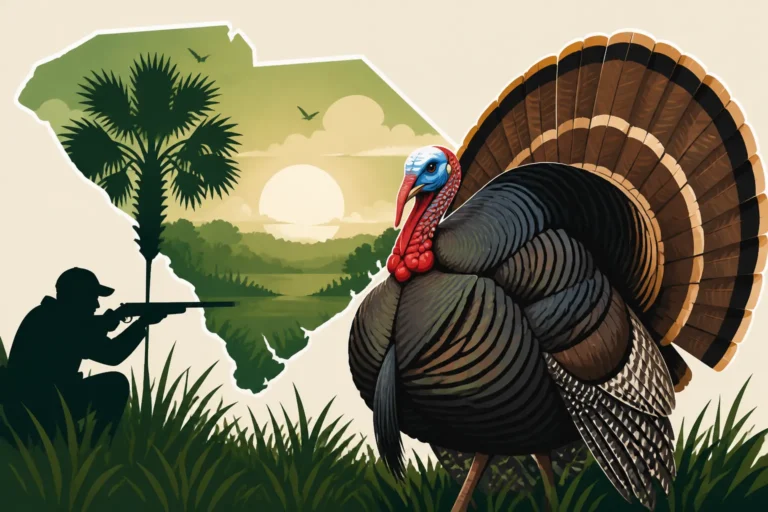
There’s nothing quite as frustrating as seeing a big gobbler strutting just out of range in a sprawling Lowcountry field, especially when you’ve been set up since before dawn. Those open edges can be deceiving, making it tough to close the distance without spooking wary birds. This guide is all about mastering the art of bringing those field-edge turkeys into shotgun range, focusing on the unique challenges and opportunities of South Carolina's coastal plain.
Understanding the Lowcountry Field Edge Environment
Hunting turkeys along field edges in South Carolina’s Lowcountry presents a distinct set of challenges and rewards. Unlike the steep topography of the Upstate or the dense hardwoods of the Midlands, the Lowcountry is often flat, riddled with swamps, and dotted with vast agricultural fields or clear-cuts that eventually transition into thick timber. Gobblers here are accustomed to open spaces but are also incredibly wary of anything out of place in their daily routines. Their routines often revolve around these field edges, using them as strutting zones, bugging areas, and travel corridors between roost sites and feeding grounds.
The Lay of the Land: Crop Fields, Pastures, and Openings
When we talk about Lowcountry field edges, we're not just talking about cornfields, though those are certainly common. You might be hunting the edge of a newly planted soybean field, a sprawling winter wheat patch, an old overgrown pasture, or even a recently clear-cut timber block that's grown in just enough to offer some cover around its perimeter. Each of these scenarios presents unique characteristics that influence how turkeys use the space. A cut agricultural field, for instance, might be a prime spot for turkeys to pick through leftover grain, while a lush green field of clover or rye offers insects and tender greens. Pastures provide excellent strutting grounds and bugging opportunities. Understanding what a particular field offers at any given time of the season is crucial for predicting where a gobbler might spend his morning. You’ll often find birds working these edges, not necessarily in the wide-open middle, but along the interface where they can quickly duck into the safety of the woods.
How Timber and Swamps Dictate Movement
The Lowcountry is defined by its timber and swamps, and these features profoundly influence turkey movement along field edges. Roost trees, often towering pines or ancient hardwoods, are usually located within 50 to 100 yards of a field edge, offering gobblers a clear flight path into their strutting grounds. Swamps, though often impenetrable to humans, serve as natural barriers and sanctuaries for turkeys, funneling their movement to specific, drier crossings. A long, linear field bordered on one side by a dense swamp and on the other by thick timber will likely have turkeys moving along the dry transition zone. You might observe birds flying down from the roost, landing in the field, strutting for a bit, then slowly working their way along the timber line, picking at bugs or dusting in a sunny spot. These timbered edges also provide crucial escape cover from predators like coyotes, or even other hunters. Paying close attention to how these natural features intersect with the open ground is key to predicting a gobbler's path and setting up effectively.
Strategic Scouting and Setup for Field Edge Success
Success on Lowcountry field edge turkeys hinges on diligent scouting and meticulously planned setups. You can’t just walk up to a field edge an hour before daylight and expect a gobbler to cooperate. These birds are pressured, wary, and have an excellent memory of anything out of the ordinary. Your ability to read the landscape, identify key turkey sign, and position yourself undetected will make all the difference.
Pre-Season Reconnaissance and Identifying Key Areas
Scouting isn't just a suggestion; it's absolutely non-negotiable for field edge hunting. Weeks, or even months, before the South Carolina Spring Turkey Season Rules go into effect, you should be out there, boots on the ground, learning the lay of the land. Use aerial maps from resources like GoHunt to pinpoint potential roosting areas – look for tall timber near water or swamp edges. Identify pinch points where birds are likely to enter or exit a field. Check for old logging roads or deer trails that turkeys might use.
When you're actually in the field, look for specific turkey sign:
- Droppings: Fresh droppings indicate recent activity. Gobbler droppings are typically larger and J-shaped.
- Tracks: Look for distinct turkey tracks in soft dirt or mud, especially along field edges or crossing points.
- Scratchings: Turkeys scratch the leaf litter to uncover food. Look for areas of disturbed leaves near the timber line.
- Dusting Bowls: Shallow depressions in dry soil where turkeys dust themselves to remove parasites. These are often found in sandy spots along field edges.
- Feathers: Finding a primary wing feather means a turkey has been there, often near roosts or dusting bowls.
- Strut Marks: In soft soil or sand, you might even see the distinct drag marks of a gobbler's wingtips as he struts.
Focus your scouting efforts on the first 100-200 yards into the timber from the field edge, as well as the transition zone itself. This is where birds spend most of their time after flying down. Note areas where the timber line bends, where a small ditch or creek enters the field, or where a brush pile offers a bit of natural cover. These are all potential hot spots.
Setting Up: Blinds, Cover, and Decoy Placement
Once you've identified a promising area, your setup needs to be flawless. For field edge hunting, especially in the Lowcountry where concealment can be tough, a good blind is often your best friend.
- Natural Blinds: If hunting Setting Up Against a Big Oak or a thick pine, use existing cover to your advantage. Pile up palmetto fronds, fallen branches, or even Spanish moss to create a natural, low-profile blind that blends seamlessly with the surroundings. You want to be able to move and shoulder your gun without being seen.
- Portable Blinds: Ground blinds offer excellent concealment and allow for some movement, which can be critical when a gobbler hangs up just out of range. Set them up well in advance of the season if possible, allowing birds to get used to them. Position your blind so you have a clear shooting lane into the field, but also good visibility into the timber where a bird might approach from. Make sure it's brushed in thoroughly, not just a black box sticking out.
- Decoy Placement: Decoys are often highly effective on field edges, particularly when a gobbler can see them from a distance. A common setup is a single hen or a breeding pair (hen and jake). Place your decoys about 20-30 yards out into the field from your position, ensuring they are highly visible but not so far that a bird hangs up beyond shotgun range. Positioning the decoys to face away from your blind can encourage an incoming gobbler to strut past them, offering a broadside shot. If you're using a jake decoy, place it where an approaching gobbler will be forced to walk past your shooting lane to get to it. Be mindful of areas where Turkey Decoys That Work on Pressured Birds might need more subtle placement. The goal is to draw the bird into your comfort zone, not just into the field.
When setting up, always consider your entry and exit routes. You want to be able to get into your position before daylight without spooking any birds, and leave quietly after the hunt. This might involve parking further away and walking in, or using a less obvious trail.
Calling Strategies for Lowcountry Field Edge Gobblers
Calling a gobbler off a field edge can be an exercise in patience and precision. These birds are often visual, especially when they have an open field to survey, and they've heard it all before. Your calling needs to be realistic, well-timed, and responsive to the bird's mood.
Soft and Subtle Morning Calls
As dawn breaks and turkeys begin to stir on their roosts, your initial calling should be soft and unassuming. Think about a hen waking up on the roost, stretching, and making a few contented noises. A few soft tree yelps, clucks, and purrs are often all it takes to get a gobbler to sound off. Don’t immediately hit him with aggressive calling; you’re simply letting him know a hen is nearby. Once he gobbles, listen intently. Is he on the roost? Is he already on the ground? How many birds are gobbling? This information is critical.
If a gobbler flies down into the field and starts strutting, he's expecting the hen to come to him. This is where many hunters make a mistake, continuing to call aggressively. Instead, go silent or offer only very soft clucks and purrs. The visual of your decoys (if used) combined with minimal, alluring sounds often works better than loud yelping. Let his curiosity and natural inclination to breed bring him closer. You're trying to create the illusion that the hen is content and waiting, forcing him to cover the distance. Sometimes, the best calling is no calling at all once he’s committed to the field. If he breaks strut and starts walking, he's coming.
Aggressive Mid-Day and Hang-Up Tactics
Not every gobbler is going to respond to subtle tactics. Some birds, especially later in the morning or those that have been heavily pressured, might hang up just out of range, gobbling but refusing to commit. This is when you might need to shift to more aggressive calling. A series of loud, excited yelps, perhaps combined with a fly-down cackle, can sometimes break a stalemate. Make it sound like a hen is getting impatient or is being pursued by another gobbler. This might force the hung-up bird to come in.
Another effective tactic for hung-up birds is to go completely silent for 15-20 minutes, then hit them with a sudden, loud burst of calling, perhaps a "lost hen" series. This change in rhythm can often trigger a response. If a gobbler is truly hung up, consider using an internal link to explore Calling a South Carolina Gobbler Off the Roost for more specialized techniques that might apply even once he's on the ground. Sometimes, if the terrain allows, a slight change in your position (a small, quiet move) can also give him the different angle he needs to commit, but this is incredibly risky in open field edges.
Reading the Bird and Adjusting Your Strategy
Turkey hunting is rarely a one-size-fits-all endeavor, and Lowcountry field edge birds are no exception. You need to constantly read the bird's body language and listen to his cadence.
- Coming in hot: If a gobbler is gobbling frequently and closing the distance rapidly, keep your calling minimal and let him come.
- Hanging up: If he stops at a certain distance, struts, and continues to gobble but doesn't advance, he's hung up. This is when you might try aggressive calling, going silent, or a combination.
- Walking away: If he turns and starts walking in the opposite direction, sometimes a desperate, loud series of yelps or even a "challenge" gobble (if you can make one) can turn him around. This is also when you might consider a tactical retreat and relocation, or even switching to a Run-and-Gun Turkey Tactics on Public Land approach if you're on public ground and the opportunity allows.
Remember, turkeys on field edges have incredible eyesight. Any sudden movement, any unnatural outline, and he's gone. Keep your gun up and ready, but stay absolutely still until the moment of truth.
Common Field Edge Challenges and Adaptations
Hunting Lowcountry field edges isn't always straightforward. You'll face specific challenges that require adaptation and sometimes a complete shift in strategy. From dealing with other hunters to understanding bird behavior in different weather, flexibility is key.
Dealing with Hunting Pressure and Wary Gobblers
South Carolina's prime turkey hunting areas, especially on public lands like many of the Wildlife Management Areas or parts of Francis Marion National Forest Hunting, can see significant pressure. This means that a gobbler might have been called to, shot at, or spooked multiple times before he ever hears your call. These birds become extremely wary and difficult to pull into the open.
When dealing with pressured birds, subtlety is your greatest asset. Forget the loud, aggressive calling that might work on unpressured birds. Instead, focus on soft, realistic clucks, purrs, and soft yelps. Use minimal or no decoys if you suspect extreme wariness. You might even want to try a lone hen decoy rather than a jake. Getting in super early, well before other hunters, and setting up deep inside the timber where a gobbler might fly down to, instead of right on the field edge, can also pay dividends. Think about areas that other hunters might overlook, perhaps a smaller, less obvious opening, or a far corner of a large field that requires a longer walk. Using maps from services like GoHunt to scout less accessible spots can be a game-changer. Also, keep an eye on When South Carolina Gobblers Go Quiet in May, as increased pressure and breeding activity winding down can make birds more responsive to certain calls.
| Lowcountry Field Edge Scenario | Primary Challenge | Scouting Focus | Recommended Tactic | Calling Strategy |
|---|---|---|---|---|
| Large Ag Field (Early Morning) | Gobbler hangs up, too far out. | Roost trees, fly-down zones, dusting areas. | Set up ~50-75 yards into timber, near likely fly-down. | Soft tree yelps, minimal post-flydown calling. |
| Overgrown Pasture (Mid-day) | Birds scattered, less vocal. | Fresh sign, bugging areas, thickets. | Patiently still-hunt timber edge, set up on fresh sign. | Locator calls (crow/owl), then soft hen talk. |
| Swampy Field Edge | Limited access, birds approach from specific points. | Dry crossings, high ground, natural funnels. | Set up overlooking a funnel or dry access point. | Moderate yelps, purrs; focus on visibility. |
| Clear-cut Edge (Afternoon) | Birds moving to roost, wary of open. | Fresh tracks entering/exiting, distant roosts. | Position for evening ambush, near travel corridor. | Minimal, inviting calls; wait for birds to commit. |
Adapting to Weather and Mid-Day Lulls
Lowcountry weather can be fickle. Early season hunts might be surprisingly warm, requiring lightweight, breathable clothing, while a late-season cold front can make birds quiet.
- Warm Weather: Turkeys in warm weather, common during the early part of the season in South Carolina, tend to be more active early and late in the day. Mid-day lulls can be pronounced. During these times, focus your efforts on areas with shade, water sources, or lush green fields where insects are abundant. Birds might be less inclined to strut in the heat of the sun.
- Rainy Weather: Turkeys often get quiet during heavy rain. Light drizzles, however, can sometimes make them more active, as the rain softens the ground for bugging and dampens sounds, making them feel more secure. In a light rain, try calling from under a dense canopy, letting your calls carry.
- Mid-Day Lulls: Don't give up during the mid-day lull. While gobbling might decrease, turkeys are still active. They might be feeding, dusting, or breeding. This is a great time to implement locator calls – crow, owl, or hawk calls – to get a shock gobble without directly calling to him. Once you get a response, move quietly and set up, then try some soft hen calls. Sometimes, switching tactics from active calling to a patient stakeout on a known travel corridor or dusting area can be effective. Consider exploring Hunting the South Carolina Rut by Zone to understand turkey breeding behavior which can inform mid-day tactics. Patience is your greatest ally when birds go quiet.
Ultimately, hunting Lowcountry field edges is a chess match. It demands patience, keen observation, and the ability to adapt. But when that gobbler finally commits and struts into range, the reward is unmatched.
Disclaimer
Hunting is an inherently dangerous activity. Always prioritize safety, understand and follow all South Carolina hunting regulations, and obtain proper licensing before heading afield. The advice provided here is for informational purposes only and does not guarantee success or safety. Ethical hunting practices and respect for wildlife are paramount.