Deer Drives With Three or Four Hunters
Trying to organize a deer drive can feel like a big undertaking, especially when you're not running with a large club or a dozen hunting buddies. If you've ever found yourself looking at a promising block of cover with only three or four people, feeling like you're trying to push a herd of deer with a whisper, you know the frustration. It’s easy to feel outmatched by the sheer amount of ground and the cunning of a South Carolina whitetail. But don't despair – with smart planning and precise execution, a small group can be incredibly effective. This guide will walk you through how to successfully orchestrate deer drives with just three or four hunters, maximizing your chances in the diverse landscapes of the Palmetto State.
Understanding the Challenges of Small Group Drives
Let's be real, a three or four-person deer drive isn't going to look like something out of a classic hunting film with a long line of yelling drivers. Those kinds of pushes often require a small army to effectively cover ground. When you're working with a minimal crew, the biggest hurdles often come down to coverage, reading the terrain, and maintaining effective communication without spooking every deer in the county. It's a different game, and acknowledging that is the first step to playing it right.
The Problem of Coverage with Fewer Hunters
The most obvious challenge with a small group is simply the lack of boots on the ground. A typical deer drive relies on a wide line of drivers to move through an area, pushing deer towards strategically placed standers or blockers. With only three or four hunters, that line becomes incredibly sparse, leaving massive gaps. Deer, being the masters of escape that they are, will quickly identify these openings and often try to slip back through the driving line or peel off to the sides, leaving your blockers staring at empty woods. This can be incredibly disheartening when you’ve put in the effort, only to hear deer crashing out behind the push. It feels like wasted energy, and it's a common frustration for smaller teams.
The Importance of Terrain Reading and Micro-Scouting
Because you can't rely on sheer numbers to cover vast expanses, your success hinges on intimately knowing the ground you're trying to push. This isn't just about general knowledge; it's about micro-scouting. You need to identify every significant ditch, thicket, ridge, and swamp edge that a deer might use for escape or bedding. When your driving line is spread thin, every natural barrier or funnel becomes critically important. Ignoring these subtle landscape features can mean the difference between a successful push and deer simply melting away into the cover you hoped to clear. You're essentially letting the terrain do half the work for you, guiding the deer where you want them to go. This deep understanding of the land is paramount, especially when Scouting South Carolina Public Land Before Season.
Communication is Key in a Limited Hunter Scenario
In a small group, silent or barely audible communication is absolutely vital. You can't have hunters yelling or making excessive noise, as that will simply scatter deer unpredictably, often sending them running away from your blockers at top speed, making for extremely difficult shots, if any. Your goal is a slow, methodical push that subtly encourages deer to move, not a panic-inducing stampede. This means developing a system of hand signals, pre-arranged movement patterns, or using quiet two-way radios if permissible and practical. You need to be able to convey information – "deer sighted," "moving left," "hold position" – without alerting the deer. This level of coordination takes practice and trust among your hunting partners.
Strategic Planning for Small Group Success
Success in small-group deer drives in South Carolina is less about brute force and more about finesse and intelligent planning. You can't just pick a block of woods and start walking. Every aspect, from property selection to hunter roles, needs to be considered to maximize your limited resources. Think of it as a chess game, where every move is calculated.
Scouting the Right Properties and Areas
The first rule for a small-group drive is to choose your battleground wisely. Forget those huge, unbroken tracts of timber or massive agriculture fields unless you're targeting a very specific, small section of them. Instead, look for properties or areas within larger public lands that are naturally constrained. This might mean a narrow finger of woods between two fields, a small island of high ground in a swamp, or a thicket bordered by a road or creek. These smaller, more manageable blocks of cover reduce the number of escape routes deer have, making your limited coverage much more effective. On public land, this could mean finding those less-traveled corners or distinct habitat changes where deer concentrate, often where others don't bother to go, helping you with Finding Ground Others Walk Past.
Identifying Natural Funnels and Bottlenecks
Once you've identified a suitable area, the next critical step is to pinpoint its natural funnels and bottlenecks. These are the geographical features that naturally constrict deer movement. Examples include:
- Pinch Points: Narrow strips of woods between open fields, two converging creek bottoms, or a saddle on a ridge line.
- Heavy Cover Edges: The dense border of a clear-cut, a thick briar patch adjacent to more open timber, or the transition zone around a lowcountry swamp. Hunting Lowcountry Swamp Deer often means understanding these subtle transitions.
- Water Barriers: Creeks, small ponds, or flooded areas that deer prefer to avoid crossing if possible.
These are the places where deer are most likely to travel when pushed, and therefore, where your blockers should be positioned. Use satellite imagery and topographic maps – apps like GoHunt are excellent for this – to visualize these features before you ever set foot on the ground. A small group simply cannot afford to guess; you need to know exactly where the deer will go.
Assigning Roles: Blockers, Drivers, and the Flex Hunter
With only three or four hunters, everyone needs a clear, predefined role, and sometimes, a hunter might even have a "flex" role.
- Blockers (1-2 hunters): These are your static hunters, strategically positioned at the funnels and escape routes. Their job is to remain absolutely still, vigilant, and ready for a shot. They should be placed downwind of anticipated deer movement, concealed, and with clear shooting lanes. They need to understand the direction of the drive and anticipate where deer will likely emerge. Sometimes a well-placed Using a Ground Blind on South Carolina Public Land can be invaluable here for concealment.
- Drivers (1-2 hunters): These hunters will be actively moving through the cover, pushing deer towards the blockers. Their movement should be slow, deliberate, and relatively quiet, designed to displace deer rather than panic them. The goal is to nudge deer, not send them rocketing out of the woods. One driver might focus on noise (crashing through brush, calling softly), while another might focus on quietly covering ground.
- The Flex Hunter (Optional 1 hunter): In a four-person team, one hunter might act as a "flex." This could mean starting as a driver and then quickly moving to cover a newly identified escape route, or acting as a secondary blocker on a less-defined edge. This role requires excellent judgment and quick decision-making.
The key is that everyone knows their role and the anticipated movement of deer and other hunters. A quick pre-drive briefing with a map outlining positions and directions is essential.
Executing the Drive with Precision
Once the planning is done, the execution phase begins. This is where your careful scouting and communication skills truly come into play. A small group drive is often more like still-hunting with a purpose than a chaotic charge.
Setting Up the Blockers Effectively
The blockers are arguably the most crucial part of a small-group drive. Their placement determines if the deer you move will even present a shot. Before anyone starts moving, blockers need to be in position, settled, and ready.
- Strategic Placement: As discussed, blockers should be positioned at natural funnels, pinch points, or known escape routes that deer will use. Think about where a deer would naturally try to sneak out when disturbed. This might be a narrow crossing in a creek, a saddle on a ridge (especially relevant if Reading a Ridge for Upstate Deer), or the downwind edge of a thicket.
- Concealment and Lanes: Blockers must prioritize concealment. This means using natural cover, such as large trees, thick brush, or a well-brushed-in ground blind. They also need to ensure they have clear shooting lanes in the direction the deer are expected to come from. This often means trimming a few branches before the drive begins, being mindful of WMA rules on vegetation removal.
- Wind Direction: Always position blockers downwind of the anticipated deer movement. Deer rely heavily on their sense of smell, and you don't want your scent carried ahead of the deer as they approach. This is fundamental to all hunting, but even more so when trying to coax deer into a precise spot.
The Art of the Slow Push
The drivers' role is to move the deer slowly and deliberately, almost guiding them, rather than sending them into a panic. A slow push gives the deer time to react naturally and move along their preferred escape routes, which is exactly where your blockers are waiting.
- Pacing and Noise: Drivers should walk at a steady, slow pace, covering the intended area thoroughly but not rushing. Make just enough noise to encourage movement – a few footsteps in dry leaves, an occasional soft grunt call, or a light tap on a tree trunk. The goal is to make the deer feel slightly pressured, not terrified.
- Maintain Spacing: Even with limited numbers, try to maintain as consistent a line as possible. Use landmarks or compass bearings to stay on track. If one driver gets too far ahead or lags behind, it creates a larger gap for deer to slip through. Remember, deer will try to circle back or escape through the widest opening.
- Adapt to Deer Movement: If a driver spots deer sneaking out the side, they might have to adjust their path slightly to gently redirect them. This is where the communication system comes in handy. A quiet signal can alert other drivers or even the flex hunter to adjust.
Post-Drive Strategies: Tracking and Recovery
Once the drive is complete and shots have been fired (hopefully!), the work isn't over. Recovery is just as important as the drive itself, especially in South Carolina's often dense and challenging terrain.
- Marking the Shot: Immediately after a shot, mark the exact spot where the deer was standing and where it was last seen. Use flagging tape, a hat, or a bright piece of clothing. In thick woods, it's incredibly easy to lose your bearings.
- Wait and Listen: Unless you saw the deer drop, give it time. A deer that runs off might expire quickly if left undisturbed. Waiting 30 minutes to an hour, or even longer for a marginal hit, can greatly improve your chances of recovery. Listen for crashing noises indicating a fall.
- Systematic Tracking: Start at the shot site and look for blood, hair, bone fragments, or tracks. Move slowly and methodically. If the blood trail disappears, expand your search in circles or grid patterns around the last known sign. Having a plan for Tracking a Deer Through South Carolina Pine Straw or even Blood Trailing After Dark in South Carolina can be invaluable.
- Team Effort: Two sets of eyes are always better than one for tracking. One person can focus on the ground, while another keeps an eye on the surrounding cover for the deer itself or additional signs.
Optimizing for South Carolina's Unique Hunting Conditions
South Carolina offers incredibly diverse hunting environments, from dense coastal swamps to rolling upstate hills. A successful small-group drive needs to be tailored to the specific type of terrain you're hunting.
Lowcountry Swamps and Thick Cover
Hunting the lowcountry often means battling incredibly dense vegetation, standing water, and a maze of creek beds. Deer drives here can be particularly effective because the deer are naturally restricted by the terrain.
- Utilize Water Barriers: In swamps, focus your drives on pushing deer across narrow land bridges or towards a specific dry edge. The water itself acts as a natural funnel. Blockers should be positioned where the deer are forced to cross drier ground or come within shooting range along a swamp edge.
- Slow and Deliberate: Drivers in thick lowcountry cover must move even slower and more deliberately. Crashing through dense palmetto or briars will just cause deer to hunker down or burst out unpredictably. A soft, steady push is key.
- Snake Boots and Waders: Essential gear for drivers and blockers alike. You'll be wading through water and traversing areas where snakes are prevalent. Investing in quality snake boots or chest waders is a must.
Upstate Hills and Pine Plantations
The upstate presents a different set of challenges and opportunities. Rolling hills, mature hardwoods, and vast pine plantations require different drive tactics.
- Ridge-Top Saddles and Creek Bottoms: Deer in the upstate often travel along ridge lines or in the bottoms of drainages. Target drives that push deer off one ridge and across a saddle, or along a creek bottom to an ambush point. Blockers can be strategically placed on the opposite ridge or at the mouth of a hollow.
- Pine Plantation Edges: Pine plantations often have incredibly thick interiors but more open edges or clear-cut lines. Drives can be focused on pushing deer from the dense interior out to these more open edges where blockers are waiting. Consider the wind when setting up, as thermals can be tricky in hilly terrain.
- Elevation Changes: Drivers need to understand how deer use elevation to their advantage. Pushing deer uphill can be more challenging than pushing them downhill or across contours. Use the topography to guide your push.
Early Season Warm Weather Considerations
South Carolina's deer season often kicks off in warm, humid weather, especially in the coastal zones. This presents a unique challenge for deer drives and post-harvest care.
- Cooler Management: Have coolers packed with ice ready at the nearest accessible point. After a successful shot, you'll need to field dress the deer quickly and get it on ice to prevent spoilage. This is particularly crucial in August and September. Read up on Field Dressing a Deer in Warm Weather to be prepared.
- Hydration and Breaks: Drivers, especially, will exert a lot of energy. Ensure everyone is well-hydrated and takes short, strategic breaks to avoid overheating.
- Bug Protection: Mosquitoes and other biting insects are rampant in warm, humid conditions. Use effective bug repellent and consider permethrin-treated clothing. Being distracted by bugs will compromise focus and success.
Safety First: Essential Considerations
No matter the size of your hunting party or the excitement of the hunt, safety should always be your number one priority. In a deer drive, where hunters are moving and shots can be taken in various directions, vigilance is paramount.
Blaze Orange Requirements
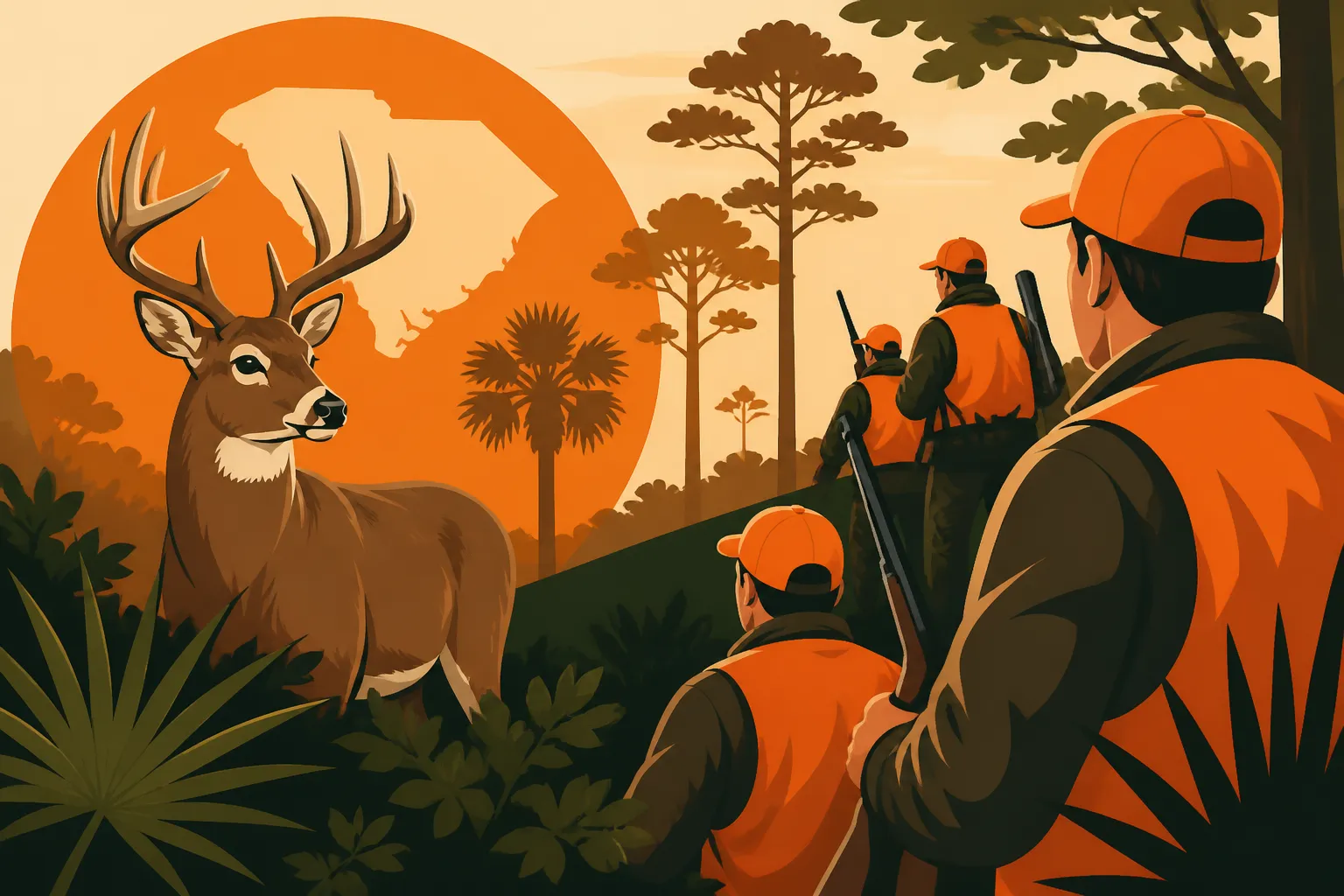
South Carolina law is clear on blaze orange: hunters must wear at least 500 square inches of solid visible international orange, yellow, or pink above the waist, OR a full-size international orange, yellow, or pink hat, OR a combination of hat and vest with at least 144 square inches of visible international orange, yellow, or pink. This applies to all hunters during daylight hours when hunting deer, bear, or feral hogs with firearms, and also to hunters in many WMAs during certain seasons. Even if you're bowhunting, and it's not strictly required in all scenarios, wearing blaze orange or blaze pink when driving deer is a non-negotiable safety measure to ensure maximum visibility for your fellow hunters. Always err on the side of caution. For more details on the specific requirements, consult South Carolina Blaze Orange Requirements.
Clear Communication and Establishing Safe Shot Lanes
Before the drive even begins, everyone needs to be crystal clear on their position, the direction of the drive, and most importantly, the established safe zones of fire.
- Pre-Drive Briefing: Go over a map together. Point out where each blocker will be, the exact route each driver will take, and the anticipated direction of deer movement. Identify "no-shoot" zones, such as roads, buildings, or other areas where non-hunters might be present.
- Identifying Backstops: Blockers should always have a clear, safe backstop for their shots. Never shoot at deer silhouetted on a ridge or moving towards an unknown area.
- "Know Your Target and What Is Beyond It": This fundamental rule is especially important in a drive. Hunters can emerge unexpectedly, and a deer can change direction. Always positively identify your target and be certain of what lies beyond before squeezing the trigger. Never shoot at sound or movement alone.
- Maintain Visual Contact (When Possible): Drivers should try to maintain visual contact with each other, even if it's just a glimpse through the trees. This helps ensure everyone stays in their lane and prevents accidental crossing of lines of fire.
- No Running with Firearms: Ever. Period. A slip or fall can have catastrophic consequences. Move slowly and deliberately.
By prioritizing safety, using clear communication, and respecting the inherent risks of a deer drive, your small group can enjoy a productive and secure day in the South Carolina woods.
| Role | Primary Objective | Key Actions |
|---|---|---|
| Blocker | Intercept deer pushed by drivers | Remain still, vigilant, concealed; identify clear shooting lanes; know exit points |
| Driver | Slowly and subtly move deer towards blockers | Maintain steady pace; make soft, consistent noise; adapt to deer movement |
| Flex Hunter | Adapt to changing conditions; cover unexpected escapes | Quick decision-making; communicate adjustments; assist either role as needed |
Disclaimer
Hunting is an inherently dangerous activity. This guide provides general information and recommendations. Always consult the most current South Carolina Department of Natural Resources (SCDNR) regulations, local laws, and landowner permissions before hunting. Safe hunting practices, including the use of blaze orange and proper firearm handling, are paramount. The author and publisher are not responsible for any accidents, injuries, or legal issues resulting from the use of this information.