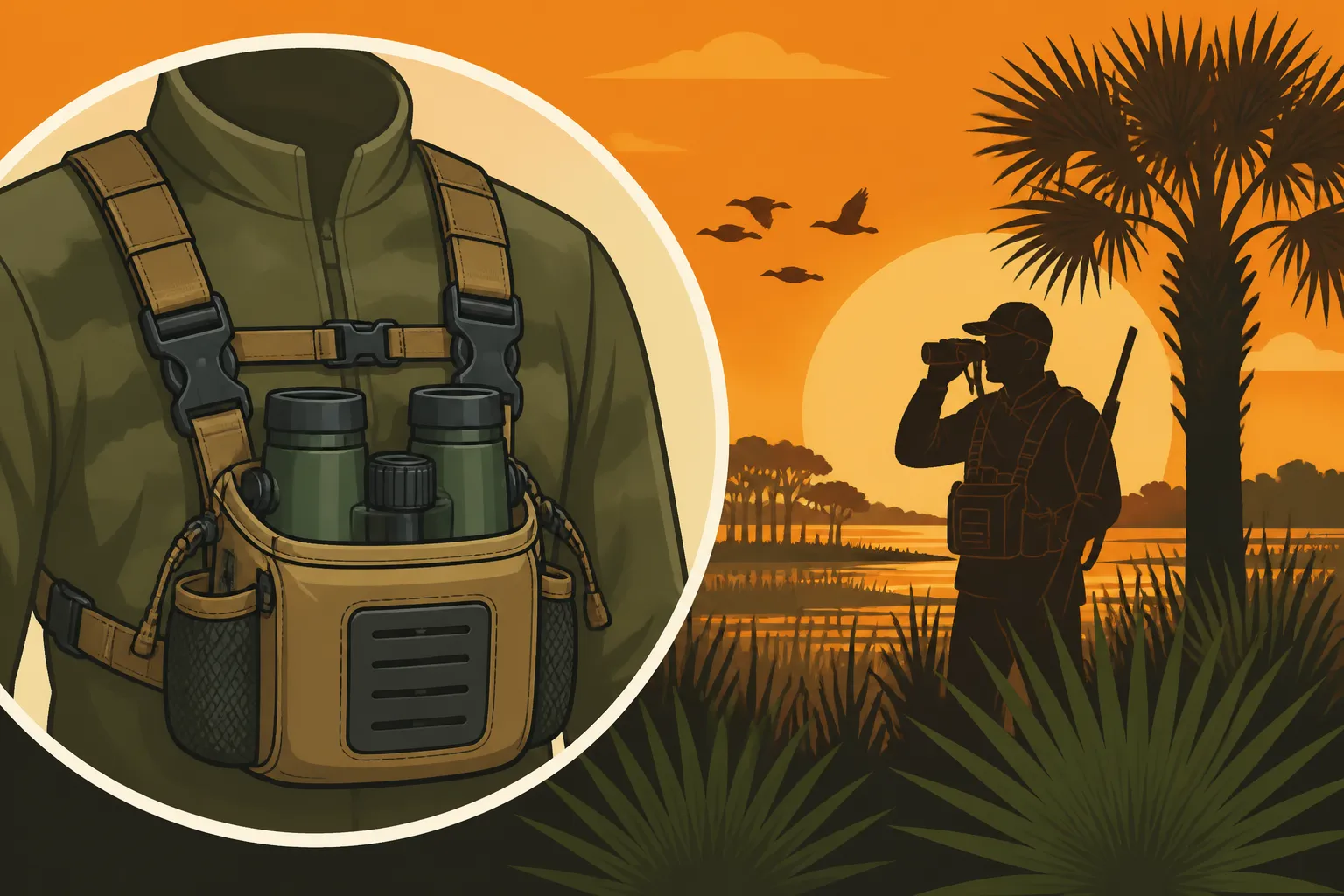
Binocular Harnesses Worth Wearing
There’s nothing quite like the feeling of stepping into the South Carolina woods before dawn, full of anticipation. But that feeling can quickly turn to frustration when your expensive binoculars are swinging wildly, banging against your chest, or getting tangled in brush as you try to navigate thick palmettos or climb into a treestand. Neck straps are notorious for causing discomfort and making your optics a liability rather than an asset. This guide will delve into why a dedicated binocular harness is an absolute game-changer for South Carolina hunters, offering comfort, protection, and quick, quiet access to your most crucial glassing tool.
Why a Binocular Harness is Essential for South Carolina Hunters
For years, many of us just draped our binoculars around our necks, accepting the inevitable pain, bouncing, and the very real risk of damage. But once you switch to a quality binocular harness, you’ll wonder how you ever hunted without one. In the diverse and often challenging terrain of South Carolina, from the dense swamps to the steep Upstate ridges, a harness isn't just a luxury; it's a necessity for comfort, gear protection, and successful hunting.
Eliminating Neck Strain and Discomfort
The most immediate and noticeable benefit of a binocular harness is how it redistributes the weight of your optics. Instead of all that pressure being concentrated on your neck, a harness spreads the load across your shoulders and back. This might seem like a small detail, but after hours of still-hunting through a pine plantation or sitting motionless in a stand, you’ll truly appreciate not having a sore neck and aching shoulders. Imagine walking miles through the Francis Marion National Forest, trying to spot a deer through thick cover. With a neck strap, every step is a jarring reminder of the weight. With a harness, your binoculars feel like an extension of your body, secure and almost weightless, allowing you to focus on the hunt, not the discomfort. This improved comfort also plays a huge role when you’re doing something strenuous like Dragging a Deer Out of a Swamp – you need all your energy for the task at hand, not battling a swinging optic.
Protecting Your Valuable Optics from the Elements and Damage
South Carolina weather is rarely predictable. We can go from bright sunshine to a sudden, torrential downpour in minutes, especially during early archery season. A good binocular harness often includes a protective case or cover that shields your binoculars from rain, dust, and debris. This is crucial for maintaining the clarity and longevity of your lenses, which are often the most expensive part of your hunting gear. Beyond weather, harnesses prevent your binoculars from swinging and knocking against your rifle, bow, or treestand. How many times have you cringed as your binoculars slammed into your chest climbing into a stand, or scraped against a tree trunk while navigating dense brush? A harness keeps them snug against your chest, minimizing movement and significantly reducing the risk of impact damage. It’s an investment in protecting your investment, ensuring your optics are always ready when you need them.
Ensuring Quick and Silent Access When It Matters Most
Hunting often boils down to split-second decisions. A buck might step out of a thicket just long enough for a quick glance, or a gobbler might appear silently from behind a ridge. Fumbling with a neck strap or trying to quietly extract binoculars from a backpack can cost you that crucial moment. A well-designed binocular harness keeps your optics front and center, allowing for quick, one-handed deployment. Many models feature magnetic closures or silent buckles, ensuring that accessing your glass doesn't alert game. When you're trying to quietly Calling a South Carolina Gobbler Off the Roost or catch movement in a dense bottomland, every sound matters. The secure but easily accessible nature of a harness means you can bring your binoculars to your eyes smoothly and silently, giving you the advantage in those critical moments. It's about efficiency and stealth – two cornerstones of successful hunting.
Key Features to Look for in a Quality Binocular Harness
Not all binocular harnesses are created equal. Just like choosing the right rifle or bow, selecting a harness that fits your hunting style and the unique demands of South Carolina's environment is important. Prioritizing certain features will ensure you get a harness that truly enhances your experience, rather than adding another piece of gear you rarely use.
Material and Construction: Durability and Weather Resistance
The materials used in a binocular harness dictate its comfort, durability, and weather resistance. Look for rugged, quiet fabrics like Cordura or similar nylons that can withstand thorns, briars, and general wear and tear from traversing thick cover. Water-resistant or waterproof materials are a huge plus for protecting your optics from those inevitable South Carolina rain showers or heavy dew. Some harnesses even have integrated rain covers that can be quickly deployed. Beyond the main fabric, pay attention to the stitching and hardware. Strong, reinforced stitching, robust zippers, and durable, quiet buckles are indicators of a well-made harness that will last many seasons. A cheap harness with flimsy zippers or noisy plastic buckles will quickly become a nuisance, undoing all the benefits it's supposed to provide. When you're out Hunting Lowcountry Swamp Deer, you need gear that can handle the grit and grime of the environment.
Adjustability, Comfort, and Breathability
A harness must fit you comfortably and securely, regardless of what you're wearing – from a thin base layer in early archery season to heavy insulated gear for a late-season deer drive. Look for wide, padded shoulder straps that distribute weight effectively without digging in. Adjustable straps are critical for a custom fit, allowing you to keep your binoculars snug against your chest to prevent bouncing, but loose enough for comfortable breathing and movement. Given South Carolina's often warm and humid conditions, breathability is also a significant factor. Mesh backing or moisture-wicking materials on the straps and back panel can help prevent sweat buildup and keep you cooler, especially during early season hunts when you're dressed in Warm-Weather Clothing for South Carolina Hunters. A harness that feels good when you try it on in the store might feel miserable after hours in the woods if it lacks proper ventilation.
Storage Capacity and Silent Operation
Many modern binocular harnesses do more than just hold your binoculars; they integrate additional storage for essential gear. Consider models with extra pockets or compartments for items like a rangefinder, a wind checker, a small grunt tube, extra broadheads, or even your hunting license and tags. This can significantly reduce the need for a separate pack, especially for day hunts or when you’re hanging a stand on a Hanging a Stand on a Sumter Forest Ridge. However, be wary of harnesses with excessive, noisy pockets. Every zipper, every buckle, every flap needs to be silent in the field. Magnetic closures, quiet elastic loops, and silent pull tabs are features worth seeking out. You don't want to spook a mature buck because your rangefinder rattled out of a pocket or your zipper squeaked as you tried to access it. Brands like GoHunt often review harnesses that balance robust storage with stealthy design, making them ideal for the discerning hunter.
Choosing the Right Harness for Your Hunting Style
The "best" binocular harness isn't a one-size-fits-all answer; it depends heavily on your specific hunting style, the terrain you frequent, and even the size of your binoculars. What works perfectly for a long-range glassing session in the mountains might be overkill for a close-quarters swamp hunt.
Minimalist Harnesses Versus Full Chest Packs
The world of binocular harnesses generally falls into two categories: minimalist designs and full chest packs. Minimalist harnesses, as the name suggests, are designed primarily to secure your binoculars comfortably to your chest. They're lightweight, often have minimal padding, and focus solely on function. These are great if you prefer a streamlined setup, already carry a large backpack for other gear, or hunt in very warm conditions where extra bulk would be uncomfortable. They excel in scenarios like Still-Hunting Sumter Forest Ridges where agility and light weight are paramount.
On the other end, full chest packs integrate a larger main compartment for your binoculars, often with additional side pockets, front pockets, and even small back compartments. These are ideal if you want to keep essential items like your rangefinder, wind checker, calls, or even a small first-aid kit readily accessible without needing to dig into a larger pack. For hunters who spend a lot of time in a treestand, or those who carry less overall gear, a chest pack can be incredibly efficient. It consolidates your most-used items right where you need them, making your setup more organized and your movements more efficient. Many hunters find that a good chest pack is indispensable when trying to locate game from an elevated position, especially if they are making a Treestand Setups in Francis Marion National Forest.
| Harness Type | Pros | Cons | Best Use Case |
|---|---|---|---|
| Minimalist | Lightweight, low profile, highly breathable | Limited storage, less protection | Hot weather, combining with large backpack, active still-hunting |
| Chest Pack | Ample storage, superior protection, organized | Can be bulky, less breathable, potentially heavier | Treestand hunting, all-day hunts, carrying multiple essentials |
| Hybrid | Good balance of storage and comfort | May still feel bulky in very warm weather, price can vary | Versatile hunters, varied terrain, needing quick access to a few tools |
Considerations for Treestand, Still-Hunting, and Drive Hunting
Your chosen hunting method in South Carolina should influence your harness selection.
- Treestand Hunting: If you spend most of your time in a treestand, quick and silent access to your binoculars and rangefinder is critical. A full chest pack with silent magnetic closures and easily accessible pockets is a huge advantage. It keeps everything consolidated, preventing items from clanging around or being out of reach when you're perched high up. You'll want something that doesn't restrict your draw if you're bowhunting, or interfere with shouldering your rifle. Using GoHunt's mapping features to pinpoint specific treestand locations often leads to situations where you need to check distances frequently, making a chest pack invaluable.
- Still-Hunting and Spot-and-Stalk: For hunters who are constantly on the move, silently picking their way through the woods, a minimalist harness or a compact chest pack is often preferred. You need something that stays snug, doesn't bounce, and won't snag on branches. Quiet materials and a secure fit are paramount. You’re often working through thick undergrowth and need to be unencumbered. When Hunting a Funnel Between Two Swamps, you might be crawling or bending, and a low-profile harness is a huge benefit.
- Deer Drives: While binoculars might not be your primary focus during a fast-paced deer drive, having them secure and protected is still important. Whether you’re a driver pushing through thickets or a stander waiting on a lane, a durable harness will keep your optics safe from accidental bumps and ensure they don't impede your movement. Protection from moisture and impact is especially important here, as you're often moving quickly through varied, sometimes rough, terrain.
Maintenance and Longevity of Your Harness
Just like any piece of hunting gear, your binocular harness needs a little love and care to ensure it performs season after season. Neglecting it can lead to premature wear, noisy components, or even failure in the field.
Cleaning and Care After the Hunt
After a long day in the South Carolina woods, your harness will likely be covered in sweat, dirt, pine straw, or even mud. It’s important to clean it properly to prevent odors, mildew, and degradation of the materials. Most harnesses can be hand-washed with mild soap and water. Avoid harsh detergents or bleach, as these can damage specialized fabrics or coatings. Pay attention to zippers, buckles, and any elastic components, ensuring they are free of debris. Let the harness air dry completely in a well-ventilated area, away from direct sunlight, before storing it. Never put it in a dryer, as the heat can warp plastic components and damage fabrics. Regular cleaning will not only extend the life of your harness but also keep it scent-free, which is vital for wary game. This applies to all your gear, just like when you're preparing your Packs for a Sumter Forest Day Hunt or Warm-Weather Sitting Strategy in South Carolina.
Inspecting for Wear and Tear
Before and after each season, take a few minutes to thoroughly inspect your harness for any signs of wear and tear. Check all seams for fraying, especially where straps connect to the main pouch. Look for cracks or damage in buckles and adjusters. Examine elastic loops or retention straps to ensure they still have their elasticity. Zippers should glide smoothly without catching. If you notice any significant damage, it’s often worth replacing the harness or at least getting professional repairs. A broken buckle or a frayed strap in the middle of a hunt can quickly become a major annoyance, or even lead to your binoculars falling and getting damaged. Just like you'd check your Snake Boots for South Carolina Swamp Ground for leaks, make sure your harness is in top working order.
Proper Storage for Off-Season Protection
How you store your harness during the off-season matters. Don't just toss it in a heap with the rest of your gear in the garage. Store it clean, dry, and in a place where it won't be crushed or exposed to extreme temperatures or pests. Hanging it in a closet or placing it in a gear tote can protect it from dust, sunlight, and accidental damage. If your harness has any scent-control properties or treatments, storing it in a sealed bag or container can help preserve those qualities. Proper storage will ensure that when opening day rolls around again, your binocular harness is in excellent condition, ready to secure your optics and enhance your next South Carolina hunting adventure. Keeping your gear organized is part of the overall strategy, from Scouting South Carolina Public Land Before Season to the final hunt itself.
Disclaimer
This article is for general informational purposes only and does not constitute professional advice. Laws, prices and regulations vary by location and change over time. Consult a qualified professional for guidance on your specific situation.