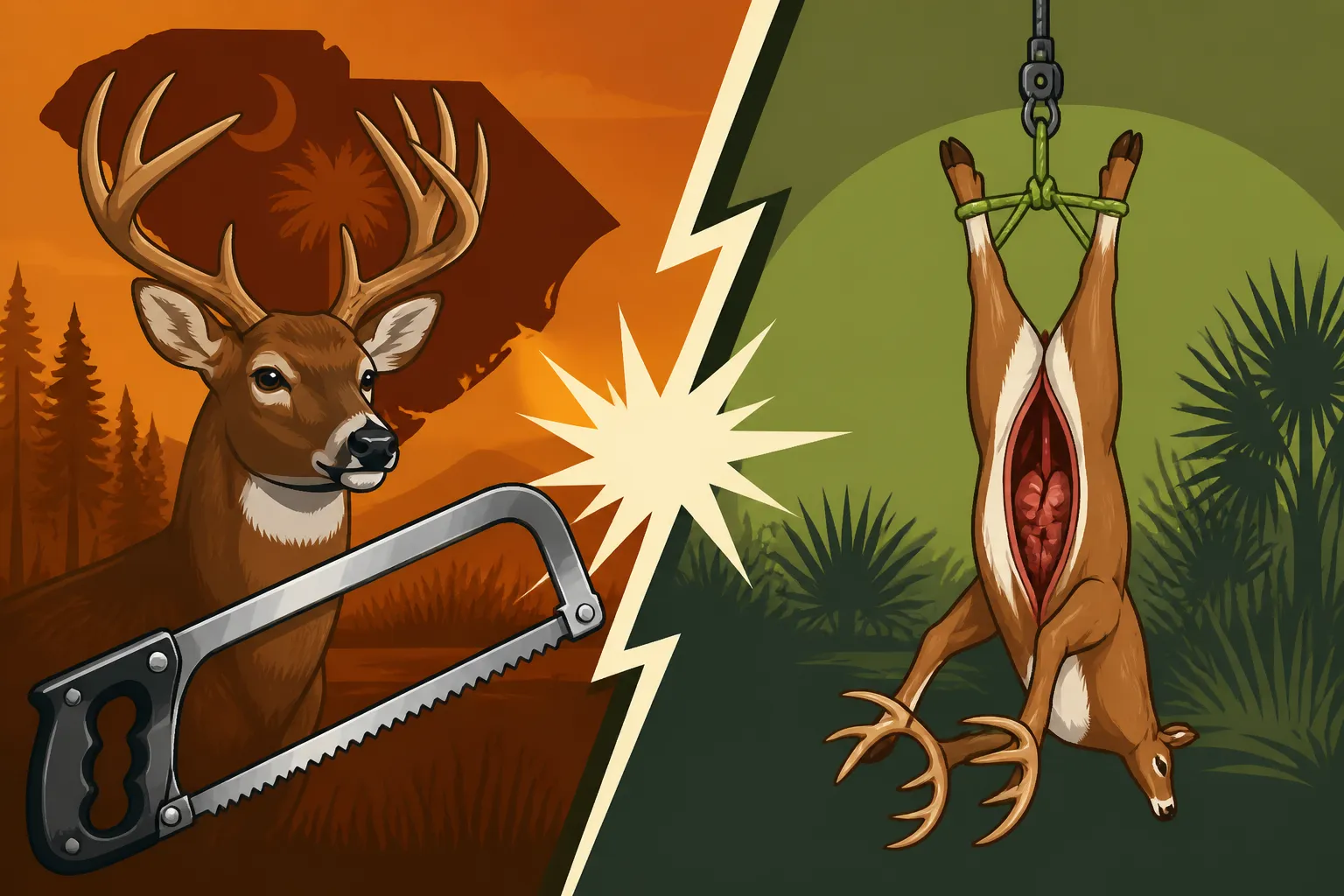
Bone Saws Versus the Gutless Method
There's nothing quite like the excitement of a successful hunt, but the real work often begins after the shot. Many South Carolina hunters face a crucial decision once their deer is down: how do you get that valuable meat from the field to the freezer, especially when you're miles back in a thick swamp or facing a hot August afternoon? This guide will dive deep into two primary field processing techniques – the traditional bone saw method and the increasingly popular gutless method – helping you understand their nuances, benefits, and drawbacks in the context of hunting here in the Palmetto State.
The Traditional Bone Saw Method for Deer
For generations, hunters have relied on saws and knives to break down big game. The bone saw method, at its core, involves separating the animal into more manageable pieces, often at the joints or by sawing through bone. This can mean quartering the animal or even splitting the pelvis and sternum to remove entrails. It's a tried-and-true approach, and for many, it's how they learned to process game.
Advantages of Sawing When it Makes Sense
There are definitely situations where a bone saw can be your best friend. If you've managed to drop a deer very close to your truck or ATV, and the weather is cool—think a crisp December morning in the Upstate—then a traditional quartering or even hauling out the whole carcass might be perfectly feasible. The bone saw allows for neat, precise cuts through bone, making it easier to section the animal into quarters with intact bone structure. This can be beneficial if you plan to hang the quarters to age them, as the bone and hide can help protect the meat.
Another scenario where a bone saw shines is if you're taking the deer to a professional processor. Many processors prefer receiving game in quarters with the bone in, or even whole, as it aligns with their established butchering methods. If you're hunting private land with easy access and a dedicated game processing area at camp, using a bone saw to break down the animal into larger, bone-in sections for transport to the cooler or processing shed can be very efficient. It often feels more familiar and less "aggressive" to some hunters than the gutless approach, especially those who grew up learning this way.
Disadvantages of a Bone Saw in South Carolina's Environment
However, South Carolina's unique hunting conditions often present significant challenges for the traditional bone saw method. Our early seasons, especially in the coastal zones that open in mid-August, bring scorching temperatures and high humidity. Dragging a whole deer or even bone-in quarters for any distance in that heat is a recipe for spoiled meat. Even a short drag can raise the internal temperature of the carcass dramatically. Furthermore, the sheer physical exertion of dragging a heavy animal through thick palmetto and deep sand, or worse, out of a lowcountry swamp, can be utterly exhausting and potentially dangerous. Dragging a Deer Out of a Swamp is no small feat.
Beyond the heat and physical toll, the logistics of a bone saw can be cumbersome. You have to carry the saw itself, which adds weight and bulk to your pack. If you're deep in the Francis Marion National Forest Hunting or trying to get a deer out of a dense pine thicket in the Sumter National Forest, every extra ounce matters. Cleaning a bone saw thoroughly in the field is also a pain, and inadequate cleaning can lead to bacterial contamination. Plus, working with a bone saw means dealing with bone dust and often more mess than a purely boneless method. For many of us, the idea of having to perform delicate bone-sawing maneuvers while swatting mosquitoes in 90-degree heat is enough to make us reconsider.
Embracing the Gutless Method for Field Processing
The gutless method is exactly what it sounds like: processing an animal in the field without ever opening the body cavity to remove the guts. Instead, you skin the animal and remove the meat directly from the bone in large, boneless sections. This technique has gained immense popularity among backpack hunters and those who frequently hunt in remote, hot, or difficult terrain, and for good reason—it’s incredibly efficient and clean.
Step-by-Step: Breaking Down an Animal "Gutless"
The process, while it might seem intimidating at first, is quite straightforward once you get the hang of it. You start by rolling the deer onto its side. First, remove the hide from the top side of the animal. Then, starting with the hindquarter, you carefully separate the muscle groups from the bone, working your way around the leg. You're essentially deboning the animal right there on the ground. Once the top hindquarter is off, you move to the front shoulder, detaching it at the joint and then boning out the meat.
After the two big muscle groups from the top side are removed, you’ll tackle the backstraps, carefully running your knife along the spine to peel them off. Finally, you can remove the tenderloins by reaching into the cavity from the outside and pulling them out, still without opening the stomach or intestines. At this point, you roll the deer over and repeat the entire process on the other side. You'll end up with four boneless quarters, backstraps, and tenderloins. You can even take the neck meat, rib meat, and any other desirable scraps. The entire gut pile remains intact with the carcass, untouched, ready for nature to reclaim. Field Dressing a Deer in Warm Weather takes on a whole new meaning with this approach.
Why the Gutless Method Excels for SC Hunters
For hunting in South Carolina, the gutless method is truly a game-changer. Our warm climate is the primary driver. By leaving the guts in, you significantly reduce the amount of surface area exposed to bacteria, and you keep the internal body temperature from rising even further due to heat transfer from the ground. This helps preserve your meat quality, especially important during those early season hunts or when the rut is in full swing and temps can still be warm. Warm-Weather Sitting Strategy in South Carolina also means planning for a quick and efficient recovery.
Another huge benefit is the reduction in weight and bulk. You're only carrying out the edible meat, which is significantly lighter than bone-in quarters. This is invaluable when you're hunting South Carolina Public Land Before Season in a remote WMA or far back on Still-Hunting Sumter Forest Ridges. Lighter loads mean less fatigue, faster trips, and potentially more meat packed out in fewer trips. Furthermore, it's a cleaner process. You're not dealing with the mess and odor of gutting, which can attract flies and other scavengers to your immediate area, making the packing-out process more pleasant. Tools like the GoHunt mapping system can be invaluable for marking your kill site and planning the most efficient, least strenuous route for packing out, making the gutless method even more appealing for remote recoveries.
Choosing Your Approach: Factors to Consider
Deciding between a bone saw and the gutless method isn't about one being universally "better" than the other. It's about matching the technique to your specific hunting situation, the conditions, and your personal preferences.
| Feature | Traditional Bone Saw Method | Gutless Method |
|---|---|---|
| Effort/Weight | Higher effort, heavier pack-out (bone-in) | Lower effort, lighter pack-out (boneless) |
| Cleanliness | Potentially messier (guts, bone dust) | Much cleaner (guts remain in carcass) |
| Speed | Can be slower if precision cuts are needed, or faster if whole | Generally faster once skilled, especially for deboning |
| Meat Quality (Warm Weather) | Higher risk of spoilage due to heat/bacteria | Lower risk of spoilage, meat cools faster |
| Gear Needed | Bone saw, knives, game bags | Knives (fixed blade, replaceable blade), game bags |
| Access | Best for easy access, short retrieves | Ideal for remote, difficult terrain, long retrieves |
| Experience Level | Traditional, widely taught | Requires practice, but easy to learn |
| Processing Preference | Good for processors who like bone-in quarters | Ideal for home processing, immediately boneless |
Gear Essentials for Both Methods
Regardless of which method you choose, a good, sharp knife is absolutely non-negotiable. For either approach, a fixed-blade knife around 4-6 inches is a versatile choice. Many hunters also carry a replaceable blade knife, often called a "surgical" or "utility" knife, which stays incredibly sharp for delicate work like caping or separating muscle groups. These are especially useful for the gutless method where precise cuts along the bone are key. You might consider a kit like those offered by GoHunt that include a variety of blades for different tasks.
For the bone saw method, obviously, you'll need a compact, sturdy bone saw. These can range from folding saws to small bow saws designed for field use. For both methods, game bags are critical. Don't skimp here; high-quality, breathable game bags protect your meat from dirt, flies, and allow it to cool properly. Think about what you'll need for Meat Care Gear for South Carolina Hunters. Finally, a sturdy pack is essential for carrying out your meat. A frame pack is ideal for heavy, boneless loads, but even a good daypack can work for smaller deer or shorter distances.
Matching the Method to Your Hunting Situation
When should you use which technique? Think about the terrain and conditions you're facing. If you're hunting in a lowcountry swamp, like those mentioned in Hunting Lowcountry Swamp Deer, or on a hot day anywhere in the state, the gutless method is overwhelmingly the superior choice. It allows you to get the meat cooled and packed out quickly, minimizing the chance of spoilage. If you're physically deep in, far from any road, and need to make multiple trips, the lighter load of boneless meat will be a blessing.
On the other hand, if you're hunting a small private tract with vehicle access right to the deer, and it's a cold late-season day, using a bone saw to quarter the animal and get it straight to a cooler or processor might be faster and easier. Some hunters simply prefer the familiarity of the bone-in approach, or have specific plans for aging bone-in cuts. The key is to assess the situation before you make your first cut. Tools like GoHunt can help you understand the terrain and plan your recovery strategy well in advance, whether you anticipate a quick drag or a methodical pack-out.
Post-Processing: Meat Care and Extraction
No matter how you break down your deer, the work isn't done until that meat is safely chilling. Proper post-processing care is just as crucial as the field dressing itself, especially in our southern climate.
Protecting Your Harvest in Warm South Carolina Weather
Once the meat is off the bone and in breathable game bags, your absolute top priority is cooling it down as quickly as possible. This means getting it into a cooler with ice. For longer pack-outs, consider bringing a separate, smaller cooler filled with ice directly to the kill site, or at least a way to insulate the meat during transport. Layering ice on the bottom of a cooler, then placing the bagged meat on top, and then more ice on top of that, will draw the heat out effectively. Drain any meltwater regularly to prevent the meat from sitting in it. This attention to detail is vital for Coolers for a Warm August Kill and ensuring a delicious table fare.
Some hunters even freeze water bottles or milk jugs to use as "ice packs" in their game bags during the pack-out, especially if the hike back to the vehicle is extensive. The goal is to drop that internal meat temperature below 40 degrees Fahrenheit as fast as you can. This is particularly important for those South Carolina Deer Season Structure Explained early-season hunts where temperatures can be punishing.
Efficiently Packing Out Your Meat
Packing out your meat can be a strenuous affair, but being organized makes a world of difference. For the gutless method, once the boneless meat is in game bags, loading it strategically into your pack is key. Distribute the weight evenly, putting the heaviest items close to your back and higher up. This helps maintain balance and reduces strain on your shoulders and lower back. Consider using multiple smaller game bags rather than one large one to make packing easier and to allow for better airflow around the meat. Packs for a Sumter Forest Day Hunt often have external frames that can handle heavier, bulkier loads with ease.
If you've opted for bone-in quarters with the bone saw method and are fortunate enough to have a short retrieve, a deer cart can be a lifesaver. These carts allow you to roll the bulk of the deer's weight rather than dragging it, saving your back and making the process much faster. However, carts are only practical on relatively flat, open ground – they're not going to do you much good in a thick marsh or over fallen timber. For those truly tough retrieves, like Recovering a Deer From a Lowcountry Swamp, sometimes the gutless method and multiple trips with a good backpack are the only realistic options. No matter the method, planning your extraction route beforehand, potentially using mapping apps, can significantly cut down on the physical toll and get your harvest home faster.
Disclaimer
This article is for general informational purposes only and does not constitute professional advice. Laws, prices and regulations vary by location and change over time. Consult a qualified professional for guidance on your specific situation.