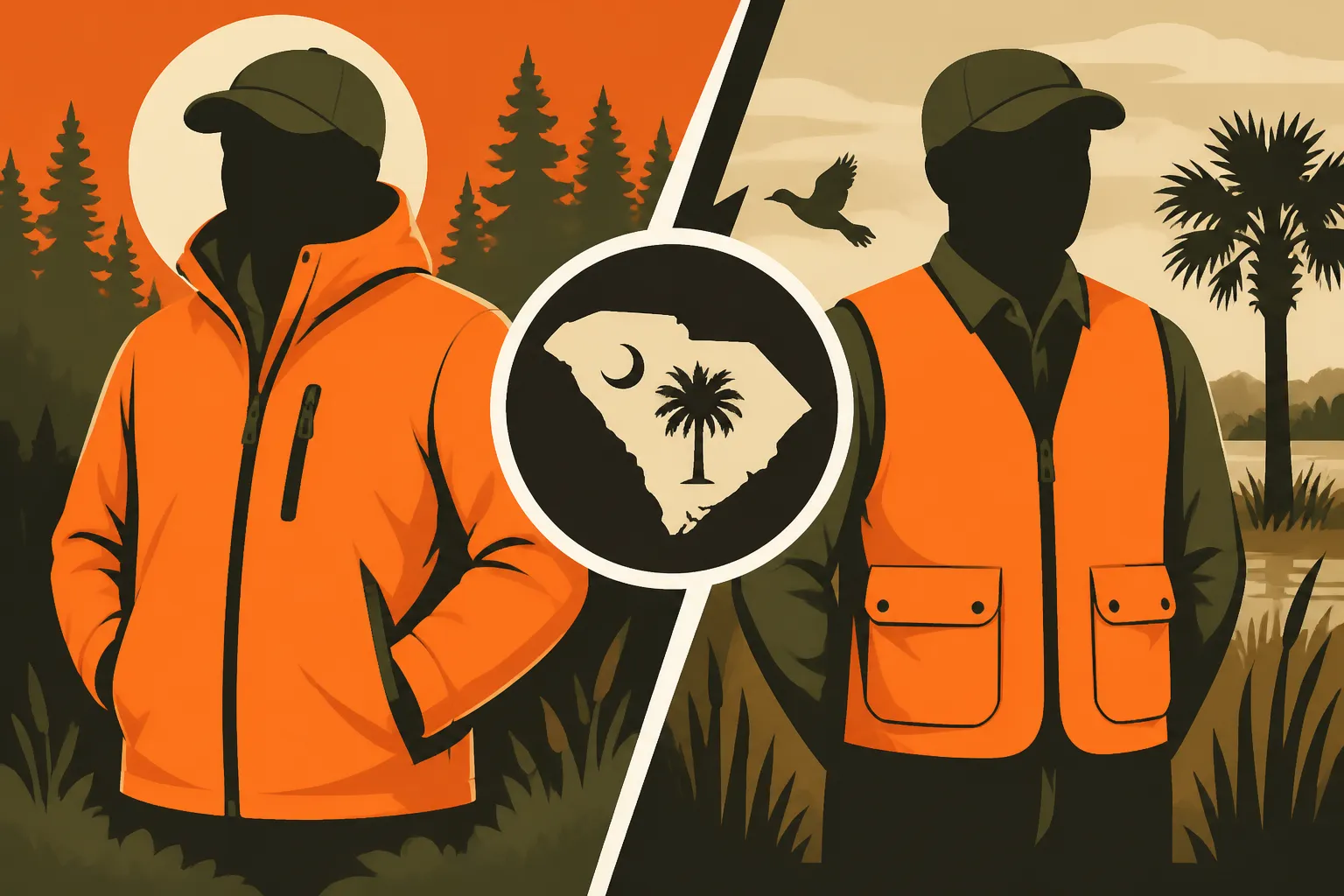
Blaze Orange Jackets Versus Vests
It's a common struggle for hunters in South Carolina: you're trying to figure out the best way to meet those blaze orange requirements while staying comfortable, visible, and effective in the field. Do you really need a full jacket, or is a vest enough? The answer isn't always cut and dried, especially with our notoriously variable weather and diverse hunting grounds, from dense coastal swamps to chilly Upstate ridges. This guide will walk you through the nuances of choosing between blaze orange jackets and vests, helping you understand the regulations, consider the practical implications, and make the best decision for your next hunt.
Understanding South Carolina's Blaze Orange Requirements
Before you even think about jackets or vests, it’s absolutely essential to understand the legal mandate for blaze orange here in South Carolina. We've all seen folks out in the woods looking like human traffic cones, but there's a good reason for it – safety. The regulations are designed to make you visible to other hunters, especially during gun seasons when deer hunting pressure can be high. It’s not just a suggestion; it’s the law, and adherence is critical for preventing accidents. Knowing the specifics helps you comply without overdoing it or underpreparing.
The Legal Minimums and "Substantial Portion"
South Carolina law requires all hunters, and those accompanying them, to wear an outer garment of solid blaze orange, blaze pink, or a combination of both, which is visible above the waist and worn on the torso. This garment must be visible from 360 degrees. The key phrase here is "visible above the waist," and while the law doesn't specify a precise square footage, the spirit of the law implies a "substantial portion" of your upper body should be covered. For practical purposes, many hunters aim for at least 500 square inches of visible orange or pink. This means no tiny armbands or just a hat; you need a significant piece of clothing to really stand out.
Think about it from another hunter's perspective: if they're still-hunting through thick palmetto patches in the Francis Marion National Forest, trying to pick out a deer, you want to be unmistakably human. A patch of orange just on your chest might be obscured by a tree or a turn of your body, but a full vest or jacket offers a much larger, more consistent target of safety. For more details on the statewide rules, you can check out South Carolina Blaze Orange Requirements.
Specific Scenarios for Wear
The requirement for blaze orange largely applies during any gun hunting season for deer. This is where most of the risk of misidentification occurs. However, it’s important to note the exceptions and nuances. During archery-only seasons, for instance, blaze orange is typically not required for deer hunters. The same often goes for hunting on private land where the landowner has specific rules, although many experienced hunters choose to wear orange regardless for their own safety and peace of mind, especially if other gun hunters might be in adjacent areas.
Consider a classic deer drive scenario: if you're involved in a Deer Drives With Three or Four Hunters operation on public land, wearing clear, visible blaze orange is absolutely non-negotiable for every participant. The movement, the noise, and the focus on the game can all lead to quick decisions, and your orange is the primary visual cue that says "human, not deer." Conversely, if you're bowhunting on a private tract in September, silently waiting in a climbing stand, then the orange might be optional, or even detrimental if you're trying to stay hidden from sharp-eyed deer. Always double-check the current regulations for your specific hunt type and location, as rules can sometimes vary slightly for Wildlife Management Areas (WMAs) compared to national forests or private lands.
Blaze Orange Jackets: The Full Coverage Advantage
When you opt for a blaze orange jacket, you're usually looking for more than just visibility. You're often seeking warmth, protection from the elements, and the peace of mind that comes with maximum visual presence in the woods. Jackets offer a continuous block of color, which can be a significant advantage in certain conditions and hunting styles.
Protection and Comfort in Colder Weather
South Carolina might be known for its warm weather, but don't let that fool you. Those late-season hunts in Zone 1 during January can get downright chilly, especially at first light or after the sun dips below the horizon. A good blaze orange jacket provides an essential layer of warmth that a vest simply can't match. Imagine sitting in a treestand during a Hunting Into the January Zone 1 Close, with a biting north wind cutting through the pines. A jacket with a decent insulation layer, or even just a windproof shell, will make a world of difference in your comfort and ability to stay on stand longer.
Beyond warmth, jackets also offer better protection from the elements. A sudden Lowcountry downpour or a persistent drizzle on an Upstate ridge can turn a hunt miserable quickly. Many blaze orange jackets come with water-resistant or waterproof membranes, keeping you dry and focused. This is especially valuable during early morning hunts when dew is heavy, or if you're pushing through wet brush. The continuous fabric across your shoulders and torso ensures moisture doesn't seep through the gaps a vest might leave open. For advice on staying comfortable in varying temperatures, you might find tips in Warm-Weather Clothing for South Carolina Hunters.
Maximizing Visibility in Dense Cover
One of the strongest arguments for a blaze orange jacket is the sheer volume of visible color it provides. In dense South Carolina cover – think thick briar patches, regenerating clear-cuts, or the heavy undergrowth of a river bottom – a vest can sometimes get obscured. If you're walking or bending, parts of your torso might disappear behind foliage, reducing your visible profile. A jacket, with its longer cut and continuous coverage, presents a larger, more consistent target.
This is particularly important in situations where you might be moving through varied terrain, such as still-hunting through the Sumter National Forest or retrieving game from a lowcountry swamp. The extra visibility offered by a jacket ensures that even if part of you is momentarily hidden, a substantial portion remains visible to other hunters. When you're using a tool like GoHunt to scout your entry and exit routes, consider how much cover you'll be moving through. If the aerial photos show thick, dense vegetation, a jacket gives you an extra margin of safety by offering more surface area for others to spot.
Blaze Orange Vests: Lightweight Flexibility
While jackets offer comprehensive coverage, blaze orange vests shine when it comes to adaptability, especially in South Carolina's often warm and humid conditions. They are the go-to choice for hunters who prioritize layering, mobility, and staying cool, making them incredibly versatile for many of our hunting seasons.
The Art of Layering and Warm Weather Comfort
South Carolina's hunting seasons often kick off in August with scorching temperatures, even for deer. Trying to wear a full blaze orange jacket in 90-degree heat with high humidity is, frankly, just miserable. This is where the blaze orange vest truly earns its stripes. A vest allows you to wear minimal clothing underneath – perhaps just a moisture-wicking t-shirt – while still meeting legal requirements. As the day warms up, you don't feel stifled or overheated.
As the seasons progress and temperatures fluctuate wildly, a vest becomes an invaluable layering tool. You can wear it over a thin long-sleeve shirt in September, then layer it over a fleece jacket and a heavier coat for a crisp December morning. The beauty of the vest is that it adapts to your layering system without adding excessive bulk or warmth. It allows you to fine-tune your comfort level throughout the day and across different seasons. For tips on how to manage your clothing effectively, consider reading Lightweight Layering for Warm-Weather Sits. This flexibility ensures you're always comfortable, whether you're breaking a sweat walking to your stand or hunkering down in a cold drizzle.
Mobility and Minimal Bulk
For hunters who are constantly on the move, whether still-hunting, tracking, or participating in a fast-paced hunt, mobility is paramount. A full jacket, especially a thicker one, can sometimes restrict arm movement, add weight, and feel cumbersome. A blaze orange vest, on the other hand, is designed to be lightweight and minimalist. It covers your torso without adding bulk to your arms or shoulders, allowing for a full range of motion.
This freedom of movement is crucial when you're navigating challenging terrain, climbing into a Treestand Setups in Francis Marion National Forest, or making quick adjustments in a ground blind. If you're running and gunning for turkeys, or stalking deer through varied terrain, a vest won't hinder your stride or your ability to quickly raise your weapon. It packs down smaller than a jacket, too, making it easier to stash in your pack if you're walking in before legal shooting light and plan to don it once you're settled. Many hunters use their GoHunt app to plan their walking routes, and the less bulk they have to carry, the better.
Choosing What's Right for Your Hunt
Ultimately, the decision between a blaze orange jacket and a vest boils down to a few key factors: your specific hunting conditions, personal style, and priorities. There's no single "best" option for every hunt; rather, it's about making an informed choice that maximizes your safety and comfort.
Matching Gear to Conditions and Hunt Style
Think about the type of hunting you'll be doing. If you're primarily still-hunting or sitting in a stand in colder weather, especially on public land with other hunters around, a jacket offers superior warmth and consistent visibility. It's a solid choice for those long, quiet sits in the late season when temperatures drop. If you're planning a hunt that involves significant movement, such as Reading a Ridge for Upstate Deer or pushing through thickets, and especially if the weather is mild or warm, a vest will offer greater mobility and breathability.
Consider also the level of hunting pressure. On heavily hunted WMAs during gun season, maximizing your visible orange with a jacket can provide an extra layer of confidence. If you're hunting smaller private tracts with limited participants, a vest might be perfectly adequate, allowing for greater comfort. The important thing is to evaluate the conditions you expect to encounter. The GoHunt app can give you detailed weather forecasts for your specific hunting area, helping you anticipate temperatures and precipitation, which are huge factors in this decision.
Cost, Durability, and Hunter Preferences
Cost can certainly be a factor. Generally, blaze orange vests are less expensive than full jackets, making them an accessible option for new hunters or those on a budget. If you're just looking to meet the legal minimums and prioritize flexibility, a good quality vest is an excellent investment. However, a well-made jacket might offer greater durability and resistance to snags and tears from heavy brush, standing up to years of abuse in the woods.
Beyond the practical, there's also personal preference. Some hunters simply prefer the feel of a vest, while others appreciate the integrated protection of a jacket. Consider how you typically layer your clothing for other outdoor activities. Do you like a lighter outer shell with many layers underneath, or do you prefer one heavier outer garment? Your personal comfort and how the gear fits into your overall hunting system are crucial for an enjoyable and safe experience. Always ensure whatever you choose fits well, doesn't restrict movement, and is genuinely comfortable to wear for extended periods.
Here's a quick comparison to help you weigh your options:
| Feature | Blaze Orange Jacket | Blaze Orange Vest |
|---|---|---|
| Visibility | Maximum, continuous 360-degree coverage | Good, but can be obscured by movement or dense cover |
| Warmth | Excellent, often insulated or windproof | Minimal, relies on underlying layers |
| Weather Protect | Good, often water-resistant/waterproof | Limited, no arm or head protection |
| Mobility | Can be restrictive, depending on bulk | Excellent, allows full range of motion |
| Layering | Less flexible, functions as outermost layer | Highly flexible, easily worn over varying layers |
| Comfort (Warm) | Poor, can lead to overheating and sweating | Excellent, breathable and lightweight |
| Comfort (Cold) | Excellent, provides integrated warmth | Moderate, depends entirely on base layers |
| Durability | Often more robust, designed for rugged use | Varies, can be lighter fabric, less protective |
| Cost | Generally higher | Generally lower |
| Typical Use | Cold weather, heavy cover, still hunting, public land | Warm weather, active hunting, layering, private land |
Disclaimer
This article is for general informational purposes only and does not constitute professional advice. Laws, prices and regulations vary by location and change over time. Consult a qualified professional for guidance on your specific situation.