Deer Drives on South Carolina Public Land
Hunting deer on South Carolina public land can feel like an uphill battle sometimes, can't it? Deer on these tracts are often smarter, warier, and more accustomed to human presence, making those solo still-hunting efforts feel pretty lonely. When you're facing vast expanses of thick cover where deer can hide for days, or dealing with the movement of other hunters, a well-executed deer drive can be the game-changer you need to punch that tag. This comprehensive guide will walk you through everything you need to know to successfully organize and participate in deer drives on public land right here in the Palmetto State.
Understanding the "Why" Behind Deer Drives on Public Land
Deer drives aren't just about making noise and hoping for the best; they're a calculated strategy, especially effective in the unique challenges presented by South Carolina's public hunting lands. When deer are pressured, they change their patterns, and sometimes, the only way to get them moving is to apply a little intelligent pressure.
The Nature of South Carolina's Public Hunting Pressure
Let's face it, public hunting land across South Carolina, from the sprawling national forests to the smaller Wildlife Management Areas (WMAs), sees its fair share of boot leather. Hunters typically gravitate towards the easiest access points, and deer quickly learn to avoid these well-trodden paths. This constant human presence can make deer incredibly wary, pushing them into the densest, most difficult-to-access cover where they feel safest. If you've spent countless hours still-hunting only to jump deer far out of range or, worse, never see a thing, you're experiencing this firsthand. These deer aren't just hiding; they're expertly using the terrain to their advantage, often bedding in spots you'd swear no animal could comfortably live.
While a patient still-hunter can certainly find success, trying to pick your way silently through miles of palmetto thickets, dense pine stands, or sprawling swamp bottoms can be a daunting, often fruitless, task. A well-orchestrated drive can effectively dislodge these pressured animals from their sanctuaries, sending them towards waiting standers. It's about leveraging a group's collective effort to move game that might otherwise stay put. When you understand the dynamics of Hunting Pressure on South Carolina Public Land, you begin to see why simply walking around might not always cut it, and why a coordinated effort becomes so much more appealing.
Topography and Cover That Favor Drives
South Carolina's diverse landscapes offer an incredible variety of hunting experiences, but certain types of terrain practically scream "deer drive." Think about those vast, impenetrable areas that you normally avoid, the ones where you suspect deer are bedding unmolested. These are often prime candidates for a drive. We're talking about the expansive, murky depths of our Lowcountry swamps, where visibility is limited, and deer can vanish into the cypress knees and blackwater. Similarly, dense clear-cuts, often replanted with thick rows of pine saplings that grow into a nearly impenetrable wall, are perfect. Deer feel incredibly secure in these places, often holding tight until the very last moment.
River bottoms, with their choked tangles of briars, fallen timber, and overgrown vegetation, also act as natural magnets for deer looking for refuge. The same goes for large blocks of mature pine plantations, especially those with little undergrowth where deer can weave through unseen. These areas naturally funnel deer, making them ideal for a drive because you can anticipate their escape routes with a higher degree of accuracy. Instead of getting lost trying to navigate these challenging environments alone, a strategic drive can transform these deer havens into effective hunting grounds. If you've ever tried Hunting Lowcountry Swamp Deer on your own, you'll immediately appreciate how a drive can make sense of such daunting terrain.
Planning Your Public Land Deer Drive
Success in a deer drive, especially on public land, isn't about luck; it's about meticulous planning. You can't just show up and start yelling. A poorly planned drive can be dangerous and ineffective, scattering deer in unpredictable directions or, worse, putting hunters at risk. The real work begins long before opening morning.
Scouting for Success Before the Hunt
This is perhaps the most critical step. Just as you would for a solo hunt, pre-season scouting is paramount for a successful drive. You need to understand the lay of the land, identifying key features that will influence deer movement. Look for natural funnels – those narrow strips of timber between fields, overgrown fencerows, or creek bottoms that act like deer highways. Pinch points, where cover narrows significantly, are excellent places to position standers. More importantly, you need to identify bedding areas within the block you intend to drive and, crucially, the most likely escape routes deer will use when pushed. Deer are creatures of habit; they'll often try to use the path of least resistance or their most familiar escape corridors.
Modern mapping tools, like those offered by GoHunt or simply studying detailed aerial photos, are invaluable here. You can identify elevation changes, dense cover patches, water features, and potential access roads for your standers to get in quietly. Don't just look for deer sign; try to envision how deer would react if pushed from a specific thicket. Where would they go? This forethought is what turns a random walk into a strategic maneuver. Knowing Scouting South Carolina Public Land Before Season thoroughly will give you an immense advantage, helping you pinpoint those escape routes and effectively position your standers. Reading Aerial Photos for Upstate Deer can also help identify those subtle topographical features that will dictate deer movement during a drive.
Assembling Your Team and Assigning Roles
The size and composition of your team will largely depend on the size of the area you plan to drive and the type of cover. For many public land scenarios in South Carolina, a team of 3-6 hunters is often ideal. Too many hunters can create excessive pressure, causing deer to break out in unpredictable directions or become "blown out" and unshootable. Too few, and you might not cover enough ground effectively, allowing deer to slip through gaps in your line.
Each hunter needs a clear role: either a driver (or pusher) or a stander (or blocker).
- Drivers are the ones who walk through the cover, making noise to push the deer. They need to be disciplined, maintaining a consistent pace and staying in their assigned lane.
- Standers get to their positions early and quietly, positioning themselves at strategic escape routes or funnels. Their job is to remain absolutely still and silent, ready for a shot.
A pre-hunt briefing is essential. Everyone needs to understand the plan, their role, and, most critically, safety protocols. Good communication is key, whether it's through hand signals or two-way radios, ensuring everyone knows where others are located. For a more in-depth look at team dynamics, consider strategies for Deer Drives With Three or Four Hunters, which often applies perfectly to public land scenarios.
Choosing the Right Section of Public Land
Selecting the right piece of public land for a drive involves more than just picking a spot on a map. You need to consider the block's size and shape. Too large, and your drivers won't be able to effectively cover it, leaving ample room for deer to slip back through the line or simply stay put. Too small, and the drive might be over before the deer even get moving, or you might push them out of the block entirely before standers are ready. Aim for a manageable area that can be effectively covered by your team within a reasonable timeframe.
Look for areas with natural boundaries, such as roads, creeks, property lines, or changes in habitat (e.g., a clear-cut meeting mature timber). These boundaries help define the drive block and can make stander placement more intuitive. Public lands like sections of the Francis Marion National Forest or certain WMAs with a mix of thickets and open timber can be excellent candidates. Remember that you’re often dealing with limited access and varying terrains, so having a good understanding of How Many Acres of Public Land South Carolina Has and the types of habitat within them can help you pinpoint the best locations for your drive. Even areas like the ACE Basin, while having unique characteristics, still offer prime spots for strategic pushes if you know the terrain.
Executing a Safe and Effective Deer Drive
The moment of truth arrives when you put your plan into action. This phase requires discipline, awareness, and unwavering commitment to safety. A well-executed drive feels almost choreographed, with each hunter playing their part to perfection.
Strategic Stander Placement
Standers are the linchpin of a successful drive. They must get to their designated positions well before the drivers begin their push, doing so as quietly and stealthily as possible. Deer will be on high alert once the drive starts, and any unnecessary noise or movement from a stander can ruin the ambush. Ideal stander locations are usually downwind or crosswind from the expected direction of deer movement, allowing the wind to carry human scent away from approaching deer.
Focus on natural funnels: creek bottoms, points of land jutting into open areas, logging roads that serve as natural corridors, or dense property lines that deer tend to follow. These are places where deer, when pushed, will often travel. Remember to pick a spot that offers both good visibility for a shot and adequate cover for the stander to remain concealed. Sometimes, a well-placed ground blind can be effective, or if allowed, a portable treestand can give you an elevated view, especially useful in thick Lowcountry cover. The principles behind Treestand Setups in Francis Marion National Forest for solo hunting apply here too; choose a location that maximizes your chances of seeing deer while remaining hidden.
The Art of the Drive: Pace and Pressure
The drivers’ role is to move deer, not run them. A slow, consistent pace is key. If drivers move too fast, deer can panic, breaking out of the drive in unexpected directions, often through the driver line itself. If drivers move too slowly or too quietly, deer might simply circle back behind them or slip out through unpressured edges. The goal is to apply just enough pressure to keep deer walking, ideally trotting, towards the standers.
Drivers should fan out in a line, maintaining visual contact or sound communication with each other to avoid gaps. Noise is important – yelling, tapping trees, or even just talking can work – but it should be consistent, not sporadic or frantic. Pay particular attention to dense cover. Deer will often hold incredibly tight in thickets, allowing drivers to pass within feet before bursting out. Drivers should zig-zag slightly through the densest patches to ensure they cover the ground thoroughly. Always be mindful of the wind direction; it can help carry your sound into the cover and also keep your scent from blowing ahead of the deer towards the standers.
Communication and Safety Protocols
Safety on a deer drive is non-negotiable, especially on public land where other hunters might be present. Before the drive starts, hold a thorough briefing.
- Map out the area: Clearly mark boundaries, driver routes, and stander positions on a map, ensuring everyone knows where every member of the team will be.
- Establish communication: Two-way radios are invaluable for real-time updates on deer movement and hunter positions. If radios aren't available, agree on clear verbal signals or whistle commands.
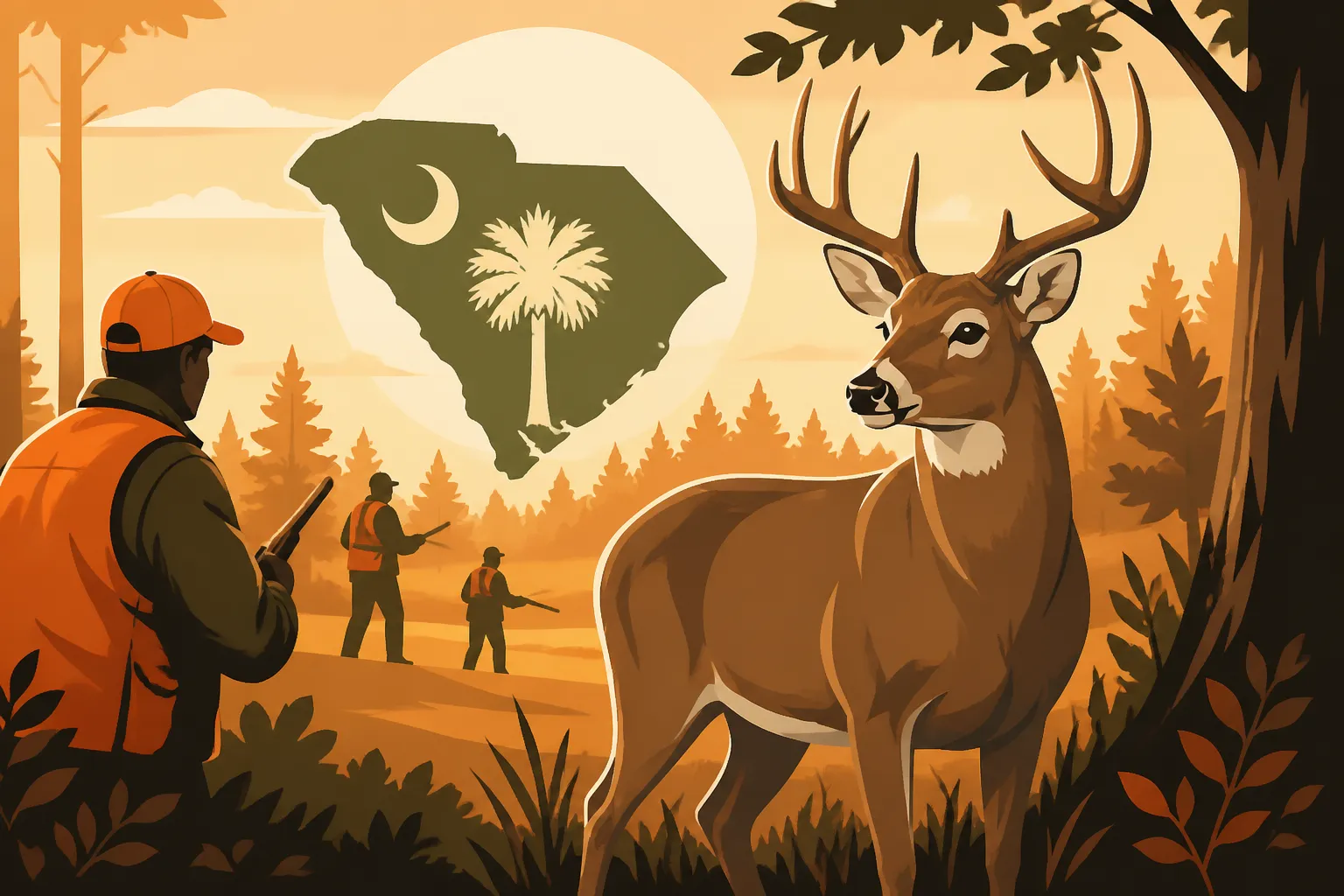
- Blaze Orange: Absolutely everyone involved, both drivers and standers, must wear the legally required amount of blaze orange (or blaze pink, where allowed) as specified by South Carolina hunting regulations. This makes hunters highly visible to each other.
- Target Identification: Never, ever shoot at movement or sound. Always positively identify your target as a legal deer and ensure that nothing is beyond or in line with your shot before pulling the trigger. This means knowing where your fellow hunters are at all times and never shooting in their direction.
- Safe Zones of Fire: Standers should understand their safe zones of fire to avoid shooting towards drivers or other standers.
These protocols aren't just suggestions; they are critical for ensuring everyone returns home safely. Remember, a deer is never worth risking a life. Even in Warm-Weather Sitting Strategy in South Carolina, remaining vigilant and focused on safety should always be your top priority.
Post-Drive Strategies and Learning for Next Time
The drive itself is only one part of the hunt. What happens immediately after and how you learn from the experience are crucial for future success and responsible hunting.
Tracking and Recovery After the Shot
Even with a successful shot during a drive, the work isn't over. Responsible tracking and recovery are paramount. If a deer is hit, especially if it doesn't drop immediately, give it time. A wounded deer might run a short distance and bed down, allowing you to recover it later. If pushed too quickly, it could run for miles. Discuss this beforehand: if a deer is hit, all hunting stops, and the team focuses on recovery.
Public land in South Carolina can present challenging tracking conditions – dense pine straw, thick swamp mud, or tangled undergrowth. Having a plan for tracking is vital. Mark the last known spot of the deer, look for blood, hair, and disturbed ground. Having a dedicated tracking dog on standby, if legal and available, can be a huge asset. Make sure you're familiar with Tracking a Deer Through South Carolina Pine Straw or similar challenging terrains you might encounter. Always confirm the hit and track diligently until the deer is recovered or all efforts are exhausted.
Adapting to Different Game Zones and Conditions
South Carolina is divided into South Carolina's Four Game Zones, each with distinct seasons and often different terrain and deer behavior. A drive strategy that works perfectly in the flat, often wet, Lowcountry swamps might need significant adjustments for the hilly, rugged terrain of the Upstate. In the mountains, deer drives often involve pushing deer from thick bedding areas on one ridge down into saddles or creek bottoms where standers are waiting, often relying on wind and thermals. In the coastal zones, drives might be more about pushing deer out of specific islands of thick cover within a larger swamp.
Weather conditions also play a huge role. Hot, humid days common during the early season might make deer move slower or seek water, while cold fronts can make them more active. Consider how the rut phase is affecting deer movement; during the peak of the rut, bucks might be less predictable and more focused on does, which could influence both driving routes and stander placement. Even specific locations like Hunting the ACE Basin for Deer will require tailoring your approach to the unique tidal and marsh conditions.
Reviewing and Refining Your Approach
Every deer drive, successful or not, is a learning opportunity. After each drive, take a few minutes for a quick debrief with your team.
- What worked well?
- What didn't go as planned?
- Did deer try to escape in unexpected directions?
- Were standers positioned correctly?
- Was the pace of the drive appropriate?
- Were there any communication breakdowns or safety concerns?
Keep notes on specific areas driven, deer sightings, and shot opportunities. This valuable information can help you refine your strategies for future hunts on the same or similar public land tracts. By continuously analyzing your efforts, you can improve your team's effectiveness and increase your chances of success. Learning from each outing is how you gain an edge and learn to start Finding Ground Others Walk Past, turning overlooked areas into productive hunting spots.
Comparing Roles in a Public Land Deer Drive
| Role | Key Responsibilities | Ideal Traits | Challenges |
|---|---|---|---|
| Stander | Get into position silently, remain still, identify target, take ethical shot. | Patient, quiet, observant, good shot placement. | Staying concealed, maintaining focus, resisting premature movement. |
| Driver | Walk designated route, maintain consistent pace, make noise to push deer. | Disciplined, good sense of direction, physically fit, attentive to group. | Staying in line, avoiding over-pushing deer, navigating thick cover. |
Disclaimer
Please ensure you are fully aware of and comply with all current South Carolina Department of Natural Resources (SCDNR) hunting regulations, including licensing, bag limits, blaze orange requirements, and any specific rules for Wildlife Management Areas or National Forests. Always prioritize safety for yourself and others in the field. Hunting regulations can change, so always check the latest SCDNR digest before heading out.