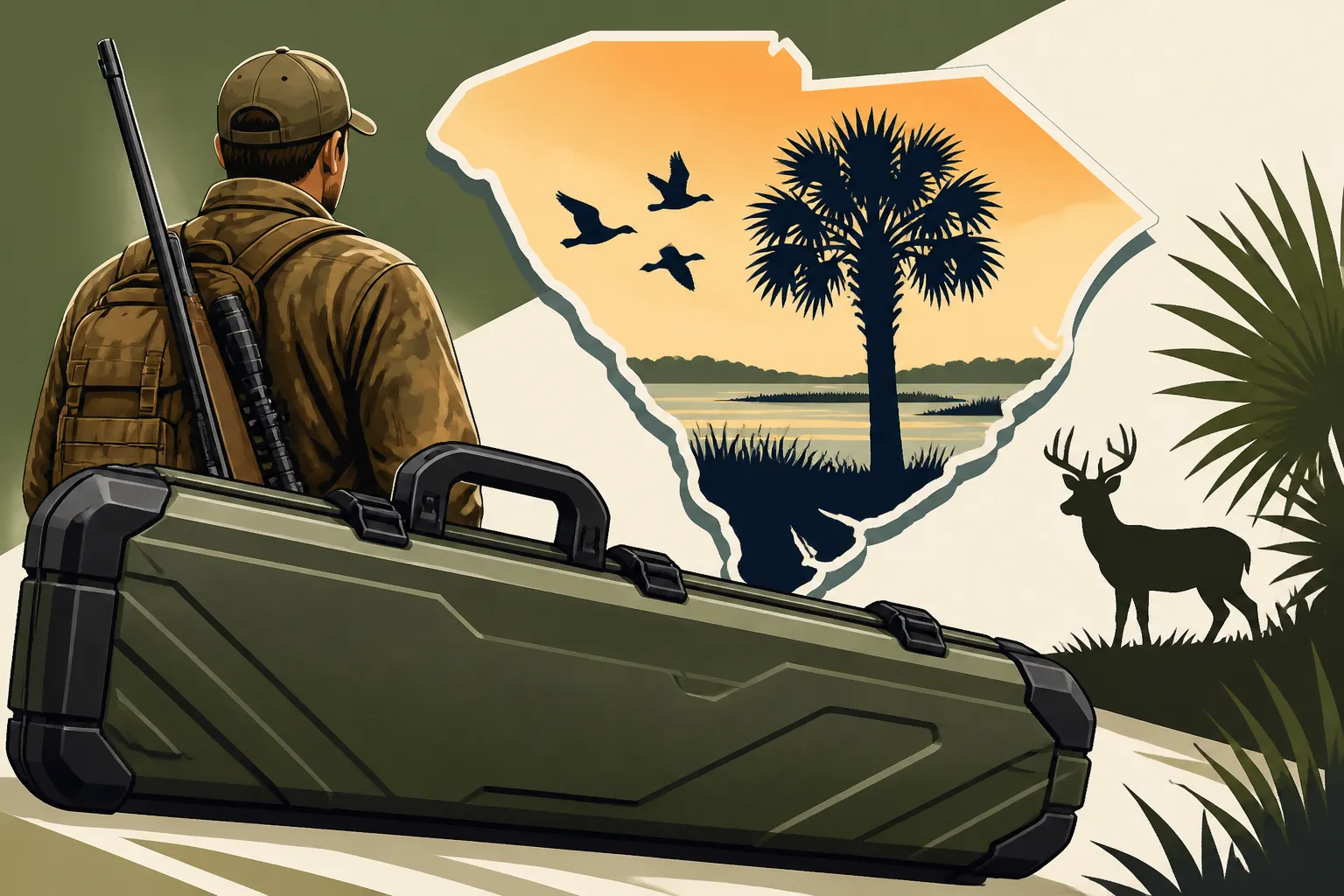
Rifle Cases for Travel to South Carolina
The thought of packing up your hunting rifle and hitting the road, especially for a trip to a new state like South Carolina, can bring on a mix of excitement and anxiety. You're eager for the hunt, but perhaps a little nervous about navigating the maze of federal and state laws, not to mention ensuring your prized firearm arrives safely and securely. This guide is here to walk you through everything you need to know about choosing the right rifle case and understanding the transport rules, making your journey to the South Carolina woods as smooth as possible.
Understanding South Carolina's Stance on Firearm Transport
Traveling with firearms is one of those topics that can make even seasoned hunters a little twitchy. It's not just about protecting your valuable equipment; it's about staying on the right side of the law. South Carolina is a state that generally respects firearm ownership, but that doesn't mean you can just throw your rifle in the back seat and go. Knowing the nuances of both federal and state laws is absolutely crucial.
Federal vs. State Laws: The Overlap
When you're crossing state lines with a firearm, the Firearm Owners' Protection Act (FOPA) is your best friend. This federal law essentially provides a safe passage for law-abiding citizens transporting firearms through states where they might otherwise be illegal, provided the firearm is unloaded, not readily accessible (e.g., in a locked case in the trunk), and ammunition is stored separately. It's designed to protect travelers from inadvertently becoming criminals just by passing through a jurisdiction with stricter laws.
However, and this is a big "however," FOPA doesn't give you a blank check to ignore state-specific regulations entirely. While South Carolina is known for its pro-gun stance, you still need to understand how FOPA interacts with its local rules. For instance, FOPA protects your transit through a state, but if your destination is South Carolina, you're expected to comply with South Carolina's laws once you arrive. The key is to ensure your firearm is properly stored and you're not violating any state laws regarding concealed carry or possession once you've stopped traveling and are, say, at your hunting camp or hotel. Many hunters rely on resources like GoHunt for up-to-date information on state regulations, helping them plan trips with confidence, knowing they've done their homework.
Specifics for Hunters: Loaded vs. Unloaded
For hunters, the general rule of thumb when transporting a rifle in your vehicle is to keep it unloaded and secured. This isn't just a good safety practice; it's often a legal requirement. Imagine driving down a winding gravel road to your favorite hunting spot in Sumter National Forest; having a loaded rifle bouncing around in the cab is just asking for trouble, and potentially a citation.
In South Carolina, a loaded firearm in the passenger compartment of a vehicle, particularly on public roads or public land, can raise red flags. While specific statutes can be complex, the safest bet is always to transport your rifle unloaded, in a case, and separate from its ammunition. This becomes even more critical when you're hunting on Wildlife Management Areas (WMAs). Many WMAs have their own specific regulations regarding firearm transport and use, often stricter than general statewide laws. You might be allowed to carry a loaded rifle on private land when actively hunting, but the moment you get back into your truck to move to another section or head home, that rifle needs to be unloaded and secured. This is why understanding South Carolina Legal Firearms for Deer Hunting and the nuanced rules for each area you intend to hunt is so vital. Always double-check the specific WMA rules before you head out, as these can vary.
Choosing the Right Rifle Case for Your South Carolina Hunt
The type of rifle case you choose isn't just about aesthetics; it's about protecting a significant investment and ensuring compliance with transport regulations. From the jostle of a long car ride to the unforgiving environment of airline baggage handling, your case is the first line of defense.
Hard Cases: The Ultimate Protection
If you're planning any serious travel to South Carolina, especially by air, a hard case is non-negotiable. These cases are built like tanks, designed to withstand impacts, punctures, and even the occasional rough handler. Modern hard cases are often made from high-density polymers or aluminum, featuring robust latches (often multiple, and lockable), reinforced corners, and a snug interior that cradles your rifle.
Think about the conditions your rifle might face: being tossed onto an airport conveyor, sliding around in the bed of a pickup truck on a bumpy dirt road, or enduring a sudden Lowcountry downpour. A good hard case will offer water and dust proofing, often rated with an IP (Ingress Protection) standard, meaning your rifle stays dry and clean even if the case ends up in a puddle. Many also include pressure equalization valves, which are critical for air travel to prevent vacuum sealing at altitude. When your rifle has a high-end scope or other sensitive optics, the superior protection of a hard case becomes even more apparent. While they might be heavier and bulkier, the peace of mind they offer is truly invaluable. They ensure your rifle, and by extension your hunting trip, isn't jeopardized by preventable damage.
Soft Cases: Convenience for Local Transport
Soft cases have their place, but it's important to understand their limitations. These lighter, often fabric-based cases (think Cordura or heavy canvas) are fantastic for short-distance transport. If you're driving from your hunting camp to a treestand that's just a few miles away, or from your truck to your ground blind on a field edge, a soft case offers quick, convenient protection against scratches, dust, and minor bumps.
They're easy to throw over your shoulder, fit into tight spaces in the cab of your truck, and generally make moving your rifle a less cumbersome affair. However, they offer minimal impact protection and are generally not suitable for checked airline baggage, nor are they designed for long-distance travel where greater security and weather resistance are paramount. A soft case might be perfectly fine for Hanging a Stand on a Sumter Forest Ridge and then walking your rifle in, but it's not what you want if you're traveling across the country. They usually rely on zippers, which offer very little in the way of security compared to the heavy-duty, lockable latches of a hard case.
Integrated Storage and Organization
Some rifle cases go beyond just holding your firearm, offering clever solutions for integrated storage and organization. This is where you start to see real utility, especially for hunters who carry multiple accessories. Many hard cases come with pick-and-pluck foam inserts, allowing you to custom-fit the interior around your rifle, scope, and even extra magazines or a rangefinder. This ensures everything stays put and protected.
Other cases might feature built-in compartments, mesh pockets, or modular dividers to keep items like cleaning kits, slings, or ammunition separate but easily accessible. Imagine pulling up to your hunting spot near the Pee Dee River bottoms, opening your case, and having your rifle, spare magazines, and even your Grunt Calls in Mature South Carolina Timber all neatly organized and ready to go. Thoughtful design in a rifle case can save you time and frustration, prevent small items from getting lost or damaged, and ultimately make your hunting experience smoother. When you're planning your setup, consider how well your chosen case can accommodate not just the rifle, but all the crucial extras that make your hunt successful.
Air Travel Considerations for Your Hunting Rifle
Flying with a firearm can be intimidating, even for the most experienced travelers. The rules are strict, and adherence is absolutely mandatory. Understanding and complying with TSA and airline regulations is critical to avoid delays, legal issues, or even having your hunting trip cut short before it begins.
TSA Regulations: A Non-Negotiable Guide
The Transportation Security Administration (TSA) has clear and non-negotiable rules for transporting firearms on commercial flights. Your rifle must be in a hard-sided, locked case as checked baggage. This is not optional. You cannot carry a firearm or ammunition onto the plane with you, not in your carry-on, and not on your person.
When you check in, you are required to declare your firearm to the airline agent. They will likely ask you to open the case to verify it's unloaded, and then you'll need to secure it with a lock that only you have the key or combination for. Importantly, these locks cannot be TSA-approved locks, as those can be opened by TSA agents without your presence, which violates the security requirement. Ammunition must be transported in a separate container (it can be in the same locked hard case, but must be distinct from the firearm) and packaged in its original manufacturer's box or a similar secure container designed to hold cartridges. Loose ammunition is not permitted. Navigating these rules requires careful attention to detail, and a tool like GoHunt can be invaluable for accessing checklists or guides specific to air travel with firearms, ensuring you don't miss a single step.
Choosing a Fly-In Approved Case
Not all hard cases are created equal when it comes to air travel. A "fly-in approved" case generally means it meets specific criteria for durability, security, and sometimes even size, to be accepted by airlines as checked baggage for a firearm. Look for cases with robust, heavy-duty latches that can withstand the rigors of baggage handling. Multiple locking points are also key – not just one, but often two or more, which means you'll need multiple, non-TSA locks to secure it.
The construction material is important; a cheap plastic case might crack under pressure, exposing your valuable rifle. High-quality polymer or aluminum cases are designed to absorb impact without compromising the contents. Additionally, consider cases with robust, well-designed handles and wheels, as these cases can be heavy, especially with a rifle and ammunition inside. Investing in a top-tier, airline-compliant hard case isn't just about protecting your rifle; it's about making your air travel experience as smooth and stress-free as possible, ensuring you arrive ready for Bowhunting South Carolina's Long Archery Season or the general firearm season.
The GoHunt Edge: Planning Your Trip
Planning a hunting trip often feels like a full-time job, especially when you factor in travel logistics, state regulations, and gear considerations. This is where modern hunting resources and communities can really shine. While I can't directly endorse a specific product, many hunters use platforms and apps that offer comprehensive tools for trip planning, including detailed information on hunting seasons, licensing requirements, and even localized maps that show public land boundaries and terrain features.
These resources can be particularly helpful when planning a trip that involves transporting a firearm. You can often find specific guidelines for South Carolina's hunting zones, like South Carolina's Zone 4 Coastal Deer Season or South Carolina's Zone 1 Upstate Deer Season, and cross-reference them with your travel route. Some platforms might even offer features to help you track your gear list, ensuring you've got everything from your rifle case to your Warm-Weather Clothing for South Carolina Hunters packed and ready. Having a centralized place to organize all this information allows you to focus on the excitement of the hunt rather than the anxiety of logistics.
Road Trip Logistics and Storage on the Go
For many South Carolina hunters, hitting the road in a truck is the preferred method of travel. Whether it's a day trip to a nearby WMA or a week-long expedition to the mountains, securing your rifle in your vehicle has its own set of challenges, from theft deterrence to battling the famously humid South Carolina weather.
Vehicle Security: Deterring Theft
Leaving a valuable hunting rifle in your vehicle, even for a short stop, makes you a potential target for opportunistic theft. Your hard case, while robust, is only as good as its weakest link. Always ensure your rifle case is locked, and if possible, secured to the vehicle itself. Cable locks or chains can be run through the case handles and anchored to a sturdy point in your truck bed or trunk.
Out of sight, out of mind is a good motto here. Avoid leaving your rifle case visible in the cab or through truck bed toppers. If you have a locking tonneau cover or a trunk, utilize it. For overnight stops, especially if you're staying in a hotel, consider bringing your rifle case inside with you if permitted, or ensuring it's in the most secure part of your vehicle, out of sight. Remember, a stolen firearm isn't just a financial loss; it can lead to a lot of paperwork and hassle. Taking these extra steps can make all the difference, especially if you're stopping in an unfamiliar town on your way to hunt South Carolina's Year-Round Feral Hogs.
Weather Protection: Humidity and Rain
South Carolina's weather is famously unpredictable. A beautiful, clear morning can quickly turn into a torrential downpour, and the humidity can be a relentless foe for metal and wood. Even if your hard case is waterproof, the inside can still trap moisture, leading to condensation and potential rust if your rifle isn't properly prepared.
Before packing your rifle for a trip, give it a good cleaning and light oiling, paying special attention to metal surfaces. Consider placing desiccant packs (those little silica gel packets) inside your rifle case, especially if it's a humid day or you anticipate storing it in the case for an extended period. When you arrive at your destination, try to take your rifle out of the case and allow it to air out, especially if it's been exposed to temperature changes. A quick wipe-down with a silicone cloth wouldn't hurt. Protecting your rifle from the elements, whether it's the salt air near Hunting Coastal Marsh Waterfowl or the damp woods of the Upstate, is crucial for its longevity and performance.
Ease of Access vs. Security
There's often a natural tension between keeping your rifle readily accessible and keeping it securely stored. On a long road trip, deep security (locked hard case, ammunition separate, out of sight) is paramount. But once you arrive at your hunting grounds, say a remote WMA or private land in the Lowcountry, you might want your rifle to be a bit more accessible for quick deployment.
For example, when you're driving from your camp to a designated parking area for Deer Drives With Three or Four Hunters, you'll likely still want your rifle unloaded and cased. However, the case might be a soft one, or a hard case that's easily opened, rather than chained down. The key is to understand the specific regulations for the area you're hunting and to exercise good judgment. If you're on public land, rules about loaded firearms in vehicles can be very strict. If you're on private land, you might have more leeway, but safety and the prevention of theft should always guide your decisions. Striking the right balance means you can quickly get your rifle ready when it's time to hunt, while ensuring it remains secure and compliant during transit.
| Feature | Hard Case | Soft Case |
|---|---|---|
| Primary Use | Air Travel, Long-Distance, High Protection | Short-Distance, Vehicle-to-Stand Transport |
| Protection | Excellent (Impact, Water, Dust) | Basic (Scratches, Minor Bumps) |
| Security | High (Multiple Lock Points, Robust Latches) | Low (Zippers, Easy Access) |
| Material | Polymer, Aluminum | Nylon, Canvas, Cordura |
| Air Travel | Required for Checked Baggage | Not Allowed for Checked Baggage |
| Weight | Heavy | Lightweight |
| Cost | Higher | Lower |
| Key Benefit | Maximum protection for valuable firearms | Convenience and quick handling |
Disclaimer
This article is for general informational purposes only and does not constitute professional advice. Laws, prices and regulations vary by location and change over time. Consult a qualified professional for guidance on your specific situation.