Still-Hunting Sumter Forest Ridges
Walking through the dense timber of Sumter National Forest, especially up and down those unforgiving ridges, can feel like you're playing a frustrating game of hide-and-seek with a ghost. You know the deer are there, you see the sign, but actually seeing a deer before it sees you? That's the real challenge. This guide is all about equipping you with the know-how to slow down, read the subtle clues, and master the art of still-hunting those Sumter Forest ridges for whitetails.
Embracing the Still-Hunting Mindset in Sumter Forest
Still-hunting is more than just walking slowly through the woods; it's a deep immersion, a meditative practice that demands patience and keen observation. In a place like Sumter National Forest, where the timber can be thick, the topography varied, and other hunters might be moving about, it's often the most effective way to intercept a wary whitetail that has grown accustomed to human presence. The frustration of blowing out deer just by walking too fast or making too much noise is real, and still-hunting is your antidote to that. It's about blending in, becoming part of the landscape, and letting the woods reveal themselves to you.
The Lay of the Land in Sumter's Ridge Country
Sumter National Forest spans a vast area, but the portions with prominent ridges, particularly in the Upstate, offer distinct advantages and challenges for the still-hunter. These aren't towering mountain peaks, but rather a series of rolling hills and ridges broken by drainages and creek bottoms. The timber composition varies, from mature hardwoods on the ridge tops and slopes to younger pines in regenerated cuts or mixed stands. Understanding this mosaic is crucial. You'll often find older, more open timber along the highest points, offering slightly better visibility, while the thickest cover often congregates in the draws and along the edges of clear-cuts or planted pines. Deer use these elevation changes strategically, often bedding high to catch thermal drafts and slipping down into lower, denser cover to feed or escape pressure. Recognizing these subtle shifts in habitat and elevation is the first step in successful still-hunting.
Navigating Public Land Pressure and Avoiding Other Hunters
One of the biggest realities of hunting anywhere on public land in South Carolina, and Sumter National Forest is no exception, is the presence of other hunters. On opening weekend, it can feel like everyone had the same bright idea to hit your favorite spot. This pressure can make deer incredibly skittish and nocturnal. Still-hunting offers a distinct advantage here: your slow, deliberate movement is less intrusive than crashing through the woods, and you’re often working the edges and overlooked pockets that a lot of hunters simply walk past. To truly escape the crowds, you have to be willing to walk further than most. The deeper you go into the less accessible areas of the forest, the better your chances of encountering undisturbed deer. Utilizing mapping tools like GoHunt, you can identify remote sections, deep draws, or thickets that are a good distance from access roads and trails. This also helps you understand the boundaries and ensure you're within legal hunting areas, especially when Scouting South Carolina Public Land Before Season. By carefully picking your entry and exit points, and even considering a weekday hunt instead of a bustling Saturday, you can significantly reduce encounters with other hunters and increase your odds.
Reading the Terrain: Ridges, Draws, and Transitions
The secret to still-hunting Sumter Forest isn't just knowing the woods; it's knowing how deer use the woods. The topography here isn't just scenery; it's a roadmap to whitetail activity. The subtle contours of the land dictate movement, bedding, and feeding patterns. Your job as a still-hunter is to decipher this map, moving with purpose and awareness.
Identifying Key Ridge Features Like Saddles and Points
Ridges in Sumter National Forest aren't uniform; they have character. Look for features that create natural bottlenecks or travel corridors. Saddles, those dips or low spots connecting two higher points on a ridge, are absolute magnets for deer movement. Deer will often cross saddles when transitioning between different drainage systems or when moving from bedding areas to feeding grounds. A saddle minimizes the elevation change they have to navigate, making it an efficient travel route. Picture a deer moving from one side of a ridge to the other—they're not going to climb straight over the highest peak if there's a gentler dip nearby. Similarly, ridge points—the fingers of high ground that jut out from the main ridge into a drainage—are often used as observation points or bedding areas. A buck might bed on a point with the wind at his back, allowing him to smell anything approaching from behind, and a clear view of the valley below to spot danger. When you're still-hunting, these are the places where you need to be exceptionally slow and observant, understanding that deer are likely using them for strategic reasons. Paying attention to these subtle changes in elevation is key to Reading a Ridge for Upstate Deer.
Utilizing Creek Bottoms and Escape Routes
While ridges offer prime travel and bedding, the creek bottoms and drainages that dissect them are equally important, especially for finding food and water. These low-lying areas often hold richer soil, retaining moisture longer, which translates to lusher vegetation, acorns, or other food sources. Deer will frequently move from the higher, drier ridge tops down into these bottoms to feed or grab a drink, particularly during drought conditions. However, creek bottoms also serve as critical escape routes. When spooked, deer will often drop into the nearest drainage, using the thick cover and undulating terrain to quickly put distance between themselves and perceived danger. As a still-hunter, you can use this knowledge to your advantage. By hunting parallel to a creek bottom, or slowly working your way upwind along its edge, you can intercept deer moving to or from water and food. Conversely, if you bump a deer, knowing its likely escape route can help you predict its next move, though usually, it's best to let it go and find another.
Edge Habitat and Its Importance
Deer, by their nature, are creatures of the edge. They thrive where different habitat types meet, because these transition zones provide a rich diversity of food, cover, and travel routes. In Sumter Forest, these edges can manifest in many ways: the boundary between a mature hardwood ridge and a regenerating pine plantation, the fringe where a thick clear-cut meets an open timber stand, or even the gradual shift from dry upland to a moist creek bottom. Deer use these edges for security, moving cautiously along them, always having quick access to dense cover if needed. Think about a deer browsing along the edge of a recent timber harvest; they have young, palatable browse from the cut, and the safety of the standing timber just a few feet away. When still-hunting, these are prime areas to focus your efforts. Move slowly along these edges, constantly scanning the transition lines, because deer will often be moving through them, using the available cover to their advantage. A good mapping app on your phone, perhaps even one like GoHunt, can highlight these habitat changes, allowing you to plan your still-hunting route to maximize time spent along productive edges.
Deciphering Deer Sign and Movement Patterns
Finding sign in the woods isn't just about spotting a track; it's about interpreting a narrative. Every rub, every scrape, every trail tells a story about deer activity, and understanding these clues is paramount to still-hunting success. The goal isn't just to see that deer are present, but to understand how and when they are using a particular area.
Interpreting Rub Lines and Scrape Activity
As you move through the Sumter ridges, keep a sharp eye out for rub lines and scrapes, especially during the pre-rut and rut phases. Rubs, where bucks strip bark from saplings and small trees, are essentially signposts. A single rub might just be an expression of aggression, but a line of rubs, often running parallel to a ridge top or along an old logging road, indicates a travel corridor frequently used by bucks. The size of the rub can give you a clue about the size of the buck, and its freshness tells you how recent the activity was. Similarly, scrapes—patches of bare earth pawed out by bucks, often with an overhanging branch (licking branch) they rub with their forehead glands—are communication hubs. Bucks urinate in them and chew on the licking branch, leaving scent to attract does and assert dominance to other bucks. Finding fresh scrapes and rub lines, particularly on ridge saddles or points, can tell you exactly where a mature buck is marking his territory and traveling. Concentrate your still-hunting efforts in these areas, moving extra slowly, as you're literally walking through a buck's bedroom or travel route. This information is especially vital when you're trying to figure out The South Carolina Rut by Zone.
Pinpointing Feeding Areas and Browse Sign
Deer are constantly seeking food, and identifying their preferred feeding areas is critical. In Sumter National Forest, this can mean a variety of sources depending on the season. In the fall, acorns are king. Look for areas with mature oak trees—white oaks, red oaks, pin oaks—and scan the ground for chewed acorn caps or fresh deer droppings. Ridge tops and slopes often host productive oak stands. During other times of the year, deer will browse on young shoots, woody browse, and forbs. Look for clipped twigs and plants, especially in clear-cuts or areas where prescribed burns have stimulated new growth. These feeding areas might be distinct from bedding cover, requiring deer to travel. Your still-hunting strategy should involve moving between likely bedding cover (thickets, ridge points) and these feeding zones, anticipating where deer might be headed. Remember, fresh browse sign, even if it's just a few clipped leaves, is a stronger indicator of current activity than older, faded signs. Knowing Hunting After a Poor Acorn Year is also crucial for adapting your strategy.
Following Tracks and Game Trails
While deer are masters of stealth, they do leave clues in the form of tracks and trails. Fresh tracks in soft dirt, especially after a rain, are a golden opportunity. Look for tracks that are clean-edged and clear, indicating recent passage. Pay attention to the size and stride; larger, wider tracks often belong to older deer. Follow these tracks, but do so with extreme caution, as you're likely getting very close to the deer itself. Beyond individual tracks, identify well-worn game trails. These are superhighways for deer, connecting bedding, feeding, and watering areas. In Sumter, these trails often follow the contours of ridges, dip into saddles, or parallel creek bottoms. They might be subtle, just a faint depression in the leaves, or well-defined paths worn into the soil. While following a main trail can be productive, don't overlook smaller, less obvious "feeder" trails that branch off into thicker cover; these often lead directly to bedding areas. Combining insights from a mapping app, perhaps even something like GoHunt's public land layers, with on-the-ground track and trail reading, is how you truly build a picture of deer movement. This is a crucial step for Finding Sign in Big Sumter Forest Timber.
Mastering Stalking Techniques for Success
Still-hunting is as much an art as it is a science. It demands a heightened sense of awareness, extreme patience, and an understanding of how to move through the woods without announcing your presence. The goal is to move so deliberately that you become almost invisible, allowing you to spot deer before they ever know you're there.
Slow, Deliberate Movement
This is the cornerstone of still-hunting. Forget about walking at a normal pace; you're essentially crawling through the woods, but upright. A good rule of thumb is to take 10 steps, then pause for at least 30 seconds to a minute, often longer. During those pauses, you're not just resting; you're actively scanning, listening, and observing. Use your binoculars to pick apart every shadow, every stump, every patch of cover that looks even remotely like a deer. Imagine each step you take as a puzzle piece; you want to place it silently and thoughtfully. Test your footing before putting your full weight down. Avoid crunchy leaves, dry twigs, and anything that will betray your presence. It's painstaking work, especially when the woods are dry, but it's the only way to avoid blowing out deer you never even knew were there. If you rush, you'll simply be pushing deer ahead of you, making it impossible to get a shot.
Using Cover to Your Advantage and Breaking Up Your Outline
Deer are incredibly attuned to shapes and movement. Your human silhouette, especially against a contrasting background, is a dead giveaway. To counteract this, always think about using the available cover to break up your outline. Hug the trunks of large trees, use dense clumps of undergrowth, or walk along the backside of small rises in the terrain. Don't walk in the open unless absolutely necessary, and if you do, move very slowly and deliberately, pausing frequently. When you pause, position yourself so that a tree or thick bush is behind you, making it harder for a deer to pick you out. Also, think about your movement. Instead of a steady, rhythmic walk, which deer can pick up on, vary your pace and direction slightly. Take a few steps, pause, take a few more, then maybe shift slightly to the left. This erratic movement is less alarming to a deer than a predictable pattern. It's about being an irregular, unthreatening part of their environment.
The Importance of Pausing and Glassing Constantly
This cannot be stressed enough: your eyes are your most important tool in still-hunting. When you pause (and you should be pausing constantly), don't just glance around. Systematically scan your surroundings. Start close, then expand your focus further out. Look for horizontal lines (a deer's back) in a vertical world (trees). Look for patches of color that don't quite match the environment – the tan of a deer's hide, the dark of an eye, the flicker of an ear. Use your binoculars, even in relatively close quarters. They can reveal that "stump" is actually a deer's rump, or that "branch" is an antler tines. Often, a deer will hold perfectly still, betting that you won't see it. It's during these extended pauses, when you're patiently dissecting the cover with your optics, that you'll often spot them. Don't just look for a deer; look for parts of a deer. And listen. The rustle of leaves that isn't the wind, a twig snapping, the soft snort of an unseen deer—all can provide crucial clues to their presence. When deciding on Binocular Choice for South Carolina Whitetails, remember that clarity and light-gathering are more important than excessive magnification for this kind of hunting.
Weather and Wind: Your Strategic Allies and Adversaries
In South Carolina, weather plays a massive role in hunting success. The unpredictable nature of our Southern climate means you need to be prepared for anything from sweltering heat to sudden cold fronts. For still-hunting, understanding how weather affects deer behavior, and especially how it influences wind and thermals, is paramount.
Understanding Wind Direction and Thermals on an Upstate Ridge
Wind is the still-hunter's primary concern. Deer rely heavily on their sense of smell, and hunting with a swirling or unfavorable wind guarantees you'll be smelled before you see anything. Always hunt into the wind or with a slight crosswind. This means you'll often have to adapt your route to accommodate wind changes throughout the day. In ridge country like Sumter Forest, thermals add another layer of complexity. Thermals are air currents that rise as the air warms (typically mid-morning to afternoon) and fall as the air cools (early morning and late evening). In the morning, cooler air will funnel down into the creek bottoms and drainages. This means deer bedding high on a ridge will often smell anything below them. As the sun rises and warms the air, thermals will begin to rise, carrying scent up the ridge. This knowledge informs your approach: in the morning, hunt downwind from the ridge top, moving slowly upwards as the thermals start to rise. In the evening, hunt from the bottom up, anticipating the cooling, falling air carrying your scent downwards. This constant awareness of Wind and Thermals on an Upstate Ridge is a non-negotiable part of effective still-hunting.
Hunting After a Cold Front: Increased Deer Activity
Few things energize deer activity quite like a strong cold front rolling through South Carolina. After days of warm, muggy weather, a sudden drop in temperature, especially if accompanied by clear, crisp skies, can make deer move like crazy. They often become more active, feeding heavily to fuel their bodies and moving more freely during daylight hours. This is prime still-hunting weather. The cooler temperatures also help with scent dissipation, making it a bit easier to manage your scent trail. On these days, focus your still-hunting efforts on known feeding areas and primary travel corridors. Deer that have been mostly nocturnal might feel more secure moving during the day. The enhanced visibility from clear skies also works in your favor, allowing you to glass more effectively through the timber. Don't miss these opportunities; they are some of the most productive times to be in the woods.
Using Rainy Days to Your Advantage
Many hunters shy away from hunting in the rain, and for good reason—it can be miserable. But for the still-hunter, a light, steady rain can be a secret weapon. The soft pitter-patter of rain on the leaves masks your footsteps, making it much easier to move silently through the woods. The ground becomes softer, reducing noise, and the visual clutter is often reduced, making deer stand out more distinctly. Furthermore, deer often feel more secure moving during a light rain. They might be out feeding or moving between bedding areas, relying on the rain to mask their own movements and dampen the senses of predators. Heavy rain, however, is generally best avoided; visibility is poor, and deer will typically hunker down. But a gentle drizzle or light shower? Those are golden opportunities for a still-hunter to cover ground quietly and catch deer unawares. Just make sure you have good Rain Gear for Lowcountry Downpours to stay comfortable!
Essential Gear and Preparation for Sumter Still-Hunting
Still-hunting demands a specific approach to gear. You need to be mobile, silent, and self-sufficient. Every item you carry should serve a purpose, and unnecessary bulk or noise will only hinder your efforts. Preparation starts long before you step foot in the woods, ensuring your equipment is ready for the rigors of a day on those Sumter ridges.
Clothing for Silence and Comfort
South Carolina hunting conditions can be notoriously variable, swinging from hot and humid to surprisingly cold within a single season. For still-hunting, your clothing needs to be quiet, breathable, and able to shed light rain. Avoid noisy fabrics like stiff nylons or certain cotton blends that rustle with every step. Soft fleece, wool, or brushed polyester are excellent choices. Layering is key: a good moisture-wicking base layer, an insulating mid-layer, and a quiet, waterproof outer shell will keep you comfortable and adaptable. Since you’ll be moving slowly, you won’t generate as much heat as a fast walker, but you still need breathability. Perhaps one of the most important often-overlooked items is sturdy, comfortable, and quiet footwear. You need ankle support for the uneven terrain, good traction, and a flexible sole that allows you to feel the ground beneath your feet to avoid stepping on noisy debris. Many hunters opt for rubber boots for their scent-blocking properties and waterproof nature, which are perfect for damp conditions you might encounter in the creek bottoms or even after a light rain.
Optics, Navigation, and Communication
Your eyes are your primary tool, but quality optics amplify them significantly. A good pair of 8x or 10x binoculars is non-negotiable for still-hunting. They allow you to patiently pick apart distant cover, identify subtle deer parts, and confirm that "stump" is indeed just a stump. Make sure they have good light-gathering capabilities for those low-light hours. A rangefinder is also invaluable for confirming shot distances in the varied terrain, especially if you're bowhunting or using a muzzleloader. For navigation, a GPS unit or a reliable mapping app on your smartphone (like GoHunt) is essential for staying found and understanding the topography. Download offline maps before you go, as cell service can be spotty in the deeper parts of Sumter National Forest. Knowing How Many Acres Sumter Forest Covers helps you understand the scale of your hunting grounds. Always carry a compass and a physical map as a backup. Finally, a small two-way radio can be useful for communication if you're hunting with a partner, ensuring you know each other's location without spooking game with loud calls.
| Item | Purpose | Key Considerations |
|---|---|---|
| Quiet Clothing | Silence, comfort, warmth, concealment | Soft fleece, wool, brushed poly; layering system |
| Comfortable Boots | Silent movement, ankle support, traction | Rubber boots, flexible sole, waterproof |
| 8x or 10x Binoculars | Scouting ahead, identifying deer parts, clarity | Good low-light performance, ergonomic |
| Rangefinder | Accurate shot distance estimation | Quick readings, compact, waterproof |
| Mapping App/GPS | Navigation, terrain analysis, staying found | Offline maps, battery life, backup compass/map |
| Scent Control | Minimizing human odor | Scent-free laundry, sprays, field dressing wipes |
| Small Daypack | Carrying essentials, hydration, quiet | Comfortable, minimal external straps, silent zippers |
| Headlamp | Early morning entry, late evening exit | Red light option, good battery life |
| Water/Snacks | Sustenance for long hunts | Electrolytes for warm days, easily accessible |
Scent Control and Minimalist Carry
Deer will smell you long before they see you if you're not meticulous with scent control. Shower with scent-free soap, wash your hunting clothes in scent-free detergent, and store them in a clean, airtight container. Use scent-eliminating sprays on your outer layers before heading out, and consider carrying a small bottle for reapplication during the day. While still-hunting, you're constantly moving, so minimizing your scent trail is a continuous battle. Be mindful of what you touch and where you sit. Beyond scent, think minimalist. You're covering ground, not sitting in a stand. A small, quiet daypack with only the absolute essentials—water, snacks, headlamp, first-aid kit, game processing gloves, a knife, and maybe a small rattling bag or grunt tube—is all you need. Heavy packs are noisy and cumbersome. Keep anything that rattles or clangs secured. The less you carry, the more quietly and efficiently you can move through the timber. For more ideas on how to pack, consider articles like Packs for a Sumter Forest Day Hunt.
Disclaimer
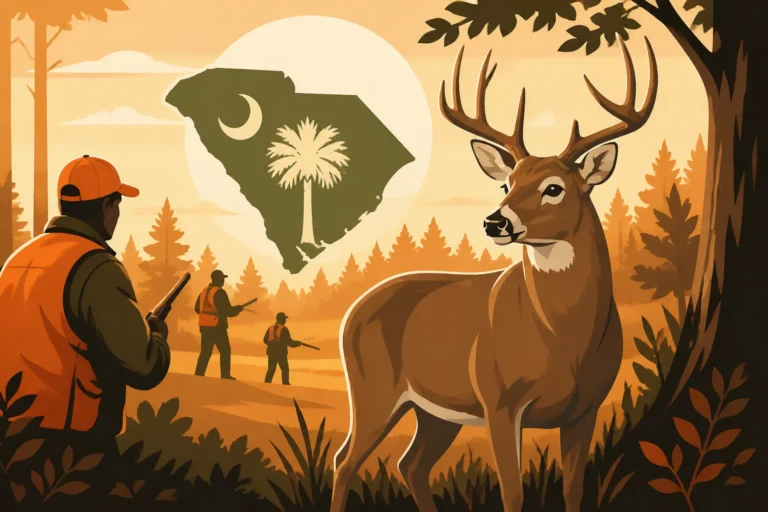
Hunting is an inherently dangerous activity. Always prioritize safety, wear appropriate blaze orange as required by law, and be aware of your surroundings and other hunters. Familiarize yourself with all current South Carolina Department of Natural Resources (SCDNR) regulations before heading afield. The information provided here is for educational purposes and should not replace official safety guidelines or regulations.