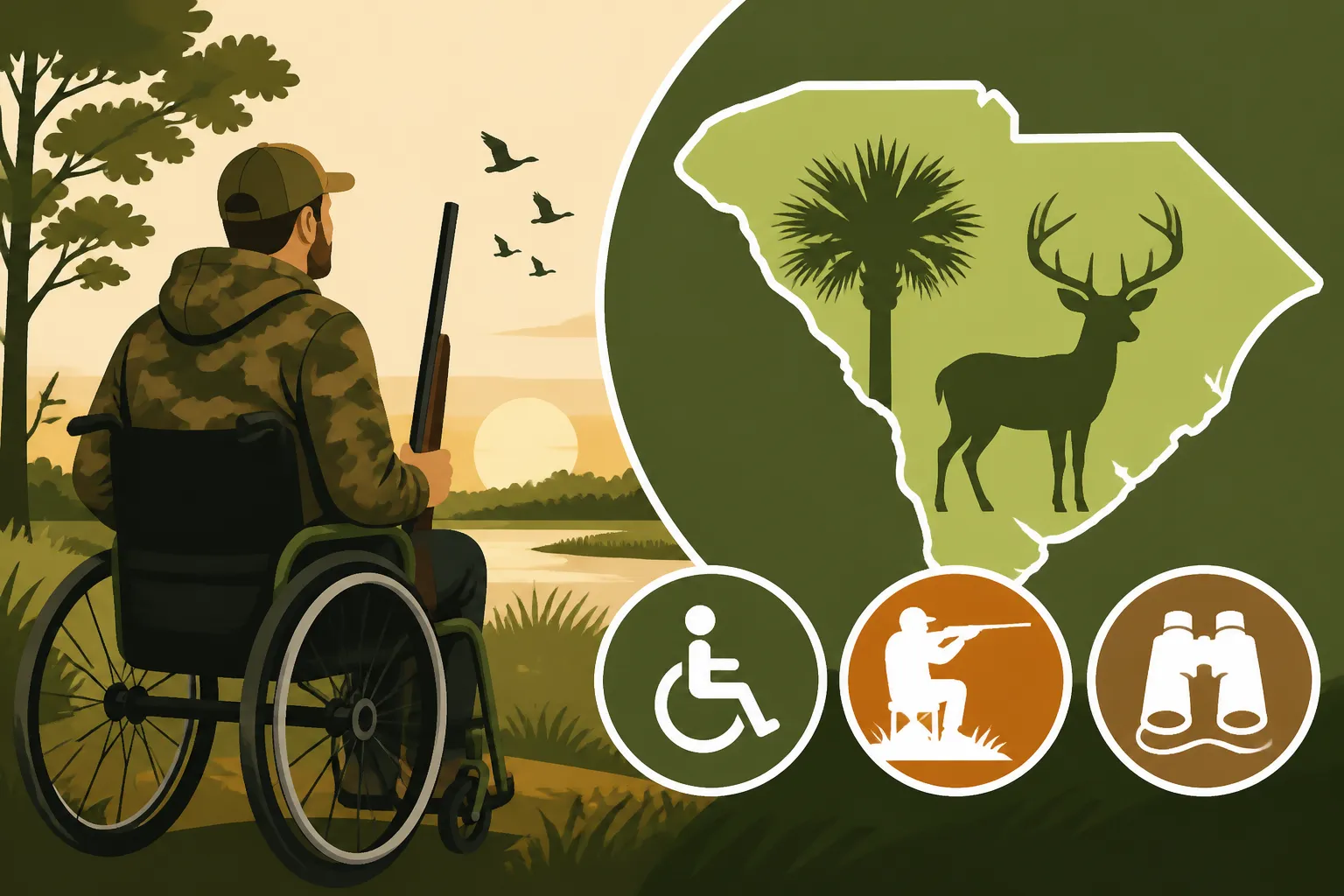
South Carolina Disabled Hunter Permit Options
It’s a tough reality that not everyone can easily traverse dense woods, climb steep ridges, or sit for hours in a traditional treestand. Hunting, for many of us, is a physical endeavor, and when mobility or other physical challenges enter the picture, it can feel like your passion is slipping away. But here in South Carolina, the Department of Natural Resources (SCDNR) understands these struggles and has put in place several permit options designed to make the woods more accessible for disabled hunters. This guide is all about helping you understand those options, navigate the process, and get back to doing what you love.
Understanding South Carolina's Disabled Hunter Permit Landscape
Dealing with a disability, whether it’s a lifelong condition or a recent injury, can throw a wrench into your hunting plans. You might worry about how you'll get to your stand, retrieve game, or even just keep up with the physical demands. South Carolina has recognized these very real challenges and offers specific permits to help mitigate them, ensuring that the joy of hunting remains within reach for as many people as possible. These aren't just handouts; they're thoughtfully designed accommodations.
Types of Disabled Hunter Permits Available
When we talk about "disabled hunter permits" in South Carolina, we're really talking about a few key programs designed to address different needs. The most prominent is the Mobility Impaired Hunter Permit. This permit is specifically for individuals whose physical condition severely limits their ability to walk. It's not just for anyone with a bad knee; we're talking about folks who truly struggle to move about without assistance or who have very limited endurance. This permit allows access to certain roads and trails on Wildlife Management Areas (WMAs) that are otherwise closed to vehicle traffic, letting you get closer to your hunting spot. Imagine not having to worry about a half-mile drag when you have limited mobility – that's a game-changer.
Beyond that, there are broader considerations for permanently disabled individuals which can sometimes lead to reduced license fees or other special allowances, although these aren't always specific "hunting permits" in the same way the mobility permit is. For example, some resident disabled veterans or those deemed totally and permanently disabled may qualify for reduced-cost or even free lifetime licenses, which can significantly ease the financial burden of hunting. While not directly a "hunting privilege" permit like vehicle access, it's a huge benefit that allows many to continue their hunting pursuits. Understanding South Carolina Hunting Licenses and What They Cost is a good first step to seeing how these might integrate with your overall hunting expenses. These programs are about more than just saving money; they represent a recognition of service or long-term struggle, making the outdoors more accessible in a holistic way.
Who Qualifies for These Special Permits
So, who exactly is eligible for these permits? It's not as simple as just having a doctor's note saying you're "disabled." For the Mobility Impaired Hunter Permit, the criteria are quite specific. An applicant must have a physical condition that severely limits their mobility. This typically means conditions like:
- Being confined to a wheelchair.
- The use of crutches, a walker, or a brace for mobility.
- Having an artificial limb that significantly impairs mobility.
- A Class III or Class IV cardiac condition.
- Severe pulmonary disease.
- Arterial insufficiency.
- A diagnosed neurological or orthopedic condition that limits walking to less than 200 feet without stopping or without aid.
It's clear that the SCDNR wants to ensure these permits go to those who genuinely need them to access hunting opportunities. This isn't just a way to get closer to your stand if you're feeling a bit lazy; it's for those whose physical limitations would otherwise prevent them from participating. The definition is pretty tight, and you'll need proper medical documentation to back it up.
For the lifetime licenses for disabled veterans or permanently disabled residents, the qualifications hinge on your disability status as determined by the U.S. Department of Veterans Affairs or Social Security Administration. Generally, if you have a 100% service-connected disability or are deemed totally and permanently disabled, you'll likely qualify for these significant cost reductions. These programs are a true testament to respecting those who have served or are facing profound, long-term health challenges, ensuring they can still find solace and sport in South Carolina’s wild places.
Beyond the Basics: Other Considerations for Disabled Hunters
While permits and licenses address access and cost, there are other crucial elements for disabled hunters. One often overlooked aspect is the psychological barrier. Feeling like you can't participate in a beloved activity can be incredibly discouraging. Knowing that there are programs designed to help can provide a much-needed morale boost. Sometimes, just having the ability to drive closer to a prime spot on a WMA, rather than having to hike a long way, can mean the difference between getting out in the woods or staying home.
Furthermore, preparation is key. Regardless of your mobility, understanding the terrain you'll be hunting and having a good scouting plan is paramount. Even with a mobility-impaired permit, you won't have free reign over every inch of a WMA. You’ll need to understand the designated accessible routes and areas. Apps like GoHunt can be incredibly useful here, allowing you to examine aerial photos and topographic maps from home, identifying potential access points and hunting areas that are manageable within your permit’s allowances. Being able to visualize the lay of the land, find suitable spots for a ground blind, or scout for game sign without physically covering miles can dramatically improve your success and enjoyment. This proactive approach ensures that when you do get out, your time is spent hunting, not struggling.
Navigating the Application Process for Disabled Hunter Permits
Getting your hands on one of these permits might seem a bit daunting with all the paperwork and rules, but it’s a straightforward process once you know the steps. The SCDNR has worked to make it as clear as possible, though gathering your medical documentation is always the most critical part. Don't get discouraged by the initial paperwork; the freedom it can offer in the field is well worth the effort.
Step-by-Step Guide to Applying
Applying for a Mobility Impaired Hunter Permit usually starts with obtaining the official application form from the SCDNR website or one of their regional offices. Once you have the form, you’ll need to fill out your personal information accurately. The most important section, however, will be the medical certification. This part requires a licensed physician to complete and sign, verifying your specific qualifying disability. They will need to attest to the nature and severity of your condition, confirming that it meets the SCDNR's established criteria for mobility impairment. Think of it as your doctor advocating for your right to continued outdoor recreation.
After your physician has completed their portion, you’ll typically submit the entire application, along with any other required documents, directly to the SCDNR. It's often best to send it via certified mail so you have a record of its delivery. While the SCDNR processes these applications, they may take some time, so it's wise to apply well in advance of the hunting season you plan to participate in. Don't wait until August 15th if you're hoping to hunt the earliest coastal zone opener; plan ahead!
For disabled veteran or permanent disability lifetime licenses, the process is similar but focuses more on documentation from official sources like the VA or Social Security. You’ll typically need to provide proof of your disability rating or status directly to the SCDNR. Again, all the forms and instructions are available on their website, or you can contact a regional office for guidance.
Essential Documentation and Medical Certifications
The key to a smooth application process lies in having all your ducks in a row when it comes to documentation. For the Mobility Impaired Hunter Permit, this means a thoroughly completed medical certification section by your doctor. The physician will usually need to specify the diagnosis that causes the severe mobility limitation and describe how it limits your ability to walk. For example, stating "arthritis" isn't enough; it needs to explain that due to severe osteoarthritis in both knees, you cannot walk more than 100 feet without severe pain and assistance. Specificity is your friend here.
For those applying for lifetime licenses based on a permanent disability, you'll need official letters or forms from the Department of Veterans Affairs verifying your 100% service-connected disability or documentation from the Social Security Administration confirming your total and permanent disability. These are official government documents, and the SCDNR will need copies of them to approve your application. Always keep original copies for your records and only submit copies unless specifically asked for an original. The SCDNR also has a detailed list of what South Carolina Disabled Hunter Permit Options require for each type of permit or license, so always check their website for the most current information.
Renewals and Keeping Your Permit Current
The Mobility Impaired Hunter Permit usually has an expiration date, often valid for a period of a few years. It's not a once-and-done deal for life, because medical conditions can sometimes change. Therefore, it's essential to keep track of your permit's expiration date and begin the renewal process well before it runs out. Renewals typically require a fresh medical certification from your physician, just like the initial application. This ensures that the privileges granted are still aligned with your current physical condition. The SCDNR wants to ensure these permits are used by those who genuinely need them, and periodic re-certification helps achieve that.
For lifetime licenses for permanently disabled individuals or veterans, the "lifetime" aspect means exactly that – no annual renewals are typically required once you've been approved. However, it's always a good practice to ensure your contact information with the SCDNR is up-to-date. If you move or change your primary contact details, make sure they know so you don't miss any important communications, even if it's just about general hunting regulation changes. Having easy access to your license information via the Go Outdoors SC app can also be really helpful, especially when you’re out in the field and need to quickly show proof of your valid license.
Benefits and Enhanced Access for Disabled Hunters in SC
Once you have your permit, a whole new world of hunting possibilities opens up. These permits aren't just pieces of paper; they grant tangible benefits that directly address the challenges faced by hunters with disabilities, making the outdoors truly more accessible.
Special Privileges on Wildlife Management Areas (WMAs)
The Mobility Impaired Hunter Permit truly shines when it comes to accessing South Carolina’s extensive network of Wildlife Management Areas. As many hunters know, WMAs often have strict rules about vehicle access, with many roads and trails closed to the general public to reduce pressure and protect habitat. However, with this permit, you are often granted specific access to these normally restricted areas. This means you can drive your vehicle on designated roads or trails, getting significantly closer to prime hunting spots. This can be absolutely critical for someone who struggles to walk long distances or navigate rough terrain.
Imagine a situation where you’ve identified a fantastic deer travel corridor deep within a WMA, but it’s a mile hike from the nearest public parking. For many, that’s a tough but doable trek. For a mobility-impaired hunter, it could be an insurmountable obstacle. Your permit can bridge that gap, allowing you to drive a UTV or truck right up to where you need to be. This means you can get to your stand without exhausting yourself, conserving your energy for the hunt itself. Remember, even with the permit, you still need to follow WMA-specific rules and designated access routes. Using tools like GoHunt's mapping features can help you pre-plan your approach and identify suitable areas for Hunting the ACE Basin or other WMAs.
Mobility Assistance and Vehicle Access
The core benefit of the Mobility Impaired Hunter Permit is, as the name suggests, mobility assistance. This isn't just about getting to your stand; it's about the entire hunting experience. Being able to use your vehicle, or an approved ATV/UTV, on designated WMA trails means you can transport more gear with ease. This can include specialized hunting chairs, larger ground blinds, or even game retrieval equipment that might be too cumbersome to carry on foot. It also means quicker and less strenuous game retrieval, which is a major concern for many disabled hunters. Nobody wants to harvest an animal only to face an impossible drag out of the woods.
While vehicle access is a huge perk, it's vital to know the specific rules for each WMA. Not all closed roads become open roads for permit holders, and there may be specific vehicle types allowed or restrictions on where you can park once you reach your destination. Always check the individual WMA regulations before you go. This permit effectively extends the effective hunting range for many individuals, allowing them to reach areas previously inaccessible, and opens up new opportunities for hunting, whether it's South Carolina's Zone 4 Coastal Deer Season or Hunting South Carolina's Year-Round Feral Hogs.
Extended Seasons and Special Hunt Opportunities
In addition to enhanced access, the SCDNR also offers specialized hunting opportunities for disabled hunters. These might include specific disabled veteran hunts or mobility-impaired hunts on certain WMAs. These hunts are often organized during periods with less hunting pressure or in areas specifically set up to be more accessible. They provide a fantastic opportunity for camaraderie with other hunters facing similar challenges, fostering a supportive community.
These special hunts can sometimes have different regulations, such as extended season dates or specific bag limits, tailored to the unique circumstances. For example, there might be a dedicated early primitive weapons season for disabled hunters before the general public, allowing for a more relaxed and less crowded experience. These are not always guaranteed and often operate on an application or draw basis, so staying informed through the SCDNR website and newsletters is key. Knowing the specific rules for South Carolina Primitive Weapons Tactics during these special seasons can give you a significant advantage. These hunts exemplify the SCDNR’s commitment to providing inclusive opportunities for all who wish to participate in South Carolina's rich hunting heritage.
Practical Considerations for Disabled Hunters on SC Public Lands
Having a permit is fantastic, but it's just the first step. To truly make the most of your hunting experience as a disabled hunter on South Carolina's public lands, thoughtful planning, specialized equipment, and a keen understanding of accessible areas are paramount. This proactive approach will turn your permit into truly effective access.
Scouting and Preparation with Accessibility in Mind
For any hunter, scouting is crucial, but for a disabled hunter, it takes on an even greater importance. You need to identify not just where the game is, but also how you can get there and hunt effectively within your physical limitations and permit privileges. This means using aerial maps, topographical features, and even road and trail maps available through resources like GoHunt or the SCDNR's online WMA maps. Look for areas with established accessible roads or trails that your mobility permit allows you to use. Identify clearings, field edges, or areas of more open timber where a ground blind might be easily set up, or where a wheelchair-accessible shooting lane could be established. Planning your entry and exit routes meticulously is vital, keeping in mind terrain challenges and potential vehicle access points.
It's also a good idea to scout during the off-season, if possible, even just by reviewing maps. This allows you to plan without the pressure of an open season. Understanding Scouting South Carolina Public Land Before Season will help you identify natural funnels, bedding areas, and food sources that are within a reasonable distance from an accessible point. Don't be afraid to utilize trail cameras on public land, ensuring they are within regulations. This helps you monitor game movement without physically needing to be there constantly, further conserving your energy for the actual hunt.
Equipment and Setup for Enhanced Comfort and Safety
Equipment choices can significantly impact a disabled hunter's comfort, effectiveness, and safety. While a traditional treestand might be challenging for some, a well-placed ground blind can be a perfect solution. Ground blinds offer concealment, protection from the elements, and most importantly, easy entry and exit. Many modern ground blinds are spacious enough to accommodate a wheelchair or a comfortable chair, allowing you to sit for extended periods without discomfort. Look for blinds that are easy to set up and take down, and consider brushing them in naturally for optimal concealment. Using a Ground Blind on South Carolina Public Land offers more specific tips.
Beyond blinds, consider other adaptive equipment. Specialized shooting rests can provide stability and support, making accurate shots easier. A deer cart or even an electric game cart can be invaluable for retrieving game, eliminating the strenuous physical drag. When it comes to clothing, focus on layers that manage temperature and moisture effectively, as sitting for longer periods can make you more susceptible to chills or overheating. Proper Warm-Weather Clothing for South Carolina Hunters is especially important during our early seasons. Always prioritize safety gear, including a fully charged cell phone, a whistle, a comprehensive first-aid kit, and, of course, your blaze orange or pink during appropriate seasons.
Finding Accessible Hunting Locations
Not all public land is created equal when it comes to accessibility. While your Mobility Impaired Hunter Permit opens up many WMA roads, it's still crucial to identify which specific WMAs or sections of National Forests (like Francis Marion or Sumter) genuinely offer suitable terrain and established accessible features. The SCDNR often provides maps or lists of WMAs that have designated accessible hunting areas or specific mobility-impaired vehicle routes. Don't hesitate to call the WMA manager or the local SCDNR office directly. They can provide invaluable, up-to-date information on the best places to hunt.
Even within a WMA, terrain can vary wildly. Some areas might be relatively flat and open, while others are dense, swampy, or heavily wooded. Focus on those flatter, more open sections, especially near accessible roads or clearings. River bottoms and older clear-cuts can sometimes offer less restrictive movement, while still providing good habitat. Keep in mind that pressure on public land can be high, so if you're able to find areas that require a bit more effort to reach, even with a permit, you might encounter less competition. Exploring the specifics of South Carolina Wildlife Management Areas or even looking into Treestand Setups in Francis Marion National Forest can help you find suitable, accessible spots within larger public tracts. The ultimate goal is to match your hunting strategy and physical capabilities with the most suitable habitat available.
Disclaimer
This guide is intended for informational purposes only and does not constitute legal advice. Hunting regulations, permit requirements, and accessibility rules can change. Always consult the official South Carolina Department of Natural Resources (SCDNR) website or contact them directly for the most current and accurate information before planning any hunting trip. Eligibility for permits and licenses is determined solely by the SCDNR based on current state laws and regulations.