Duck Migration Timing Through South Carolina
Duck migration timing through South Carolina depends on northern weather patterns, food availability, and hunting pressure.
Know what you’re after.
Big game, small game, upland birds, and waterfowl — identification, behavior, rut and migration timing, and how each species moves through the season.
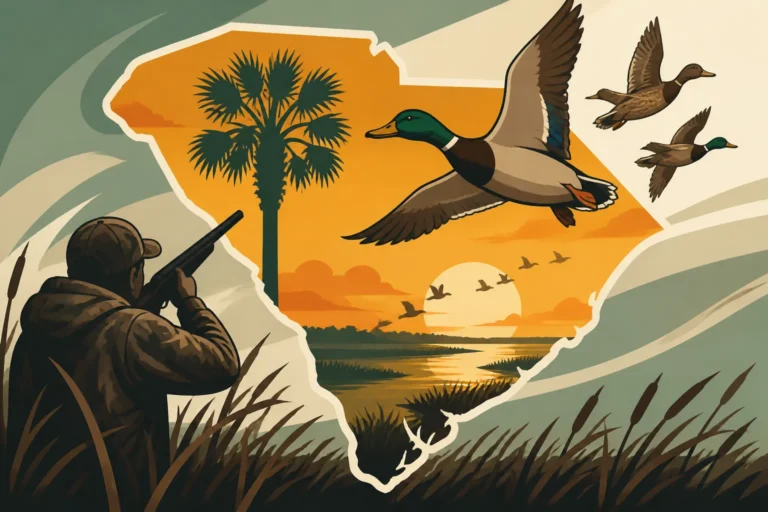
Duck migration timing through South Carolina depends on northern weather patterns, food availability, and hunting pressure.
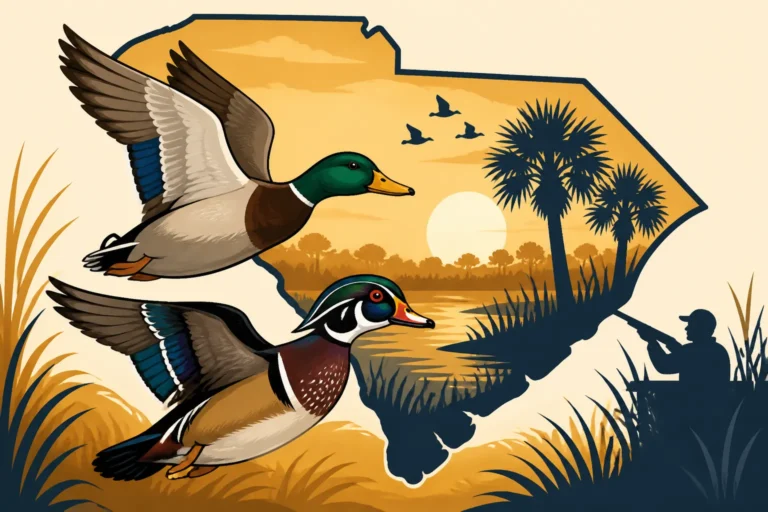
South Carolina mallard and wood duck population numbers reveal how northern breeding success and migration weather affect local hunting.
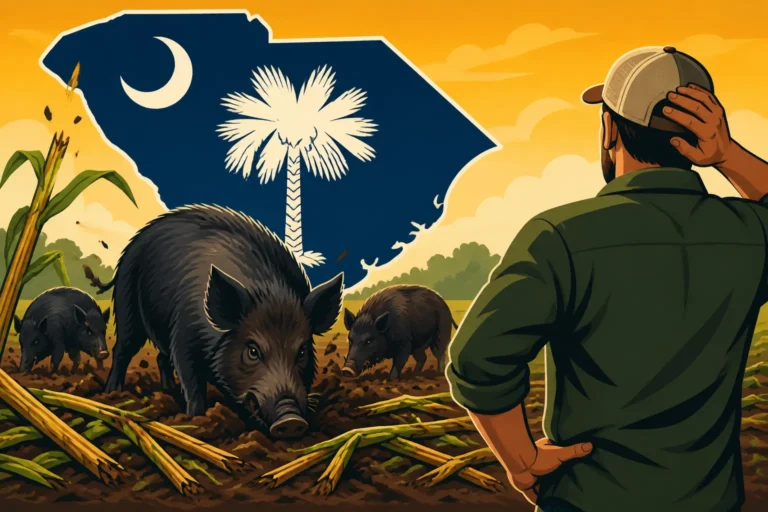
Feral hogs cost South Carolina agriculture millions annually, destroying corn, soybean, and peanut yields through rooting.
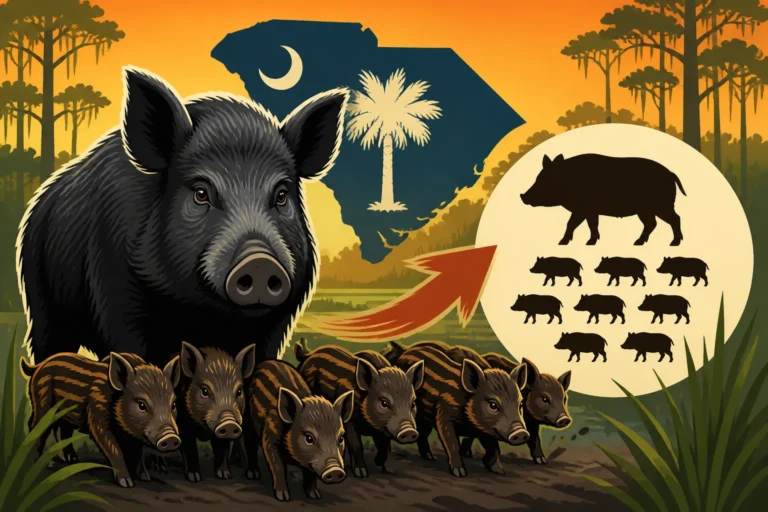
Lowcountry feral hogs reproduce rapidly because sows reach sexual maturity at six months and have short gestation periods.
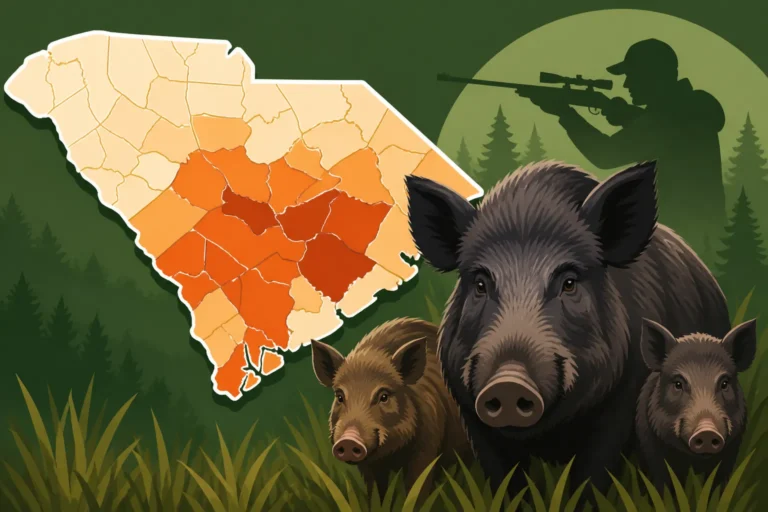
South Carolina counties with the most feral hogs, highlighting high concentrations in Colleton, Beaufort, Jasper, Hampton, and Allendale.
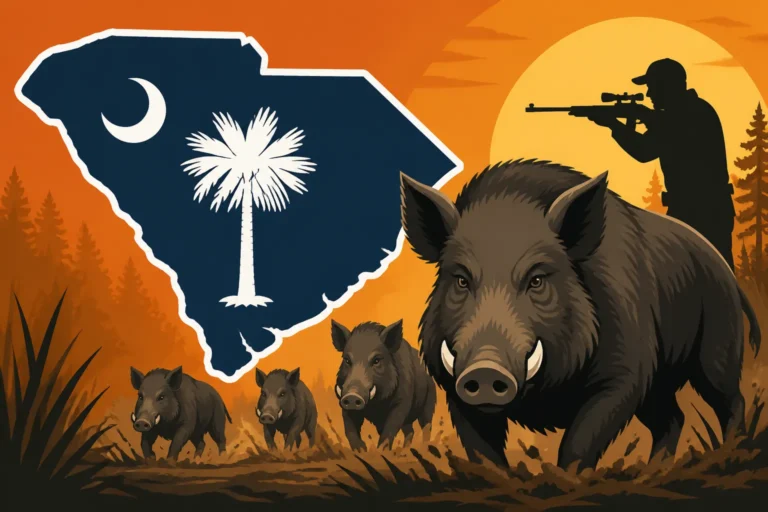
South Carolina feral hog population estimates remain impossible because animals reproduce twice yearly, producing four to eight piglets.
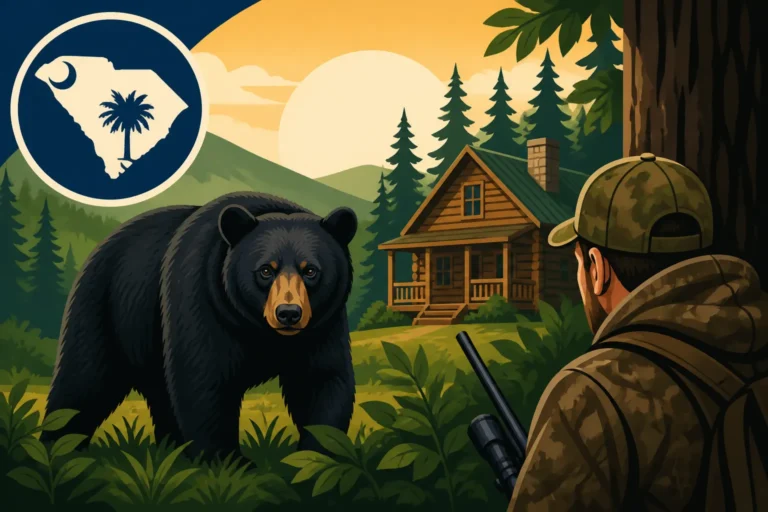
South Carolina black bear encounters near mountain cabins increase when animals seek human food, requiring specific prevention tips.
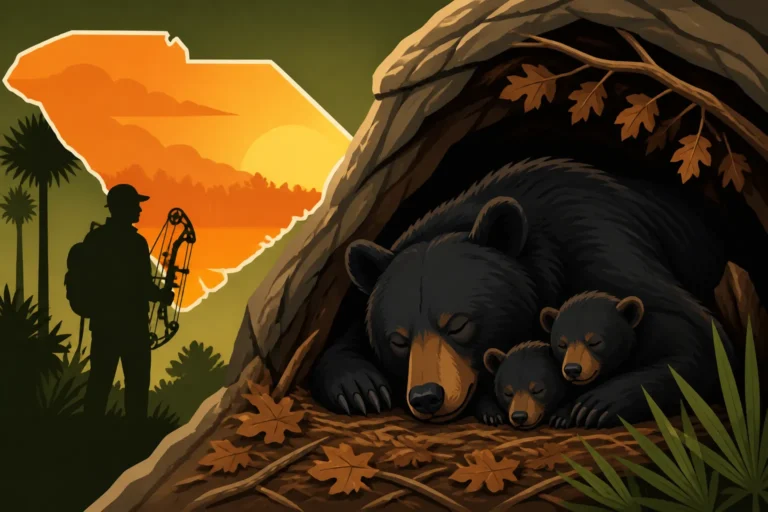
South Carolina black bear denning behavior, influenced by mild climates, explains reduced winter activity, energy conservation, and cub survival patterns.
South Carolina black bear populations, mountain and coastal habitats, weight ranges, and the factors influencing maximum animal size.
South Carolina bear harvest data and regional differences reveal population trends, management effectiveness, and hunter opportunities.