South Carolina Bear Denning Behavior
For those of us who spend time in South Carolina’s wild places, whether chasing deer through the lowcountry swamps or calling turkeys in the upstate mountains, understanding the subtle behaviors of our native wildlife is key. One such behavior, often misunderstood, is the denning of black bears. This guide dives deep into what bear denning means in our unique Southern climate, helping you grasp this critical part of a bear's annual cycle and its implications for both bears and hunters.
Understanding Bear Denning in South Carolina
When most people think of bear denning, they picture a deep sleep through harsh winter snows, tucked away in a cave. But here in South Carolina, our bear denning behavior is a nuanced affair, heavily influenced by our milder climate and distinct habitats. It's not always the deep, prolonged hibernation seen in more northern latitudes, but rather a period of reduced activity crucial for survival, especially for sows raising young.
The Purpose of Denning for South Carolina Black Bears
Bear denning, often referred to as torpor rather than true hibernation in our warmer regions, serves several vital purposes. Primarily, it's a physiological response to periods of food scarcity and adverse weather. While South Carolina rarely sees extreme, prolonged cold, there are certainly times when natural food sources dwindle, particularly in late winter. Denning allows bears to conserve energy, relying on fat reserves built up during the fall.
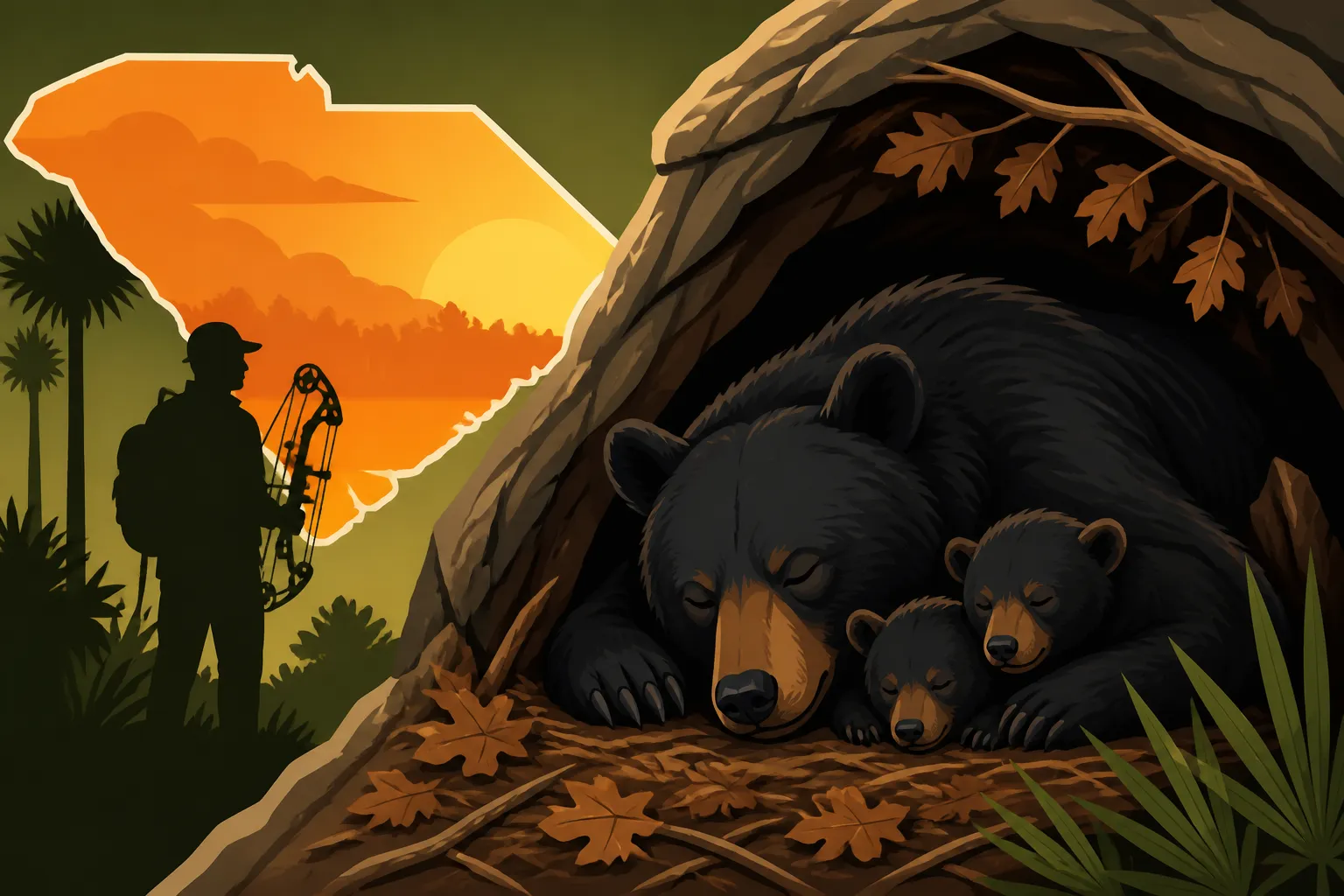
Beyond energy conservation, denning is absolutely critical for reproduction. Pregnant sows will seek out suitable den sites to give birth in late winter, usually in January or February. These secluded dens provide a safe, warm environment for the tiny, vulnerable cubs, protecting them from predators and the elements during their most fragile stage. Without secure denning locations, the success rate of cub survival would plummet. It’s a remarkable adaptation that ensures the continuation of the species, allowing the cubs to grow rapidly on their mother's milk before emerging into the world in spring.
How South Carolina's Climate Influences Denning Behavior
Our state's mild winters play a significant role in how South Carolina's black bear population approaches denning. Unlike bears in the Rockies or Canada, where snow can blanket the ground for months, many South Carolina bears may not experience the same intensity or duration of denning. Some bears, particularly younger males or those in areas with readily available food, might enter a den for shorter periods, or even come out briefly during warm spells. It’s not uncommon to hear of a bear being spotted in January or February, a testament to the less rigid denning patterns here.
The availability of mast crops like acorns and berries in the fall heavily influences the timing and duration of denning. A bountiful mast year means bears can pack on more fat, potentially allowing for a longer, more complete denning period. Conversely, a poor mast year might mean bears enter their dens later or emerge earlier, driven by hunger to find scarce resources. This variability makes predicting exact denning patterns a bit of a moving target, requiring hunters and wildlife enthusiasts to stay attuned to local conditions. Our coastal regions, with their distinct ecology, can see even further deviations from the traditional "winter sleep" narrative, as food sources may remain available longer.
Timing and Location of Denning in South Carolina
Understanding when and where bears den in South Carolina is crucial for anyone exploring our forests, whether you're a hiker, photographer, or hunter. It’s not a one-size-fits-all scenario, as conditions vary significantly across the state's diverse habitats.
Typical Denning Season Across the Zones
For South Carolina's black bears, the typical denning season generally begins in late fall to early winter and extends into early spring. In the Upstate, particularly in the mountainous regions of Zone 1 Upstate Season Dates, bears might enter dens a bit earlier, perhaps late November or early December, and remain there through March. This is largely due to more pronounced seasonal shifts and cooler temperatures compared to the coast.
However, down in the coastal plain, bears might not enter dens until late December or even January, and they can emerge as early as late February or early March, especially if mild weather persists and food sources become available. Pregnant sows, regardless of location, will typically be the first to den and the last to emerge, ensuring the safety and development of their newborn cubs. Non-pregnant bears, especially males, might have a more flexible schedule, with some even foregoing a full denning period if conditions are mild enough and food is exceptionally plentiful. This fluid timetable makes it challenging but fascinating to track bear activity throughout the cooler months.
Preferred Den Sites in Upstate and Coastal Habitats
The type of den chosen by a black bear is often dictated by the available habitat. In the Upstate, especially in the Andrew Pickens Ranger District of the Sumter National Forest, bears frequently utilize natural features like rock crevices, caves, and hollow logs. Thick stands of rhododendron and mountain laurel also provide excellent cover for building ground nests or shallow dens. These spots offer natural insulation and concealment, crucial for protection against the elements and predators. When scouting the Upstate, look for old growth timber with large cavities or rocky outcroppings that might shelter a bear. Tools like GoHunt can be invaluable for identifying areas with dense cover and suitable terrain features from aerial imagery before you even set foot in the woods.
On the other hand, the coastal plain, including areas like the Francis Marion National Forest and the ACE Basin, presents a different set of challenges and opportunities for denning. Here, bears often rely on large hollow trees, particularly old cypress or pine snags, which provide excellent vertical protection from water and ground predators. Dense palmetto thickets, impenetrable cane breaks, and large brush piles created by logging or storms are also common denning sites. Bears might also simply create ground nests in extremely thick, swampy areas, relying on the water and dense vegetation for concealment. When considering Hunting Lowcountry Swamp Deer, you might inadvertently stumble upon bear sign near these denning hotspots, so it's always wise to be aware of your surroundings. The specific denning behaviors and preferences can significantly impact a hunter's strategy for Zone 4 Coastal Bear Season Rules.
Here's a quick look at some common denning site characteristics:
| Habitat Type | Common Den Site Characteristics | Specific Examples in SC |
|---|---|---|
| Upstate Mountains | Rock crevices, small caves, hollow logs, dense rhododendron thickets, blowdowns | Sumter National Forest's Andrew Pickens Ranger District, Blue Ridge Escarpment ridgelines |
| Coastal Plain | Large hollow cypress/pine trees, dense palmetto thickets, cane breaks, thick brush piles, ground nests in swamps | Francis Marion National Forest, ACE Basin, Pee Dee River Bottoms |
How Denning Behavior Impacts South Carolina Bear Hunters
Understanding the nuances of bear denning behavior is not just academic; it has practical implications for South Carolina bear hunters. While bear seasons are carefully structured to avoid the peak denning period for sows with cubs, knowing when and where bears are reducing their activity can inform your scouting and hunting strategies.
Scouting for Bears During Pre-Denning and Post-Emergence Periods
The periods immediately before denning and after emergence are crucial times for hunters. In the fall, as bears prepare for denning, they enter a phase of hyperphagia, where they are intensely focused on consuming calories to build up fat reserves. This makes them highly active and predictable, often concentrating around prime food sources like oak stands dropping acorns or persimmon trees. This is an excellent time for scouting, as bears will leave significant sign while gorging themselves. Using mapping tools like GoHunt can help you pinpoint mast-producing areas in both the Upstate and the Lowcountry, giving you an edge in identifying potential feeding zones that will be active right up until denning.
Conversely, after bears emerge from their dens in the spring, they are often hungry and eager to replenish lost weight. While hunting seasons aren't typically open during early spring emergence, this post-denning period offers a fantastic opportunity for shed hunting or general scouting. Bears will be moving to new food sources as they become available, and understanding these patterns can help predict their movements for future seasons. Knowing where to look for concentrated activity during these transitions, rather than just random wanderings, is key to successful bear hunting. Tracking South Carolina Bear Harvest Numbers over the years can sometimes reveal patterns tied to these behaviors as well.
Ethical Considerations When Encountering a Den
While bear hunting seasons in South Carolina are set to primarily target active, free-ranging bears and generally avoid the critical denning period, especially for sows with cubs, accidental encounters are always possible, particularly during other hunting seasons that might overlap or in scouting trips. If you stumble upon an active bear den, whether it's an old hollow log with fresh sign or a thicket where you hear tiny whines, the most ethical and responsible action is to quietly and immediately back away.
Disturbing a denning bear, particularly a sow with cubs, can be incredibly dangerous for both you and the bears. A startled sow might abandon her cubs, or become aggressive in defense. Not only is it illegal to disturb dens, but it goes against the core principles of ethical hunting and wildlife conservation. Remember, the goal is fair chase and sustainable management, not putting wildlife at undue risk. Should you find what you suspect is a den, mark the location on your GoHunt app, leave the area, and consider reporting it to SCDNR if you believe it's in a sensitive area or if there's any concern for the bear's safety. Always prioritize the welfare of the animal. This kind of respect for wildlife is part of the hunting tradition here, as important as understanding Hunting South Carolina Black Bear Without Bait.
South Carolina's Bear Population and Conservation
The black bear population in South Carolina is a conservation success story, growing steadily and expanding its range over the past few decades. Understanding their denning habits is a crucial piece of this larger puzzle, as it directly relates to their reproductive success and overall health.
Population Trends and Denning Success
South Carolina's black bear numbers have been on an encouraging upward trend, particularly in the traditional strongholds of the Upstate mountains and the coastal plain. This growth is a testament to effective wildlife management and the resilience of the species. A key factor in this success is the bears' ability to find and utilize suitable denning sites, ensuring high cub survival rates. Without protected, quiet places to give birth and raise their young, the population simply wouldn't thrive as it does. Studies into South Carolina Bear Denning Behavior help wildlife biologists monitor the health of the population and inform management decisions.
Habitat availability and quality directly impact denning success. As development encroaches on wild lands, securing protected corridors and large tracts of undisturbed forest for bears becomes even more critical. Healthy denning translates to more cubs surviving to adulthood, which in turn contributes to the overall stability and expansion of the bear population, supporting healthy and sustainable hunting opportunities. Hunters play a vital role in this by purchasing licenses and tags, which fund conservation efforts, and by adhering to regulations that protect denning bears and their young. Understanding How Many Black Bears South Carolina Has helps us all appreciate the importance of these behaviors.
Habitat Management for Denning Bears
Effective habitat management is fundamental to supporting a robust bear population and ensuring successful denning. This involves preserving large, contiguous blocks of forest, especially those with old-growth trees that provide ideal hollows for dens, or dense undergrowth that offers natural cover. In the Upstate, this might mean protecting areas with rock formations and mature hardwoods that produce reliable mast crops. For example, understanding Hunting Bears Over Natural Mast in the Mountains highlights the importance of these food sources.
In the coastal plain, it often means safeguarding vast tracts of swamp, bottomland hardwoods, and maritime forest, where old cypress and pine trees offer prime denning locations. Forest management practices, such as selective timber harvesting that leaves snags and large cavity trees, can also contribute positively to denning habitat. Public lands, including the Sumter National Forest and Francis Marion National Forest, are vital for providing these critical habitats. The continued effort to manage and protect these unique ecosystems directly benefits South Carolina's black bears, ensuring they have the resources and security to continue their annual cycle of foraging, breeding, and denning, for generations of hunters and wildlife enthusiasts to appreciate. This is especially important for the South Carolina's Black Bear Population as a whole.
Disclaimer
This article is for general informational purposes only and does not constitute professional advice. Laws, prices and regulations vary by location and change over time. Consult a qualified professional for guidance on your specific situation.