South Carolina Cottonmouth Range in Swamp Country
There's a unique thrill that comes with hunting South Carolina's swamp country, especially when chasing deer or turkeys through those dense, often watery landscapes. But let's be honest, for many of us, that thrill comes with a healthy dose of anxiety about one particular resident: the cottonmouth. Also known as water moccasins, these venomous snakes are a real concern, and it's easy to feel a knot in your stomach when you're wading through murky water or pushing through thick palmettos. You want to enjoy your hunt without constantly looking over your shoulder, and understanding where these snakes live and how to avoid them is absolutely critical. This guide is here to shed some light on the cottonmouth's range in South Carolina's swampy areas, offering practical advice to keep you safe and confident in the field.
Understanding the South Carolina Cottonmouth
Before we can talk about avoiding cottonmouths, it's crucial to understand what makes them tick and how they behave. These aren't just any old snakes; they're unique in their appearance, behavior, and the habitats they prefer. Knowing these fundamental characteristics is your first line of defense in the field, helping you differentiate them from harmless look-alikes that share similar watery environments.
Distinguishing Features of the Cottonmouth
A cottonmouth (scientific name: Agkistrodon piscivorus) is a pit viper, which means it possesses heat-sensing pits located between its eyes and nostrils, giving it an advantage in hunting warm-blooded prey, especially in low light. Adult cottonmouths typically range from 2 to 4 feet in length, though some can grow larger. Their bodies are stout and heavy-bodied, not slender like many non-venomous water snakes. The head is distinctly triangular and broad, much wider than the neck, giving it a somewhat menacing appearance. Their scales are keeled, meaning they have a raised ridge down the center, giving them a rough, dull appearance rather than a shiny one.
One of the most telling features, though not always easy to see in the field, is the dark line that runs from their eye to the back of their jaw, often outlined with a lighter stripe. Their coloration varies greatly, from solid black or dark brown in older specimens to lighter olive, brown, or even yellow with dark, often hourglass-shaped crossbands in younger snakes. These bands can be very indistinct on darker snakes, making identification harder. Always be cautious when observing any snake in the water.
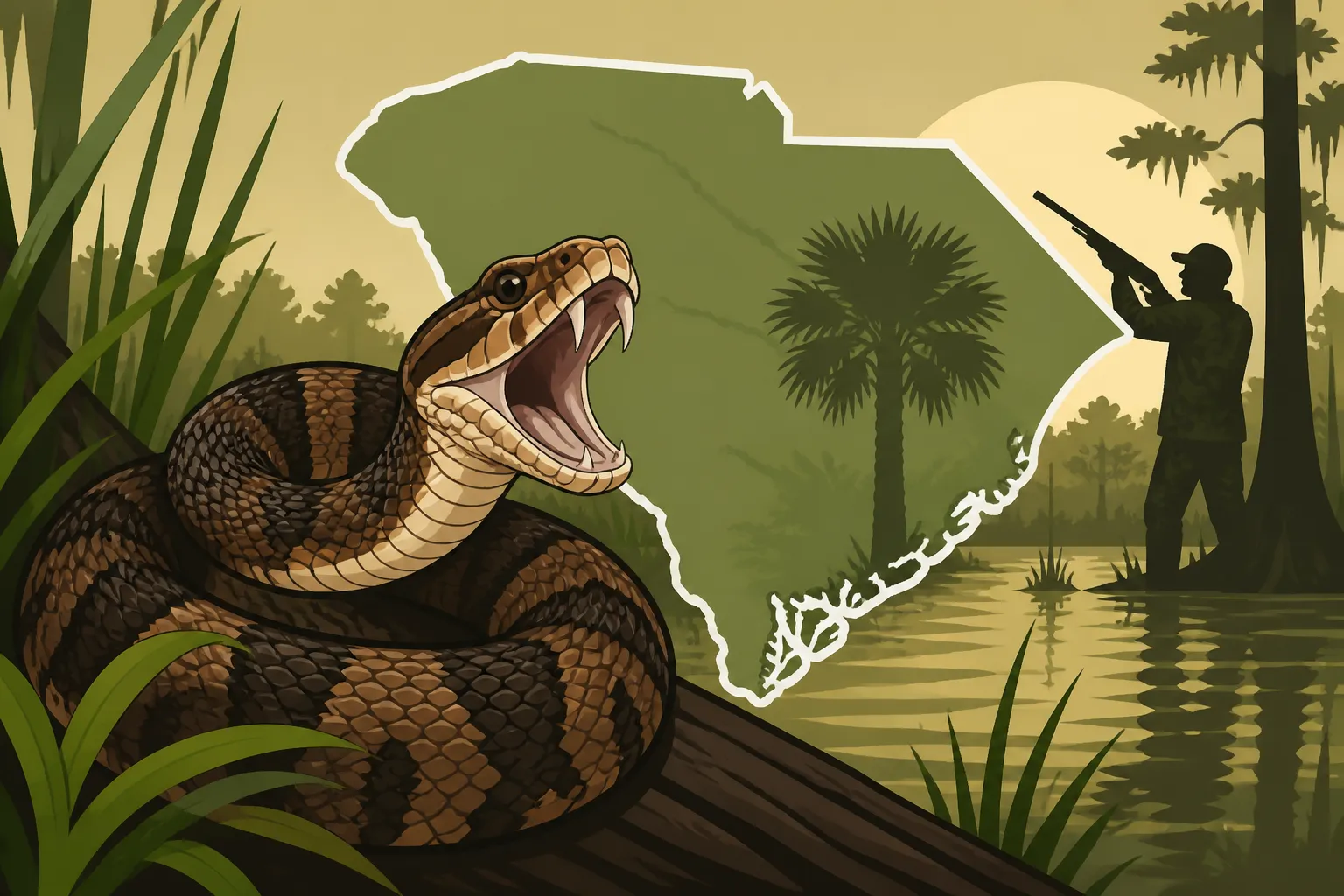
When threatened, a cottonmouth will often coil its body, vibrate its tail (even if no leaves are present to make a rattle sound), and open its mouth wide to display the stark white, cotton-like interior of its mouth—hence the name "cottonmouth." This is a clear warning signal, and it's your cue to back away immediately. They're not looking to chase you; they're trying to tell you to leave them alone.
Behavioral Traits and Habitat Preferences
Cottonmouths are semi-aquatic snakes, meaning they are perfectly at home both on land and in the water. They are excellent swimmers and are often seen swimming with their entire body on top of the water, unlike most non-venomous water snakes that swim with only their heads above the surface. This "floating" behavior is a key identifier. They are frequently found basking on logs, rocks, or low-hanging branches near water sources. When approached, their first instinct is often to hold their ground or slowly retreat, rather than to flee rapidly. This can be startling, as they appear aggressive, but it's largely a defensive posture.
These snakes are often most active during the day, especially when basking, but they can be nocturnal, particularly during the hot South Carolina summers. They feed on a varied diet of fish, frogs, other snakes, small mammals, and birds. Given their opportunistic nature, they often congregate in areas rich with these prey species, which, unfortunately for hunters, are often the same spots that attract deer, hogs, and turkeys. They are not inherently aggressive towards humans, but they will defend themselves if they feel threatened or are stepped on.
Pinpointing Their Domain: Where Cottonmouths Thrive in SC
When you're out hunting in South Carolina, understanding the specific geographical areas where cottonmouths are most prevalent is crucial. It’s not just any water; they have preferred zones and particular kinds of watery habitats where they feel most at home. Knowing these hotspots can help you adjust your hunting tactics and your level of caution.
The Lowcountry Stronghold
The vast majority of South Carolina's cottonmouth population resides in the Lowcountry and coastal plain. This region, characterized by its extensive network of swamps, blackwater rivers, cypress-tupelo sloughs, tidal marshes, and drainage ditches, provides the ideal environment for these semi-aquatic serpents. Areas like the ACE Basin, the Congaree River floodplains, and the Edisto River basin are prime examples of places where you can expect to encounter cottonmouths with regularity. Hunting the ACE Basin for Deer or pursuing waterfowl along the coast naturally puts you in their backyard. The warm, humid climate and abundant prey species in these ecosystems contribute to a thriving cottonmouth population.
When you're hunting deer in the lowcountry, especially in areas like Francis Marion National Forest or through private lands with extensive wetlands, you should always operate with the assumption that cottonmouths are present. Hunting a Funnel Between Two Swamps often means navigating through dense vegetation right where these snakes might be basking or hunting. The water can be murky, making it hard to see what lies beneath or on logs just under the surface. This isn't to instill fear, but rather a healthy respect for the environment and its inhabitants.
River Systems and Bottomland Forests
While the coastal plain is their densest stronghold, cottonmouths also extend their range up into the state's major river systems and associated bottomland forests. The Santee, Edisto, Black, Pee Dee, and Savannah River systems, including their numerous tributaries and floodplains, all provide suitable habitat. These areas, even as you move further inland into the Midlands, offer the necessary combination of permanent water, dense vegetation for cover, and a rich food source.
For hunters working these river bottoms, perhaps scouting Reading a Tidal Creek for Deer Movement or setting up near flooded timber, remaining vigilant is key. You might not see as many as you would deep in the ACE Basin, but they are certainly present. Public lands like portions of Sumter National Forest that border significant river systems can also harbor these snakes, particularly in the lower elevations closer to water. Recovering a Deer From a Lowcountry Swamp can be an especially high-risk activity, as you're often focused on the game, tired, and moving through thick, unseen areas where a snake might be hiding.
Why the Upstate is Largely Cottonmouth-Free
Conversely, as you move into the Upstate region of South Carolina, particularly the mountainous areas, cottonmouth sightings become exceedingly rare to non-existent. While there are plenty of water sources—streams, rivers, and lakes—the higher elevations and cooler temperatures generally push them out of their preferred range. The habitat shifts from slow-moving, warm, swampy waters to faster-flowing, cooler mountain streams and drier, rockier terrain. These conditions simply aren't conducive to cottonmouth survival or reproduction.
You might find other venomous snakes in the Upstate, such as copperheads or timber rattlesnakes, but cottonmouths are typically absent. This difference in range is an important distinction for hunters who might hunt across different zones of the state. Knowing that you likely won't encounter a cottonmouth while Hunting Blue Ridge Escarpment Ridgelines can be a small comfort, allowing you to focus on other aspects of your hunt, while still remaining aware of the other venomous species that do call those hills home.
Field Identification: Knowing a Cottonmouth When You See One
In the field, quick and accurate identification of a cottonmouth is paramount for safety. It’s not always as easy as seeing that white mouth, especially if the snake is just sitting still or partially obscured. Learning to spot the subtle differences between a venomous cottonmouth and the many harmless water snakes that inhabit South Carolina's wetlands can literally be a lifesaver.
Visual Cues and Warning Signs
Beyond the "cotton mouth" display, several visual cues can help you identify a cottonmouth. Look for the chunky, heavy body; most non-venomous water snakes are more slender. Their triangular head, significantly wider than the neck, is a strong indicator. Non-venomous snakes tend to have heads that flow more seamlessly into their body shape. Another key feature is their pupil shape. Cottonmouths, like all pit vipers, have elliptical, cat-like pupils. However, this is incredibly difficult to discern at a safe distance in the field, so don't rely on it. A better, though still distant, sign is the presence of the heat-sensing pits located between their eyes and nostrils.
Their swimming posture is also a dead giveaway. Cottonmouths often swim with their entire body floating on the surface of the water, looking much like a floating stick or rope. Non-venomous water snakes, on the other hand, typically swim with only their head visible above the waterline, with the rest of their body submerged. Pay attention to how the snake moves and holds itself. If it seems to be "floating" rather than truly swimming, especially in murky water, assume it's a cottonmouth and give it a wide berth.
| Feature | Cottonmouth (Venomous) | Common Non-Venomous Water Snakes |
|---|---|---|
| Head Shape | Distinctly triangular, broad, much wider than neck | More rounded, narrower, flows into body |
| Body Shape | Heavy-bodied, stout, stocky | More slender, generally less robust |
| Pupils | Vertical, elliptical (cat-like) | Round (difficult to see from safe distance) |
| Heat Pits | Present (small indentations between eye and nostril) | Absent |
| Tail | Tapers quickly, usually shorter | Longer, more gradually tapering |
| Swimming Posture | Often floats with entire body on surface | Typically swims with only head above water |
| Behavior | Often holds ground, may gape white mouth, vibrates tail | Tends to flee quickly, rarely aggressive unless cornered |
| Coloration | Variable, often dark, crossbands (may be obscured); juveniles brighter | Highly variable, often banded or blotched, but lack "cotton" mouth |
Proactive Habitat Awareness
Knowing where you're most likely to encounter a cottonmouth is as important as knowing what they look like. They prefer still or slow-moving water, especially areas with dense vegetation for cover, such as cypress swamps, sloughs, stagnant ponds, drainage ditches, and the edges of larger bodies of water. These are often the exact spots that are most attractive to game animals, creating a conflict for hunters. A good scouting app like GoHunt can help you identify these low-lying, wet areas on topographical maps long before you ever step foot in them. Mark these spots and treat them with extra caution.
When you're still-hunting or making your way to a stand, always be mindful of where you're stepping, especially around logs, stumps, and dense patches of grass or brush along water edges. Remember that they often bask on logs partially submerged or on low-hanging branches. If you're wading, a good rule of thumb is to disturb the water ahead of you with a stick or walking pole to give any hidden snakes a chance to move away. Waders for South Carolina Tidal Marsh Hunting are not just for keeping you dry; they also offer a layer of protection against unexpected encounters.
Avoiding Encounters: Safety Measures for Hunters
As hunters, we're often focused on the game, the wind, the path ahead, and the myriad of details that go into a successful outing. But in South Carolina's swamp country, adding snake awareness to that mental checklist is absolutely non-negotiable. Proactive steps and smart gear choices can drastically reduce your risk of an unpleasant surprise.
Essential Gear and Footwear
One of the simplest, yet most effective, preventative measures is wearing appropriate footwear. Snake Boots for South Carolina Swamp Ground are highly recommended, not just for coastal hunting but anywhere you might encounter these snakes. A good pair of snake boots or gaiters that come up to your knees provides a crucial barrier between your lower leg and a potential bite. A cottonmouth's fangs are relatively short, and thick leather or tough synthetic material can often prevent them from penetrating to your skin.
Beyond footwear, consider carrying a sturdy walking stick or trekking pole. This tool isn't just for balance; it can be used to probe dense vegetation ahead of you, tap logs before stepping over them, or gently push aside low-hanging branches. It creates a buffer between you and anything hidden on the ground, giving you a safe way to announce your presence without getting too close. Even something as simple as using your Packs for a Sumter Forest Day Hunt to carry extra water and a small first-aid kit can make a huge difference in an emergency.
Mindful Movement and Vigilance
Moving slowly and deliberately through snake country is key. Rushing can lead to accidental steps on unseen snakes. Before stepping over a log, step on it first, checking the other side. Before reaching into a brush pile or thick cover, use your stick to probe the area. If you're hunting during the early archery season, Bug Protection for Early Archery Season is important, but don't let the buzzing gnats distract you from looking down at your feet and the ground ahead. Snakes are often camouflaged and can be incredibly still, blending perfectly with their surroundings.
Always scan the immediate area, not just where you're about to step, but also low branches and logs where snakes might be basking. If you are near water, watch for the telltale "floating stick" in the water. Remember, cottonmouths can also be found in trees or bushes overhanging water, occasionally dropping into boats or on land below. Maintaining a general awareness of your surroundings, beyond just deer sign, becomes part of your routine. Using a mapping tool like GoHunt to mark known swampy areas can also reinforce vigilance in those spots.
What If the Worst Happens? Responding to a Cottonmouth Bite
No matter how careful you are, accidents can happen. It's an unfortunate reality of spending time in the wilderness. Knowing how to react calmly and correctly in the event of a cottonmouth bite can significantly impact the outcome, potentially saving a limb or even a life. This isn't medical advice, but practical field knowledge for hunters.
Giving Them Space and Avoiding Provocation
First and foremost, if you encounter a cottonmouth, the best course of action is to leave it alone. Give it a wide berth and let it move off on its own. They are not typically aggressive and prefer to avoid confrontation. If one is in your path, try to go around it, maintaining a safe distance. If it's coiled and showing its white mouth, it's giving you a clear warning – heed it. Never try to harass, pick up, or kill a snake you encounter, even if you are certain it's a cottonmouth. This is when most bites occur, as the snake feels cornered or directly threatened.
Even if you're tempted to "remove" it from your hunting spot, remember that interfering with wildlife, especially a venomous snake, can lead to serious consequences for you. Your primary goal is personal safety, not wildlife management in that moment. Walk away, keep your eyes on it until you're a safe distance, and then proceed with your hunt in another direction or simply wait for it to move.
Accidental Bites: What NOT to Do
In the unfortunate event of a bite, staying calm is critical. Panic can increase heart rate and circulate venom more quickly. The most important thing is to seek immediate medical attention. Get to a hospital or emergency room as quickly and safely as possible. Call 911 or emergency services if you are deep in the woods and need extraction. If you use an app like GoHunt, make sure you know your exact coordinates to relay to emergency personnel.
There are many myths about snakebite first aid that are actually harmful. DO NOT attempt to suck out the venom, cut the wound, apply a tourniquet, or apply ice. These actions can cause more damage than good. Tourniquets, for example, can concentrate the venom in one area and lead to severe tissue damage and even limb loss. Also, avoid consuming alcohol or caffeine, as these can increase circulation. Keep the bitten area below the level of the heart if possible.
Emergency Preparedness in the Field
Being prepared is about more than just carrying a license. If you're hunting in remote South Carolina swamp country, consider how you'd communicate in an emergency. Cell service can be spotty. A satellite messenger device, like those offered by InReach or Garmin, can be a literal lifeline, allowing you to send emergency messages even without cell service. Make sure your hunting partners know where you are and when you expect to return. Share your route if possible.
Carry a basic first-aid kit that includes essentials like pain relievers, bandages, antiseptic wipes, and any personal medications, but specifically do not include snakebite kits with "extractors" or other devices that are scientifically proven to be ineffective and potentially harmful. The only effective treatment for a venomous snakebite is antivenom, which must be administered by medical professionals. Knowing your exit routes, nearest roads, and hospital locations before you head into the field is just as crucial as knowing South Carolina Alligator Nuisance Complaints in your hunting area. A healthy dose of caution and preparedness ensures you can enjoy the unique hunting opportunities South Carolina offers, even in its most challenging environments.
Disclaimer
This article is for general informational purposes only and does not constitute professional advice. Laws, prices and regulations vary by location and change over time. Consult a qualified professional for guidance on your specific situation.