South Carolina Diamondback Rattlesnake Encounters Afield
Stepping into the South Carolina woods, especially during our long, warm hunting seasons, means sharing the landscape with all kinds of wildlife, and sometimes, that includes creatures we'd rather keep our distance from. One of the most common anxieties for hunters, particularly those venturing into the lowcountry or pinelands, is the possibility of encountering an Eastern diamondback rattlesnake. This guide will walk you through how to identify these formidable reptiles, understand their habits, and most importantly, equip you with the knowledge to prevent dangerous encounters and react effectively if one unfortunately occurs afield.
Understanding the Eastern Diamondback Rattlesnake
Before we can talk about avoiding or reacting to these snakes, we first need to know what we're looking for. The Eastern diamondback rattlesnake is not just any snake; it's the largest venomous snake in North America, and encountering one can be a truly unnerving experience. These aren't creatures actively seeking a confrontation, but they are masters of camouflage and can be easily overlooked in dense cover or pine straw, leading to accidental close calls. Understanding their characteristics and typical behaviors is the first line of defense for any hunter in South Carolina.
Identifying Features: Don't Confuse Them!
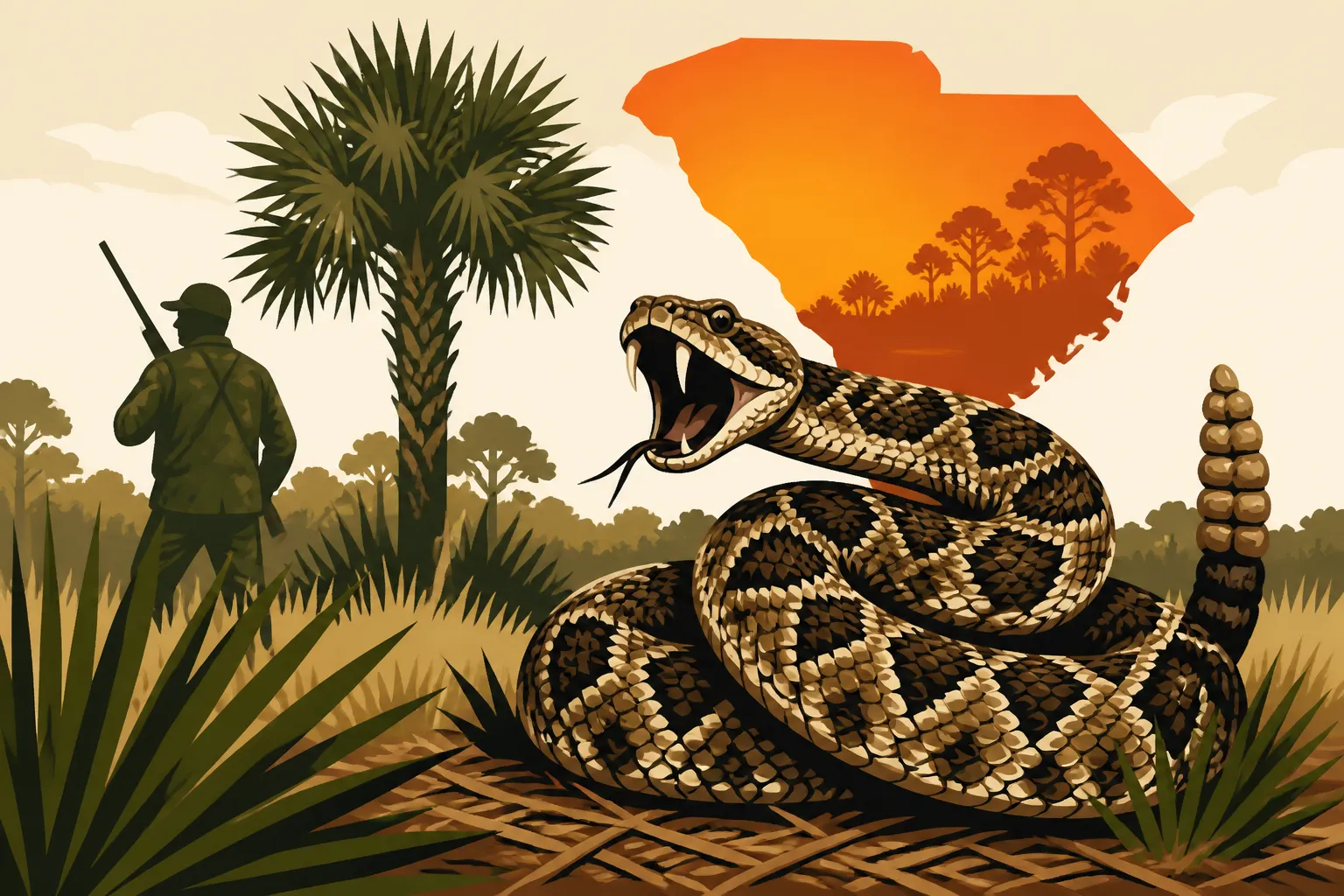
The Eastern diamondback has a distinctive look that, once you know it, is hard to mistake for anything else, even among our other venomous residents. They are heavy-bodied snakes, often growing quite long, with adults regularly exceeding four or five feet, and some reaching over seven feet! The most obvious identifying mark is the series of dark, diamond-shaped patterns with lighter borders running down their back. These diamonds are often outlined in yellow or cream. Their coloration typically ranges from brown, olive green, or yellowish to grayish.
Another key feature is their head. It's large and triangular, much wider than their neck, giving them a very distinct silhouette. And, of course, there’s the rattle. While many non-venomous snakes will vibrate their tails, only rattlesnakes have the segmented keratin structure that produces that unmistakable buzzing sound. However, don't rely solely on the rattle; sometimes they don't rattle, or you might not hear it over the rustle of leaves or the wind. Always look for the other physical cues. Their tail typically ends in a series of loose, horny segments, forming the rattle, which is often a dull, brownish-black color.
Here's a quick comparison of key features among some common snakes you might encounter:
| Feature | Eastern Diamondback Rattlesnake | Copperhead | Cottonmouth (Water Moccasin) | Black Racer (Non-venomous) |
|---|---|---|---|---|
| Body Shape | Very heavy, thick | Medium, moderately stout | Heavy, stout | Slender, agile |
| Head Shape | Triangular, distinct neck | Triangular, distinct neck | Triangular, distinct neck | Oval, blends with neck |
| Pattern | Dark diamonds with light borders | Hourglass or Hershey Kiss pattern | Solid dark, or faint crossbands | Uniform glossy black |
| Tail | Rattle (juveniles may have only a button) | Single row of scales, yellowish tip on young | Single row of scales, no rattle | Single row of scales, long and thin |
| Pupil | Vertical (cat-like) | Vertical (cat-like) | Vertical (cat-like) | Round |
| Typical Length | 3-6+ feet | 2-3 feet | 2-4 feet | 3-6 feet |
Their Preferred Habitats and Why Hunters See Them
Eastern diamondbacks are creatures of specific environments, and unfortunately for hunters, those environments often overlap with prime hunting grounds. In South Carolina, you'll primarily find them in drier, sandier areas, often associated with pine forests, longleaf pine savannas, and palmetto flatwoods. They love areas with thick underbrush, briar patches, and dense ground cover where they can ambush prey and hide from predators. Think of those stretches of woods where the pine straw is deep, and fallen logs create perfect basking and hiding spots. They also frequent old fields, agricultural areas bordering woodlands, and even coastal dune areas.
This means if you're Hunting Coastal Maritime Forest Edges or exploring Longleaf Pine Savanna for Deer, you're likely in their territory. They're often found near logging roads, utility cuts, or even overgrown trails because these areas offer sunny spots for basking and easier travel, while still providing quick access to dense cover. When you're still-hunting through sumter forest ridges or working through South Carolina Sandhills Region Scrub Oak, keep your eyes peeled. The dense vegetation provides cover, and the sandy soil is ideal for burrowing or hiding.
When They're Most Active in South Carolina
Like most reptiles, Eastern diamondbacks are ectothermic, meaning they rely on external heat sources to regulate their body temperature. This dictates their activity patterns. In South Carolina, with our extended warm seasons, they can be active for a significant portion of the year. From early spring, typically around March or April, through late fall, often into October or November, you'll find them on the move. They emerge from brumation (a reptile version of hibernation) as temperatures rise, seeking food and mates.
Peak activity usually occurs during warm, sunny days. However, during the sweltering heat of a South Carolina summer, especially in July and August, they may shift their activity to cooler parts of the day, moving more during early mornings, late afternoons, or even at night. This is particularly relevant for those venturing out for Hunting South Carolina's Year-Round Feral Hogs when temperatures can still be scorching. A hunter checking trail cameras in the evening or walking to a stand before dawn could easily stumble upon a snake seeking cooler ground or an opportunistic meal. Always be vigilant, even when the sun isn't directly overhead.
Proactive Steps: Avoiding an Unwanted Encounter
The best encounter with a venomous snake is the one that never happens. Prevention is key, and it involves a combination of appropriate gear, heightened awareness, and smart planning. You can significantly reduce your risk by understanding how to move through snake habitat and what protective measures to take.
Gear Up: The Right Protection for Your Feet and Legs
This is non-negotiable, especially in areas known for rattlesnakes. The vast majority of snake bites occur on the lower leg or foot. Investing in quality snake boots or snake gaiters is perhaps the most important piece of gear for hunting in South Carolina's snake country. These aren't just for peace of mind; they are designed with puncture-resistant materials that can stop a rattler's fangs. Don't skimp here; your safety is worth it.
When choosing, look for boots that come up high on the calf, ideally to the knee, or gaiters that pair well with sturdy hiking boots. Ensure they are comfortable for long walks, as you’ll be covering a lot of ground. Remember, a heavy-bodied snake like a diamondback can strike with surprising force and reach. Combining snake boots with thick, durable pants, like briar pants, offers an extra layer of protection. While they might feel warm during an Warm-Weather Sitting Strategy in South Carolina, the alternative is far worse. Think of it as essential armor, not just clothing.
Situational Awareness: Where to Look and Listen
This is where your hunter's instincts truly come into play. Your eyes and ears are your most powerful tools for snake avoidance. Always watch where you place your feet, especially when stepping over logs, rocks, or through thick brush. Never step blindly. If you can't see the ground you're about to step on, use a stick or your boot to probe the area first.
When walking through dense areas, be mindful of where you place your hands, too. If you're climbing into a treestand, grabbing a branch, or reaching into a bush to clear a shooting lane, always look first. Diamondbacks often coil up at the base of trees or under bushes. Listen for their distinctive rattle, but as mentioned, don't rely solely on it. They may not always rattle before striking, especially if startled. Many hunters use mapping apps like GoHunt to scout and mark potential high-risk areas from previous seasons or sightings, which can make you extra cautious when entering those zones. This type of pre-hunt intelligence, combined with active vigilance, forms a robust defense.
Scouting and Trail Planning with Safety in Mind
Before you even step foot in the woods, spend some time scouting, not just for game, but for potential hazards. When looking at aerial photos or using a mapping tool like GoHunt, identify areas that look like prime snake habitat: dense pine thickets, clear-cuts with heavy regrowth, and areas with lots of fallen timber. When planning your entry and exit routes, consider opting for more open paths if available, even if it means a slightly longer walk. While dense cover holds deer, it also holds snakes.
If you're hunting in particularly remote areas, consider telling someone your planned route and estimated return time. Many modern hunting apps, including GoHunt, have features that allow you to share your location with trusted contacts, which can be invaluable in an emergency. Being aware of your surroundings also includes being mindful of where you set up your ground blind or hang your stand. Check the immediate vicinity for any coiled snakes before settling in. Don't leave gear lying on the ground where a snake could coil underneath it. Remember, snakes are often just trying to find a safe, warm spot, and they might choose the exact same spot you do. Always maintain that heightened sense of awareness, from the moment you leave your vehicle until you return.
What to Do If You Spot One (or Worse, Are Bit)
Even with the best preparation, encounters can happen. Knowing how to react calmly and correctly is crucial, both for preventing a bite and for managing the situation if a bite does occur. Panic is your enemy in these moments.
The Immediate Reaction: Staying Calm and Assessing the Situation
If you see an Eastern diamondback, the first and most important rule is to remain calm and give it space. Do not try to kill it, harass it, or pick it up. Most bites occur when people try to interact with the snake. Slowly back away, maintaining a safe distance. Rattlesnakes can strike about half their body length, so a 5-foot snake can strike 2.5 feet. Give it more room than that. Keep your eyes on the snake as you retreat to ensure it doesn't move towards you.
If the snake is between you and your intended path, find an alternative route. It's not worth the risk. If you are with other hunters, quietly alert them to the snake's presence and guide them away from it. Teach everyone in your hunting party about proper snake identification and avoidance. If it's coiled and rattling, it's a warning, and you should absolutely heed it. Sometimes, a snake will simply be crossing a path or basking. If you give it space, it will usually move off on its own.
Post-Bite Protocol: Getting Help and First Aid
If, despite all precautions, a bite occurs, immediate action is critical.
- Stay Calm and Call for Help Immediately: This cannot be stressed enough. Panic will only increase your heart rate, which can spread the venom more quickly. Call 911 or your local emergency number right away. If you're in a remote area, use a satellite messenger or a hunting app with emergency features. GoHunt, for example, often has GPS coordinates that can be quickly shared, which is vital for responders trying to locate you in the wilderness.
- Move Away from the Snake: Ensure you are no longer in danger of another bite.
- Remove Restrictive Clothing/Jewelry: Swelling will occur, so remove rings, watches, bracelets, or tight clothing near the bite area before swelling begins.
- Keep the Affected Area Still and Below Heart Level (if possible): Minimize movement of the bitten limb to help slow the spread of venom. If feasible, keep it slightly below the level of your heart.
- Clean the Wound: Gently wash the bite area with soap and water if available, but do not flush with excessive water or alcohol.
- Cover with a Clean, Dry Dressing: Apply a clean, dry dressing or bandage loosely over the bite.
- Do NOT:
- Apply a tourniquet: This can cause more harm than good and lead to tissue damage.
- Cut the wound or try to suck out venom: This is ineffective and can introduce infection.
- Apply ice or heat: Neither is beneficial and can worsen the situation.
- Drink alcohol or consume caffeine: These can increase heart rate and venom circulation.
- Attempt to catch or kill the snake: This risks further bites and isn't necessary for treatment. Antivenom is administered based on symptoms, not snake identification.
Getting to a hospital for antivenom as quickly as possible is the primary goal. Every minute counts. Having a First Aid Kits for Remote Swamp Ground with you can be beneficial for basic wound care and shock prevention, but remember, snakebite treatment requires professional medical attention.
Tracking and Reporting: What Comes Next
After a snakebite, once immediate medical attention is underway, there's a period of recovery and observation. The medical staff will monitor you closely, administer antivenom as needed, and manage pain and swelling. Recovery time varies greatly depending on the severity of the bite, the amount of venom injected, and individual response. It can range from a few days to several weeks, sometimes with long-term tissue damage requiring extensive rehabilitation.
For hunters, there's also the aspect of reporting. If you were on public land, such as a Wildlife Management Area (WMA) or National Forest, it can be helpful to notify the managing agency (e.g., SCDNR or the Forest Service) about the incident. This information can contribute to their understanding of snake activity in certain areas and help them disseminate warnings or educational materials to other users. While not strictly required, it's a courtesy that can benefit the wider hunting community.
Most importantly, after such an event, it's natural to feel apprehensive about returning to the woods. Take your time, process the experience, and slowly rebuild your confidence. Education and preparation are your best allies in overcoming fear and ensuring that future outings are safe and enjoyable. Remember, the goal is always to minimize risk and respect the wildlife that calls South Carolina home.
Disclaimer
This article is for general informational purposes only and does not constitute professional advice. Laws, prices and regulations vary by location and change over time. Consult a qualified professional for guidance on your specific situation.