South Carolina Deer Antler Growth Timeline
There's a deep fascination, and sometimes a real puzzle, for hunters in South Carolina: understanding how a buck's antlers grow and change throughout the year. We've all seen those pictures of tiny velvet nubs in spring and then, seemingly overnight, a magnificent rack in the fall. It can be incredibly frustrating trying to predict what a buck will look like from one season to the next or even just decipher what you're seeing on a blurry trail cam photo. This guide is here to unravel the mystery, providing a detailed look at the South Carolina deer antler growth timeline and what it means for your hunting strategy.
The Annual Cycle of Antler Growth in South Carolina Bucks
The growth of antlers is one of nature's most impressive feats, a rapid biological process that resets itself every single year. For a South Carolina buck, this cycle is intrinsically linked to the changing seasons, hormonal shifts, and the availability of crucial nutrients. Understanding this annual rhythm is key to predicting a buck's potential and planning your hunts effectively.
Shedding: The Winter Reset
For many deer hunters, the end of the hunting season often marks the beginning of shed hunting season! Typically, South Carolina bucks will begin to cast their antlers in late winter, usually from late January through March, though some individuals may shed earlier or later. This timing is largely governed by a drop in testosterone levels after the intensity of the rut has passed. Once those hormone levels dip, a layer of bone-dissolving cells forms at the pedicle (the base where the antler attaches to the skull), weakening the connection until the antler simply falls off.
You might find sheds lying in fields where deer have been feeding, along creek bottoms they use for travel, or nestled in thick piney woods where they sought refuge. Bucks can shed one antler and carry the other for days or even weeks before it, too, drops. It's a natural, cyclical process, leaving them temporarily "bald" as they recover from the strenuous breeding season. Finding these sheds is not just a treasure hunt; it's a direct peek into the health and potential of the bucks in your area, giving you clues for the coming year.
Early Spring: The Velvet Sprout
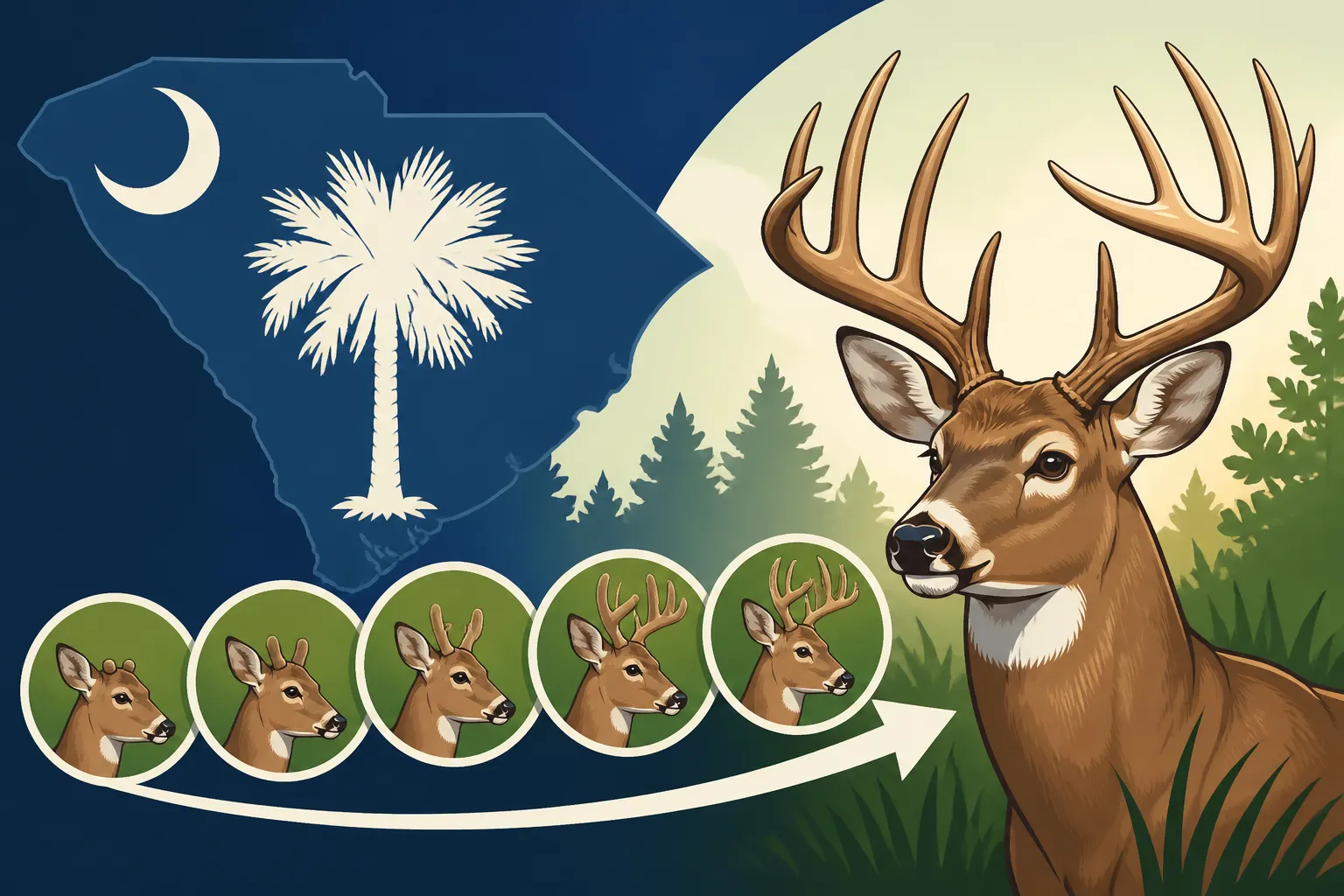
As winter fades and the vibrant green of spring bursts forth across the Palmetto State, a buck's testosterone levels begin to rise again, signaling the start of a brand new antler growth cycle. By late March and early April, you'll start seeing small, fuzzy nubs emerging from the pedicles. These aren't just bare bone; they're covered in a soft, nutrient-rich skin known as velvet, which supplies blood, oxygen, and minerals directly to the rapidly growing bone.
During these initial weeks, growth might seem slow, but it's a critical foundation phase. Bucks are actively seeking out nutrient-dense forage to recover from winter and fuel this new growth. Early green-up in fields, fresh browse in the hardwoods, and lush food plots are all vital. A buck's body is literally building bone at an astonishing rate, sometimes up to an inch or more per day during peak periods. The quality of their diet at this stage sets the stage for the entire rack.
Summer Surge: Rapid Development
The true magic of antler growth happens during the long, hot South Carolina summer. From May through July, antler development goes into overdrive. This is when bucks pack on the most mass and length, and the basic architecture of their rack—the number of points, beam length, and spread—becomes evident. It's a sight to behold if you can catch it on a trail camera. You'll see antlers elongate, tines push skyward, and mass build up rapidly.
The intense heat and humidity of a South Carolina summer require bucks to stay hydrated and continue finding high-quality forage. They'll often frequent cooler, shadier areas, especially during the midday sun. Minerals are particularly important during this phase, with calcium and phosphorus being essential for bone formation. Many hunters utilize mineral supplements on private land, but wild deer rely on natural sources in the soil and plants. This period of rapid growth is entirely dependent on the buck's overall health and the nutritional richness of its habitat. Think of it as a sprint where every bit of energy and every available nutrient is thrown into growing that impressive headgear.
Hardening and Polishing: Ready for the Rut
As the long days of summer begin to shorten and a subtle hint of fall enters the air, typically from late August into early September, the antler growth cycle reaches its dramatic conclusion. Once the antlers have reached their full genetic potential for the year, blood flow to the velvet ceases. The velvet dries up, often becoming itchy and irritating for the buck. This is when they begin the process of "stripping" or "polishing" their antlers.
Bucks will vigorously rub their antlers on saplings, small trees, and brush to remove the now-dead velvet. This rubbing not only cleans the antlers but also stains them with tree sap and blood, giving them their characteristic dark, polished appearance. It’s also an important way for bucks to mark their territory and condition themselves for the coming rut. Once the velvet is completely gone, the antlers are hard, sharp, and ready for battle, signaling that the breeding season is just around the corner. Hunters eager for the earliest opportunities should note When South Carolina's Archery Season Opens as some bucks may be stripped well before traditional firearms seasons begin.
Key Factors Shaping South Carolina Antler Development
While the annual cycle follows a predictable timeline, the actual size and configuration of a buck's antlers are influenced by a complex interplay of several critical factors. Hunters across the varied landscapes of South Carolina, from the Lowcountry swamps to the Upstate mountains, will observe differences based on these elements.
Age: The Maturation Curve
Without a doubt, a buck's age is the single most influential factor in antler size. Young bucks (1.5 to 2.5 years old) are still growing themselves, so much of their energy is diverted to body development, resulting in smaller antlers. They might carry spikes or small forked horns. As a buck matures, typically reaching peak antler production between 4.5 and 6.5 years old, his body has reached its full growth, and more energy can be dedicated to producing larger, more robust antlers.
Think about it this way: a 1.5-year-old buck is like a teenager; still growing into his frame, and not ready for a full beard, let alone a grand rack. A 4.5-year-old buck, however, is in his prime, a seasoned athlete with all his resources focused on showing off. After their prime, a buck's antler quality may start to decline as they age further, much like an older athlete's performance might slightly taper off. Understanding the South Carolina Buck Age Structure in your hunting area is crucial for setting realistic expectations.
Nutrition: The Building Blocks
You can't build a mansion without good materials, and a buck can't grow impressive antlers without top-notch nutrition. A consistent diet rich in protein, minerals (especially calcium and phosphorus), and vitamins is absolutely essential. Deer living in areas with abundant, high-quality forage—like agricultural fields, managed timber stands with lush undergrowth, or diverse hardwoods with plenty of acorns—will generally produce larger antlers than those in poor habitats.
Consider the difference between a buck living in a rich river bottom, feasting on protein-packed browse and mast, compared to one struggling in a drought-stricken pine barren. The well-fed buck will simply have more resources to allocate to antler growth. This is why areas with strong agricultural components or excellent habitat management often boast bigger racks. Even subtle changes in food sources can impact antler growth; for example, a poor acorn year means deer rely more heavily on browse and can affect their condition going into the winter and spring. Paying attention to Late-Season Food Sources for South Carolina Whitetails is important, as a healthy deer going into winter is more likely to grow better antlers the following spring.
Genetics: Inherited Potential
Just like humans, deer inherit certain traits from their parents, and antler characteristics are definitely one of them. While a buck needs to be old enough and well-fed, genetics dictate the potential for antler growth. Some deer families are simply predisposed to grow wider racks, more points, or heavier mass, regardless of how good their nutrition or age might be, up to a certain point.
It's a complex puzzle, and separating genetics from environment can be tough in the wild. You might have a 3.5-year-old buck with excellent nutrition and still only a respectable 8-point, whereas a similar-aged buck just a few miles away might be a wide 10-point, due to differing genetics. Herd management often considers genetic factors, though on public lands, it's virtually impossible to influence on a large scale. However, observing consistent antler patterns in a particular area might offer clues about the local deer's genetic makeup.
Habitat and Health: The Environmental Impact
The overall health of a buck, which is heavily influenced by its environment, also plays a significant role. Factors like population density, disease, and weather extremes can all impact antler development. In areas with high deer density, competition for food can be intense, leading to stressed animals and smaller antlers across the herd. Disease outbreaks, like Epizootic Hemorrhagic Disease (EHD), can also set back a buck's health and, consequently, its antler growth.
Severe droughts can reduce the availability and quality of forage, while harsh winters can deplete a buck's body reserves, leaving less energy for antler production in the spring. Predator pressure can also keep deer stressed and on the move, burning calories that could otherwise go to growth. On the flip side, well-managed habitats that provide ample food, water, and cover promote healthier deer and maximize their antler-growing potential. Tools like GoHunt can help you analyze habitat types and predict deer movement, which can indirectly help you understand the health and potential of the deer in a given area.
Observing and Interpreting Antler Development Afield
As hunters, our objective isn't just to understand the biology; it's to apply that knowledge in the field. Watching antlers develop throughout the seasons provides invaluable intelligence, helping us scout more effectively and make informed decisions during the hunt. This is where the science meets the practical art of deer hunting.
Scouting for Seasonal Changes
From the moment winter gives way to spring, smart hunters are thinking about antler development. Trail cameras become our eyes in the woods, capturing the subtle—and not so subtle—changes in a buck's headgear. In April, you're looking for those first velvet bumps, giving you an early indication of which bucks survived the winter and are starting fresh. By May and June, you'll start to see the basic frame: is he growing wider? Does he have brow tines? How many points are starting to emerge?
Come July and August, this is when the true potential is revealed. Pictures from this period will show you most of what you'll see in the fall, minus the velvet. You can observe mass, tine length, and overall symmetry. A good long-term scouting strategy using cameras set up on mineral sites or travel corridors can help you track individual bucks year over year. Knowing Scouting South Carolina Public Land Before Season is crucial for getting these early season insights, allowing you to identify individual deer and track their growth.
Using Trail Cameras for Longitudinal Study
Trail cameras are arguably the single best tool for observing the South Carolina deer antler growth timeline in real-time. By placing cameras strategically on trails, near food sources, or along creek beds, you can collect a visual diary of a buck's development. Think of it as a longitudinal study, but with more camouflage and less paperwork. Regularly checking your cameras, even outside of hunting season, gives you invaluable data.
If you have consistent camera placement, you can track the same bucks year after year, observing how their antlers change with age, how they recover from injuries, or how they respond to habitat changes. This long-term data can help you identify mature bucks, understand their home ranges, and even predict their movements once the season opens. You can use mapping tools, like those found on GoHunt, to mark where you've captured specific bucks and start to piece together their patterns throughout the year, combining antler development with movement data.
Connecting Antler Stage to Rutting Behavior
The final stages of antler development are intimately tied to the onset of the rut. When bucks shed their velvet and begin polishing their antlers, it’s a clear signal that their testosterone levels are peaking, and they are becoming increasingly aggressive and focused on breeding. This transition, typically in late August and early September in many parts of South Carolina, means bucks are moving out of their summer bachelor groups and starting to establish dominance.
As a hunter, recognizing this transition is vital. Velvet shedding marks the shift from a summer pattern, where bucks are often predictable around food sources, to a more agitated, rut-driven pattern. You'll start to see more rubs and scrapes as bucks mark their territory. Knowing when bucks are stripped clean and ready to breed helps you zero in on the prime window for Hunting the Rut in the Coastal Zones or wherever you happen to hunt. The visible change in their antlers serves as a biological calendar, telling us exactly where they are in their annual cycle of seeking does.
What the Antler Timeline Means for South Carolina Hunters
Understanding the detailed South Carolina deer antler growth timeline isn't just for curiosity's sake; it's a powerful tool that can dramatically influence your hunting success and contribute to responsible herd management. It allows us to move beyond guesswork and make more informed decisions afield.
Strategic Timing for Different Objectives
Knowing when antlers are developing, when they're hardening, and when bucks are moving into their rutting phase allows for incredibly strategic hunt planning. If your goal is to harvest a specific mature buck, tracking his antler development through trail camera photos in late summer can help you pinpoint his likely whereabouts and peak activity times come fall. You'll know his rack potential, and you can choose to hold out for him.
For early season archery hunters, observing bucks still in velvet can be a unique opportunity, but it also signals that the deer are likely still on summer patterns, often around agricultural fields or consistent water sources. As velvet sheds, and the first rubs appear, it's a clear indicator that bucks are becoming more aggressive and seeking out scrapes, meaning you might shift your focus to thicker cover or travel corridors. This understanding helps tailor your tactics to the deer's current stage of life, rather than just the calendar.
Understanding Local Deer Potential
The antler growth timeline, when combined with other factors, gives hunters a clearer picture of the local deer population's health and potential. If you're consistently seeing young bucks with underdeveloped antlers in an area, even at 2.5 or 3.5 years old, it might indicate nutritional deficiencies, high population density, or poor age structure. Conversely, seeing a good number of mature bucks with impressive racks suggests a healthy herd and habitat.
This kind of observation, especially when paired with harvest data, can help you understand what's typical for your specific hunting grounds. For instance, some of the Best South Carolina Counties for Big Bucks are known for specific habitat qualities that lead to excellent antler growth. Knowing the potential allows you to set realistic goals and appreciate the animals you're pursuing. It also helps manage expectations; not every 3.5-year-old buck in every part of the state will be a Boone and Crockett contender, and that's perfectly normal.
Contributing to Responsible Deer Management
Responsible deer management isn't just about harvest numbers; it's also about understanding the health and dynamics of the herd. By observing antler development, hunters indirectly contribute to this understanding. For example, if many bucks in a specific area are showing stunted growth despite being of appropriate age, it could signal an issue that local wildlife biologists might want to investigate, such as overpopulation or habitat degradation.
TABLE: South Carolina Deer Antler Growth Cycle Overview
| Phase | Approximate Timing (South Carolina) | Key Characteristics | Hunter's Observation | Implications for Hunting |
|---|---|---|---|---|
| Shedding | Late January – March | Antlers fall off due to low testosterone. Bucks are "bald." | Finding shed antlers on the ground. | Opportunity for shed hunting, assessing winter survival. |
| Velvet Sprout | March – Early May | Small velvet-covered nubs emerge and begin growing. | Tiny fuzzy bumps visible, slowly elongating. | Bucks recovering from winter, focused on nutrition. |
| Rapid Growth | May – July | Antlers grow rapidly in length, mass, and points. | Visible increase in size, tines developing. | Trail cam scouting is crucial for monitoring potential. |
| Hardening | Late July – August | Blood flow to velvet ceases; antlers calcify. | Velvet appears shriveled, sometimes bloody. | Bucks begin to feel irritable, may start light rubbing. |
| Velvet Shed | Late August – Early September | Bucks rub velvet off, polishing antlers. | Fresh rubs appear; antlers are clean, hard, and stained. | Rut activity begins, bucks become more aggressive. Consider Reading a Ridge for Upstate Deer for early season sign. |
| Post-Rut | Late November – January | Antlers are hard, used for sparring and breeding. | Full, polished racks. Bucks focused on breeding/recovery. | Peak rut hunting, then focusing on late-season food. |
Data collected through trail cameras, combined with harvest reports (which you can learn more about by reviewing South Carolina Deer Harvest Records), offer valuable insights into the age structure and overall health of the deer population. This kind of grassroots information, shared with wildlife agencies or discussed within hunting clubs, can support broader conservation efforts. It reminds us that hunting is not just a recreational pursuit, but a vital part of wildlife stewardship.
Disclaimer
This article is for general informational purposes only and does not constitute professional advice. Laws, prices and regulations vary by location and change over time. Consult a qualified professional for guidance on your specific situation.