South Carolina Elk History and Extirpation
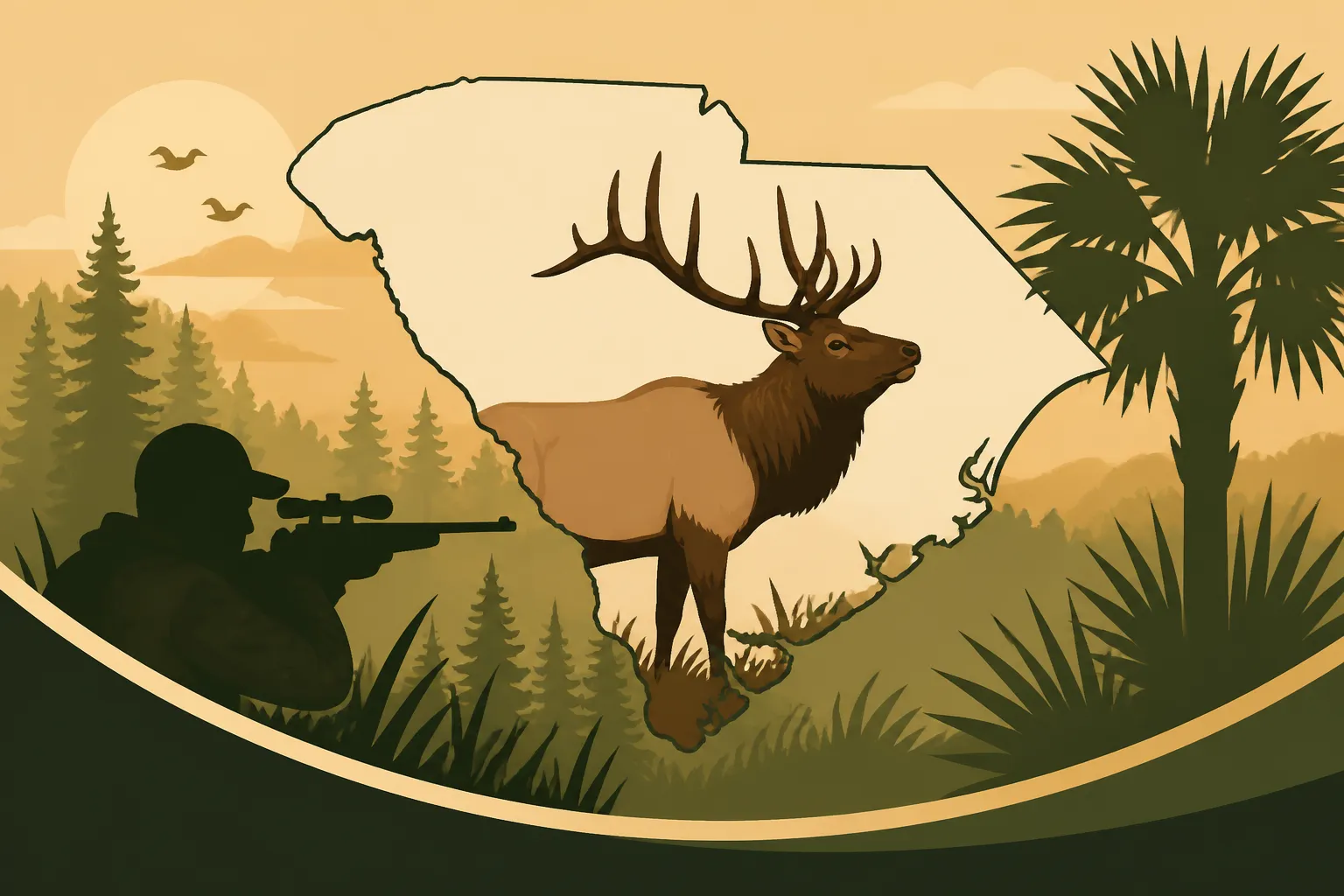
Many of us South Carolina hunters spend countless hours dreaming of vast, wild places, picturing big game roaming our forests. While deer and bear are here, the majestic elk, once a common sight across the state, is sadly absent. It’s a real shame to think about what we’ve lost, and it raises questions about how such magnificent animals could simply vanish from our landscape. This guide will walk you through the fascinating, yet ultimately somber, history of elk in South Carolina, exploring when and where they roamed, why they disappeared, and the lasting impact of their extirpation on our state's natural heritage.
The Early Days: Elk Roaming the Palmetto State
It might sound like a tall tale to someone who's only ever seen a whitetail in the Lowcountry, but indeed, elk were once a vital part of South Carolina's diverse ecosystem. Imagine stalking through dense bottomland hardwoods or scaling a rolling Upstate ridge and encountering a herd of these massive animals, their antlers reaching skyward. It's a powerful image, and it was a reality for thousands of years.
Historically, elk were found across a vast range of North America, and their presence extended deep into the southeastern United States, including all of what we now call South Carolina. These weren't just stray individuals; evidence suggests established populations thrived here. They were common enough that early European explorers and settlers frequently noted their presence in historical accounts and journals. These original elk were likely a subspecies of eastern elk, larger than our modern deer, with bulls sometimes weighing over 1,000 pounds and sporting impressive racks. They were magnificent creatures that would have dwarfed even the largest South Carolina Deer Population Estimate we see today.
Elk were master adapters, utilizing a variety of habitats. While often associated with mountainous terrain, they were equally at home in the rich river bottoms, open savannas, and extensive hardwood forests that once characterized much of South Carolina, from the Appalachian foothills down to the coastal plains. They were grazers and browsers, shaping the landscape by consuming grasses, forbs, and the tender shoots of trees and shrubs. Their presence was a testament to the health and vastness of the pre-colonial South Carolina wilderness, a time when large tracts of unbroken habitat stretched for hundreds of miles, providing everything a large herbivore could need.
Think about the sheer scale of the landscape they would have required. An elk herd needs a lot of room to forage, move between seasonal ranges, and avoid predators. In those days, the concept of a "game zone" like South Carolina's Four Game Zones would have been utterly meaningless to them, as they could freely traverse what we now consider distinct ecological regions. Their trails would have crisscrossed the state, following ancient pathways dictated by food sources, water, and security cover.
The March of Progress: Unregulated Hunting and Their Demise
Sadly, the arrival of European settlers marked the beginning of the end for South Carolina's elk. While Native American populations hunted elk for millennia, their methods were generally sustainable, in tune with the rhythm of the land. They relied on elk for sustenance, hides, and tools, but they did so in a way that didn't decimate populations.
However, the influx of European colonists brought a different approach to wildlife. The boundless frontier often led to a perception that natural resources were infinite. This period saw the rise of unregulated hunting, driven by two primary factors: subsistence and commercial exploitation. Settlers, often struggling to establish themselves, hunted elk for their meat to feed their families. But perhaps more devastating was market hunting. Elk hides and meat were valuable commodities, traded extensively. Professional hunters would kill dozens, sometimes hundreds, of animals, often leaving carcasses to rot after stripping them of their most valuable parts.
This intense, unrestricted hunting pressure was something the elk populations simply couldn't withstand. Unlike today's carefully managed South Carolina Deer Season Structure Explained, with its bag limits and reporting requirements, there were virtually no laws or conservation ethics to protect these animals. A hunter could kill as many as they pleased, whenever they pleased, and there was no mechanism to monitor populations or ensure their long-term survival. This relentless pursuit, coupled with relatively primitive weapons that often wounded rather than instantly killed, led to a rapid decline. It was a race to harvest, with little thought for the future.
Vanishing Forests: Habitat Loss and Fragmentation
As devastating as unregulated hunting was, it didn't act alone. The dramatic transformation of the South Carolina landscape played an equally critical role in the extirpation of elk. The same forces that were pushing out Native American populations were also pushing out the wildlife that depended on vast, unbroken wilderness.
With European settlement came widespread agriculture. Forests were cleared at an alarming rate to create farmland for crops like cotton, indigo, and rice, particularly in the fertile coastal plains and river valleys. Towns and cities began to spring up, further fragmenting the remaining wild spaces. Elk, as large-bodied animals requiring extensive areas for their natural movements and feeding patterns, were particularly vulnerable to this habitat loss.
Imagine a herd needing to travel miles between a rich browsing area and a secure bedding ground. As clearings grew larger and more numerous, these corridors became disrupted. What were once seamless forests became isolated patches, too small to support a viable elk population. This fragmentation also made them more accessible to hunters, further increasing pressure. The land that had once been an expansive habitat for elk, where they could roam freely, was increasingly carved up by roads, farms, and human settlements. This wasn't just a challenge for elk; other species also suffered, leading to declines like South Carolina's Historic Quail Decline, though for different reasons.
The scale of this environmental transformation is hard to grasp today, where conservation efforts focus on protecting and connecting existing wildlife corridors. But in those centuries, the prevailing mindset was one of conquest and development, with little regard for ecological consequences. The loss of vital, contiguous habitat meant that even if hunting pressure had somehow eased, the elk would have struggled immensely to find sufficient resources and refuge.
The Long Goodbye: When the Elk Disappeared
The disappearance of elk from South Carolina wasn't a sudden, cataclysmic event, but rather a slow, agonizing fade. It began with dwindling numbers, local populations winking out one by one, until eventually, there were none left. While exact dates are always difficult to pinpoint for historical extirpations, most sources suggest that by the early to mid-1800s, elk were functionally extinct in South Carolina. There might have been scattered reports of individuals or small groups clinging to existence in the most remote corners, perhaps in the Upstate mountains or deep coastal swamps, but these would have been isolated incidents.
By the time the modern conservation movement began to take root in the late 19th and early 20th centuries, elk were already long gone from the Palmetto State. There were no populations left to protect, no remnant herds to rebuild. The collective memory of elk in South Carolina faded, becoming a footnote in natural history.
Today, if you're looking for elk in the Southeast, you'd need to head to places like North Carolina or Tennessee, where reintroduction efforts have established thriving herds in their mountainous regions. Here in South Carolina, the ecological niche left by the elk has largely been filled by the ubiquitous white-tailed deer, which, while abundant, simply don't possess the same impact on the landscape or the majestic presence of their larger cervid cousins.
The question of reintroduction occasionally comes up, but the challenges are significant. Unlike South Carolina's Black Bear Population, which has rebounded remarkably in certain areas, elk require massive tracts of unbroken habitat to thrive, often thousands of acres per herd. While South Carolina does have significant areas of Public Hunting Land in South Carolina, including national forests, these are often fragmented or in areas with high human density, leading to potential conflicts with landowners and farmers. Disease concerns, such as the spread of chronic wasting disease (CWD) which is actively monitored through programs like South Carolina Wildlife Disease Monitoring and How South Carolina Guards Against CWD, also present a major hurdle for any reintroduction discussions. Even with modern mapping and habitat analysis tools like those offered by GoHunt, identifying truly suitable, vast, and contiguous tracts of land that could support a free-ranging elk population without significant human-wildlife conflict remains incredibly difficult.
It's a stark reminder of the long-term consequences of unchecked exploitation and habitat destruction, a lesson that underpins much of our modern wildlife management and South Carolina Hunter Education Requirements. While we celebrate success stories like the South Carolina Bald Eagle Recovery Near the Coast, the absence of elk serves as a powerful testament to what we've lost, and why careful stewardship of our natural resources is so vitally important today.
The Elk's Final Chapter: A Summary of Contributing Factors
To better understand the combined pressures that led to the extirpation of elk from South Carolina, consider this overview:
| Factor | Description | Impact on Elk Population |
|---|---|---|
| Unregulated Hunting | Sustained hunting for subsistence and, more significantly, for commercial hides and meat without any limits. | Direct and rapid reduction in population numbers, especially breeding adults. |
| Market Hunting | Large-scale killing of elk for profit, often wasteful, pushing populations to unsustainable levels. | Accelerated decline and wiped out local herds quickly. |
| Habitat Destruction | Widespread clearing of forests for agriculture, logging, and human settlements. | Reduced available food and cover, eliminated vital migration corridors. |
| Habitat Fragmentation | Breaking up large tracts of wilderness into smaller, isolated patches by roads, farms, and development. | Isolated remaining herds, limited genetic exchange, increased vulnerability to local extinction. |
| Lack of Conservation Ethics | Absence of laws, regulations, or public awareness regarding sustainable wildlife management. | No mechanisms in place to protect or rebuild populations once they started to decline. |
| Human Population Growth | Increasing human presence put more pressure on land and wildlife resources. | Direct conflict with humans, increased access for hunters, and further habitat encroachment. |
Disclaimer
This article is for general informational purposes only and does not constitute professional advice. Laws, prices and regulations vary by location and change over time. Consult a qualified professional for guidance on your specific situation.