How South Carolina Quail Numbers Fell Since the 1960s
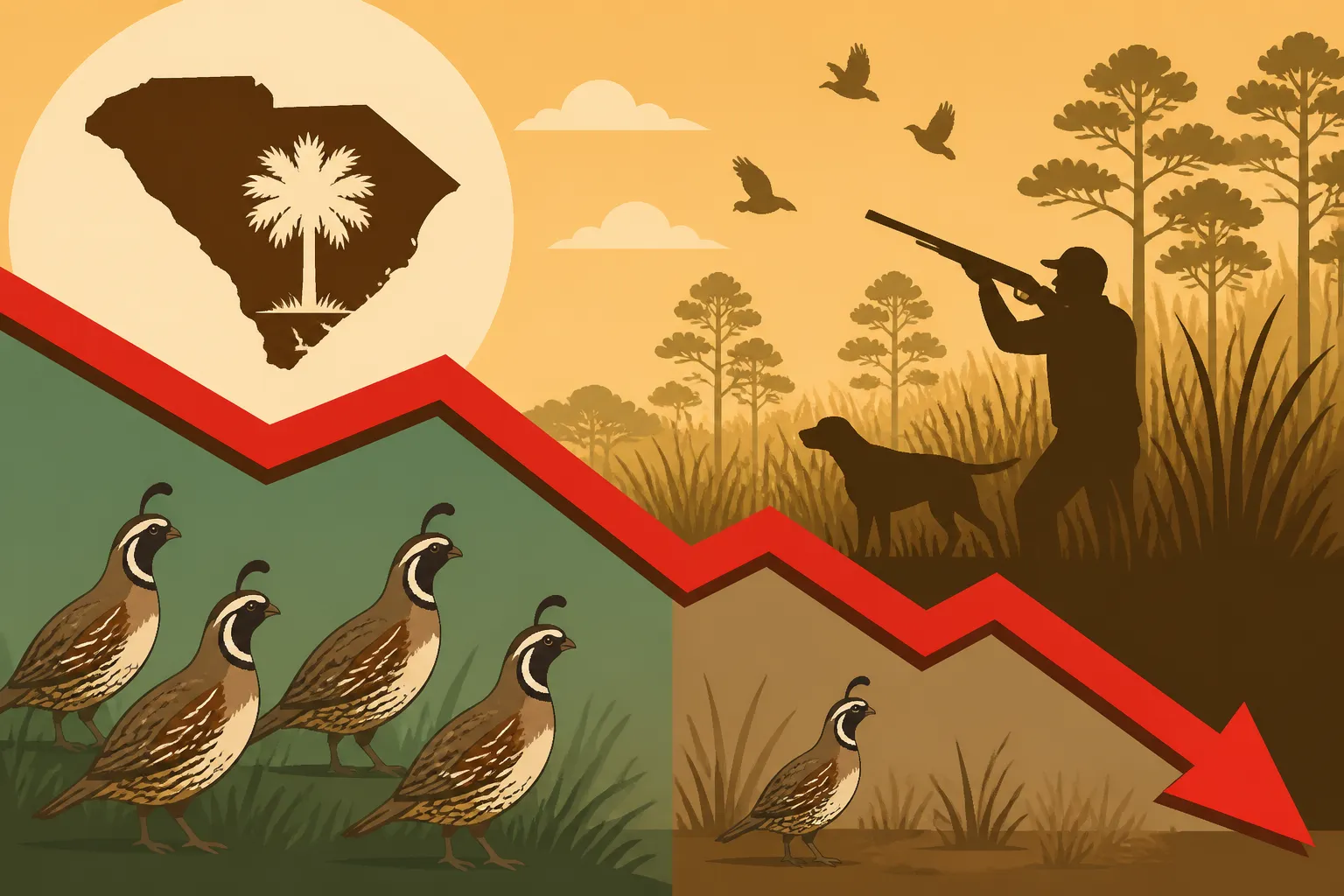
Oh, the bobwhite quail. For anyone who grew up hunting in South Carolina, or even just hearing stories from their grandparents, the decline of the bobwhite is a source of real heartache. It’s hard to reconcile the tales of coveys flushing from every hedgerow with the rare, treasured sight of a single bird today. This guide aims to shed some light on the complex factors that have contributed to the dramatic fall of South Carolina's bobwhite quail populations since the 1960s, helping us understand what happened and what it might take to bring them back.
The Golden Age of Quail Hunting and Its Fading Echo
There was a time, not so long ago, when the sound of a bobwhite whistle wasn't a rare treat but a common symphony across the South Carolina landscape. Hunters didn't "hunt for" quail as much as they "walked up" coveys, almost predictably, through a tapestry of diverse habitats. This era, often fondly recalled as the "golden age" of quail hunting, painted a picture of abundance that many modern hunters can only imagine.
A Landscape Transformed: From Patchwork to Pine Plantations
To understand the decline, we first have to picture what the South Carolina countryside looked like before the significant shifts of the late 20th century. Imagine a patchwork quilt of small farms, not sprawling monoculture operations. These farms cultivated a variety of crops, from corn and cotton to peanuts and soybeans, often rotating them. Crucially, they weren't "clean" farms by today's standards. There were always unkempt field edges, weedy fence rows, fallow fields growing up in natural successional cover, and scattered woodlots with a mix of hardwoods and pines. This was a messy, glorious buffet for quail.
These varied land uses naturally created an intricate mosaic of habitat. The field edges provided crucial grit and insect forage. The fallow fields and brushy fence rows offered nesting cover, escape routes, and dense shelter from predators and harsh weather. Even the small woodlots, often harvested selectively or for firewood, had open understories that allowed sunlight to hit the ground, promoting seed-producing forbs and grasses. This dynamic, constantly regenerating environment was tailor-made for bobwhites, providing all their life cycle needs within a small, easily traversable home range. It wasn't designed for quail, but it perfectly suited them, making the pursuit of South Carolina Small Game Season Rules a rich experience for generations.
The "Gone from the Good Ole Days" Feeling
For many who remember it, the decline of the bobwhite isn't just a statistical blip; it's a palpable loss of a cherished tradition and connection to the land. You hear it in the voices of seasoned hunters: "You used to couldn't walk ten steps without a covey getting up," or "My daddy and I would fill a vest in an afternoon." That feeling of abundance, that expectation of success, has largely vanished. Now, finding a wild covey is often the culmination of extensive scouting, dedicated habitat work, and frankly, a good deal of luck.
This shift impacts more than just the hunt itself. It touches on family legacies, the passing down of knowledge, and the unique camaraderie forged while following a brace of pointers across a field. The absence of those whistling birds leaves a quiet void where once there was vibrant life. It’s a bittersweet reflection on a bygone era, and it serves as a stark reminder of how dramatically our shared natural spaces have changed. Even the memories of Rabbit Hunting South Carolina Fencerows or Squirrel Hunting South Carolina Bottomland Hardwoods often include the incidental flush of a quail covey, a testament to their former prevalence.
Major Drivers Behind the Decline
Pinpointing a single cause for the bobwhite's vanishing act is difficult because it's truly a death by a thousand cuts. However, a few major factors stand out as the primary culprits behind the precipitous drop in quail numbers across South Carolina since the 1960s.
Habitat Loss and Fragmentation: The Biggest Culprit
Hands down, the single most devastating factor for bobwhite quail has been the widespread loss and fragmentation of suitable habitat. The agricultural revolution, coupled with intense forestry practices, completely reshaped the landscape. Small, diverse farms gave way to massive industrial operations focused on single crops, often cultivated from fence row to fence row. This meant the eradication of those crucial weedy borders, brushy ditches, and idle fields that bobwhites depended on for food, nesting, and escape cover.
Similarly, the rise of large-scale pine plantations, particularly vast tracts of even-aged loblolly pine, created biological deserts for quail. While pine can be part of a healthy quail habitat if managed correctly with frequent burning and thinning, dense, unmanaged pine plantations choke out the vital understory plants that provide food and cover. The monoculture of fescue grass, often planted for cattle, is another insidious culprit, forming a dense sod that prevents quail from moving through, foraging, or nesting. Furthermore, increasing urban sprawl and development in many parts of the state have carved up what little diverse habitat remains, creating isolated pockets that are too small or disconnected to support viable quail populations. Understanding these habitat changes is key to appreciating why we don't see the same numbers of White-Tailed Deer Across South Carolina in certain areas, or why How South Carolina Quail Numbers Fell Since the 1960s is such a critical topic.
Predation Pressure: A Growing Challenge
While predation has always been a natural part of the ecosystem, its impact on quail populations has become significantly amplified in recent decades. As habitat became fragmented and degraded, quail became more vulnerable. The same landscape changes that hurt quail often benefited generalist predators like coyotes, raccoons, opossums, and even feral cats. These predators thrive in the fragmented "edge" habitats that result from development and agriculture, having easy access to food sources and denning sites.
With less dense, secure nesting cover, quail nests are more easily found and destroyed. Poult survival rates plummet when dense brood-rearing cover, rich in insects, is absent, leaving the young birds exposed to avian and terrestrial predators. It’s a vicious cycle: as quail numbers drop due to habitat loss, the remaining birds face even greater pressure from an abundance of adaptable predators. While habitat is the foundational issue, the increased predation pressure acts as a constant brake on any potential recovery. Hunters working to manage habitat might even consider Coyote Calling in South Carolina Farm Country as part of a broader predator control strategy to give quail a fighting chance.
Changing Agricultural Practices and Pesticides
The shift from traditional, smaller-scale farming to modern, industrial agriculture has had a profound, often overlooked, impact on quail. The "clean farming" mentality, where every inch of arable land is utilized and kept free of "weeds," directly eliminates vital food sources for bobwhites. Quail rely heavily on the seeds of native annual weeds and legumes for much of their diet, especially in fall and winter. When herbicides are applied broadly to eliminate these plants from crop fields and field margins, quail lose a critical food supply.
Beyond herbicides, the widespread use of insecticides has also played a role. Quail chicks, or "poults," are almost entirely dependent on insects for protein during their first few weeks of life. This high-protein diet is essential for their rapid growth and development. When insecticides decimate insect populations in and around agricultural fields, poults struggle to find enough to eat, leading to higher mortality rates and weaker birds. The combination of losing both plant seeds and insect forage creates an environment where quail simply cannot thrive, making it harder for them to successfully navigate the seasons, including the Warm-Weather Sitting Strategy in South Carolina.
Climate Shifts and Disease Considerations
While habitat loss and increased predation are undoubtedly the primary drivers of the bobwhite quail decline, environmental factors like changing weather patterns and disease can also play a significant, albeit often secondary, role, especially for populations already teetering on the edge.
The Role of Weather Patterns
Quail are surprisingly resilient birds, but they are also quite sensitive to extreme weather events, particularly during critical breeding and brooding periods. Prolonged wet springs, for example, can be disastrous for nesting success. Nests can be flooded, eggs chilled, and newly hatched poults are highly susceptible to hypothermia and disease in wet, cold conditions. A cold, wet chick simply doesn't stand much of a chance.
Conversely, severe droughts can also impact quail. Dry conditions can reduce the availability of succulent green vegetation and insects, both important for adult quail and crucial for growing poults. Droughts can also make food sources scarcer and cover less dense, increasing vulnerability to predators. When populations are already low and struggling due to habitat issues, these unfavorable weather patterns can push them further down, making recovery even more challenging. It highlights how delicate the balance is for many species, including South Carolina Turkey Population Trends which can also be affected by weather.
Disease and Parasite Impact
While not as widely studied or impactful as habitat loss, disease and parasites can certainly contribute to quail mortality, particularly in stressed or declining populations. Just like any wildlife, bobwhites can be susceptible to various avian diseases. When birds are malnourished or living in suboptimal habitat, their immune systems might be compromised, making them more vulnerable to infections.
Parasites, both internal (like worms) and external (like ticks and mites), can also weaken birds, reducing their energy reserves and making them more susceptible to predation or disease. In a healthy, robust population, these factors are usually kept in check. However, in a fragmented landscape with already low numbers, even small outbreaks or increased parasite loads can have a disproportionately negative effect on local coveys, preventing them from bouncing back. Researchers often monitor such factors as part of South Carolina Wildlife Disease Monitoring to understand broader ecosystem health.
Hope for the Future: Conservation Efforts and Restoration
It's easy to get disheartened by the decline of bobwhite quail, but the story isn't entirely grim. Dedicated conservationists, landowners, and hunters are working tirelessly to bring back this iconic bird. The key to their recovery lies in understanding what quail truly need and then actively managing the landscape to provide it.
Managed Pine Could Restore South Carolina Quail
One of the most promising avenues for quail restoration in South Carolina involves the active management of pine forests, particularly longleaf pine. Unlike dense, unmanaged loblolly plantations, properly managed pine stands, especially those consisting of longleaf, can offer excellent quail habitat. The secret? Prescribed burning and thinning.
Regular prescribed burns, typically every 1-3 years, are absolutely critical. Fire clears out dense undergrowth, reduces fuel loads, and stimulates the growth of native grasses, forbs, and legumes that produce the seeds and harbor the insects quail need. It creates that open, park-like understory where quail can easily move, forage, and escape. Thinning pine stands allows more sunlight to reach the forest floor, further promoting the growth of these beneficial plants. Combined with edge feathering—creating a gradual transition zone between forest and field—these practices can transform unproductive timberland into thriving quail habitat. It’s a long-term commitment, but places where this is being done are seeing encouraging results. It's a prime example of How Managed Pine Could Restore South Carolina Quail and emphasizes the importance of understanding the intricate relationship between South Carolina Longleaf Pine and Quail Habitat.
What Hunters and Landowners Can Do
The good news is that hunters and private landowners have an immense capacity to make a difference. Habitat restoration isn't solely the domain of large agencies; even small parcels can contribute to the mosaic of cover quail need. One of the most impactful things you can do is to embrace a less "tidy" approach to land management. Leave fallow fields to grow up in natural weeds and cover. Plant native warm-season grasses (like switchgrass, bluestem, and indiangrass) in buffers or field corners, which provide excellent nesting and brooding cover. Create brush piles using cut trees or limbs, offering critical escape cover from aerial predators.
Working with agricultural neighbors to encourage buffer strips, delayed mowing of hayfields, or even leaving standing grain fields can also provide vital resources. Consider participating in cost-share programs that help landowners implement these habitat improvements. The reward isn't just seeing more quail; it's the satisfaction of contributing to the recovery of a species that embodies the spirit of the Southern outdoors. Every bit of good habitat, whether it's a small patch on private land or a large WMA, helps. Organizations like Quail Forever offer resources and guidance, connecting landowners with the knowledge and tools to create positive change. Even just knowing Where Francis Marion Bucks Bed might mean understanding the adjacent habitat that could support quail. It's about a holistic view of the land, one where every piece plays a role in fostering healthy wildlife populations.
| Habitat Feature | Pre-1960s Landscape | Post-1960s Landscape | Impact on Quail |
|---|---|---|---|
| Field Edges | Brushy, weedy, diverse plants | Clean, sharp, herbicide-treated | Loss of food, cover, insect forage |
| Agriculture | Small, diverse crop rotations | Large-scale monoculture | Reduced food diversity, increased pesticide use |
| Forestry | Mixed woods, selective harvest, frequent fire | Dense, even-aged pine plantations, less fire | Loss of open understory, seed production, insect habitat |
| Fallow Ground | Common, allowed to naturalize | Rare, converted to production | Loss of nesting, brooding, and escape cover |
| Predators | Natural balance, varied habitat | Increased populations, thriving in fragmented landscapes | Increased nest and poult mortality |
| Insecticides | Minimal use | Widespread use | Reduced critical protein for poults |
| Herbicides | Minimal use | Widespread use | Eliminated vital weed seed food sources |
Disclaimer
This article is for general informational purposes only and does not constitute professional advice. Laws, prices and regulations vary by location and change over time. Consult a qualified professional for guidance on your specific situation.