South Carolina Coyote Attacks on Livestock
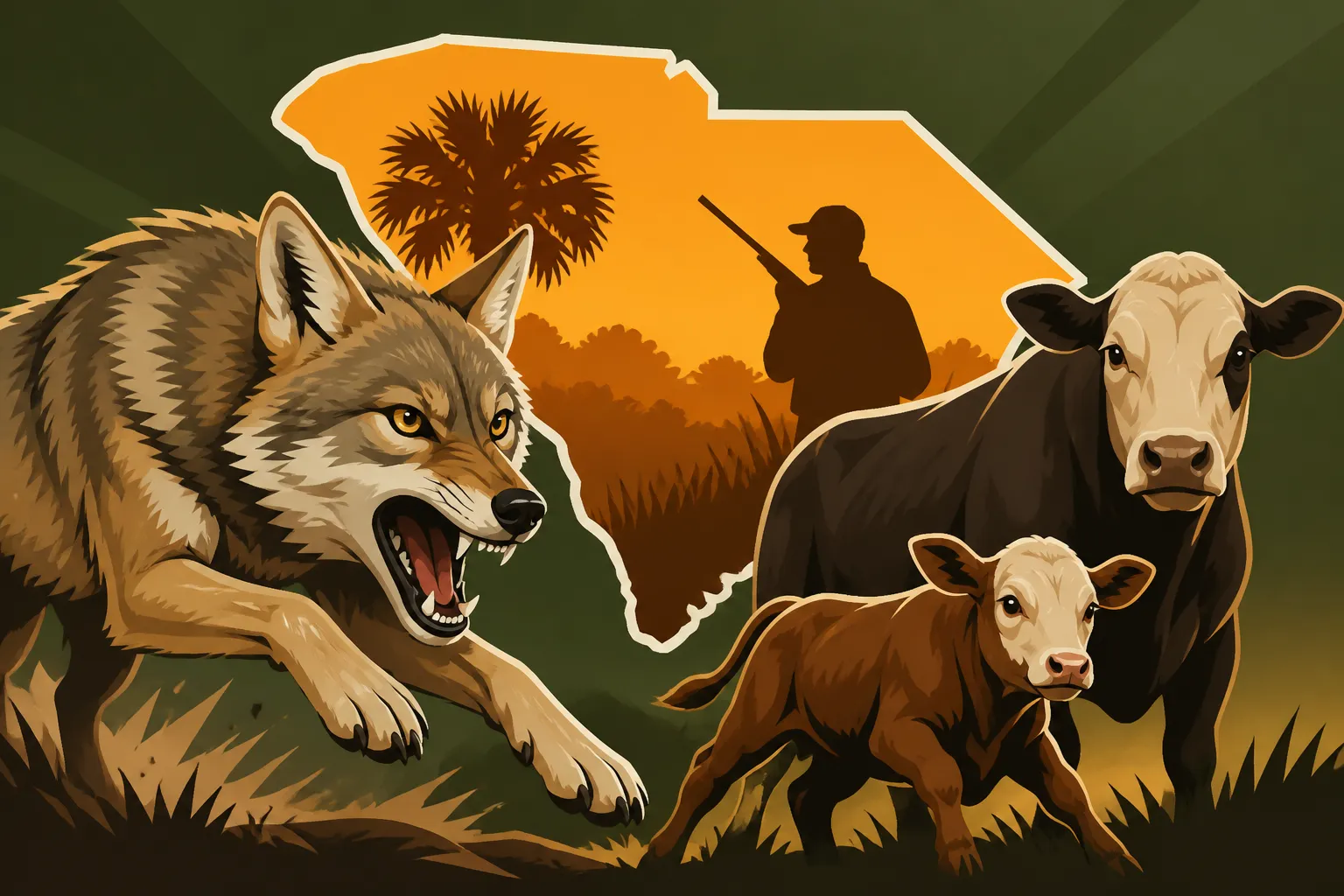
It's a gut-wrenching feeling to wake up and find your livestock, your livelihood, or even your beloved backyard chickens, fallen victim to a predator. For many South Carolina farmers and hobbyists, the rising presence of coyotes has turned this fear into a harsh reality. This guide will walk you through understanding why coyotes attack livestock, how to identify these incidents, and most importantly, practical, actionable steps you can take to protect your animals and your peace of mind.
Understanding the Coyote Threat to South Carolina Livestock
Coyotes weren't always a widespread presence in South Carolina, but they are here now, and they've adapted remarkably well to our diverse landscapes, from the coastal plains to the Upstate mountains. Their arrival and spread across the state marked a significant shift in our ecological balance, bringing with it new challenges for livestock owners. Understanding their behavior and why they target domestic animals is the first step in protecting your farm.
Why Coyotes Target Livestock
Initially, coyotes might have been primarily seen as deer or small game predators, but their opportunistic nature means they will readily shift their diet to whatever is most available and easiest to catch. Livestock, unfortunately, often fits this description perfectly. A coyote isn't inherently "evil" for attacking a lamb; it's simply seeking an easy meal for itself and its pups.
In many areas of South Carolina, particularly where natural prey populations might fluctuate, or in close proximity to human development, coyotes learn that livestock can be a reliable food source. Young, sick, or unattended animals are particularly vulnerable. Calves, lambs, goat kids, and poultry are frequent targets due to their size and defenselessness. Even larger animals can be at risk, especially if they are birthing or injured. It's not just about hunger; it's about efficiency. A coyote will always choose the path of least resistance for its next meal. This behavior is a natural part of Coyotes and Predators in South Carolina, and understanding it is key to defense.
Livestock Most Vulnerable in South Carolina
While coyotes are adaptable predators, certain types of livestock are inherently more vulnerable due to their size, behavior, or housing conditions. Small, young, and domesticated animals top this list.
- Calves: Newborn calves, especially during calving season, are prime targets. They are slow, less agile, and mothers, particularly first-time heifers, might not be as vigilant as older cows. Coyotes often target the hindquarters or soft tissue, and even if they don't make an immediate kill, the injuries can be severe enough to be fatal or require euthanasia. This is a common concern in areas where South Carolina Coyote Range and Density is high.
- Lambs and Goat Kids: These are perhaps the most vulnerable livestock. Small, easily overwhelmed, and often kept in pastures where coyotes can gain access, lambs and kids represent an easy and abundant food source for coyotes, especially when multiple births occur. Owners of sheep and goats often report the highest rates of predation.
- Poultry: Chickens, ducks, turkeys, and geese are practically irresistible to coyotes. Often free-ranging or kept in less secure coops, they are easy to catch and kill. A single coyote can decimate a flock in one night, often killing far more than it can consume, a behavior known as "surplus killing."
- Pigs: While adult hogs can be formidable, piglets are at risk. Feral hogs themselves are often seen as competitors by coyotes, but a domestic sow's litter can still be vulnerable if not adequately protected. This highlights the complex predator dynamics, often overlapping with concerns like South Carolina Hog Hunting Permit Requirements.
Understanding which of your animals are most at risk, and when, can help you prioritize your protective measures.
Identifying a Coyote Attack: Clues at the Kill Site
When you discover an injured or deceased animal, it's natural to jump to conclusions, but correctly identifying the predator is crucial for effective management. Coyote attacks have distinct characteristics that differentiate them from other predators, domestic dog attacks, or even non-predatory deaths. Paying close attention to the scene can save you time, money, and frustration.
Differentiating Coyote Kills from Other Predators
South Carolina is home to various predators, and not every attack is the work of a coyote. Bobcat attacks, for instance, might show different patterns, often on smaller game or poultry, with smaller tooth marks. Domestic dog attacks, surprisingly common, can be the trickiest to distinguish, as they often exhibit similar behaviors to coyotes. However, dogs frequently leave more indiscriminate, scattered injuries, often not focused on a kill site or food source, and they might be more likely to chase and injure multiple animals without making a clean kill.
When evaluating a carcass, look for specific patterns:
- Bite Marks and Wounds: Coyotes typically go for the throat, jugular, or windpipe to quickly incapacitate their prey. You'll often find puncture wounds on the throat, sometimes accompanied by bruising. On larger livestock like calves, coyotes might also target the flanks, hindquarters, or udders, especially if the animal is already down.
- Feeding Patterns: Coyotes tend to start feeding on the internal organs, particularly the liver, lungs, and stomach, often entering through the flank or belly. On smaller animals, they might consume the entire carcass, leaving very little behind. In contrast, bobcats might focus more on muscle tissue.
- Tracks and Scat: Look for tracks around the kill site. Coyote tracks are typically more oval than domestic dog tracks, with distinct claw marks and often a clear "X" pattern between the pads. Their scat often contains hair and bone fragments of their prey, which can provide further clues.
- Absence of Other Scavengers: If the kill is fresh and scavengers like vultures haven't arrived, it points more strongly to a recent predator event.
Recognizing these subtle differences helps you narrow down the culprit. Knowing South Carolina Coyote Diet in Farm Country can help you predict their targets and feeding habits.
Signs of Predation Versus Other Causes of Death
It's also important to rule out non-predatory causes of death. Sometimes, an animal might die from illness, birthing complications, or an accident, and then scavengers, including coyotes, move in. This can lead to misattribution of the death to predation.
Consider these factors:
- Blood Loss and Bruising: A live animal attacked by a predator will show significant blood loss and bruising around the wound sites, indicating the heart was still pumping. If the animal was already dead, blood loss would be minimal, and bruising would be absent.
- Disturbance at the Scene: Is there evidence of a struggle? Broken fences, matted grass, or overturned dirt can indicate a live animal fighting for its life.
- Missing Parts: If large parts of the carcass are missing, especially internal organs, it points strongly to predation and consumption. If only minor damage is present, it might be scavenging after natural death.
By carefully observing the scene, you can often reconstruct the events leading to your animal's death, confirming whether a coyote was indeed the primary cause. This careful approach is similar to how we might track other wildlife, perhaps using methods described in Scouting South Carolina Public Land Before Season for different game.
| Predator Type | Typical Target Areas | Feeding Pattern | Tracks (Key Differences) | Other Clues |
|---|---|---|---|---|
| Coyote | Throat, hindquarters, flank | Internal organs (liver, lungs), then muscle | Oval, distinct claw marks, "X" pattern | Stalks prey, clean kills, sometimes drags |
| Domestic Dog | Indiscriminate, often multiple areas | Rarely consume, more mutilation | Rounder, less distinct claw marks (variable) | Often multiple animals injured, chaotic scene |
| Bobcat | Head, neck, back of skull (smaller prey) | Muscle tissue, often covers uneaten portions | Retractable claws, rounder, no claw marks | Stalk-and-pounce, often on poultry/fawns |
| Fox | Neck, head (poultry/small game) | Small portions of muscle, sometimes just head | Smaller, similar to small dog but more refined | Often carries prey away, clean kills on birds |
Proactive Protection Strategies for Your South Carolina Farm
The best defense against coyote attacks is prevention. Waiting until an attack occurs to implement strategies means you've already suffered a loss. Many effective measures can be integrated into your farm's routine, building layers of protection that make your livestock less appealing and harder to access for opportunistic predators like coyotes.
Fortifying Fencing and Enclosures
One of the most immediate and tangible ways to deter coyotes is to create physical barriers. A good fence isn't just about keeping your animals in; it's about keeping predators out.
- Electric Fencing: This is often the most effective and cost-efficient option for large pastures. A multi-strand electric fence, especially with some wires close to the ground (6-8 inches) and then spaced upwards, can deliver a deterrent shock that teaches coyotes to steer clear. Many farmers use high-tensile wire systems. The key is consistent voltage and ensuring vegetation doesn't short out the lower wires. For smaller enclosures, portable electric netting can be invaluable for containing poultry or small ruminants.
- Woven Wire Fencing: While more expensive to install, heavy-gauge woven wire (also called net wire) can be very effective, especially if combined with an electric "hot" wire at the top and bottom. Burying the bottom of the fence, or using a "skirt" of wire laid flat on the ground and secured, can prevent coyotes from digging underneath.
- Night Penning: For particularly vulnerable livestock like lambs, goat kids, or poultry, bringing them into secure pens or coops at night significantly reduces their risk. These night enclosures should have solid roofs, sturdy walls, and secure latches. Coyotes are primarily nocturnal, and removing the easy nighttime target can dramatically cut down on predation. This is a common practice, sometimes involving planning ahead, much like you might use GoHunt to plan your hunting itinerary.
Remember, a fence is only as strong as its weakest point. Regularly inspect your fences for breaches, loose wires, or areas where digging might be easier.
Guardian Animals and Deterrent Technologies
Sometimes, physical barriers aren't enough, or they're impractical for large, sprawling pastures. This is where living deterrents and technological solutions come into play.
- Livestock Guardian Dogs (LGDs): Breeds like Great Pyrenees, Anatolian Shepherds, and Akbash dogs are specifically bred to live with and protect livestock. They are incredibly effective, forming strong bonds with their charges and actively deterring predators through barking, scent marking, and direct confrontation. It's a long-term investment, requiring careful selection, training, and care, but for many producers, an LGD is the cornerstone of their predator management strategy.
- Donkeys and Llamas: While not as universally effective as LGDs, certain individual donkeys and llamas can make excellent guardians, particularly for sheep and goats. They are naturally territorial and will often chase, kick, or spit at canid predators. However, their effectiveness varies greatly by individual animal, and they are generally less reliable against persistent or multiple coyotes.
- Flashing Lights and Sound Devices: Motion-activated lights (strobe or flashing) or sound alarms can startle coyotes and make them wary of an area. While useful as a temporary deterrent, coyotes are intelligent and can habituate to these devices over time. Rotating their placement and varying the types of deterrents can increase their long-term effectiveness. For large properties, knowing the lay of the land, perhaps by mapping out potential coyote travel corridors using tools similar to how you'd use GoHunt, can help strategically place these deterrents.
Smart Livestock Management Practices
Beyond fences and guardian animals, day-to-day management practices can significantly influence your farm's attractiveness to coyotes.
- Remove Attractants: Keep your farm tidy. Don't leave pet food outside, secure garbage cans, and promptly dispose of animal carcasses (burial or rendering) to avoid drawing scavengers, which can then attract predators. Coyotes are very keen on easy meals, and a readily available food source, even if unintended, can make your property a regular stop.
- Calving/Lambing Season Vigilance: This is the peak vulnerability period. Consider concentrating birthing animals in smaller, more secure pastures closer to your home during this time. Regular checks, especially at dawn and dusk, can deter coyotes. Some producers even implement "night riders" or more frequent patrols during these critical weeks.
- Maintain Herd Health: Healthy, strong animals are less likely to be targeted. A sick or injured animal is an easy meal. Work with your veterinarian to ensure your livestock are in optimal condition.
- Habitat Modification: While you can't control the entire landscape, you can manage the immediate vicinity of your pastures. Clear dense brush, tall weeds, and overgrown fencerows that could provide cover for coyotes to approach unseen. This creates a less inviting hunting ground for them. Understanding how coyotes use various covers is also relevant to general wildlife behavior, as seen in South Carolina Coyote Diet in Farm Country.
By combining several of these strategies, you create a robust, layered defense that makes your farm a much harder, and less appealing, target for coyotes.
Managing Coyote Populations and Post-Attack Response
Even with the best preventative measures, coyote attacks can still happen. When they do, knowing how to respond effectively, both immediately after an incident and in the long term, is crucial for mitigating future losses and managing the local coyote population responsibly.
Reporting and Investigating Attacks
When you discover evidence of a coyote attack, your immediate response can be critical for both your animals and for gaining assistance.
- Document the Scene: Take photos and notes of the deceased animal, its wounds, tracks, scat, and any signs of struggle. This documentation is invaluable for confirming predation and identifying the specific predator. As discussed in South Carolina Wildlife Disease Monitoring, collecting detailed information helps state agencies understand population health and trends.
- Contact Local Authorities: Depending on your location, you might contact your local county extension office, your state wildlife agency (like SCDNR in South Carolina), or USDA Wildlife Services. These agencies often have specialists who can help investigate the incident, confirm the predator, and offer advice on further management. They might also be able to provide resources or support for lethal control options if necessary.
- Community Awareness: Talk to your neighbors. If you're experiencing coyote issues, chances are others in the area are too. Sharing information can help identify patterns, coordinate efforts, and create a broader, more effective community response to manage coyote presence, particularly in areas like South Carolina's Two Bear Hunting Zones where large predators are a known factor.
Legal and Responsible Coyote Control
In South Carolina, coyotes are not native and are generally considered an unprotected species, meaning they can be hunted or trapped year-round on private land, often without specific bag limits, provided you have the appropriate hunting license. However, there are still rules and best practices to follow.
- Hunting and Trapping: For landowners experiencing chronic predation, lethal control can be a necessary step.
- Hunting: Many hunters participate in coyote hunting, sometimes as a recreational pursuit, or specifically to help landowners. Night hunting with artificial lights is generally permitted for coyotes on private land in South Carolina, which can be highly effective given their nocturnal nature. It’s important to understand the Night Hunting Rules for South Carolina Coyotes to ensure compliance.
- Trapping: Trapping, particularly with foothold traps or snares, can be very effective for removing specific problem coyotes. However, trapping requires specialized knowledge and skill to be done humanely and effectively, and to avoid capturing non-target animals. If you're considering trapping, it's highly recommended to get training or hire a professional trapper. General trapping guidance can be found in resources like Running a Trapline in Rural South Carolina.
- Professional Assistance: USDA Wildlife Services often works with livestock producers to address predation issues. They can offer advice, conduct depredation control, and even assist with integrated pest management plans. Their expertise can be invaluable for persistent or severe problems.
- Integrated Pest Management (IPM): The most successful coyote management plans combine multiple strategies: fencing, guardian animals, habitat modification, and targeted lethal control when necessary. Relying on a single method is rarely as effective as a comprehensive, adaptive approach. This includes understanding the broader ecosystem, as detailed in How Many Coyotes South Carolina Has and When South Carolina Coyotes First Arrived.
Coyote management is an ongoing process, not a one-time fix. Populations can rebound, and new coyotes can move into an area. By staying vigilant, adapting your strategies, and working with your community and wildlife professionals, you can protect your livestock and coexist more peacefully with these intelligent predators.
Disclaimer
This article is for general informational purposes only and does not constitute professional advice. Laws, prices and regulations vary by location and change over time. Consult a qualified professional for guidance on your specific situation.