How Many Coyotes South Carolina Has
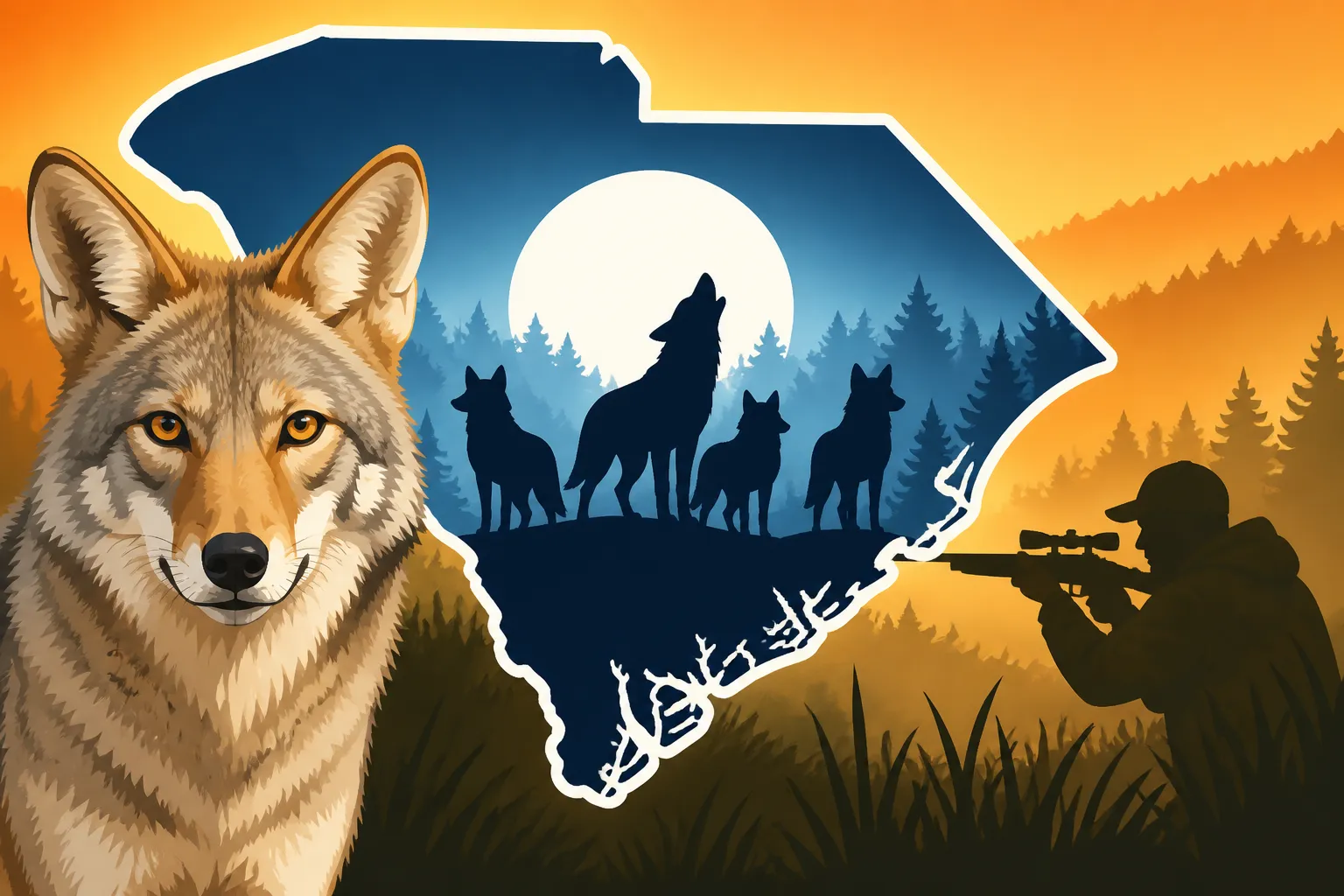
It's a common frustration for hunters across South Carolina: you spend hours scouting, planting food plots, and putting in the work, only to feel like something unseen is constantly putting pressure on your deer and turkey populations. Coyotes, once a rarity, have become a ubiquitous presence, and many of us are left wondering just how many of these cunning predators have made our beautiful state their home. This guide dives deep into understanding the coyote population in South Carolina, why exact numbers are so elusive, and what their widespread presence means for hunters like us.
The Elusive Numbers Game: Why Pinpointing Coyote Populations Is Tricky
When you talk about deer or turkey populations, wildlife agencies can often give you estimates based on surveys, harvest data, and scientific models. With coyotes, it's a completely different ballgame. These animals are incredibly adaptable, elusive, and their population dynamics are a complex puzzle that wildlife biologists grapple with constantly. It's not as simple as counting tracks in the mud, though that's part of the picture.
The Nature of Coyote Expansion in South Carolina
Coyotes weren't always a native resident of the Palmetto State. They are, in fact, relatively new arrivals, having expanded their range eastward over the last century or so. They likely arrived in South Carolina sometime in the 1970s and 80s, gradually moving down from states like Georgia and North Carolina, and quickly found our diverse habitats to be quite welcoming. From the vast swamps of the Lowcountry to the rolling hills and farmlands of the Upstate, coyotes have proven themselves to be opportunistic survivors. They thrive in broken landscapes—areas with a mix of woods, fields, and even suburban fringes—which describes a huge chunk of South Carolina. Their diet is incredibly varied; they'll eat anything from deer fawns and turkey poults to rodents, insects, berries, and even carrion. This adaptability is precisely why they've been so successful at colonizing virtually every corner of the state, often spreading undetected until their presence becomes undeniable through game camera photos, tracks, or unfortunate encounters with livestock.
Challenges in Estimating Predator Populations
Trying to get an accurate count of coyotes is like trying to nail jelly to a wall. Unlike deer, which can be counted via spotlight surveys or aerial flights in some open areas, coyotes are largely nocturnal and masters of stealth. They have huge home ranges, are incredibly wary of humans, and don't congregate in large, easily countable groups. You might see one or two at dawn or dusk, but their true numbers are often hidden within the dense cover they inhabit. Wildlife agencies often rely on indirect methods to gauge population trends, such as:
- Scent station surveys: Placing bait at specific locations and counting coyote visits.
- Harvest data: Analyzing the number of coyotes taken by trappers and hunters each year. This is more of an indicator of activity and distribution than an actual population count.
- Genetic studies: Analyzing DNA from scat or hair samples to estimate minimum population numbers or genetic diversity.
- Trail camera data: While anecdotal for individual hunters, broad scientific studies using extensive camera grids can offer insights into relative abundance.
The best we can usually get is an estimate or an index of abundance, rather than a hard number. It's less about knowing exactly "how many" and more about understanding "how widespread" and "how many are being observed or harvested."
Understanding the Coyote Presence Across South Carolina
Despite the difficulty in nailing down a precise number, there's no doubt that coyotes are firmly established throughout South Carolina. Their footprints can be found in almost every habitat type, and their impact is felt by hunters, farmers, and even homeowners in some areas.
Regional Distribution and Density
If you hunt anywhere in South Carolina, chances are you've seen coyote sign or heard their eerie howls. They are truly found in all 46 counties. While they are present everywhere, their densities can vary. You might find higher concentrations in areas with abundant food sources, such as agricultural regions where they prey on rodents and consume crop residues, or in mixed pine-hardwood forests with healthy deer populations. The Lowcountry's vast swamps and coastal plain offers ample cover and a year-round food supply, making it prime coyote habitat, but they're just as comfortable ranging through the timbered ridges and valleys of the Upstate.
Hunters often report seeing more coyote activity in certain areas, particularly around clear-cuts, field edges, and along major creek bottoms. For a more general overview of where these animals are commonly encountered, you can look into resources like South Carolina Coyote Range and Density, which provide insights into their established presence across the state. It's not uncommon to hear a farmer in the Midlands lamenting that they see more coyotes on their trail cameras than deer these days, a testament to their pervasive spread.
Indicators from Harvest Data and Public Sightings
Since direct counts are so tough, we rely on a mosaic of indicators to understand the coyote population. Harvest data, reported by hunters and trappers, provides crucial information. While there isn't a statewide mandatory reporting system for coyotes like there is for deer or turkey, the sheer volume of coyotes taken each year, combined with consistent trapping efforts, speaks volumes about their widespread abundance.
Public sightings are another key indicator. This includes everything from roadkill data to anecdotal reports from landowners dealing with livestock depredation. South Carolina Coyote Attacks on Livestock are unfortunately a reality for some farmers, and these incidents highlight the density and activity of coyotes in specific locales. When you hear about someone losing chickens or a calf, it’s a strong signal that coyotes are active in that immediate area.
Tools and apps can also help piece together the puzzle. While no app can tell you an exact coyote population, mapping services can show property boundaries and terrain features crucial for coyote travel. Some hunters utilize platforms with user-generated data to identify areas with high reported coyote activity. A mapping tool like GoHunt might not directly track coyote numbers, but its comprehensive satellite imagery and public land overlays can help you identify prime ambush points or travel corridors where you might encounter them, based on the types of habitat they prefer. While the precise number of coyotes in South Carolina remains a moving target, the consensus among wildlife professionals and hunters alike is that their numbers are substantial and stable, if not increasing, across most regions.
Here's a quick look at why getting an exact number for coyotes is so different from other game species:
| Characteristic | Deer & Turkeys | Coyotes |
|---|---|---|
| Visibility | Often active during daylight, somewhat predictable. | Largely nocturnal, extremely elusive and wary. |
| Home Range | Generally smaller, more localized. | Large, wide-ranging; can travel many miles in a day. |
| Social Structure | Deer in herds, turkeys in flocks. | Small family groups or solitary; less visible aggregation. |
| Habitat Use | Often use open fields, known bedding/roosting areas. | Adaptable to nearly all habitats, utilize dense cover extensively. |
| Reproduction Rate | Known fawn/poult rates, often one litter/brood a year. | Can have large litters (4-7+ pups), rapidly replace losses. |
| Survey Methods | Spotlight counts, aerial surveys, harvest checks. | Trapping indices, scat analysis, trail cam activity, harvest data. |
The Impact of Coyotes on South Carolina's Ecosystem and Hunting
The presence of a widespread, adaptable predator like the coyote inevitably has ripple effects throughout the ecosystem. For South Carolina hunters, these effects are often felt most acutely in the woods during deer and turkey season.
Predation on Deer and Turkey Populations
The primary concern for most hunters is the impact coyotes have on fawn and poult survival. It's a tough truth to swallow, but coyotes are highly efficient predators of young, vulnerable animals. Studies in South Carolina and across the Southeast have repeatedly shown that coyote predation can be a significant factor in fawn mortality. They are incredibly skilled at locating and catching fawns, especially during their first few weeks of life when they are most helpless. This can lead to a noticeable decrease in the number of young deer surviving to adulthood, impacting overall herd recruitment. If you're seeing fewer fawns accompanying does in late summer or a dip in overall deer numbers, coyote predation is definitely a factor to consider in your hunting area. South Carolina Predator Impact on Fawn Recruitment delves deeper into this critical issue.
Similarly, wild turkey poults are also highly vulnerable. Ground-nesting birds, turkey hens and their newly hatched broods are easy targets for opportunistic coyotes. While bobcats, foxes, and raccoons also play a role in turkey predation, coyotes add another layer of pressure, especially on poult survival rates. Many veteran turkey hunters lament the decrease in poult sightings compared to decades past, and while habitat loss and other factors are at play, coyote presence certainly doesn't help. The frustration is real when you feel like you're competing with a ghost in the woods, constantly outsmarting or outmaneuvering your efforts to manage game populations. For more on the bigger picture, check out South Carolina Deer Population Estimate and South Carolina Turkey Population Trends.
Management Strategies and Hunter Participation
Given their widespread presence, total eradication of coyotes in South Carolina is neither feasible nor desirable from an ecological standpoint. However, managing their numbers and impacts is a critical component of wildlife conservation, especially for game species. The good news for hunters and landowners is that South Carolina has very liberal regulations regarding coyote harvest. They are classified as a nuisance species, meaning there are no closed seasons or bag limits on private land, and they can be hunted year-round. This offers a significant opportunity for hunters to contribute directly to predator control efforts.
Many hunters are embracing the challenge, incorporating coyote hunting into their overall strategy. Methods include:
- Calling: Using electronic or mouth calls to mimic prey in distress or other coyote vocalizations. This can be incredibly effective, especially in rural farmlands. Coyote Calling in South Carolina Farm Country offers great insights.
- Trapping: A highly effective method for reducing local populations, though it requires skill and adherence to trapping regulations. Running a Trapline in Rural South Carolina covers this.
- Night hunting: Where legal on private land, hunting at night with lights or thermal optics can be very productive. Night Hunting Rules for South Carolina Coyotes can clarify regulations.
Participating in coyote control isn't just about reducing a predator population; it's about actively managing the ecosystem on your hunting grounds. It's an opportunity to protect the fawns and poults that you hope to see grow into mature deer and gobblers. For public land hunters, while specific WMA rules may apply, coyotes can often be harvested as opportunity presents itself during other hunting seasons. Staying informed about local regulations, possibly through resources like South Carolina WMA Permit Requirements, is always a good idea. A tool like GoHunt can help you identify key terrain features and access points on public land that might be ideal for setting up a calling stand for coyotes, or for understanding travel corridors on private land where you could set traps.
What Does This Mean for the South Carolina Hunter?
The widespread presence of coyotes means that South Carolina hunters need to adapt their approach. It's no longer enough to just focus on deer or turkeys; understanding and managing predator pressure is an integral part of successful hunting in the modern era.
Adapting Hunting Tactics
For deer hunters, this means being more conscious of fawn survival. Hunting tactics might include creating more secure fawning cover, being vigilant about removing coyotes from your property, and even considering earlier season hunts when fawns are still small and vulnerable, as a way to reduce overall deer numbers and ensure more fawns survive to replacement age. Understanding South Carolina Deer Season Structure Explained helps plan. For turkey hunters, reducing local coyote populations can directly benefit poult survival, potentially leading to more birds reaching maturity. This might involve setting up trail cameras to monitor coyote activity before turkey season even begins, giving you a head start on predator control.
It also means that scouting for coyote sign becomes just as important as scouting for deer rubs or turkey tracks. Recognizing coyote scat, tracks, and travel corridors can inform where you set up a stand or place a calling setup. If you use a GPS unit or a mapping app like GoHunt, marking coyote sign and activity hotspots throughout the year can give you a better understanding of their movements and density on your property or public hunting area. Scouting South Carolina Public Land Before Season is a great resource that applies to predator sign as well.
Looking Ahead
Coyotes are here to stay in South Carolina, and their presence is a permanent fixture in our wildlife landscape. While exact numbers will always be a subject of estimation rather than precise counting, their impact on our cherished game species is undeniable. The proactive hunter recognizes this and incorporates predator management into their overall strategy. It's a long-term game, requiring consistent effort, but every coyote removed is one less predator impacting a fawn or a poult.
State wildlife agencies continue to monitor populations and conduct research, and the collective efforts of individual hunters and trappers play a vital role in local population control. By understanding the challenges coyotes present and actively engaging in management, South Carolina hunters can contribute to healthier deer and turkey populations for generations to come. For those looking to truly dive deep into property management, or even just understand the lay of the land better to identify prime predator hunting opportunities, a comprehensive mapping tool such as GoHunt can be invaluable for analyzing habitat, topography, and potential game movement influenced by predators.
Disclaimer
This article is for general informational purposes only and does not constitute professional advice. Laws, prices and regulations vary by location and change over time. Consult a qualified professional for guidance on your specific situation.