South Carolina Legal Firearms for Deer Hunting
Navigating the rulebook for what firearms you can legally use to hunt deer in South Carolina can feel like trying to untangle a fishing line after a big blow. It’s a common frustration for hunters, whether you’re a seasoned veteran or just starting out, because the regulations can seem dense and sometimes contradictory at first glance. This comprehensive guide is here to cut through that confusion, giving you a clear understanding of the legal firearms, calibers, and ammunition you need to know about to confidently and lawfully pursue whitetails across the Palmetto State.
The Foundational Rules for Deer Firearms in South Carolina
Before you even think about stepping into the woods with your chosen deer rifle or shotgun, it’s absolutely crucial to understand the foundational rules that govern firearm use in South Carolina. These aren't just suggestions; they are laws designed to ensure safety, promote ethical hunting, and manage our deer populations effectively. Overlooking any of these can lead to fines, loss of hunting privileges, or worse.
General Principles of Legal Firearms
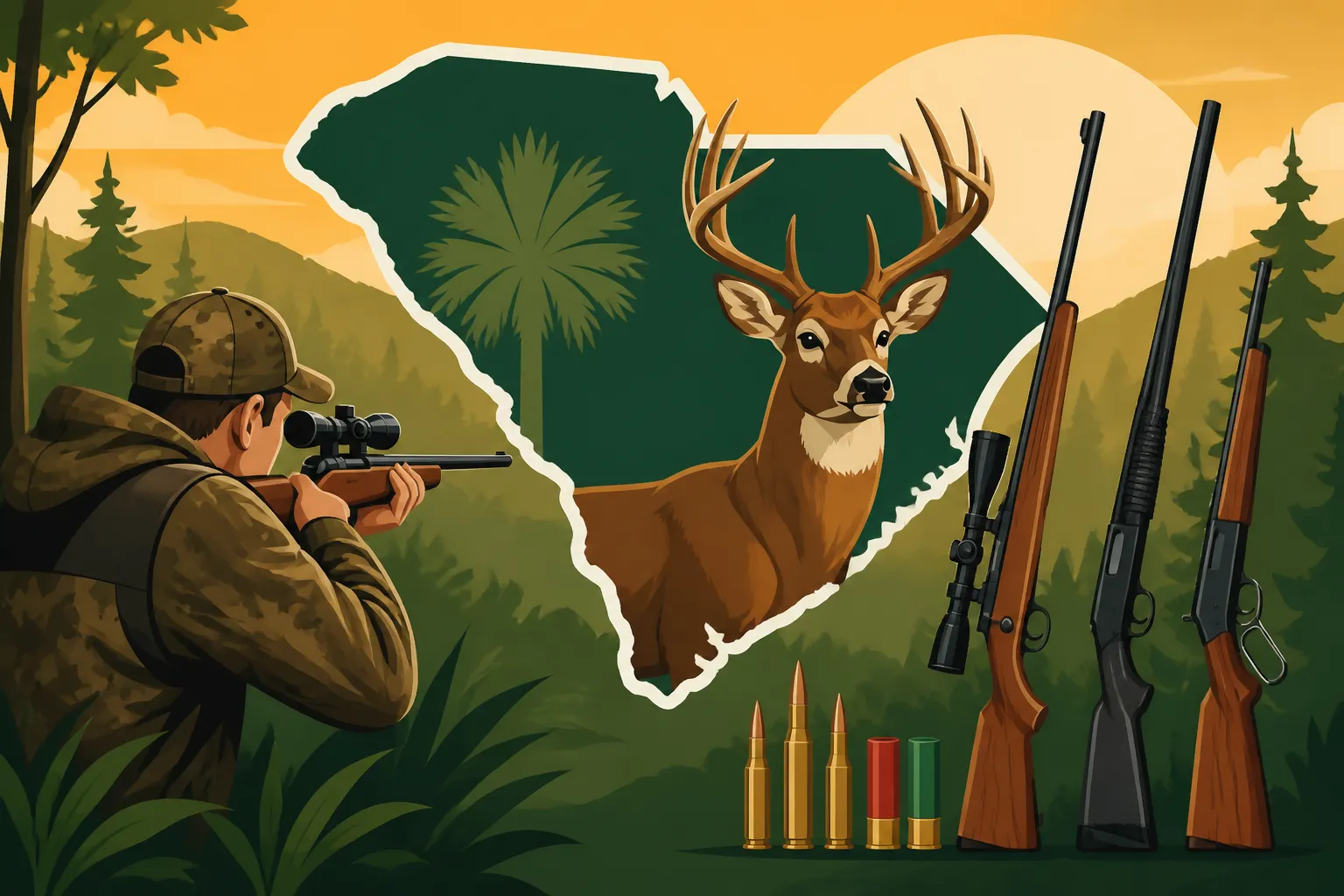
In South Carolina, the general principle for deer hunting is that most centerfire rifles, shotguns, and handguns are legal, provided they meet certain criteria. This open approach allows for a good deal of flexibility, which is a real bonus for hunters who might already own a variety of firearms. However, this flexibility also means you need to be diligent about checking your specific equipment against the regulations. You can't just assume any gun you own is good to go for deer season. It’s always best to consult the latest SCDNR regulations booklet or their website, as rules can occasionally be updated.
For instance, while a powerful .30-06 is certainly legal, so is a smaller .243, which often sparks debates among hunters about what's "enough gun." The state's regulations focus more on the type of firearm and its minimum caliber rather than dictating a specific power level beyond that. This allows hunters to choose based on their comfort, skill, and the terrain they're hunting. Whether you're hunting the thick swamps of the Lowcountry or the rolling hills of the Upstate, your firearm choice will play a role in your success and safety. Make sure you understand the overall South Carolina Deer Season Structure Explained to best plan your hunts.
It’s also important to remember that these general rules apply to private land and most Wildlife Management Areas (WMAs) during the general firearm season. However, there are often specific restrictions for WMAs, primitive weapons seasons, or certain public lands that override these general guidelines. Always double-check the specific area you plan to hunt, as some areas might have shotgun-only rules or other limitations that you wouldn't encounter on private property. This proactive checking is part of responsible hunting in South Carolina.
Important Safety Regulations to Remember
Beyond the type of firearm, safety regulations are paramount. Every hunter in South Carolina needs to adhere to blaze orange requirements, which are designed to ensure visibility and prevent accidents in the field. When hunting deer with a firearm, you are generally required to wear a minimum amount of outer clothing above the waist that is fluorescent orange, commonly known as blaze orange. This is not just for your protection; it’s for the safety of everyone else in the woods, too. It’s a small, bright detail that makes a massive difference, especially when you consider the varied terrain and cover found across the state. For comprehensive details on this, check out our guide on South Carolina Blaze Orange Requirements.
Another critical safety regulation involves hunter education. Most individuals born after June 30, 1979, are required to complete a hunter education course before they can purchase a hunting license in South Carolina. This course covers not only firearm safety and handling but also ethics, wildlife conservation, and basic hunting techniques. Even if you're exempt due to age, brushing up on safety rules is always a good idea. Knowing how to properly carry, load, and unload your firearm, identify your target and what’s beyond it, and avoid accidental discharges are fundamental skills that hunter education reinforces. If you're new to hunting or just need a refresher, understanding South Carolina Hunter Education Requirements is a great place to start.
Furthermore, always be aware of local ordinances and proximity to dwellings, roads, and property lines. South Carolina has laws regarding discharging firearms near occupied buildings or public roadways. Even if you have permission to hunt a specific tract, you must ensure you are following all setback requirements. This means knowing where your bullet will go and ensuring it won’t endanger anyone or anything outside your immediate hunting area. Using mapping tools like those found on the GoHunt app can be incredibly helpful for identifying property lines and ensuring you maintain a safe distance from residential areas or roads, even if Go Outdoors SC is the official state portal for licenses.
Deciphering Legal Firearm Types for Deer
South Carolina offers hunters a variety of options when it comes to legal firearms for deer hunting, which is a blessing for many. However, each type comes with its own set of guidelines, advantages, and limitations that you need to be aware of. Let's break down the specifics for rifles, shotguns, and handguns.
Rifles and Their Specific Guidelines
Rifles are, for many, the quintessential deer hunting weapon, and they are broadly legal for deer hunting across South Carolina during the general firearms season. The state embraces a wide array of calibers, from common choices like the .270 and .30-06 Springfield to modern favorites like the 6.5 Creedmoor and .308 Winchester. However, there is a specific minimum caliber requirement that hunters must adhere to. While smaller calibers like .22 centerfire cartridges are often legal for smaller game or varmints, they are not typically considered appropriate or legal for deer. This is for ethical reasons, ensuring a humane kill. We delve deeper into this specific regulation in our article on South Carolina Minimum Rifle Caliber Rules.
When choosing a rifle, consider the typical shot distances you expect. In the dense pine forests and thick bottomlands common in many parts of South Carolina, shots beyond 150 yards are relatively rare. A flat-shooting rifle is certainly an asset, but extreme long-range capabilities might be overkill for much of the terrain, especially in areas like the Francis Marion National Forest. For those hunting open fields in the Midlands or larger clear-cuts, a rifle capable of accurate shots at 200-300 yards might be more appropriate.
It's also worth noting that while popular, some older military-style rifles might have features that raise questions. The key is that the firearm must be legally owned and operated, and chambered in a legal caliber. Semi-automatic rifles are legal, but magazine capacity can sometimes be a point of confusion; generally, standard hunting capacities are fine. The emphasis is always on safe and ethical hunting, regardless of the rifle's action. Remember, you'll need a South Carolina Resident Hunting License Options and a South Carolina Big Game Permit Requirements to legally hunt deer with a rifle.
Shotguns: Versatility in the Lowcountry and Beyond
Shotguns are another widely used and perfectly legal option for deer hunting in South Carolina, particularly valued for their versatility in thick cover and for specific hunting scenarios. When hunting deer with a shotgun, you must use slugs—a single projectile—not buckshot or birdshot. This is a critical distinction for safety and efficacy. Slugs deliver a powerful punch and are capable of a clean kill on a deer at appropriate ranges, typically up to 100-150 yards depending on the shotgun and slug type.
Many hunters, especially those in the heavily timbered coastal plains or areas with close proximity to residential zones, prefer shotguns. They often feel more comfortable with the shorter effective range of a slug, which minimizes the risk of a projectile traveling too far and endangering others. This makes them an excellent choice for hunting in areas like the Lowcountry, where dense vegetation means deer encounters are often up close and personal. Shotguns are also frequently the only legal firearm during special hunts or in certain WMAs where rifles are prohibited.
Modern slug guns, often purpose-built with rifled barrels and optics, can be incredibly accurate, blurring the line between a traditional shotgun and a dedicated deer rifle. However, even with these advancements, understanding your shotgun's effective range and practicing with slugs is vital. Don't assume your bird hunting shotgun will automatically be accurate with slugs; patterning is key. This versatility makes shotguns a reliable choice for diverse South Carolina landscapes, from coastal marshes to inland forests.
Handguns and Archery Equipment During Firearm Season
Yes, handguns are also a legal firearm for deer hunting in South Carolina, provided they meet the minimum caliber requirements. This might surprise some, but for many, handgun hunting offers a unique challenge and a different kind of thrill. Much like rifles, centerfire handguns are generally permitted, with specific rules about minimum bore size. Revolvers and semi-automatic pistols in appropriate calibers like .357 Magnum, .44 Magnum, 10mm, and even larger calibers are suitable. The effective range of a hunting handgun is typically shorter than a rifle, demanding closer stalking and more precise shot placement.
Hunting deer with a handgun requires significant practice and discipline. It's not a weapon for casual use in the deer woods; it demands a deep understanding of its limitations and your own skill. For many, it's a specialty hunt, focusing on drawing deer into close quarters, perhaps by still-hunting along Sumter Forest ridges or setting up in a ground blind near a known travel corridor. The GoHunt app's detailed mapping features can certainly help you scout potential close-range ambush points.
While not firearms, it's worth noting that archery equipment, including compound bows, recurve bows, and crossbows, is also legal during the general firearms season. So, even if you’re carrying a rifle, you could, theoretically, also have a bow. However, if you are specifically hunting during the Primitive Weapons Deer Hunting in South Carolina season, or an archery-only season, the rules are much stricter, and firearms would be prohibited. Crossbows have their own set of regulations, and you can find specific details on South Carolina Crossbow Equipment Requirements.
Ammunition and Caliber Considerations
Beyond the type of firearm, the ammunition you choose and the caliber of that ammunition are equally important. South Carolina has clear guidelines to ensure humane harvesting and to differentiate between legal and illegal choices for deer hunting. It’s not just about what fits in your gun; it’s about what’s effective and lawful.
Minimum Caliber Requirements
South Carolina enforces minimum caliber requirements for deer hunting to ensure that the firearms used are powerful enough to achieve a quick and humane kill. For centerfire rifles, the general rule is that any centerfire cartridge of .22 caliber or larger is legal for deer. This means popular calibers like .223 Remington and 5.56x45mm are technically permissible for rifles, though many experienced deer hunters would argue that a larger caliber offers a more ethical advantage. For example, a .243 Winchester, while a smaller end of a deer rifle, is entirely capable and quite popular, especially for younger hunters or those sensitive to recoil.
For handguns, the minimum is typically a .22 centerfire, but just like rifles, most handgun hunters opt for significantly larger calibers. Think .357 Magnum, .41 Magnum, .44 Magnum, or 10mm Auto. These larger calibers provide the necessary energy and bullet mass for effective deer hunting. Using a rimfire .22 LR, for example, is absolutely illegal and highly unethical for deer hunting due to its insufficient power. The emphasis is always on ensuring the firearm has enough knockdown power to dispatch the animal quickly.
This table summarizes common legal calibers for deer hunting in South Carolina:
| Firearm Type | Minimum Caliber (General) | Common & Recommended Calibers | Notes on Use |
|---|---|---|---|
| Centerfire Rifle | .22 caliber | .243 Win, .270 Win, .30-06 Sprg, .308 Win, 6.5 Creedmoor | Most popular choice; focus on shot placement. |
| Shotgun | N/A (must use slugs) | 12-gauge, 20-gauge slugs | Excellent in thick cover; effective range shorter than rifle. |
| Centerfire Handgun | .22 centerfire | .357 Mag, .44 Mag, 10mm Auto, .45 Colt | Challenging, requires skill; effective range typically under 50 yards. |
| Muzzleloader | .40 caliber | .50 caliber, .54 caliber | Used during Primitive Weapons season; powerful at close range. |
It’s not just about meeting the minimum; it’s about choosing a caliber you can shoot accurately and confidently. A well-placed shot from a .243 is far more ethical than a poorly placed shot from a .300 Winchester Magnum. Practice, knowing your firearm, and understanding its capabilities are key.
Restrictions on Ammunition Types
Beyond caliber, South Carolina also has specific rules about the type of ammunition you can use. As mentioned, for shotguns, only single projectiles (slugs) are legal for deer. Buckshot, which is a load of multiple large pellets, is not legal for deer hunting in South Carolina. This is a common point of confusion for new hunters, especially if they're coming from states where buckshot might be permitted. The reason is primarily ethical; buckshot patterns can be inconsistent, leading to wounded animals and tracking challenges.
For rifles and handguns, the regulations are less restrictive regarding bullet construction, but the standard is always a single projectile, designed for hunting. Expanding bullets, such as soft points or hollow points, are generally preferred and highly effective for hunting due to their ability to create a larger wound channel and transfer energy quickly, resulting in a humane kill. Full metal jacket (FMJ) ammunition, sometimes referred to as "ball" ammunition, is usually not recommended for hunting as it may not expand sufficiently, leading to less effective energy transfer and a higher chance of a non-lethal wound. While not explicitly prohibited for deer in all cases, using hunting-specific ammunition is always the ethical choice.
It's also worth remembering that on some public lands, like specific Wildlife Management Areas, there might be additional ammunition restrictions, such as lead-free requirements, though these are rare for deer hunting in South Carolina. Always confirm the local WMA rules if you plan to hunt public ground. A quick check on the Go Outdoors SC website or using a reliable hunting app like GoHunt can help you verify these details before you head out, preventing any unwelcome surprises.
Navigating Special Seasons and Public Land Rules
Hunting in South Carolina is incredibly diverse, offering various seasons and types of land, each with its own set of rules. This means that while your firearm might be legal for general season on private land, it might not be for a special primitive weapons hunt or on a specific WMA. Understanding these nuances is crucial for a lawful and successful hunt.
Primitive Weapons Season: A Different Challenge
The Primitive Weapons season in South Carolina offers hunters a chance to pursue deer with more traditional equipment, extending the hunting calendar and providing a unique experience. During this special season, only certain types of firearms are permitted, specifically designed to restrict the hunter to a more "primitive" style of hunting. This primarily includes muzzleloaders, which are firearms loaded from the muzzle with black powder or a synthetic substitute and a single projectile. Modern cartridge firearms are strictly prohibited during the Primitive Weapons season.
Muzzleloaders must generally be .40 caliber or larger. Many hunters opt for popular .50 caliber or .54 caliber models, which are more than capable of taking down a whitetail. It’s a different kind of challenge, requiring careful attention to detail in loading, maintaining the powder dry in South Carolina’s often humid climate, and mastering the slower ballistics of the projectile. This season often falls before the general firearms season, giving hunters an early crack at the deer herd. Learning how to best prepare for this season will provide you with a unique experience in the woods, and we cover it in more detail in our guide to Primitive Weapons Deer Hunting in South Carolina.
It's important to remember that even within the Primitive Weapons season, there can be additional rules depending on the specific Game Zone or WMA. Always confirm the exact dates and regulations for your hunting area. While you might use a powerful muzzleloader, the spirit of the season is about a more traditional, sometimes slower, approach to hunting, often requiring closer stalking and more patience. This is where scouting, possibly with tools that help with Reading Aerial Photos for Upstate Deer, can really pay off, helping you identify areas where deer movement is concentrated and you can get within muzzleloader range.
WMA and Public Land Specifics
Hunting on South Carolina's Wildlife Management Areas (WMAs) and other public lands, such as portions of the Francis Marion National Forest or Sumter National Forest, often comes with additional layers of regulations regarding firearms. These rules are put in place to manage hunter density, ensure safety, and sometimes to promote specific types of hunting experiences. It's not uncommon for certain WMAs to have "shotgun only" regulations for deer hunting, prohibiting rifles altogether. This is particularly true for smaller, more intensively managed WMAs or those close to populated areas.
Before heading to any WMA, you absolutely must check the specific WMA regulations for that particular unit. These regulations are typically published annually by the South Carolina Department of Natural Resources (SCDNR) and are accessible through their website or the Go Outdoors SC portal. Ignorance of WMA rules is not an excuse, and violations can lead to serious penalties. Additionally, many WMAs require a specific WMA permit in addition to your regular hunting license and big game permits. Understanding South Carolina WMA Permit Requirements is crucial before planning your trip to public land.
Sometimes, even on large national forest lands, specific areas or seasons might have unique firearm restrictions. For example, during certain managed hunts or youth hunts, there might be limitations on firearm types or calibers. The goal is always to provide a safe and regulated hunting environment for everyone. Using a robust mapping system, like the GoHunt platform, can often overlay public land boundaries and sometimes even WMA-specific regulations, acting as a handy companion to the official SCDNR resources. Whether you are Hunting the Earliest Coastal Zone Opener or Hunting the Latest Upstate Zone Opener, knowing the exact WMA regulations will ensure a legal and enjoyable experience.
Disclaimer
Please remember that hunting regulations can change. While every effort has been made to provide accurate and up-to-date information, it is the individual hunter's responsibility to review and comply with all current South Carolina Department of Natural Resources (SCDNR) regulations before heading into the field. Always consult the official SCDNR website or current hunting guides for the most accurate and legally binding information.