Hunting Standing Cotton for Late Deer
Late season deer hunting in South Carolina can feel like trying to find a needle in a haystack. The vibrant green food sources of early fall have long faded, the acorns are mostly gone, and the relentless pressure from hunters has made deer incredibly cagey. Many hunters throw in the towel, thinking their chances are slim. But if you know where to look and what to look for, vast standing cotton fields can transform those frustrating late-season hunts into incredibly productive outings, offering both critical nutrition and unparalleled security. This guide will help you unlock the potential of these often-overlooked agricultural goldmines.
Why Standing Cotton is a Late-Season Magnet for Deer
When the landscape turns brown and sparse, deer are constantly searching for reliable food and, just as importantly, secure cover. Standing cotton fields, even after the main harvest, provide both in spades, making them prime real estate for whitetails in the latter half of the season.
The Hidden Buffet and Bedding Areas
Most hunters focus on winter food plots or the last few lingering acorns in hardwood bottoms as the primary late-season food sources. However, in the vast agricultural regions of South Carolina, particularly across the Lowcountry and Pee Dee, standing cotton fields offer a crucial, often underestimated, caloric boost. Deer aren't necessarily feasting on the fluffy white bolls, but rather browsing on the residual seeds and plant material that remain on the stalks or have fallen to the ground. After a few hard frosts, some of the tougher parts of the plant soften, making them more palatable. It's a subtle buffet, but a consistent one when other options have vanished.
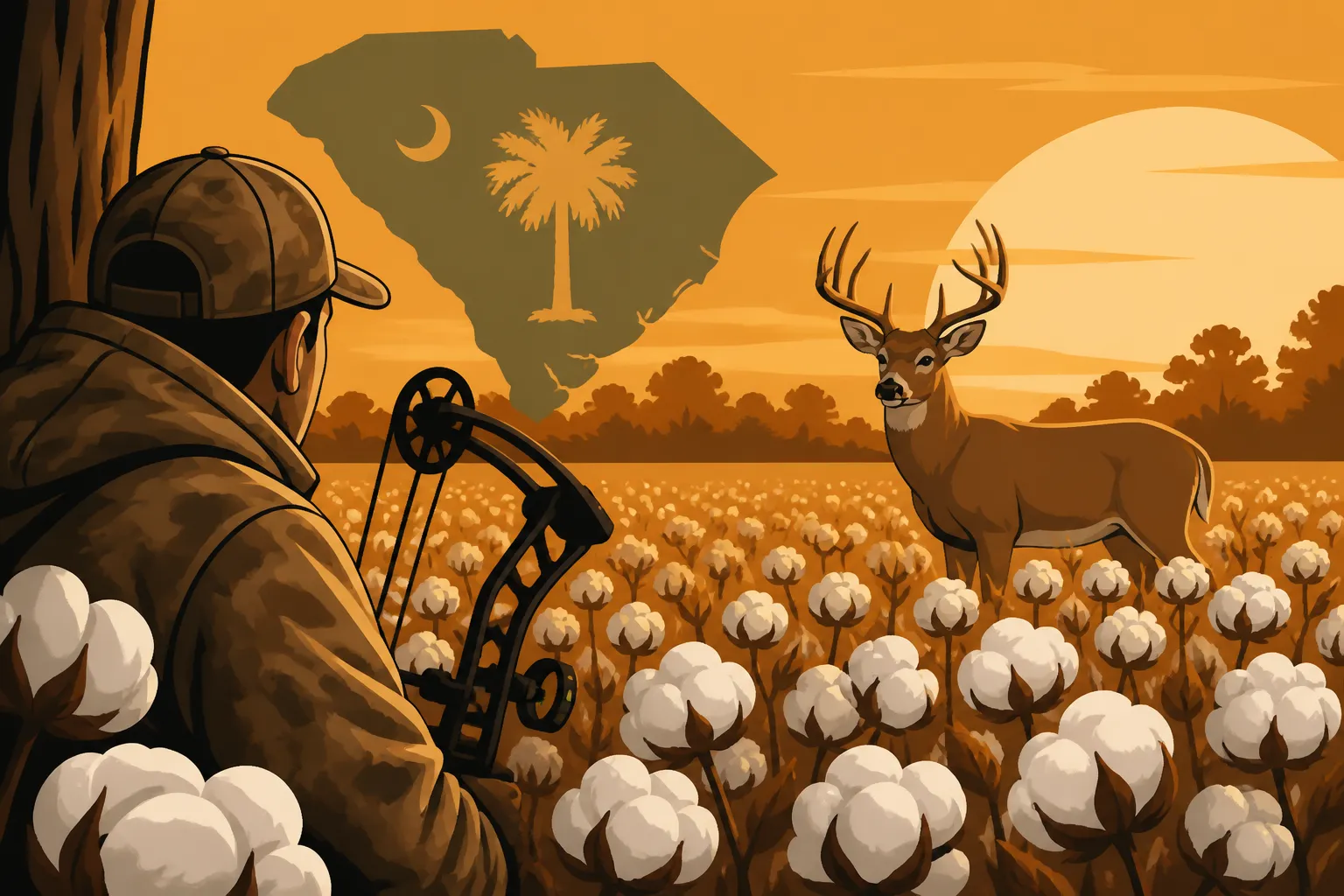
Beyond the subtle forage, the true appeal of a standing cotton field in the late season lies in its exceptional cover. Imagine a sea of chest-high cotton stalks, dense and uniform. To a deer, this offers incredible visual and often thermal concealment. They can move freely, bed down, and feel completely hidden from predators and, more importantly, human hunters. This makes these fields de facto sanctuaries, allowing deer to spend more time within the field, often bedding deep inside and only moving to the edges to browse or stage before heading to other food sources at dusk. It creates a completely different dynamic than hunting a traditional wood line.
This feeling of security is particularly valuable on properties that may lack extensive natural bedding cover like swamps or dense pine thickets. Deer quickly learn where they can find refuge from hunting pressure. If adjacent properties are experiencing heavy activity, deer will often retreat into the safety of these dense cotton fields, making them key strategic hunting locations. Understanding this risk-reward calculation for deer is crucial; the security offered by standing cotton often outweighs any perceived risk, drawing them in and holding them.
Why Cotton Outperforms Other Crop Residue
While hunting harvested corn or soybean fields can sometimes yield results, standing cotton offers a distinct advantage that makes it a superior late-season draw. Once corn is cut, much of the remaining nutritional value is quickly consumed or succumbs to the elements, leaving behind relatively barren ground. The same goes for soybeans; once the pods are harvested, the field offers minimal sustenance. Cotton, however, with its unique fibrous structure and persistent bolls, retains value for a longer duration. While not a preferred food source when greener options are available, its consistent, albeit low-grade, availability becomes highly attractive when other choices dwindle as winter approaches.
Another critical differentiator is the visual barrier cotton provides. A harvested cornfield, even with stalks remaining, offers minimal concealment once the ears are gone. Deer might traverse it under the cover of darkness but are unlikely to linger during daylight. Standing cotton, conversely, creates an impenetrable wall of camouflage. This encourages deer to remain in or near the cotton for extended periods, often moving deeper into the field as the day progresses. This prolonged comfort level is a significant factor in attracting pressured deer, as they feel safe browsing and resting within the stalks, confident in their invisibility. Any farmer in the agricultural heartlands of South Carolina will attest to deer practically living in their cotton fields post-harvest.
Furthermore, these dense fields offer valuable thermal cover. On a cold, windy late-season day, the tightly packed stalks can significantly reduce wind chill, helping deer conserve energy, much like a thick pine plantation would. This trifecta of persistent food, superior visual cover, and decent thermal protection makes standing cotton fields incredibly resilient as deer magnets. As other fields lose their appeal with advancing winter, cotton often becomes more valuable to deer, making it a highly strategic target for those focused on Late-Season Food Sources for South Carolina Whitetails.
Reading the Sign in Standing Cotton Fields
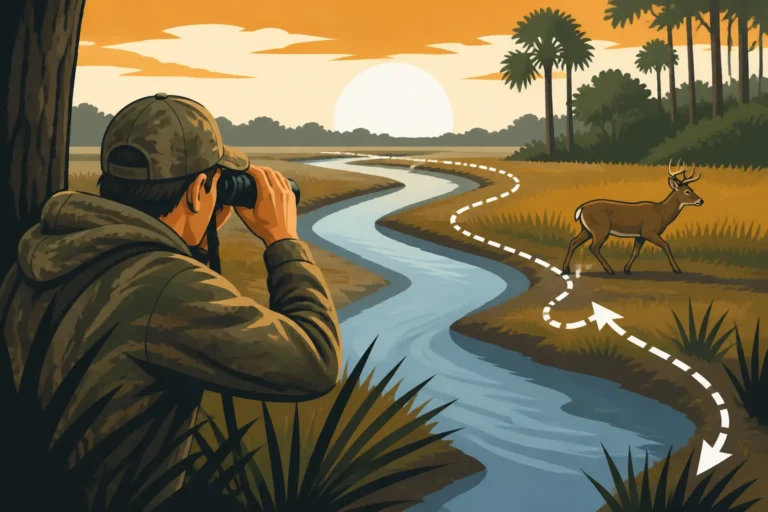
Successfully hunting standing cotton isn't just about finding the field; it's about understanding how deer use it. Meticulous scouting, often done from a distance, is crucial to pinpointing where to focus your efforts without pressuring the animals.
What to Look For: Tracks, Tunnels, and Rubs
When you first approach a standing cotton field, resist the urge to immediately plunge into the dense cover. The real insights into deer movement lie both along the perimeter and, tantalizingly, deep within. Begin by walking the very edge of the field, meticulously searching for tracks indicating where deer are entering and exiting. Pay particular attention to corners, natural depressions, or points where the cotton abuts a wood line, creek, or swamp – these are natural funnels where deer activity will concentrate. You're looking for well-worn trails, not just isolated tracks, signaling consistent use. As these trails extend into the field, they often morph into distinct "deer tunnels" or "runways"—paths where deer have repeatedly pushed through the dense stalks, creating discernible lanes of travel. These tunnels are invaluable, showing you precisely where deer are moving, likely between bedding and feeding areas, or simply using the cover for safe passage.
Beyond tracks and tunnels, keep an eye out for less common signs like rubs on the cotton stalks themselves. While deer won't typically rub vigorously on cotton as they would on a sapling, they might occasionally brush their antlers against tougher stalks, leaving scuff marks or knocking off bolls. This indicates a buck moving through with intent. You might also find droppings or even subtle bed sites within the field, though these are harder to spot without deep penetration into the cover, which you should try to avoid initially. The overarching goal is to construct a detailed map of deer movement without disturbing the sanctuary of the field. I've personally found that an early morning perimeter walk, especially after a light rain, can unveil a wealth of fresh sign.
Leveraging a robust mapping tool, such as the one offered by GoHunt, is incredibly beneficial here. You can pinpoint and mark specific entry points, the locations of tunnels observed from a distance, or areas where you suspect bedding based on topography or adjacent cover. This allows you to compile a comprehensive understanding of deer activity without physically disturbing the field and leaving your scent. Remember, late-season deer are incredibly sensitive to pressure, so a stealthy, observational scouting approach is paramount.
Identifying Key Entry and Exit Points
Deer, by nature, are creatures of habit. Their entry and exit points into and out of large fields, including standing cotton, tend to be remarkably consistent. Focus your scouting efforts on areas where the cotton field connects directly to other desirable habitats: a dense cypress swamp, a thick block of pine regeneration, a mature hardwood bottom, or even a particularly brushy fencerow. These transition zones serve as critical highways for deer movement. You might discover a well-trodden trail leading directly from a dark, secure swamp into the heart of the cotton, or a more subtle path emerging from a thicket on an adjacent property.
Often, these access points are found in low spots, natural dips in the terrain, or areas where the cotton's density is slightly reduced, facilitating easier passage. Sometimes, it's simply the most direct route to or from a primary bedding area. Pinpointing these bottlenecks is absolutely critical for effective stand placement. A deer is highly unlikely to traverse hundreds of yards of open field if it can utilize a fencerow offering cover for most of that distance before slipping into the cotton. They invariably choose the path of least resistance and greatest concealment.
Always factor in the prevailing wind patterns characteristic of your hunting area during the late season. Deer will almost always enter a feeding or staging area with the wind in their favor, allowing them to scent-check for potential dangers. Therefore, if you observe significant sign at a particular corner of a field, consider which wind direction would make that an advantageous entry point for a deer. This not only dictates where to hunt but also when to hunt it. For a deeper dive into how natural forces like wind influence deer movement, checking out an article on Wind and Thermals on an Upstate Ridge can provide valuable context, even for flatter terrains.
Tactics for Hunting South Carolina Cotton Fields
Once you've diligently scouted and identified key areas within and around standing cotton fields, it's time to implement effective hunting tactics designed for these unique late-season environments.
Optimal Stand Placement on Field Edges
Hunting the edges of standing cotton fields demands strategic precision. Your objective isn't merely to find any tree, but rather the right tree that offers both excellent concealment and a commanding view of the crucial entry/exit points and anticipated travel corridors. Frequently, the most productive trees are situated at natural junction points—where the cotton meets an adjacent wood line, a ditch, or where two distinct cover types converge. Your position must be either directly downwind or at least crosswind of the expected deer travel paths. Given the heightened wariness of late-season deer, minimizing your scent cone is of paramount importance.
Elevated stands, whether a sturdy ladder stand or a mobile hang-on, are often superior choices in these scenarios. They elevate your scent stream higher above the ground and provide a better vantage point over the relatively flat cotton field. Seek out trees that offer a natural backdrop to help break up your silhouette. Occasionally, a solitary oak or pine at a field's corner can be an absolute dynamite spot. Expect your shot distances to be shorter than in wide-open expanses, typically in the 50-100 yard range, so ensure your chosen firearm is accurately zeroed for these distances. If you're a bowhunter, you'll need even greater precision, focusing on those tight travel corridors right at the field's edge. For additional insights on effective stand setups, consider exploring articles like Hanging a Stand on a Sumter Forest Ridge or even Setting Up on a Lowcountry Field Edge, as the core principles of identifying advantageous staging areas remain consistent.
A critical detail often overlooked is your entry and exit strategy. Avoid walking directly across the field or along the edge where deer are likely to travel. Carefully plan your route to and from your stand, utilizing natural cover such as a ditch, a creek bottom, or a dense line of trees to approach and depart undetected. This is especially vital during morning hunts when deer might still be lingering in the field. Disturbing the area even once can quickly make deer pattern-shy for days.
The Effectiveness of Ground Blinds
When suitable trees for elevated stands are scarce, or if the natural cover along the field edge is insufficient, a strategically placed and meticulously brushed-in ground blind can be an incredibly effective alternative for hunting standing cotton. The absolute key here is thorough brushing in. Do not simply place a blind; integrate it seamlessly into the environment. Utilize cotton stalks, branches from nearby woods, and any other natural materials available to completely break up its outline. The goal is for the blind to appear as a natural, inconspicuous part of the landscape.
Position your blind to offer clear sight lines of the identified deer tunnels or key entry points. A slight rise or even a shallow depression can provide a better shooting angle and improved concealment. Ground blinds facilitate comfortable, extended sits, which can be essential during the late season when deer movement might be sporadic. They also offer superb concealment for drawing a bow or maneuvering a firearm, and they help contain your scent to some degree, particularly when coupled with effective scent-control measures. For comprehensive guidance, articles such as Using a Ground Blind on South Carolina Public Land or Brushing In a Blind on a Field Edge offer excellent starting points.
If possible, set up your ground blind well in advance of your planned hunt. Deer are naturally curious and will often investigate new objects. Allowing the blind to sit for a week or two gives them time to acclimate to its presence, reducing their wariness. This is where a resource like the GoHunt app proves invaluable, allowing you to mark blind locations and review historical deer movement patterns around them. Another useful tip: always bring a high-quality pair of binoculars. While you might expect close-range encounters, the ability to scan the dense cotton for a subtle flick of an ear or a hidden patch of hide can be the difference between success and a missed opportunity.
Hunting the South Carolina Rut by Zone and Late Season Timing
The precise timing of your hunt around standing cotton fields is paramount. While the peak of the rut in South Carolina exhibits variations across its different zones—for example, Hunting the Rut in the Coastal Zones often sees later activity compared to the Upstate—by the time cotton fields are mature and standing post-harvest, the primary breeding phase has typically concluded. We are generally focused on the late season, spanning from late November through December and into January, depending on the specific game zone. During this period, deer are transitioning their focus from breeding activities back to the critical task of caloric intake, aiming to recover from the physical demands of the rut and build up reserves for the leanest part of winter. This shift in priorities makes reliable food sources like standing cotton exceptionally attractive.
You'll generally observe the best deer activity in standing cotton fields during the traditional early morning and late afternoon periods, mirroring patterns seen when hunting any other primary food source. However, due to the excellent security cover that cotton provides, it would be a mistake to completely dismiss midday movement. Deer often feel secure enough to browse or even relocate from one part of the field to another within the dense cover during the middle of the day, especially on cooler, overcast days. A good rule of thumb for late-season hunting is to extend your time in the stand beyond what you might typically consider necessary. Those quiet mid-morning or mid-afternoon lulls can sometimes surprise you with a mature buck slipping through.
Always monitor the weather forecast. A significant cold front pushing through can often stimulate increased deer movement, prompting them to feed more aggressively in anticipation of colder temperatures. In years following a poor acorn crop, the value of these agricultural fields skyrockets, making cotton an even more critical target. Remember to always consult the latest South Carolina Deer Reporting Requirements for your specific zone, and be aware of any unique dates or regulations that might apply to Wildlife Management Areas (WMAs) versus private land.
| Factor | Best Practice for Standing Cotton | Notes |
|---|---|---|
| Scouting | Observe from a distance, use quality optics, mark sign on a mapping app like GoHunt. | Avoid physically entering deep into the field to prevent disturbing deer and leaving excessive scent. |
| Stand Type | Elevated treestand (ladder/hang-on) or a meticulously brushed-in ground blind. | Ground blinds offer superior concealment; treestands provide better visibility and scent dispersal. |
| Location | Target junctions where cotton meets woods/swamp, or natural funnels and terrain features. | Always position yourself downwind of anticipated deer travel paths, considering local topography. |
| Timing | Focus on early morning and late afternoon; be prepared for sporadic midday movement on cool, overcast days. | Activity is primarily driven by post-rut recovery and the critical need for consistent caloric intake. |
| Wind | Prioritize playing the wind above all other factors; always ensure your scent is carried away from deer travel. | Deer rely heavily on their sense of smell; no amount of scent control beats a favorable wind. |
| Entry/Exit | Plan and utilize hidden routes (e.g., ditches, thickets, logging roads) to approach and leave your stand silently and undetected. | Minimize disturbance to and from your stand site to avoid educating and pressuring deer. |
Essential Gear and Considerations for Cotton Field Hunts
Successful late-season hunting in standing cotton fields also hinges on having the right gear and adopting specific strategies for concealment and game recovery.
Choosing the Right Optics and Firearms
When you're perched on the edge of a standing cotton field, your optics will be your most valuable asset. The dense, uniform nature of the stalks can make spotting a deer incredibly challenging, even at relatively close distances. A high-quality pair of binoculars, ideally 8×42 or 10×42, is indispensable for methodically picking apart the field edges and scanning for the subtlest signs of movement within the cover. You'll be looking for small clues: a flicking ear, a horizontal line that indicates a deer's back against the vertical stalks, or a patch of contrasting hide. Investing in clear, bright glass makes a significant difference, particularly in the critical low-light conditions of dawn and dusk.
A reliable rangefinder is also a non-negotiable piece of equipment. Even if shots appear "close" in an open field, judging exact distances through the uniform cotton cover can be highly deceptive. Knowing the precise yardage to key landmarks or specific sections of the field will build your confidence and drastically reduce the chances of a missed shot. Whether you're hunting with a rifle, a shotgun loaded with slugs, or a crossbow, understanding your effective range and consistently practicing shots at those distances is paramount. For rifle hunters, popular calibers in South Carolina like a .308 or a .270 offer an excellent balance of stopping power and a relatively flat trajectory for potential longer shots across wider field edges. If you're a bowhunter, ensure your setup is meticulously tuned for quiet, precise shots, as deer can often materialize much closer than anticipated in that dense cover. If you're considering using one, it's always wise to review the Crossbow Rules During South Carolina Archery Season.
Keep in mind that while it's late season, South Carolina's weather can still be quite mild, though sudden cold snaps are not uncommon. Being prepared with appropriate layers for warmth is essential. Additionally, a good pair of snake boots is a wise investment, especially if your approach involves navigating brushy edges or occasional wet ditches, as venomous snakes can sometimes remain active on warmer winter days.
Staying Concealed and Managing Your Scent
Concealment is paramount when hunting standing cotton. The deer that inhabit these fields are often heavily pressured and possess an uncanny ability to detect threats. If you're in a treestand, ensure your silhouette is effectively broken up by the tree itself, and consider adding natural branches to your stand for additional camouflage. If utilizing a ground blind, as previously emphasized, brush it in until it virtually disappears into its surroundings. Wear camouflage patterns that effectively blend with the muted browns and grays of late-season South Carolina foliage, perhaps incorporating some lighter tones to match the cotton itself.
Scent control is equally, if not more, critical. By late season, deer have likely encountered human scent repeatedly throughout the fall, making them incredibly quick to flee. Shower with scent-eliminating soap, wash your hunting clothes in scent-free detergent, and store them in airtight containers. Apply a high-quality scent-eliminating spray to your clothes and gear before heading into the field. Pay particular attention to your boots, as they will be directly contacting the deer's environment. Ultimately, playing the wind correctly remains your most effective scent control strategy; no amount of spray will completely mask your presence if a deer gets directly downwind of your position. Utilizing a mapping application like GoHunt can assist you in predicting wind direction and planning your approach accordingly.
Don't neglect insect repellent, even in the late season. While the peak mosquito activity may have passed, persistent gnats and other bothersome insects can still be an annoyance, particularly on warmer days, making a Warm-Weather Sitting Strategy in South Carolina still very relevant. Distraction caused by bugs can lead to fidgeting and unnecessary movement, which can easily spook a wary deer. A silent, effective deterrent like a ThermaCell can be a valuable addition for longer sits.
Planning for the Recovery and Game Care
A successful shot on a deer in a standing cotton field presents a unique recovery challenge: tracking. The very density and uniform cover that provides such excellent concealment for deer also makes blood trailing incredibly difficult. Even a perfectly hit deer can seemingly vanish into the labyrinth of stalks almost instantly. This is where patience, precision, and a methodical tracking approach become absolutely crucial. Immediately after the shot, mark the exact spot where the deer was standing and note the precise direction it ran. Then, cautiously look for the first signs of blood or disturbed cotton, and proceed slowly, marking each drop or sign with flagging tape or brightly colored toilet paper.
If you hit a deer and it moves into the standing cotton, it's often prudent to give it ample time—at least a couple of hours for a suspected lung shot, and considerably longer for a gut shot, especially in cooler weather. This allows the deer to bed down and expire peacefully. Pushing a deer too soon, particularly into such thick cover, can result in it running much further, making recovery nearly impossible. If tracking becomes too challenging, or if darkness descends, consider contacting a reputable tracking dog service. Many skilled dog handlers across South Carolina specialize in blood trailing.
Once you recover your deer, immediate field dressing and proper game care are essential, especially given South Carolina's often mild late-season temperatures. Having a good quality game bag and a cooler filled with ice at the ready is paramount. Even in December, a warm day can rapidly spoil meat. For more detailed advice on handling your harvest, you might find articles like Field Dressing a Deer in Warm Weather or Butchering a Deer at Camp incredibly helpful. The unique challenges of recovering a deer from dense cover like standing cotton underscore the critical importance of making the best shot possible and being thoroughly prepared for a potentially difficult track.
Disclaimer
Please remember that hunting regulations, seasons, and licensing requirements can change. Always consult the latest South Carolina Department of Natural Resources (SCDNR) regulations before heading afield. This guide is for informational purposes only and does not supersede official state wildlife laws.