Calling Crows Over a Winter Feed Site
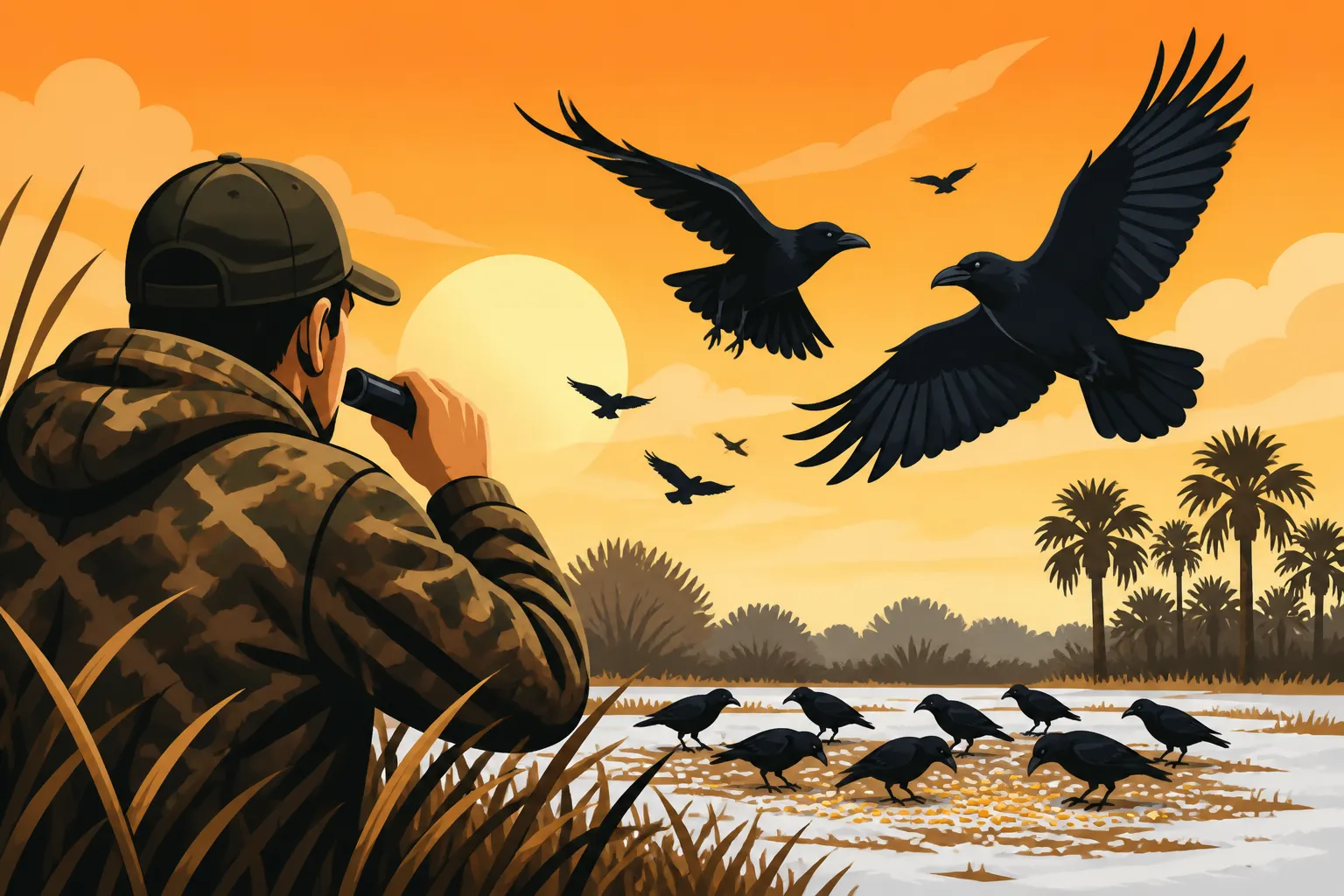
There's nothing quite like the chill of a South Carolina winter morning, the air crisp and still, but sometimes, instead of the peaceful quiet we crave, you're faced with a cacophony of cawing crows that have descended on a farmer's feed lot or a remote field edge. These intelligent birds can quickly become a nuisance, devouring crops and feed intended for livestock. This guide will walk you through the nuanced art of calling crows over a winter feed site, helping you understand their behavior, choose the right gear, and employ tactics that bring these wary birds into range.
Understanding Winter Crow Behavior and Habits
Crows are incredibly intelligent and adaptable birds, and their behavior in winter, especially around a consistent food source like a feed site, takes on a specific pattern that hunters can learn to exploit. You can't just walk out and start cawing; you need a solid understanding of what drives them. Ignoring these subtle cues is a sure way to educate the local crow population even further, making them even harder to hunt in the future.
Why Crows Congregate at Winter Feed Sites
During the colder months in South Carolina, natural food sources can become scarce or harder to access, forcing crows to seek more reliable alternatives. A winter feed site, whether it's a cattle pasture with spilled corn, a hog operation, or even a deer feeder on private land, becomes an undeniable magnet for these opportunistic omnivores. They're looking for an easy meal, and these sites provide just that. This congregation is driven by survival; safety in numbers, efficient foraging, and access to calories are all critical. They might travel significant distances from their communal roosts, sometimes miles, to reach these reliable food sources. Understanding this journey and their daily routine is your first step. Often, they'll arrive in waves, with scout birds coming first, then larger groups following once the all-clear is given. This behavior makes it tricky, as an uncommitted scout can ruin your hunt before it even begins.
Crow Intelligence and Wariness
If you've ever tried to hunt crows, you know they're not like doves or quail. These birds are exceptionally smart, often considered one of the most intelligent bird species. They have an incredible memory for locations, faces, and threats, and they'll quickly learn from negative experiences. If you hunt a spot poorly, they'll remember and avoid it. This wariness is why a casual approach rarely works. They utilize complex communication, with different calls signaling alarm, food, or assembly. They also post sentinels—birds perched high on power lines or the tallest trees, scanning for danger while the main flock feeds. Spotting these sentinels is crucial; if they see you, the jig is up. Their ability to quickly identify and communicate threats across the flock is a major hurdle you'll have to overcome, demanding extreme vigilance and concealment from your end. This is why tactics that might work for other species, like simply setting up in the open, will almost guarantee failure with crows.
Essential Gear and Setup for Winter Crow Calling
Hunting crows over a winter feed site demands specific gear and a meticulously planned setup. Given their intelligence and keen eyesight, you can't afford to cut corners. The right equipment won't just improve your chances; it’ll also help you maintain ethical hunting practices and respect for the game, even when dealing with a nuisance species.
Choosing the Right Calls and Decoys
Your calling strategy is paramount. For crow hunting, you have two main options: mouth calls and electronic calls.
- Mouth Calls: These include various reed calls, friction calls, and even simple handheld horns. They offer incredible versatility and allow for nuanced, realistic vocalizations that an electronic call might struggle to replicate. You can adjust volume, tone, and cadence on the fly, which is critical when trying to mimic different crow emotions – excitement, distress, or assembly. For instance, a sharp, excited caw can draw attention, while a rapid series of distress calls can trigger a mobbing response. However, mastering mouth calls takes practice, and a poorly executed call can scare birds away.
- Electronic Calls: These devices, like those from reputable brands such as Foxpro or Primos, come pre-loaded with a variety of realistic crow sounds, including common caws, distress calls, and even hawk or owl sounds that trigger mobbing behavior. They allow for consistent, high-volume calling, which can be invaluable for reaching distant birds. The remote control feature means you can place the caller away from your position, drawing attention away from yourself. When setting up, you might find using a combination is most effective, using the electronic call for initial volume and then switching to mouth calls for finer tuning as birds get closer.
Decoys are equally important. They provide a visual cue that complements your calling, convincing wary birds that it's safe to approach. Realistic full-body crow decoys are excellent, especially when set up in feeding or landing postures. You can also use distress decoys, often a crow or even a hawk decoy (like an owl or hawk), positioned to look like it's attacking a crow. This triggers the natural mobbing instinct of crows, drawing them in aggressively. Motion decoys, such as a flapping crow or a crow attached to a pole that you can move, can add an extra layer of realism. Placing decoys effectively, often on branches or poles above the feed site, mimicking common crow perching and feeding habits, is key to drawing them into comfortable shooting range.
Concealment and Ethical Shot Selection
Crows have incredible eyesight, and if they spot you, your hunt is over. This means absolute concealment is non-negotiable. Don't just think about camouflage; think about your silhouette, movement, and reflections. A pop-up ground blind offers excellent concealment and allows for more movement, but it needs to be brushed in thoroughly with natural vegetation to break up its outline. Alternatively, setting up against a thick hedgerow, a dense stand of pines, or even within a cattle trailer that offers good cover can work. Just make sure whatever you choose offers a full 360-degree break-up of your outline. Pay attention to the sun's position – never let it shine directly on your position or eyes, as glinting optics or even your face can give you away.
For ethical shot selection, a good shotgun with appropriate ammunition is usually the preferred tool for crow hunting, especially given the birds' small size and quick movements. A 12-gauge or 20-gauge shotgun with a modified or full choke is ideal. For shot size, 7 ½ or 8 shot is typically sufficient, offering a dense pattern for these agile targets. While it might seem overkill for crows, remember that you're aiming for clean kills. When they commit to the decoys, let them get close and settle. Don't take Hail Mary shots. Wait for them to present a clear, ethical shot opportunity, typically within 25-40 yards. Knowing the range capabilities of your shotgun and practicing with your chosen load is crucial. Always prioritize a quick, humane harvest. If you're on public land, remember to check South Carolina Public Land Hunting Hours and other specific WMA rules which might regulate hunting methods or times.
Effective Calling Techniques and Strategies
Crow hunting is a dynamic sport that demands adaptability and a deep understanding of calling sequences. It's not just about making noise; it's about having a conversation with the flock and convincing them that your setup is worth investigating.
Aggressive Versus Subtle Calling
The type of calling you employ should directly respond to the situation at hand.
-
Aggressive Calling: When you're trying to reach distant birds, or if you've spotted a large flock high up, aggressive calling is your go-to. This typically involves loud, rapid, and excited "assembly" or "come here" calls. You want to sound like there's a huge party going on, or a major territorial dispute. Sometimes, combining this with a distress call (mimicking a crow being attacked by a predator like a hawk or owl) can trigger an intense mobbing response. Crows, being territorial and protective, will often come rushing in to harass the perceived threat. This can be especially effective if you’re positioned near a communal roost or a flyway where they are already traveling in numbers. The key is volume and intensity without sounding frantic or fake. Using an electronic call for this initial burst can be highly effective, drawing their attention from a mile away.
-
Subtle Calling: As crows get closer and start circling, or if they're already somewhat wary, you need to dial it back. Subtle calling mimics natural flock chatter or a quiet, reassuring "all clear" sound. This could be soft caws, gurgles, or light feeding sounds. The goal is to make them feel comfortable enough to commit to your decoys. If they're hanging up, refusing to drop down, try a series of quick, quiet caws, almost like a question. This can often be the trigger that brings them the last 50 yards. If you continue with aggressive calling at this stage, you risk making them even more suspicious. This is where your mouth calls really shine, allowing you to perfectly match the tone and volume needed.
Reading Crow Reactions and Adapting
One of the biggest frustrations for crow hunters is when the birds just circle endlessly, cawing back at you but never committing. This is where reading their reactions becomes critical. Are they flying high and wide, or lower and tighter? Are their caws defensive, inquisitive, or alarm calls?
- High and Wide Circles: If they're circling far out, high in the sky, they're probably scoping out the area for danger. Keep your calling steady, perhaps a mix of assembly and inquisitive caws. This is when your decoys need to be perfectly visible and convincing.
- Direct Approach with Caution: If they’re heading straight in but hovering, they've seen something that makes them hesitant. This is often a sign of human movement, glinting equipment, or poor camo. Freeze completely, stop calling for a moment, and let them try to figure it out. Then, try a very soft, reassuring call.
- Alarm Calls: If you hear sharp, urgent "CAW-CAW-CAW!" from a sentinel bird, you've been busted. It's likely time to move to another location or pack it in for the day, as these birds will quickly spread the warning. Their ability to learn from these experiences is why platforms like GoHunt can be invaluable for scouting new locations and understanding property boundaries to avoid burning out spots.
Knowing when to switch between aggressive and subtle, when to stop calling altogether, and when to restart is an acquired skill. Sometimes, the best call is no call at all. Just like Rattling and Grunting in South Carolina for deer, sometimes less is more.
Maximizing Success with Strategic Placement
Your setup and location are just as important as your calling.
- Wind Direction: Always try to position yourself so the wind is in your face or quartering. Crows, like most birds, prefer to land and take off into the wind. This means they will naturally approach your decoys from a direction that exposes their underside to you, often presenting a better shot.
- Sun Position: Position yourself so the sun is behind you, shining into the crows' eyes. This makes it harder for them to spot your position and can give you precious extra seconds.
- Ambush Points: Crows will often land in trees surrounding a feed site before dropping down to the ground. Identify these potential perching trees and set up your concealment to cover their approach to these spots. Using decoys on top of poles or in trees can enhance this.
- Multiple Hunters: If hunting with a partner, spread out slightly, perhaps 30-40 yards apart, providing a wider zone of fire and reducing the chance that approaching birds only spot one of you. Communication is key for safety and effective shooting. Also, consider setting up a few yards behind a natural blind, like a hay bale or a thick bush, to obscure your entry and exit route.
Post-Hunt Considerations and Ethical Practices
Even with successful crow hunting, the job isn't done when the guns cool down. Responsible hunters understand the importance of post-hunt ethics, regulations, and maintaining a positive image for hunting.
Game Recovery and Site Cleanup
After a successful hunt, retrieving every bird you shoot is paramount. While crows might not be traditionally consumed game like ducks or deer, leaving downed birds in the field is not only disrespectful but can also lead to issues with local landowners, especially around active feed sites. It also leaves behind a visual cue that can educate surviving birds about the danger of the location. Make a concerted effort to pick up all spent shell casings. Leaving litter behind is a terrible look for hunters and can jeopardize access to private land. Consider bringing a small bag specifically for trash. A clean hunting site shows respect for the land and the landowner who graciously granted you permission to hunt.
Respecting Regulations and Landowner Relations
Crows generally have very liberal hunting seasons in South Carolina; they can be hunted year-round on private land, often with no daily bag limit. However, always double-check the current South Carolina Small Game Season Rules for any updates or specific local ordinances, especially if hunting near residential areas or on specific Wildlife Management Areas (WMAs), as these might have different regulations. Remember that while crows are often a nuisance, they are still a game species (even if largely unconsumed).
Landowner relations are absolutely critical. If you're hunting private land, make sure you have explicit permission. A simple courtesy call or text before you show up can go a long way in maintaining a good relationship. Offering to help with chores or sharing some harvested game from other species can also strengthen these bonds. Never assume implied permission carries over from one season to the next. Always refresh your permission. Ignoring posted signs or hunting without permission can lead to serious consequences, including South Carolina Wildlife Violation Penalties. Using tools like the GoHunt app can assist in identifying property lines and landowner information, helping you maintain good standing.
Managing Hunting Pressure and Future Opportunities
Crows are exceptionally intelligent, and they will quickly learn to associate your hunting pressure with danger. If you hunt the same feed site too often or too aggressively, you'll educate the entire flock, making them incredibly difficult to hunt in the future.
- Rotate Locations: If possible, have several different crow hunting spots. By rotating between them, you give the birds a chance to forget the negative experiences and resume their normal feeding patterns. This is where scouting different agricultural areas or even open timber stands where crows might gather is useful.
- Vary Your Tactics: Don't use the exact same call sequence or decoy spread every time. Change things up. Sometimes a simple assembly call works best; other times, a full-blown mobbing scenario is required. The element of surprise keeps them guessing.
- Limit Hunt Duration: Don't overstay your welcome. Once the primary action slows down, it's often best to pack up and leave. Continuing to call to wary birds that are circling high will only further educate them.
- Focus on Problem Birds: Remember the primary goal is often nuisance abatement. Focus your efforts where crows are causing the most damage, rather than just indiscriminately hunting.
By employing these post-hunt considerations, you're not just being an ethical hunter; you're also ensuring future hunting opportunities, maintaining good relationships with landowners, and contributing positively to the perception of hunters in South Carolina.
A Comparative Look at Winter Crow Calling Tactics
To illustrate the different approaches and their effectiveness, here's a brief comparison of calling tactics based on crow behavior:
| Crow Behavior | Recommended Calling Tactic | Decoy Setup | Notes |
|---|---|---|---|
| Distant / High-Flying Flocks | Aggressive assembly/excitement calls | Multiple feeding/perching decoys on poles/trees | Aim for high volume to get their attention. Electronic calls are highly effective here. Combine with some distress for added urgency. This is about drawing their initial interest over long distances. |
| Circling / Hesitant Birds | Soft, inquisitive caws / chatter | Realistic feeding/perching decoys | Reduce volume and urgency. Try short bursts of chatter. The goal is to reassure them it's safe to commit. Be completely still. This stage demands precision and patience. |
| Mobbing a "Predator" | Intense distress calls (crow/owl) | Crow distress decoy with owl/hawk decoy | This tactic leverages their natural instinct to drive away threats. Birds will come in aggressively and often low. Be ready for fast action. This is similar to the reactive nature you see when Coyote Calling in South Carolina Farm Country. |
| Entering / Leaving Roost | General assembly/flyway calls | Fewer decoys, often in tree lines | Less about feeding, more about intercepting their travel paths. Calling should be consistent but not overly aggressive. Patience is key as they follow established routes. |
| Actively Feeding at Site | Soft feeding / contented calls | Realistic feeding decoys on the ground | Use if you approach a site with birds already present. Aim to blend in with their existing sounds to avoid alarming them. Focus on concealment first. |
Conclusion: Mastering the Art of Crow Calling
Hunting crows over a winter feed site in South Carolina is a challenging but incredibly rewarding pursuit. It demands more than just pointing a gun; it requires a deep understanding of avian intelligence, a mastery of calling techniques, meticulous concealment, and unwavering respect for the land and its rules. From understanding why crows congregate to strategically placing your decoys and adapting your calls based on their reactions, every detail matters. By approaching each hunt with patience, preparation, and ethical considerations, you'll not only help manage a nuisance species but also sharpen your own hunting skills, making you a more effective and responsible outdoors enthusiast. Whether you're a seasoned veteran or new to small game, the thrill of a flock of wary crows committing to your calls is an experience you won't soon forget.
Disclaimer
Please ensure you are fully aware of and comply with all current South Carolina Department of Natural Resources (SCDNR) hunting regulations for crows and all other species, as well as any specific rules for Wildlife Management Areas or private land. Regulations can change, so it is your responsibility to stay informed before heading afield.