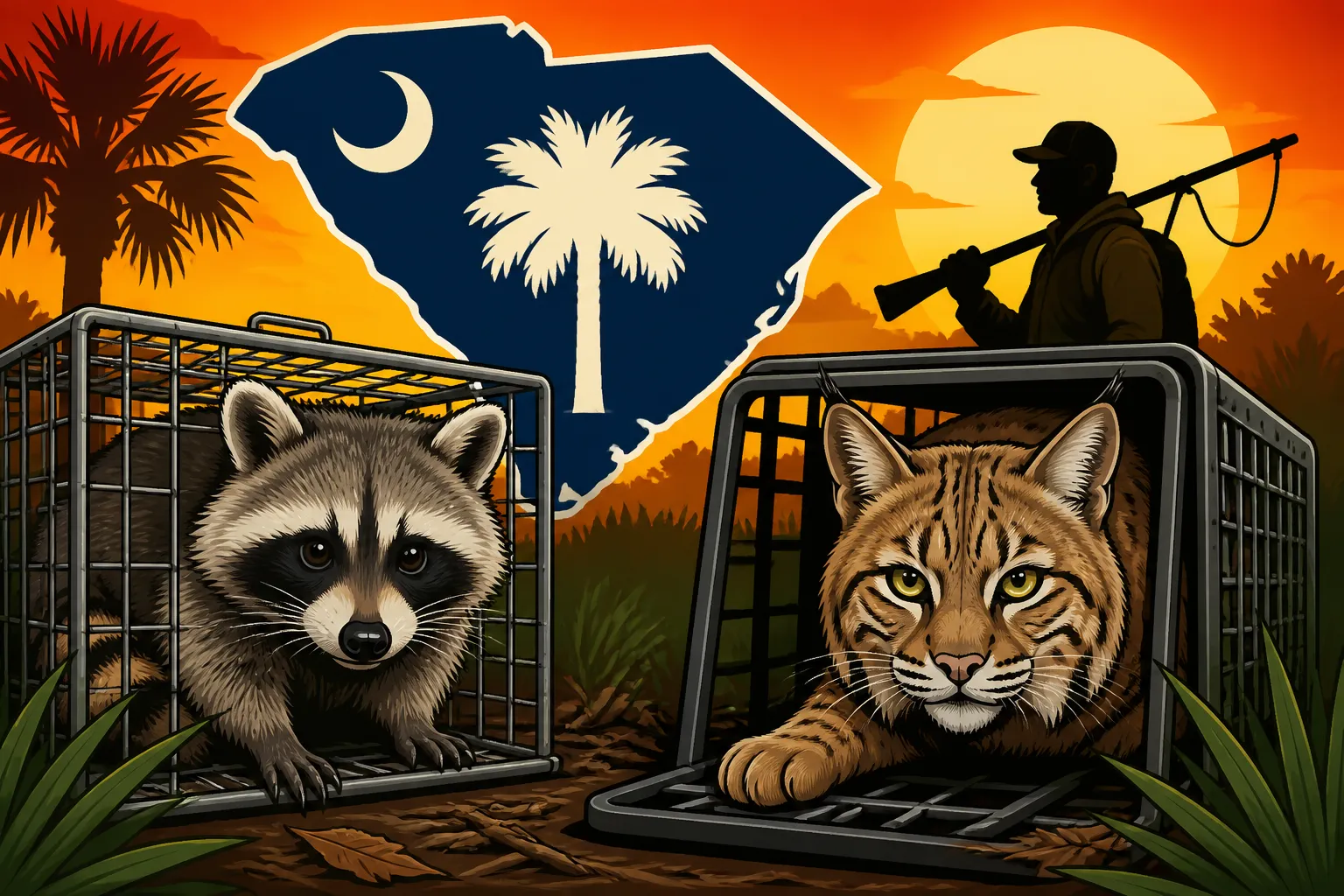
Trapping South Carolina Raccoon and Bobcat
Managing furbearers like raccoons and bobcats in South Carolina can be a real challenge for landowners, hunters, and trappers alike, whether you're trying to protect game populations or simply address nuisance issues. It can feel overwhelming to know where to start, balancing effectiveness with legal requirements and ethical considerations. This comprehensive guide will walk you through the specifics of trapping raccoons and bobcats in the Palmetto State, covering everything from licenses and seasons to effective techniques and responsible practices.
Navigating South Carolina's Furbearer Regulations
Before you even think about setting a trap, understanding the legal landscape for furbearer trapping in South Carolina is absolutely paramount. The South Carolina Department of Natural Resources (SCDNR) sets clear guidelines to ensure sustainable management and prevent conflicts. Ignoring these rules can lead to serious penalties, so it's worth taking the time to get it right.
First and foremost, you’ll need the correct licenses. A basic hunting license is often a prerequisite, but for trapping furbearers, you'll specifically need to meet the South Carolina Trapping License Requirements. This isn't just a formality; it ensures that trappers have a basic understanding of regulations and responsible practices. You can usually purchase these licenses through the SCDNR website or via their mobile application, and many seasoned trappers use resources like the GoHunt app to keep all their license information handy and accessible, even when out in the field where cell service might be spotty.
Beyond licensing, seasonal restrictions are critical. Unlike some nuisance animals that can be harvested year-round, raccoons and bobcats have designated trapping seasons. For instance, you'll find specific South Carolina Raccoon Season Dates and South Carolina Fox and Bobcat Trapping Season details published annually by the SCDNR. These seasons are put in place to manage populations effectively, ensuring that trapping activities don't negatively impact breeding cycles or overall population health. Always double-check the current year's regulations, as dates can shift slightly based on biological data and management goals. Additionally, be aware of specific Wildlife Management Area (WMA) rules, as they might have different opening and closing dates or even restrict certain trap types compared to private land.
Finally, specific trap types and their usage are regulated. South Carolina generally allows the use of cage traps, foot-hold traps (often referred to as leg-hold or foothold restraints), and body-gripping traps (like Conibears), but with important caveats. For example, body-gripping traps of a certain size may have restrictions on where they can be set (e.g., elevated or in water) to prevent accidental capture of non-target species, including domestic animals. It's vital to read the fine print in the SCDNR regulations regarding maximum jaw spread for foothold traps and specific setup requirements for Conibears, especially when trapping near residential areas or public access points. Remember, violating these regulations can result in significant South Carolina Wildlife Violation Penalties, so a thorough understanding is non-negotiable.
Understanding Your Quarry: Raccoons and Bobcats
Successful trapping isn't just about setting a legal trap; it's about understanding the animals you're pursuing. Raccoons and bobcats are distinct creatures with different behaviors, preferred habitats, and dietary habits, which means your trapping strategies need to be tailored to each. Knowing their typical routines and how to identify their presence can dramatically increase your success rate and minimize the capture of non-target species.
Raccoons, with their distinctive masked faces, are incredibly adaptable omnivores found throughout South Carolina. They thrive in a variety of habitats but are particularly drawn to areas with water sources like creeks, rivers, swamps, and ponds, often near agricultural fields or suburban developments. Their diet is incredibly varied, consuming everything from berries and nuts to insects, crayfish, frogs, bird eggs, and even small mammals. This opportunistic feeding habit makes them relatively easy to bait. When scouting for raccoons, look for their hand-like tracks in mud along water's edge, overturned rocks, disturbed soil where they've dug for grubs, or droppings. They are primarily nocturnal, meaning your traps will likely be most active at night. Their high population density in many areas means you're rarely far from a raccoon, and their impacts on ground-nesting birds and agricultural crops can be significant, making their management important. Understanding their habits can even help you with other furbearers, like those covered in South Carolina Opossum and Skunk Trapping.
Bobcats, on the other hand, are much more elusive and secretive predators. While their population is South Carolina's Recovering Bobcat Population, they are not as numerous as raccoons and require a more nuanced approach. Bobcats prefer dense cover—thick forests, swamps, and areas with plenty of underbrush provide excellent hunting grounds and denning sites. Unlike raccoons, bobcats are obligate carnivores, preying primarily on rabbits, squirrels, small rodents, and birds, occasionally taking fawns or other larger game. Their sign can be harder to spot; look for scat containing fur and bone fragments, claw marks on trees (especially leaning ones used as scratching posts), and distinct tracks that lack claw marks, as their claws are typically retracted. They are most active at dawn and dusk, though they can be active throughout the day and night. Trapping bobcats requires understanding their travel corridors—game trails, old logging roads, and natural funnels between cover. You can find them in all four of South Carolina's game zones, but they truly excel in the dense, wilder parts of the Lowcountry and the thicker sections of the Upstate.
Effective Trap Types and Setting Strategies
Once you've done your homework on regulations and scouted your target species, it's time to talk traps and techniques. The right trap, placed in the right spot with the right lure, makes all the difference. It’s a bit of an art form, really, combining knowledge of animal behavior with careful execution.
For raccoons, versatility is your friend. Cage traps are excellent for beginners or when trapping close to homes, as they are live-capture and minimize harm to non-target animals. A typical cage trap for raccoons should be at least 10x12x32 inches to comfortably hold an adult raccoon. Bait them with sweet foods like marshmallows, fruit, corn, or commercial pastes. Place them along game trails, near water sources, or at the edge of gardens where raccoons are known to frequent. Another popular and highly effective option for raccoons is the dog-proof (DP) trap. These tube-shaped traps require the raccoon to reach inside and pull a trigger, making them highly selective for raccoons and significantly reducing non-target catches. They are often staked firmly and baited with dry pet food, corn, or sweet treats.
For bobcats, more traditional methods are often employed, keeping in mind the regulations on trap types. Foothold traps are a common choice for bobcats, particularly coil-spring or long-spring traps with a jaw spread appropriate for bobcats (typically between 4.5 to 5.5 inches). These traps are designed to hold the animal by the foot without causing serious injury, allowing for release of non-target animals. When using footholds, consider specific sets like the dirthole set, which mimics a caching animal digging a hole. You'll dig a slanted hole, roughly 6-8 inches deep, at a 45-degree angle, place your bait (meat scraps, feathers, or commercial bobcat lure) in the bottom, and then set your trap roughly 6-8 inches in front of the hole, blending it seamlessly with the surroundings. Another effective bobcat set is the cubby set, which involves creating a small, enclosed space with brush or logs and placing bait and a trap inside, enticing the bobcat to enter. When considering Running a Trapline in Rural South Carolina, a mix of these techniques will serve you well.
Bait and lures are crucial. For raccoons, their omnivorous nature means a wide range of strong-smelling foods work well. Sweet baits like marshmallows, fruit, or even cheap cat food are highly effective. For bobcats, fresh meat scraps (rabbit, squirrel, or even chicken) are prime bait, combined with a good quality bobcat urine or glandular lure to trigger their territorial and predatory instincts. Placement is key: aim for natural pinch points, funnels, and areas where you’ve identified fresh sign. Remember to minimize human scent on traps and around the set area by wearing gloves.
Here's a quick comparison of common trap types:
| Trap Type | Target Species | Advantages | Disadvantages | Typical Bait/Lure |
|---|---|---|---|---|
| Cage Trap | Raccoon, Opossum | Live catch, easy release, low non-target risk | Bulky, can be avoided by wary animals, prone to theft | Marshmallows, corn, fruit, sweet pastes |
| Dog-Proof (DP) Trap | Raccoon | Highly selective for raccoon, minimal non-target risk | Single species focused | Dry pet food, corn, sweet pastes |
| Foothold Trap | Bobcat, Raccoon, Fox | Effective, reusable, can release non-targets | Requires skill to set, potential for injury, public perception | Meat scraps, glands, urine lures, curiosity lures |
| Body-Grip (Conibear) Trap | Raccoon | Quick, humane dispatch, very effective | High risk for non-target catches, specific placement rules | Fish, meat scraps, anise oil, sweet liquid lures |
Note: Always check current SCDNR regulations for allowed trap sizes and placement restrictions, especially concerning body-grip traps.
Responsible Trapping: Ethics, Safety, and Best Practices
Trapping, like any other outdoor pursuit, comes with a serious responsibility to the animals, the environment, and the public. Ethical and safe practices are not just suggestions; they are fundamental to maintaining the privilege of trapping in South Carolina. Neglecting these principles can lead to unnecessary suffering, legal issues, and a negative perception of trapping as a whole.
One of the most critical responsibilities for a trapper is the frequency of trap checks. South Carolina regulations, and indeed ethical standards, require traps to be checked regularly—typically at least once every 24 hours. This ensures that any captured animal is not left to suffer or exposed to predators or harsh weather conditions for an extended period. Regular checks also allow for the humane dispatch of target animals or the careful release of any non-target species that may have been caught. Planning your trapline to be easily accessible for daily checks is vital, especially when you're covering a large area, as often happens when Hunting the ACE Basin for Deer or other extensive public lands.
Humane dispatch is another cornerstone of responsible trapping. For animals that cannot be released, such as target furbearers within season, dispatch should be quick and cause minimal suffering. This typically involves a quick, well-placed shot with a small-caliber firearm (.22 rimfire) or a sharp, forceful blow to the head with a blunt instrument. If you are new to dispatching, seek guidance from experienced trappers or refer to instructional materials provided by trapping associations. Avoid any method that prolongs suffering.
Safety for non-target animals is paramount. While some traps like the dog-proof (DP) are highly selective, foothold and body-grip traps require more careful placement. Avoid setting traps near known dog walking paths, residential areas, or places where domestic animals are likely to roam. If you must set in such areas, consider using cage traps, which allow for easy release of non-target animals. Properly marking your trap lines and being discreet can also help prevent unintended interactions. It's also wise to carry a catch pole or heavy gloves for safely handling an animal, whether it's for release or dispatch. Awareness of what other species might be active, even those not typically associated with trapping like South Carolina Coyote Range and Density, can inform your trap choices and placement.
Finally, proper carcass handling and reporting are essential. After dispatch, the animal should be processed quickly and efficiently. If you plan to use the fur, learn proper skinning and fleshing techniques. If the animal is not being used for fur or meat, it should be disposed of respectfully and legally, often by burial or rendering. Some counties or WMAs may have specific rules regarding carcass disposal, so always check local guidelines. Additionally, while furbearers like raccoons and bobcats typically don't require individual reporting like deer or turkeys, some species or specific WMA hunts might have reporting requirements. Staying informed through the Go Outdoors SC app or the SCDNR website is crucial. Adhering to these best practices not only makes you a more effective trapper but also ensures the sustainability of wildlife resources and the continued acceptance of trapping as a valuable management tool.
Disclaimer
This guide is for informational purposes only and is not a substitute for legal advice. Always consult the most current South Carolina Department of Natural Resources (SCDNR) hunting and trapping regulations before engaging in any trapping activities. Regulations can change annually, and it is the individual's responsibility to understand and comply with all applicable laws.