Rabbit Hunting Thick South Carolina Brush
Rabbit hunting in South Carolina can be incredibly rewarding, but anyone who's tried it knows that pushing through dense, tangled brush can feel like an impossible task. It's easy to get discouraged when rabbits seem to vanish into thin air, leaving you wondering if you're even in the right spot or using the right approach. This guide is here to unravel the mysteries of hunting cottontails in South Carolina's thickest cover, offering practical strategies and gear advice to help you put more rabbits in the pot.
Understanding South Carolina's Rabbit Habitat in Thick Brush
Hunting cottontail rabbits successfully in South Carolina's dense areas starts with a deep understanding of where they live and why. It's more than just looking for any old thicket; rabbits are particular about their habitat, seeking out specific conditions that offer both sustenance and security.
Identifying Prime Brushy Areas
South Carolina is blessed with a diverse array of landscapes, and for cottontail rabbits, "thick brush" can encompass a surprising range of environments. It's not just random briar patches you're looking for; rabbits are actively seeking a specific combination of food, water, and crucially, escape cover that these dense areas provide. Consider the edges of agricultural fields, especially those that have been left fallow for a season or two and are now choked with overgrown weeds, honeysuckle, and impenetrable blackberry brambles. These transitional zones, where open ground meets a seemingly insurmountable tangle, are absolute rabbit magnets. They can dart out to feed and then vanish back into the safety of the thick stuff in a heartbeat.
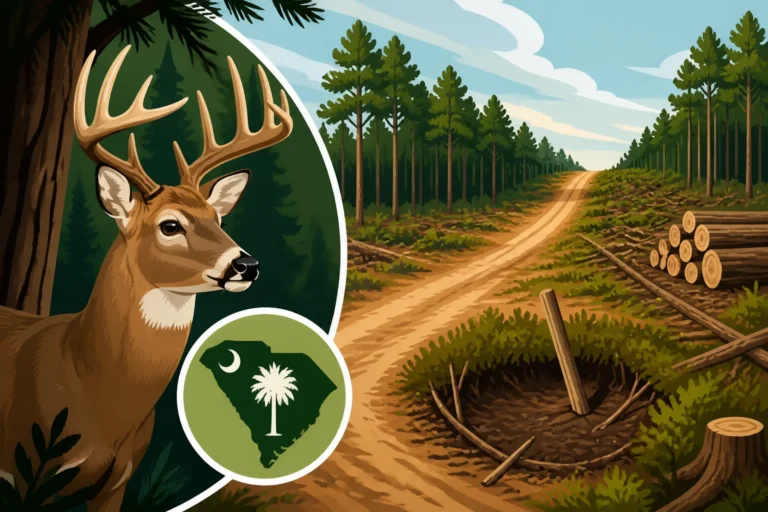
Also, don't overlook old clear-cuts where young pines and hardwoods are vigorously regrowing. This creates an incredibly dense understory, often referred to as "dog hair thickets," which are perfect for rabbits. River bottoms and creek edges are another hotspot, particularly those areas with a lot of downed timber, invasive privet, or thick stands of switch cane. Rabbits thrive in these places precisely because the thick vegetation offers exceptional protection from a myriad of predators, from coyotes and bobcats to hawks and owls. Beyond safety, these dense areas are also where they find an abundance of their favorite foods – tender shoots, succulent seeds, and even the bark of certain young plants during leaner times. They aren't just randomly distributed; their survival instincts dictate precise habitat requirements that, once understood, can significantly improve your hunting success.
Rabbit Behavior in Thick Cover
When you decide to tackle these really thick South Carolina brush patches, you're dealing with rabbits that are truly masters of evasion. Cottontails living in such dense cover aren't prone to bolting out into wide-open spaces at the first hint of danger. Instead, their primary defense mechanism is to "hold tight," relying heavily on their natural camouflage and the sheer impenetrability of their hiding spots. They might allow you to walk almost directly past them, only flushing when you're practically stepping on them, which can be quite startling! This "holding tight" behavior is precisely what makes hunting in thick cover both incredibly frustrating and, paradoxically, highly productive if you know how to leverage it.
Once a rabbit is flushed, its immediate reaction is almost always a short, lightning-fast dash back into even thicker cover or down a familiar escape route. These escape routes are often well-worn tunnels or runs that they've established over time within the brush, essentially a highway system through the dense vegetation that only they can navigate efficiently. Understanding this inherent tendency to stick to the densest, most secure parts of their home range is absolutely crucial for hunters. They are phenomenal at using every stalk and branch to their advantage, twisting and turning through the vegetation, making anything but an instantaneous, close-range shot nearly impossible. This means you, as the hunter, need to be prepared to get in close, exercise immense patience, and constantly anticipate their next move through the tangle.
Tactics for Hunting Rabbits in Dense Cover
Successfully hunting rabbits in South Carolina's thick brush requires more than just walking around; it demands specific tactics tailored to the challenging environment and the rabbits' elusive nature. Whether you're hunting solo, with a pack of dogs, or as part of a group drive, having a clear strategy makes all the difference.
Still-Hunting and Stalking Approaches
While the image of a hunter with a pack of beagles is iconic for rabbit hunting, there are definitely times and places where still-hunting or stalking in thick brush can be incredibly effective. This approach is particularly well-suited for smaller tracts of land or when you find yourself hunting solo. This method demands a significant amount of patience and an exceptionally keen eye. You're not just taking a casual walk through the woods; you're easing through the cover, stopping frequently, and meticulously scanning every dense clump, every thorny briar patch, and every pile of brush. Your movements should be deliberate and slow, almost painstaking, allowing you to observe your surroundings thoroughly before you disturb the area too much.
Look for the subtle signs that give away a rabbit's presence: a slight twitch of a nose, the barely discernible outline of a rabbit hunkered down deep in the cover, or fresh droppings that signal recent activity. The core principle here is to move slowly enough that you spot the rabbit before it spots you, or at the very least, before it has a chance to bolt. This method is especially useful in areas characterized by distinct, isolated patches of thick cover rather than vast, sprawling expanses, as it allows you to systematically pick them apart. When you do manage to flush a rabbit, be mentally and physically prepared for a quick, instinctive shot. These rabbits won't be lingering around for you to get comfortable or take careful aim.
Using Dogs for Brushy Cover
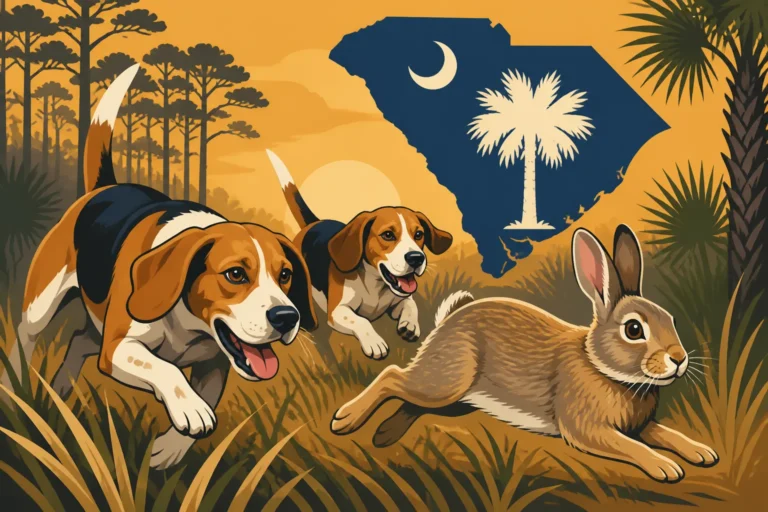
Let's be honest, for many passionate hunters, rabbit hunting in South Carolina is synonymous with hunting with dogs. And there's a very good reason for this, especially when you're contending with the state's notoriously thick brush. A well-trained pack of beagles or other dedicated rabbit dogs possesses an unparalleled ability to penetrate cover that would be utterly impossible or extremely difficult for a human to navigate effectively. Their incredibly keen sense of smell and their relentless, energetic pursuit are simply invaluable assets in these challenging environments.
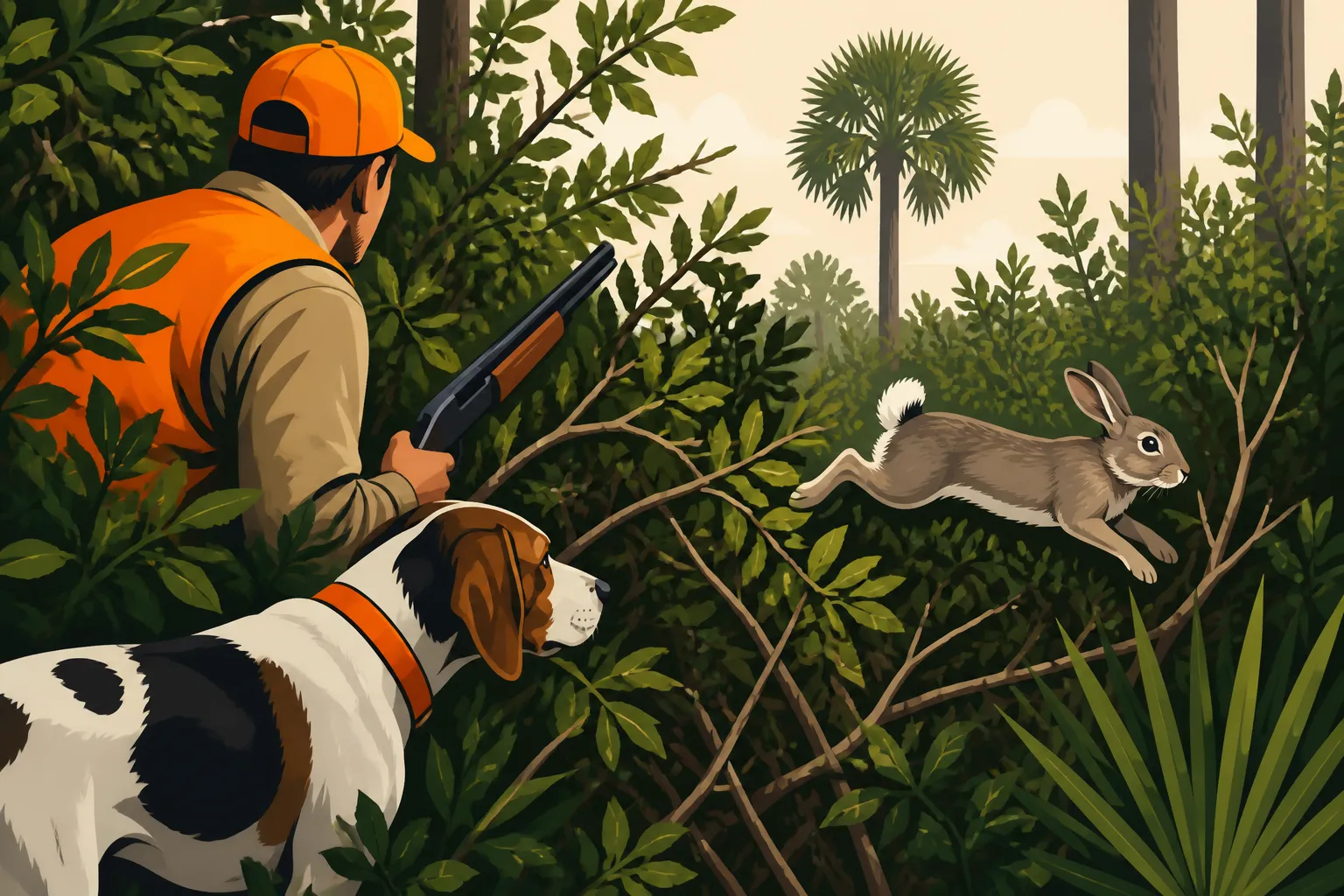
When hunting with dogs, your primary role as the hunter shifts dramatically towards anticipation and strategic positioning. The dogs do the hard work of jumping the rabbit, and then you become an attentive listener to the unfolding chase. Rabbits, once jumped, have a strong tendency to circle back towards their point of origin or make a run for a familiar, nearby safe haven. By understanding these common escape patterns and positioning yourself on known escape routes, at the edges of the thickest cover, or along natural funnels like old logging roads that border the primary habitat, you can effectively intercept them. This often means standing quietly, blending into the environment, at the end of a fencerow, at the mouth of a dense briar thicket, or along a slight rise. The dogs perform the strenuous task of rooting out the rabbits, and you get yourself ready for the shot. Diving deeper into the nuances of Running Beagles on South Carolina Cottontails is paramount for maximizing your success with this method. It's a true team effort, and the constant communication between the dogs (through their baying) and the hunters (through their positioning and calls) is the undeniable key to a productive hunt.
Effective Driving Techniques
When you're hunting with a group but without the benefit of dogs, or if you're confronting a truly immense and impenetrable patch of thick brush, organized driving can be an exceptionally effective method for pushing rabbits out of their well-protected sanctuaries. This technique involves carefully setting up a line of "blockers" or "posters" on one side of a thick patch of cover, while a coordinated line of "drivers" slowly and deliberately pushes through the dense vegetation from the opposite side. The drivers create noise—stomping their feet, hitting brush with sticks, and making vocalizations—systematically moving through the thicket to encourage the rabbits to move towards the waiting guns.
The significant challenge, especially in very thick brush, lies in maintaining a safe and effective line, ensuring that every participant knows their role, their assigned shooting lane, and the direction of the drive. Clear and constant communication among all members of the hunting party is absolutely vital. Safety is, as always, of paramount importance, particularly because you're often dealing with severely obscured lines of sight. Hunters must maintain acute awareness of their surroundings, constantly knowing the location of other hunters, and only taking safe, ethical shots at rabbits that are clearly moving away from the line of drivers. This method proves particularly useful in larger clear-cuts, extensive briar patches, or dense river bottom thickets where a few dedicated hunters can effectively cover a significant area. This requires meticulous coordination and a well-thought-out plan, much like the principles applied in Deer Drives on South Carolina Public Land, albeit on a smaller, more focused scale and tailored specifically for small game.
Essential Gear and Preparation for Brush Hunting
Getting ready for a rabbit hunt in South Carolina's thick brush isn't just about grabbing your gun. It's about smart gear choices and thorough preparation to ensure you're effective, safe, and comfortable in challenging environments.
Firearm and Ammunition Choices
When you find yourself deep in the heart of South Carolina's thick brush, you'll quickly realize that shots are almost universally close-range and incredibly fast. This is decidedly not the environment for long-range precision shooting. Your absolute best friend in these conditions will be a lightweight, fast-swinging shotgun. While many dedicated rabbit hunters typically opt for a versatile 12-gauge or a more nimble 20-gauge, even a classic 16-gauge or a snappy .410 can be surprisingly effective in dense cover, provided you possess solid shooting skills.
What becomes even more critical than the specific gauge of your shotgun is the choke selection and the shot size of your ammunition. An open choke, such as an improved cylinder or even a skeet choke, is generally preferred because it provides a wider, more forgiving pattern at those tight, close-quarter ranges. For ammunition, typically #5, #6, or even #7.5 lead shot proves exceptionally effective on cottontails. The smaller shot sizes in this range offer a denser pattern, which significantly increases your chances of connecting with a fast-moving rabbit that might only offer you the briefest glimpse through the intervening leaves and branches. Always ensure your shotgun is meticulously well-maintained, and crucially, make sure you've practiced your snap shooting. That fleeting moment when a rabbit bursts from cover is all you'll likely get.
| Shotgun Gauge | Recommended Choke | Shot Size for Rabbits | Ideal Range (yards) | Notes |
|---|---|---|---|---|
| 12 Gauge | Improved Cylinder | #5, #6, #7.5 | 10-25 | Most versatile, good power, common ammo |
| 20 Gauge | Improved Cylinder | #6, #7.5 | 10-20 | Lighter and easier to carry through thickets |
| .410 Bore | Modified or Full | #6, #7.5 | 5-15 | Challenging, demands precise shooting, good for young hunters with supervision |
| 16 Gauge | Modified or IC | #6 | 10-20 | Classic gauge, good balance, less common ammo |
Clothing and Protective Gear
Hunting in South Carolina's thick brush means you're almost guaranteed to encounter briars, thorny plants, dense thickets, and, perhaps most concerningly, potential snake encounters. Your clothing, therefore, needs to offer serious, robust protection. Heavy-duty brush pants or chaps are an absolute, non-negotiable must-have if you want to prevent your legs from being torn to shreds by aggressive blackberry brambles and invasive multiflora rose. A tough, long-sleeved jacket or a durable vest made from resilient material like heavy canvas or specially designed briar-resistant fabric will protect your upper body from scratches and scrapes.
Layering your clothing is always a smart strategy, as you'll almost certainly work up a significant sweat pushing through dense cover, even on cooler days. Sturdy, waterproof boots are also essential; they'll not only keep your feet dry in damp, marshy conditions but also provide crucial ankle support on the notoriously uneven and often unseen terrain beneath the brush. And critically, no hunter in South Carolina should ever consider venturing into truly dense cover without first considering specialized Snake Boots for South Carolina Swamp Ground. Both Eastern Diamondback Rattlesnakes and Cottonmouths are present in these habitats, and accidental encounters are always a real possibility. Lastly, a good pair of tough gloves is highly recommended to protect your hands from thorns, rough vegetation, and any unexpected splinters.
Navigation and Scouting Tools
Even areas that you believe you know intimately can quickly become disorienting once you plunge into truly thick, tangled brush. A reliable GPS unit or a robust mapping application on your smartphone, like one enhanced with premium features from GoHunt, is an invaluable tool for maintaining your bearings and preventing you from getting lost. Before you even contemplate stepping foot into the brush, invest some dedicated time in thorough scouting. Utilize aerial photos or satellite imagery to pinpoint those dense cover patches, identify natural fencerows, and trace likely rabbit travel corridors. The Go Outdoors SC app can be an incredibly fantastic resource for this, especially when you're planning to hunt on public land.
Actively look for areas where different types of cover converge, or where dense thickets transition into more open ground; these "edge" areas are frequently prime rabbit locations. Understanding how to interpret Reading Aerial Photos for Upstate Deer can be effectively adapted for small game, helping you to precisely identify those crucial habitat transitions. Pay close attention to subtle game trails and any fresh rabbit sign, such as droppings or vegetation that has clearly been clipped, as these are clear indicators of active areas. Remember, scouting isn't solely about finding rabbits; it's equally about understanding the terrain, planning your approach, and, critically, mapping out your safe escape routes, especially when dealing with such incredibly dense vegetation. It also helps you identify Finding Ground Others Walk Past, which can lead to less pressured rabbit populations.
Safety Considerations When Hunting in Thick Brush
Hunting in South Carolina's thick brush presents unique challenges that demand heightened awareness and specific safety protocols. Navigating dense vegetation safely and ensuring clear communication are paramount to a successful and incident-free hunt.
Navigating Difficult Terrain Safely
Thick brush in South Carolina is almost always accompanied by uneven ground, hidden obstacles like downed timber, unseen holes, and often slippery conditions, particularly after a recent rain. It's incredibly easy to trip, twist an ankle, or take a nasty fall if you're not careful. Always be acutely mindful of where you're placing each step. Resist the urge to rush, even when a rabbit flushes directly in front of you. Your primary focus must always remain on maintaining your balance and actively scanning for potential hazards hidden beneath the vegetation. When you encounter obstacles like fallen trees or shallow ditches, ensure your firearm is consistently pointed in a safe direction, preferably skyward or towards the ground away from others.
If you're hunting with a group, maintaining visual contact with your partners or communicating frequently through calls or radios is crucial to ensure everyone is aware of the terrain ahead and each other's movements. Consider using a sturdy walking stick if it aids in your balance and helps probe uncertain ground. Remember that pushing through incredibly dense patches can be physically demanding and quickly exhausting, so pace yourself, take breaks, and stay well-hydrated. This challenging terrain also means you need to exercise extra caution if you decide to track a wounded rabbit into even deeper, more impenetrable cover, always prioritizing your personal safety above the immediate pursuit.
Blaze Orange and Communication
Even though rabbits are considered small game, South Carolina Blaze Orange Requirements mandate its wear during open firearms deer season, and it's always an incredibly smart and highly recommended practice to wear it when hunting with others, regardless of the specific game you're pursuing. In the naturally low-visibility environment of thick brush, blaze orange significantly enhances your safety by making you stand out clearly to other hunters. It should be considered a non-negotiable for any group hunt.
Beyond visual cues, clear and consistent communication is absolutely vital. Whistles, two-way radios, or even loud, clear verbal commands can prevent potential accidents, especially during organized drives. Before you even begin the hunt, establish a clear set of signals and commands: "hold," "go," "rabbit left," "rabbit right," or "stop." Never make assumptions about another hunter's exact location, and always confirm their position before moving, altering your direction, or taking a shot. If you are hunting solo, it is critical that you always inform someone of your detailed hunting plan, including your precise location and your expected return time. The dense nature of the cover means you might quickly find yourself out of cell service range, making a well-thought-out contingency plan absolutely essential. Taking the time to go through comprehensive South Carolina Hunter Education Requirements is a critical step for all hunters, as it ensures everyone understands and consistently practices these fundamental safety principles.
Disclaimer
Please be aware that hunting regulations, seasons, and licensing requirements can change. Always consult the most current South Carolina Department of Natural Resources (SCDNR) regulations before heading afield. This guide is for informational purposes only and does not supersede official legal requirements.