Reading Cuttings Under an Oak
It's a common frustration when you've spent hours scouting, found what looks like a honey hole under a sprawling oak, only to discover later that the abundant "sign" was mostly squirrels having a feast. Understanding precisely how to "read" the cuttings under an oak tree is a crucial skill for any South Carolina deer hunter, distinguishing genuine deer feeding sign from other wildlife, and this guide will help you master that subtle, yet critical, art. You'll learn to interpret these often-overlooked details to better predict deer movement and make more informed hunting decisions.
What Are Acorn Cuttings and Why They Matter for Deer
For generations of hunters, acorns have been the gold standard of deer forage. They're a high-calorie, nutrient-dense food source that whitetails absolutely crave, particularly as they prepare for the rigors of the rut and the colder months ahead. In South Carolina, with our vast hardwood bottoms and upland pine-oak mixes, acorns are a prime motivator for deer movement, often dictating where deer will feed, bed, and travel.
We have a variety of oak species across the state, from the early-dropping white oaks to the later-dropping red oaks and water oaks. Understanding the timing of these different drops can give you a significant advantage. White oaks, for instance, are often preferred because their acorns contain less tannin and are sweeter, making them a major draw in early to mid-fall. When those acorns start to hit the ground, deer will abandon almost any other food source to get to them. Finding a productive oak that's dropping fresh acorns is like finding a buffet line for deer, and it’s a spot where you can almost guarantee activity.
"Cuttings" are simply the fragments of acorn caps and nut shells left behind by animals as they consume the meat of the acorn. These aren't just random bits of debris; they are a direct, real-time indicator of recent feeding activity. While old rubs or scrapes can tell you where a buck was or might be, fresh cuttings under an oak tell you where deer are right now or were very recently. Learning to interpret these subtle clues allows you to piece together a story of who's eating what, and more importantly, when. It's like finding a fresh set of footprints leading right into the kitchen—you know someone's been there and will likely be back.
Differentiating Deer Cuttings from Other Wildlife
The biggest challenge with reading cuttings is separating deer sign from other animals, primarily squirrels. South Carolina's oak forests are bustling with grey and fox squirrels, and they love acorns just as much as deer do. A casual glance at the ground might lead you to believe an area is crawling with deer, when in reality, it's just a squirrel convention. Knowing the distinct differences in how these animals process their food is paramount.
The Tiny Teeth of a Squirrel
Squirrels are neat eaters, using their incredibly sharp incisors to precisely cut away the shell from the acorn meat. When you find squirrel cuttings, you'll often see small, crescent-shaped pieces of the shell, sometimes with very clean, almost surgical edges. They'll typically gnaw a small hole, then pry the shell open, often leaving behind a good portion of the cap intact. These fragments are usually small and numerous, and if you look closely, you might even see the tiny teeth marks on the remaining shell.
Furthermore, squirrels are creatures of habit. They'll often carry an acorn to a favorite "eating bench" – a log, a stump, a branch, or even the base of the oak itself – where they'll sit and methodically shell their meal. This means their cuttings tend to be highly concentrated in specific spots, often creating a veritable carpet of shell fragments. If you're seeing small, precise cuttings piled up next to a stump or a downed log, it's a pretty strong indicator that you're looking at a squirrel's dining area. For a deeper dive into these crafty critters, check out our guide on Squirrel Hunting a South Carolina Oak Ridge.
The Crushing Power of a Deer Jaw
Deer, on the other hand, are not nearly as meticulous. They don't have incisors in their upper jaw, so they can't make those neat, precise cuts. Instead, they pick up acorns with their lips and use their molars to crush and grind the entire nut. This results in cuttings that are typically larger, much more jagged, and often splintered. You'll see crushed pieces of the shell, sometimes even bits of the inner membrane, scattered haphazardly. Deer aren't sitting on a "bench"; they're generally eating on the move, browsing as they walk, so their cuttings will be more spread out under the entire canopy of the oak, rather than concentrated in one small area.
When you're inspecting cuttings, look for these tell-tale signs: larger, more irregular pieces that look like they've been crushed rather than meticulously cut. Also, consider the accompanying sign. Are there fresh deer tracks mixed in with the cuttings? Are there fresh deer droppings nearby? These additional clues are critical for confirmation. A seasoned hunter understands that one sign alone rarely tells the full story. Integrating observations of tracks, droppings, and even disturbed leaf litter will give you a much clearer picture, similar to how we analyze Reading South Carolina Mud for Fresh Deer Movement. The combination of multiple, fresh deer signs is what truly validates your findings.
| Feature | Squirrel Cuttings | Deer Cuttings |
|---|---|---|
| Appearance | Smaller, neater, often a clean cut around the shell. | Larger, jagged, crushed, splintered fragments. |
| Volume | Can be incredibly numerous, almost a carpet. | Generally less concentrated, more spread out. |
| Location | Often concentrated at the base of trees, stumps, logs. | Spread out under the tree canopy, where deer walk. |
| Other Sign | Bark chew marks, smaller tracks, nut caches. | Tracks (cloven hoof), droppings, disturbed leaf litter, rubs. |
Interpreting the Story Cuttings Tell for Deer Movement
Once you've confidently identified deer cuttings, the next step is to interpret what they're telling you about deer activity. It's not enough to just know deer are eating acorns; you need to understand when and how they're using that food source. This involves paying close attention to the freshness of the sign and how it integrates into the broader landscape.
Freshness is Key: When Was the Buffet Open?
The most critical aspect of reading cuttings is determining their freshness. Cuttings that are bright, still slightly damp (especially after a recent rain), and show no signs of weathering or insect activity are hot sign. This means deer were likely feeding there within the last 24 hours, possibly even within the last few hours. If the cuttings are brittle, faded, or covered in spiderwebs, they're old news, and the deer have likely moved on. A quick "crunch test" can help; fresh cuttings might have a slight give, while old ones will shatter easily.
The time of year and the stage of the acorn drop are also crucial. Early-season white oak drops will draw deer intensely, but those acorns don't last long once they hit the ground. Red oak acorns, while less preferred initially, can provide a food source later into the season. Your ability to gauge freshness allows you to pinpoint current feeding patterns. If you're seeing sparse cuttings, it could also indicate Hunting After a Poor Acorn Year, meaning deer are scattered and more difficult to pattern.
Follow the Trail: Where Are They Coming From and Going To?
Deer don't just appear under an oak tree; they travel to get there. As you find fresh cuttings, look for concentrations that seem to lead in a particular direction. Are they thicker along one edge of the oak stand, perhaps pointing towards a dense bedding area or a nearby water source? Are there discernible deer trails leading in and out of the feeding zone? These travel corridors are invaluable for stand placement. Deer are creatures of habit, and if they're regularly hitting a specific oak, they're likely using the same general approach and exit routes.
Using mapping tools, like the excellent resources available through GoHunt, can help you visualize these connections. You can mark individual acorn-dropping oaks you find and then look for natural funnels, creek bottoms, or terrain features that connect these feeding areas to bedding cover. The goal is to set up where you can intercept deer as they transition between these critical areas. Understanding the general Scouting South Carolina Public Land Before Season principles, combined with this specific sign reading, greatly enhances your chances.
The Bigger Picture: Integrating Cuttings with Other Sign
Remember, cuttings are just one piece of the puzzle. To truly understand deer movement, you need to combine this knowledge with all other available sign. Fresh tracks in the dirt or mud, active rubs and scrapes along travel routes, and, most importantly, fresh droppings will corroborate your findings. If you find a heap of fresh, jagged acorn cuttings, and nearby are fresh tracks and glistening deer droppings, you’ve hit the jackpot. This combination confirms high-value, current activity.
Consider the overall deer density in your hunting area. Knowing the South Carolina Deer Herd Size in your specific zone can help you manage expectations. An area with a higher deer population might show more widespread feeding sign. Don't be fooled by areas that only show old or sparse cuttings; deer move constantly. Contrast this with areas like a Hunting a Green Field Planted for Deer, where food is intensely concentrated and deer may linger longer. Cuttings under an oak are dynamic; they tell a story that changes almost daily, requiring constant observation and adaptation.
Putting Cuttings to Work in Your Hunting Strategy
Once you've honed your ability to identify and interpret acorn cuttings, it's time to translate that knowledge into actionable hunting strategies. This is where the rubber meets the road, turning keen observation into successful encounters.
Stand Placement Near Productive Oaks
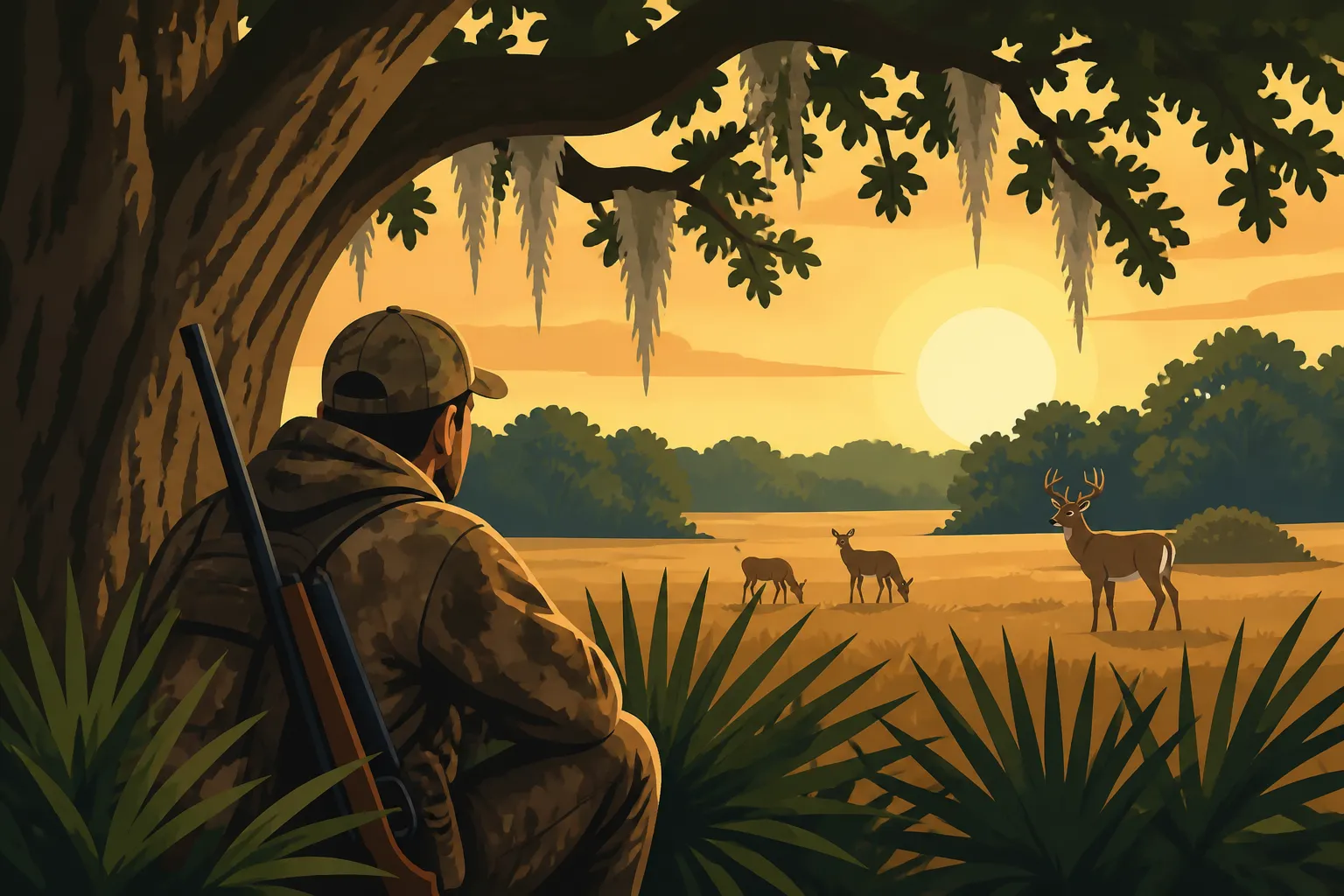
Finding a consistently dropping, acorn-laden oak with fresh deer cuttings is a prime location for a treestand or ground blind. When choosing your exact setup, always prioritize wind direction. Deer rely heavily on their sense of smell, so you absolutely must be downwind of where you expect them to approach and feed. Consider the angle of the sun at different times of day to avoid backlighting yourself or casting long shadows. Look for the most natural, subtle approach routes into your stand, minimizing disturbance. Often, deer will skirt around denser cover before entering an open oak flat, and understanding these travel patterns, sometimes evident in the spread of cuttings, can guide your setup. For more detailed advice on setting up in timber, you might find our insights on Treestand Setups in Francis Marion National Forest helpful, as many of those principles apply equally to oak stands. In areas like Sumter National Forest, where acorns are a key food source, understanding specific oak stands becomes vital. For more on this, check out Finding Sign in Big Sumter Forest Timber.
Leveraging Technology for Acorn Hotspots
Modern hunting technology has revolutionized scouting, and it can be a huge asset in identifying productive oak stands. Satellite imagery, often available through apps like GoHunt or integrated into tools like OnX Layers for South Carolina Land Status, allows you to identify large stands of oaks, particularly white oaks, by their distinctive canopy shapes. You can digitally "scout" areas from your couch, marking potential hotspots to investigate on foot. Once on the ground, use your GPS or phone app to precisely mark every productive oak you find with fresh cuttings. This creates a detailed map of current food sources.
Furthermore, trail cameras deployed near these active oak stands can confirm deer presence, identify specific bucks, and establish precise feeding times. This intelligence is invaluable for planning your hunts. Even the Using the Go Outdoors SC App can be helpful for understanding land boundaries, ensuring you're scouting and hunting legally around these promising oak bottoms. Technology doesn't replace boots on the ground, but it certainly makes your time in the woods more efficient and effective.
Adjusting Tactics as Acorns Deplete
Acorns, while a powerful attractant, are a finite resource. They don't last forever on the forest floor. As deer and other critters consume them, and as they decay or get buried, the "buffet" eventually closes. It's crucial to continuously monitor your oak stands. When the fresh cuttings become sparse, and you're seeing more old, brittle fragments, it's a clear sign that the deer's attention is shifting. This dynamic nature means your hunting strategy must be fluid. Don't cling to a productive oak if the food source has dried up.
You'll need to pivot to other food sources. This might mean shifting to planted food plots, agricultural fields (like corn or soybeans), or natural browse that becomes more appealing later in the season. Our guide on Late-Season Food Sources for South Carolina Whitetails offers detailed insights into these transitions. The early archery season in South Carolina, often characterized by warm weather, makes monitoring these ephemeral food sources even more critical, as deer movement can be subtle. Be ready to move with the deer, constantly searching for the next high-value food source they'll be keying in on. Adaptability is the hallmark of a successful deer hunter in South Carolina's diverse environments.
Disclaimer
Hunting and scouting involve inherent risks. Always prioritize safety, understand and adhere to all South Carolina Department of Natural Resources (SCDNR) regulations, and ensure you have proper landowner permission or WMA permits before entering any hunting area. The information provided in this guide is for educational purposes and should not replace professional guidance or official regulations.