Late-Season Food Sources for South Carolina Whitetails
As the vibrant greens of early autumn fade and the crisp chill of winter settles over South Carolina, many deer hunters face a familiar frustration: where did all the deer go? It often feels like they've vanished into thin air, leaving behind only sparse tracks and empty woods. This time of year, when the natural buffet of acorns and lush summer forage has largely disappeared, understanding what whitetails are truly seeking for sustenance becomes the key to unlocking late-season success. This guide will meticulously break down the most critical food sources deer rely on when the hunting gets tough and the days get short.
Understanding the Late Season Shift in Deer Diet
The transition from fall to winter fundamentally alters a whitetail's priorities. No longer is there an abundance of choice; now, it's about survival, energy conservation, and finding every last calorie available. This shift is crucial for hunters to grasp because it dictates deer movement and patterns more than any other factor.
Why Natural Forage Dwindles
South Carolina's deer often start the season feasting on a smorgasbord of acorns, succulent forbs, and browse. But by late November and into December and January, that easy meal is largely a memory. The early-dropping white oak acorns are long gone, consumed by deer, squirrels, and hogs. Even the red oak varieties, which drop later and offer a bit more longevity, are typically cleaned up by Thanksgiving, especially after a good mast year. The lush, tender leaves and green plants that deer browsed freely through the warmer months have either died back due to colder temperatures or been heavily browsed down to nothing. This creates a significant nutritional void that deer must fill.
The impact of heavy browse pressure in areas with high deer densities or on heavily hunted public land means that even secondary natural food sources are quickly depleted. Consider areas like the Francis Marion National Forest or parts of the Sumter National Forest, where deer numbers can be substantial. Here, the competition for food is intense. Without reliable, calorie-rich options, deer become stressed, burning more energy simply to stay warm and move. This scarcity means that any remaining high-value food source becomes an absolute magnet, concentrating deer in ways you might not see earlier in the season. It’s a complete flip from when deer could afford to be choosy; now, they’re desperate for reliable calories.
The Deer's Instinct for Survival
When food is scarce, a whitetail's primary goal shifts from casual browsing to efficient energy acquisition. They are no longer simply "grazing" but actively seeking out concentrated sources of carbohydrates and fats to fuel their bodies. Even in South Carolina, where winters are generally milder than in northern states, deer still need to maintain body temperature and build up reserves. For bucks, late season can also coincide with a post-rut recovery period, where they are exhausted and have depleted much of their fat reserves. They are essentially playing catch-up, making high-calorie food sources even more vital.
Does, on the other hand, are often pregnant by this time, and their nutritional needs are increasing. They need to sustain themselves and their developing fawns through the leanest months. This instinct for survival drives deer to often travel further or expose themselves more to access these crucial late-season food plots. Understanding this biological imperative helps you anticipate their movements. They are driven by an internal clock and a pressing need to put on or maintain weight, so finding a consistent, nutritious food source becomes paramount.
Key Late-Season Food Sources to Scout
Knowing what deer are looking for is one thing; knowing where to find it in the diverse South Carolina landscape is another. From the agricultural fields of the Lowcountry to the more wooded Upstate, different food sources will dominate, and savvy hunters learn to identify them.
Standing Agricultural Crops
For many South Carolina hunters, especially in the Pee Dee and Lowcountry regions, agricultural fields are absolute late-season goldmines. While most farmers will have harvested their main crops by late season, overlooked corners, unharvested rows, or even spilled grain can be irresistible to deer. Standing corn, in particular, is a phenomenal late-season food source, offering both high-energy kernels and crucial thermal cover. Deer will bed in thick cornfields and only emerge to feed. You can learn a lot about how to approach these areas by reading about Hunting a Standing Cornfield in Farm Country.
Soybeans and peanuts, though usually harvested, can also leave significant waste grain behind. Deer will meticulously work these fields, digging up any remaining morsels. The key is to scout these fields after harvest. Look for tracks entering and exiting, especially along edges where fields meet dense woods or swamp bottoms. Often, deer will stage in the timberline, waiting for twilight before venturing into the open fields. Using a good mapping tool like GoHunt can help you identify agricultural areas adjacent to public or private hunting land, allowing you to focus your scouting efforts. Don't discount the smaller, less-manicured fields; sometimes, these overlooked spots hold the most consistent deer activity simply because they haven't been picked clean or disturbed as much.
Winter Food Plots and Green Fields
On private land, and sometimes even within Wildlife Management Areas (WMAs) in South Carolina, dedicated winter food plots are designed specifically to attract and hold deer during the lean months. These plots are often planted with crops that thrive in cooler temperatures and offer high nutritional value when natural forage is scarce.
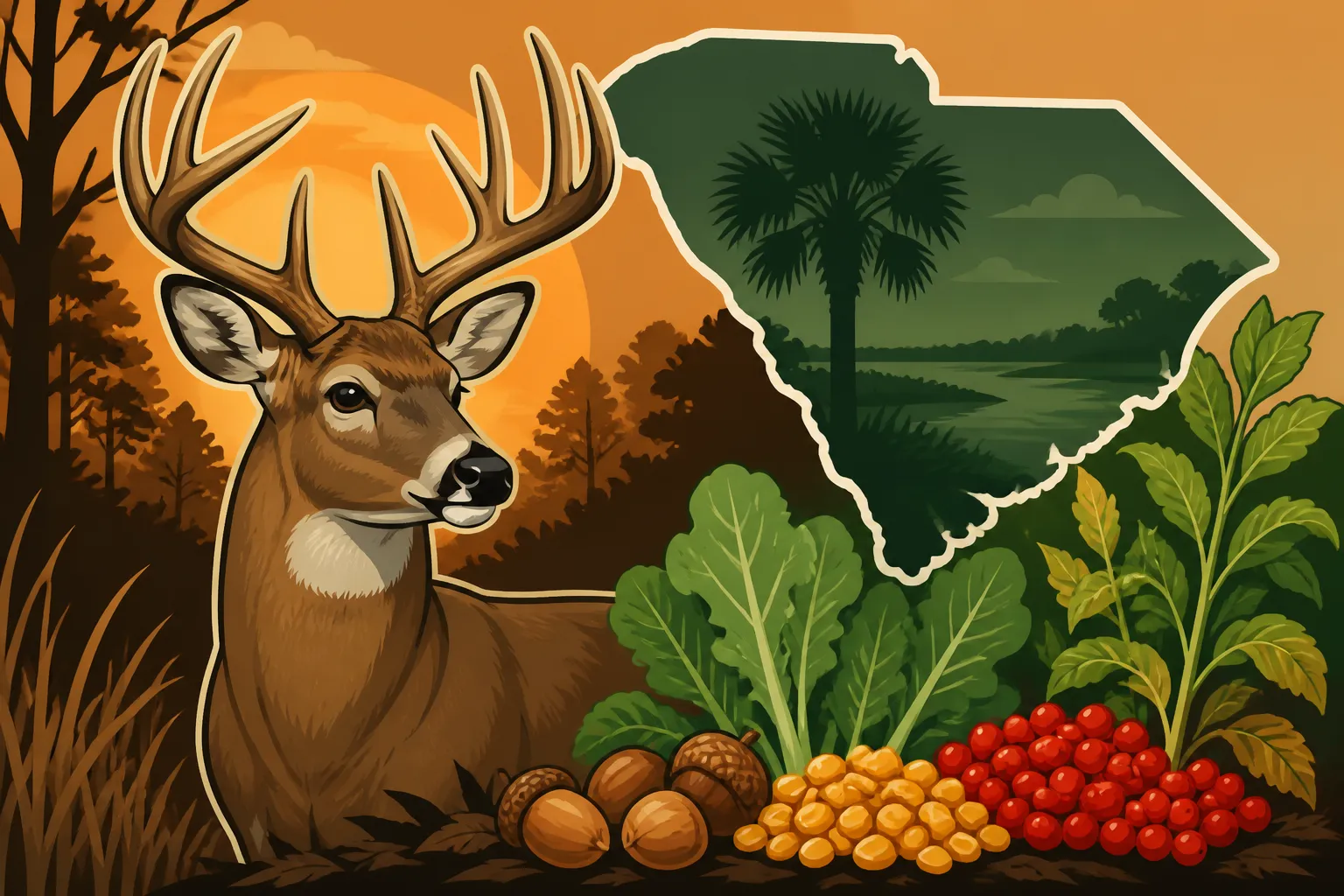
Brassicas, such as turnips, radishes, and rape, are fantastic late-season options. After a few hard frosts, the starches in these plants convert to sugars, making them incredibly palatable and highly attractive to deer. You'll often see deer digging up the turnip bulbs from the soil. Winter wheat, oats, and rye are also popular choices, providing a lush green carpet that deer will readily browse. These cereals are relatively hardy and can provide a consistent food source throughout the late season. Clover, particularly perennial varieties, can also remain green and attractive, especially during milder South Carolina winters. These food plots often become the epicenter of deer activity, drawing deer from surrounding areas. Understanding how to capitalize on these areas is crucial, and you can get more specific tips from our guide on Hunting a Green Field Planted for Deer. If you're hunting private land, knowing what has been planted can be an immense advantage.
Overlooked Browse and Hard Mast
While the main acorn crop might be gone, don't write off every natural food source completely. Deer are opportunistic and will always take advantage of anything available. Certain secondary hard mast trees, like some varieties of water oaks or willow oaks, may drop their acorns later in the season. These can be less common but are still worth scouting, especially in low-lying, damp areas or along creek bottoms. Beech trees, while not as widespread as oaks, also drop highly sought-after nuts that deer will scour the forest floor for.
Beyond nuts, there's a surprising amount of green browse that can persist or even become more attractive in the late season. Honeysuckle, a common invasive vine, remains green and palatable through much of the winter in South Carolina. Deer will seek it out in thickets and along forest edges. Privet, another ubiquitous invasive, also offers year-round browse. Additionally, muscadine vines, which produce a late-season berry, can be heavily browsed even after the fruit is gone, as deer consume the tender shoots. Persimmon trees, though their fruit typically drops earlier, can sometimes hold a few prized, late-ripening fruits that offer a sweet treat. When the primary food sources are exhausted, deer will meticulously work through cover, browsing on these seemingly minor plants. A good hunter pays attention to these subtle signs of continued browse. Consider exploring areas where you might see the effects of Hunting After a Poor Acorn Year.
Strategic Hunting Around Late-Season Food
Finding the food source is only half the battle. The true art of late-season hunting lies in how you approach, scout, and set up around these vital areas. Deer are often more wary, and your tactics need to reflect their increased caution.
Scouting for Fresh Sign
Late season scouting becomes laser-focused on freshness. Old tracks or browsed saplings are meaningless; you need to find evidence of current feeding activity. Start by walking the perimeter of suspected food sources: field edges, the fringes of green plots, or the timber surrounding a stand of late-dropping oaks. Look for distinct, fresh tracks entering and exiting the area, paying close attention to the direction of travel. Droppings are another excellent indicator of recent activity; if they're soft and dark, deer are regularly using that spot.
Also, examine the browse. Are the tips of honeysuckle vines freshly nipped? Are the turnip bulbs dug up with recent tracks nearby? This tells you exactly what they are eating and when. Employing trail cameras on trails leading into these food sources can give you invaluable insight into when deer are moving and which specific animals are using the area. Using digital tools like the Go Outdoors SC App or the detailed satellite imagery and property line features of GoHunt can help you scout remotely, identifying potential feeding areas and planning your access routes before you even step foot in the woods. This meticulous attention to detail during scouting is paramount, as you can read more about in our article on Scouting South Carolina Public Land Before Season.
Wind and Approach Considerations
Deer that have survived multiple months of hunting pressure are incredibly sensitive to human intrusion. This makes playing the wind absolutely non-negotiable, especially when hunting close to a primary food source. Your entry and exit routes must be carefully planned to avoid alerting deer in the area. Always approach with the wind in your face or quartering away from where you expect deer to be. Scent control, while always important, becomes even more critical now.
Consider the topography and thermals. In the mornings, air often sinks, carrying your scent downhill. In the evenings, it rises. If you're hunting an Upstate ridge leading to a food plot in a valley, understanding these thermal shifts is vital. You can dive deeper into this topic with our guide on Wind and Thermals on an Upstate Ridge. Ensure your stand or blind placement allows for an undetected approach and departure, and always plan for potential shot opportunities based on the prevailing wind direction. A single mistake in your approach can educate every deer in the vicinity, ruining your hunt.
Stand Placement for Staging Areas and Travel Routes
While it might be tempting to set up directly on a hot food source, especially an open field or food plot, this can often lead to frustration. Mature deer, having faced months of pressure, are highly likely to wait until after dark to enter exposed feeding areas. A more effective strategy is to set up in staging areas or along key travel routes leading to the food.
Staging areas are typically dense cover, just inside the timberline, where deer will gather and mill about before committing to entering an open field. Look for heavy tracks, rubs, and droppings in these transition zones. Setting your stand here, 50-100 yards back from the field edge, can give you shots at deer moving during legal shooting light. Similarly, identifying pinch points, creek crossings, or funnels that deer must use to access the food source can be incredibly effective. These natural bottlenecks concentrate deer movement, increasing your odds. For example, if you find a saddle on an Upstate ridge that deer are using to get to a valley food source, that's a prime spot. You can explore this further by checking out Hunting a Ridge-Top Saddle for Rutting Bucks. Another example could be a narrow strip of high ground between two swampy areas, acting as a natural corridor. More on this can be found in Hunting a Funnel Between Two Swamps. These spots offer excellent ambush points for cautious late-season whitetails.
Adapting to Pressure and Weather
Late season isn't just about food; it's also about managing hunting pressure and leveraging weather patterns. Deer, by this point, are masters of evasion, and successful hunters are those who can adapt their tactics.
Hunting Pressure and Nocturnal Movement
By December and January, many South Carolina deer have been bumped, shot at, and chased. This consistent pressure often pushes them into a more nocturnal pattern, especially on public lands or heavily hunted private tracts. They learn to move primarily under the cover of darkness, only venturing out during daylight hours when absolutely necessary. This phenomenon is why focusing solely on open fields during the middle of the day can be fruitless.
To combat nocturnal tendencies, consider hunting mornings and evenings more aggressively. Deer may feed briefly at first light before retreating to thick cover, or they may emerge from bedding just before dark to hit a food source. If legal, hunting remote pockets of public land that see less foot traffic might yield better results, as those deer might be less pressured. Our guide on Hunting Pressure on South Carolina Public Land offers more insights into this challenge. Additionally, adverse weather conditions, like a cold, steady rain or a significant temperature drop, can sometimes encourage deer to move earlier in the day, as the discomfort outweighs their caution.
Impact of Cold Fronts
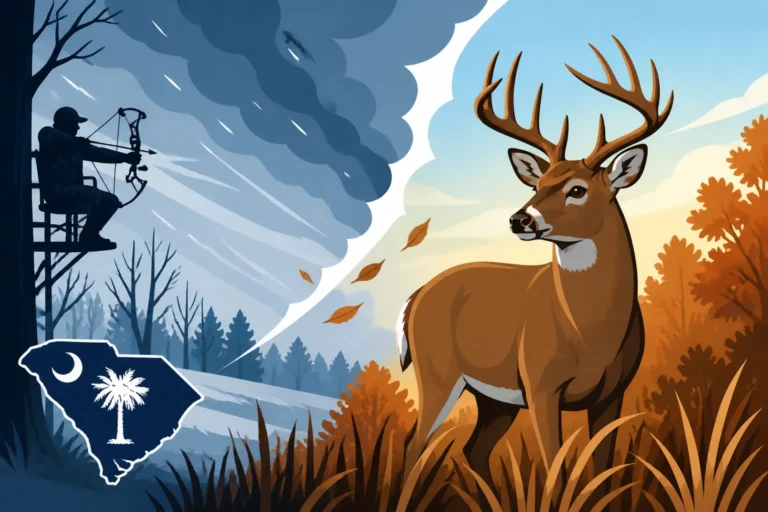
While South Carolina doesn't experience the brutal, prolonged cold of northern states, distinct cold fronts can still have a profound impact on deer movement and feeding behavior. A sudden drop in temperature, especially after a period of mild weather, often triggers an instinctive feeding frenzy. Deer know they need to pack on calories to stay warm, and a cold front makes them more willing to move during daylight to access those vital food sources.
When a strong cold front pushes through, bringing colder temperatures and clear skies, that is a prime opportunity to be in your stand near a reliable food source. Anticipate this weather shift and plan your hunts accordingly. The few days following a significant cold snap can be some of the most productive late-season hunting days. Deer will be focused on replenishing energy stores, making them more predictable in their movements between bedding and feeding areas. This is a topic explored in more detail in our article, Hunting Deer After a Cold Front. Keep an eye on the forecast and be ready to capitalize on these shifts, as they often present the best chance for success in the waning weeks of the season.
| Food Source | Primary Appeal | Ideal Location | Scouting Tips |
|---|---|---|---|
| Standing Corn | High calories, excellent cover | Agricultural fields, field edges | Look for broken stalks, husks, tracks entering deep into rows. |
| Waste Soybeans/Peanuts | Leftover high-energy protein | Harvested agricultural fields | Scan for diggings, fresh tracks, droppings, especially along wood lines. |
| Brassicas (Turnips, Radishes) | Sugary, palatable, especially after frost | Food plots (private land, some WMAs) | Check for browsed leaves, dug-up bulbs, deer trails leading in. |
| Winter Wheat/Oats | Tender green browse, sustained growth | Food plots (private land, some WMAs) | Look for consistent browsing, fresh tracks in mud or dew. |
| Honeysuckle/Privet | Year-round green browse | Thickets, creek bottoms, forest edges | Examine tips for fresh nips, heavily browsed areas. |
| Late Oaks/Beech | Remaining hard mast | Low-lying areas, mature timber, specific tree types | Search for fresh cuttings, sign of deer digging for nuts. |
| Persimmons | Sweet, high-energy fruit | Old fields, forest edges, specific trees | Look for remaining dropped fruit, deer trails to specific trees. |
Disclaimer
Hunting is an inherently dangerous activity. Always prioritize safety by adhering to all local, state, and federal hunting regulations. Ensure you understand and follow South Carolina's specific seasons, bag limits, and licensing requirements. Wear appropriate safety gear, including blaze orange or pink when required, and always be aware of your surroundings. Seek professional guidance for any activities where you lack experience. The information provided in this guide is for informational purposes only and should not replace proper training, local regulations, or professional advice.