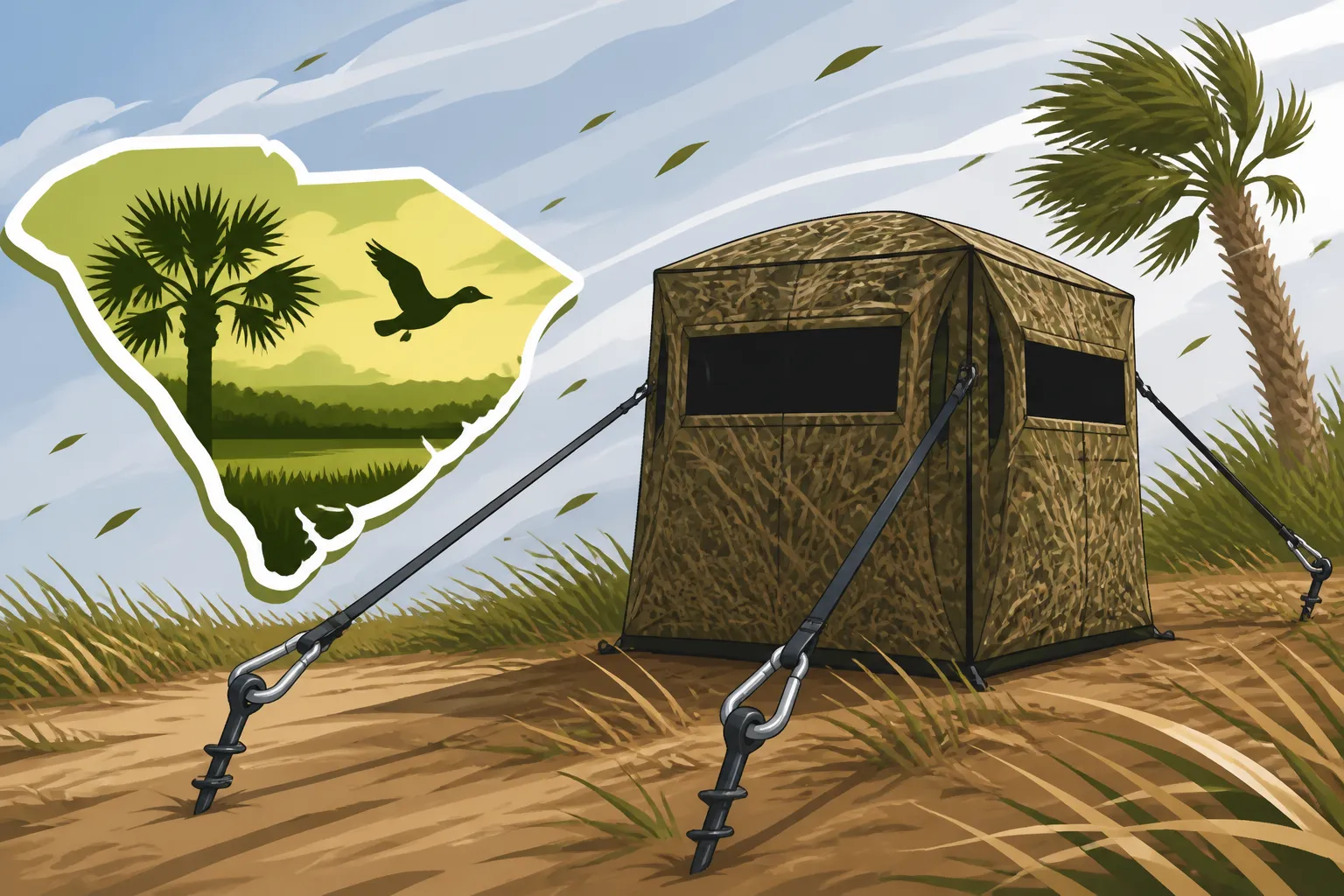
Ground Blind Anchoring in Wind
It's happened to all of us: you spend precious time setting up your ground blind in that perfect spot, only to return later, or worse, have it collapse on you mid-hunt, because a rogue gust of wind decided to make it its personal kite. The frustration is real, and it can absolutely ruin a hunt, not to mention damage your valuable gear. This guide is all about preventing that headache, providing practical, real-world advice on effectively anchoring your ground blind against the unpredictable South Carolina wind.
Why Ground Blind Anchoring Matters in South Carolina
Hunting in South Carolina means dealing with a diverse and often volatile weather pattern. From the humid, breezy coast to the sudden thunderstorms that roll through the Upstate, and even the blustery cold fronts that sweep across the Midlands, wind is a constant factor. Ignoring proper anchoring techniques isn't just an inconvenience; it can be a costly mistake that jeopardizes your hunt and your equipment.
The Unpredictable South Carolina Weather
Think about a typical late summer or early fall morning in the Lowcountry. You might start with a calm, misty dawn, but by mid-morning, those coastal breezes can pick up significantly, especially if you're set up near a large field or water body. A pop-up thunderstorm in the Upstate can bring torrential rain and sudden, violent gusts that seem to come from nowhere, turning your carefully placed blind into a crumpled mess. Even a mild cold front pushing through can bring sustained winds that will test the limits of any unanchored blind.
I remember one opening day in Zone 4, sitting near a Hunting Coastal Rice Field Edges. It was dead calm at first light, but as the sun rose, a stiff breeze off the Atlantic started building. My buddy's blind, just a few hundred yards away, started flapping like a flag. By the time he could get out and try to secure it, the wind had already ripped a seam, and a deer he'd been watching from afar bolted. That's the kind of scenario we're trying to avoid – a perfectly good hunt ruined by a preventable problem.
Protecting Your Investment and Your Hunt
Let's be honest, ground blinds aren't cheap. You've invested good money in a quality piece of gear designed to keep you concealed and comfortable. A blind that's constantly flapping, moving, or worse, collapsing, isn't just a nuisance; it's a beacon of alarm for every deer, turkey, or hog within earshot. Game animals are incredibly sensitive to movement and unusual noises, and a dancing blind will send them packing faster than a bad grunt call.
Beyond spooking game, there's the very real risk of damage. Ripped fabric, bent poles, broken hubs – these are all common casualties of an unanchored blind caught in a South Carolina squall. Repairing or replacing a blind costs time and money. And if you're actually in the blind when it decides to take flight, it can be a startling, if not outright dangerous, experience. Securing your blind properly is about preserving your hunting opportunity, protecting your investment, and ensuring your safety.
Essential Anchoring Methods for Ground Blinds
While every ground blind comes with some form of anchoring, often those factory-supplied stakes are just the starting point. Depending on the conditions and the terrain you're hunting in, you'll need to go beyond the basics to ensure your blind stays put.
The Basic Stake-Down Approach
Most ground blinds come with a set of flimsy wire stakes, sometimes resembling oversized tent pegs. These are fine for calm days or soft, loamy soil where there's no wind to speak of. However, in South Carolina, you'll encounter everything from hard-packed clay to sandy loam in the Lowcountry, or rocky soil in parts of the Upstate. Those basic stakes often pull out with minimal effort, especially if the ground is wet, or if a decent gust comes along.
For better basic security, consider upgrading your stakes. Rebar stakes with a welded top hook, heavy-duty helical stakes that screw into the ground, or even robust plastic stakes designed for soft sandy conditions can make a huge difference. You might also find that the factory-provided stake loops are in odd spots. Don't be afraid to add extra loops or attachment points to your blind's skirt or frame if it seems like it's lacking. When you're Using a Ground Blind on South Carolina Public Land, having a sturdy blind that can withstand the elements is key, as you can't always choose the most sheltered spots.
| Stake Type | Pros | Cons | Best Use Case |
|---|---|---|---|
| Basic Wire | Lightweight, compact, often included | Poor holding power, bends easily | Very calm conditions, temporary setups, soft ground |
| Plastic Helical | Good for sand/soft soil, won't rust | Can snap in hard ground, moderate holding | Sandy coastal areas, loamy fields |
| Steel Helical | Excellent holding power, durable, reusable | Heavier, harder to install in rocky ground | High wind, varied soil types, long-term setups |
| Rebar Stakes | Very strong, excellent holding power | Heavy, can be difficult to remove, may rust | Extreme wind, hard-packed earth, permanent setups |
Enhancing Stability with Tie-Down Ropes and Guy Lines
Beyond just staking the base, using external tie-down ropes or guy lines is an absolute game-changer for blind stability. Think of it like a tent; the stakes hold the base, but the guy lines pull out from the top, providing lateral support and preventing the whole structure from swaying and torquing in the wind.
You can use paracord or thin rope, attaching it to the blind's frame at multiple points, especially near the hubs or corners. Run these ropes out at an angle and secure them to heavy-duty stakes, nearby trees, stumps, or even substantial roots. If you're near a Hanging a Stand on a Sumter Forest Ridge, those strong hardwood trees can be excellent anchor points. The goal is to create a triangular support system around the blind, distributing the force of the wind. Before setting up, a quick scan with a scouting app like GoHunt can help you identify surrounding trees or features that would make ideal anchor points, giving you a tactical advantage before you even unload your gear.
Weighting Down Your Blind
Sometimes, stakes alone, even good ones, aren't enough, especially on hard, rocky ground where stakes won't penetrate, or in incredibly soft, loose sand. That's where adding weight to the inside or outside of your blind comes into play.
Sandbags are the classic choice, easy to fill on-site if sand is available, or you can bring them pre-filled. Rocks, if plentiful, can be placed in the corners or around the base. Empty water jugs can be filled with water once you're on site, providing portable weight. Even a heavy backpack filled with gear, placed in a corner, can contribute to stability. For those longer sits or when Hunting a Green Field Planted for Deer, where you might be exposed to sustained wind, a combination of stakes, guy lines, and internal weights creates a fortress of stability for your blind. Remember, the more anchor points and weight you can add, the more resilient your blind will be against the whims of the South Carolina weather.
Advanced Tactics for Extreme Wind Conditions
While the basic and enhanced anchoring methods will cover most situations, there are times when South Carolina's weather throws everything it has at you. For those extreme wind conditions, a few advanced tactics can ensure your blind remains steadfast.
Reinforcing the Blind's Structure
Modern ground blinds are designed to be lightweight and portable, which sometimes means sacrificing a bit of rigid structural integrity. In high winds, the frame can flex and twist, potentially leading to breakage or collapse. You can proactively reinforce the internal structure.
Consider carrying a few pieces of lightweight PVC pipe cut to length or even collapsible trekking poles. These can be used to brace the internal corners or cross-sections of the blind, creating a more rigid skeleton. You might even use bungee cords to secure these internal braces more tightly to the existing frame, reducing wobble. This kind of reinforcement is particularly helpful when you know you'll be set up for an extended period, perhaps for a late-season sit where Hunting Into the January Zone 1 Close can mean facing some of the year's coldest and windiest conditions.
Strategic Placement and Natural Windbreaks
Sometimes the best anchoring isn't about more stakes or ropes, but smarter blind placement. Nature often provides the best windbreaks, and learning to identify and utilize them is a critical skill for any South Carolina hunter.
Look for thick hedgerows, dense pine thickets, the lee side of a rise, or even a large, downed log. Setting your blind directly behind one of these features can dramatically reduce the wind's impact, often turning a blustery gale into a manageable breeze within your blind. If you're planning on Brushing In a Blind on a Field Edge, consider the wind direction that will be most prevalent during your hunt. Setting the blind on the downwind side of the brush line offers both concealment and a windbreak. A good scouting app can show you topography and vegetation density, helping you pick those naturally sheltered spots before you even step foot in the woods.
Pre-Season Setup and Testing
One of the most overlooked "advanced" tactics is simply to set up your blind before the season starts and leave it there for a few days or weeks. This allows you to see how it handles various weather conditions without the pressure of a hunt.
During this pre-season test, observe how the blind reacts to wind from different directions. Does one corner flap more? Do the stakes hold? This invaluable feedback allows you to fine-tune your anchoring system. You can experiment with different stake types, adjust rope tension, and even add additional brushing to see what provides the most stability. Scouting South Carolina Public Land Before Season isn't just for finding game sign; it's also for understanding the micro-terrain and how it interacts with weather patterns. This test run helps ensure that when opening day arrives, your blind is a steadfast, unmoving part of the landscape.
Common Mistakes and How to Avoid Them
Even with the best intentions, it's easy to fall into traps that compromise your ground blind's stability. Being aware of these common pitfalls can save you a lot of grief and ensure a more successful hunt.
Underestimating Wind Speed and Direction
This is probably the most frequent mistake. We often focus on temperature or rain, but neglect to consider wind. A "light breeze" can quickly become a stiff wind, especially in open areas or on ridge tops. Always check the wind forecast before heading out, and remember that local topography can funnel or amplify wind in unexpected ways. For example, a prevailing west wind might feel stronger in a specific creek bottom or across a particular field.
Understanding how Wind and Thermals on an Upstate Ridge behave is crucial, as winds can swirl and change direction rapidly in hilly terrain. Don't just rely on a general forecast; observe the flags on nearby power lines, the sway of trees, or toss up some milkweed fluff to get a real-time sense of the wind's behavior right where you're hunting. If the wind picks up mid-hunt, don't wait for your blind to start flapping; proactively check your anchors.
Ignoring Ground Conditions
Not all ground is created equal when it comes to holding stakes. That perfectly soft, easy-to-penetrate soil you found on your scout might turn into a muddy mess after a heavy rain, allowing stakes to pull free with ease. Conversely, trying to hammer a flimsy wire stake into rock-hard clay or gravelly soil is an exercise in futility, bending the stake long before it gains any purchase.
Always assess the ground beneath your blind. If it's sandy, you'll need longer, wider stakes or specialized helical stakes designed for sand. If it's hard-packed, you'll need robust steel stakes and perhaps a hammer, or you'll have to rely more heavily on internal weights and external tie-downs to trees. Carrying a variety of stake types in your pack, perhaps even a small shovel to dig a shallow trench for a log anchor, can be a lifesaver. This adaptability is especially important when you're hunting varied landscapes across South Carolina, from the sandy soils of the Coastal Plain to the harder ground of the Piedmont.
Neglecting Maintenance and Inspection
Your anchoring system is only as strong as its weakest link. Over time, ropes can fray, bungee cords can lose their elasticity, stakes can bend, and the fabric loops on your blind can tear. A quick pre-hunt inspection of all your anchoring components can prevent a disaster.
Before each use, check your stakes for damage, your ropes for fraying, and your blind's attachment points for wear. Make sure any knots you've tied are still secure. If you're leaving a blind out for an extended period, like for South Carolina's Zone 4 Coastal Deer Season where the season runs long, make these inspections a regular part of your routine. Sun and weather can degrade materials faster than you think. A few minutes spent on maintenance can save you the heartache and expense of replacing a damaged blind or, even worse, missing a shot because your blind decided to become a parachute at the worst possible moment.
Disclaimer
This article is for general informational purposes only and does not constitute professional advice. Laws, prices and regulations vary by location and change over time. Consult a qualified professional for guidance on your specific situation.