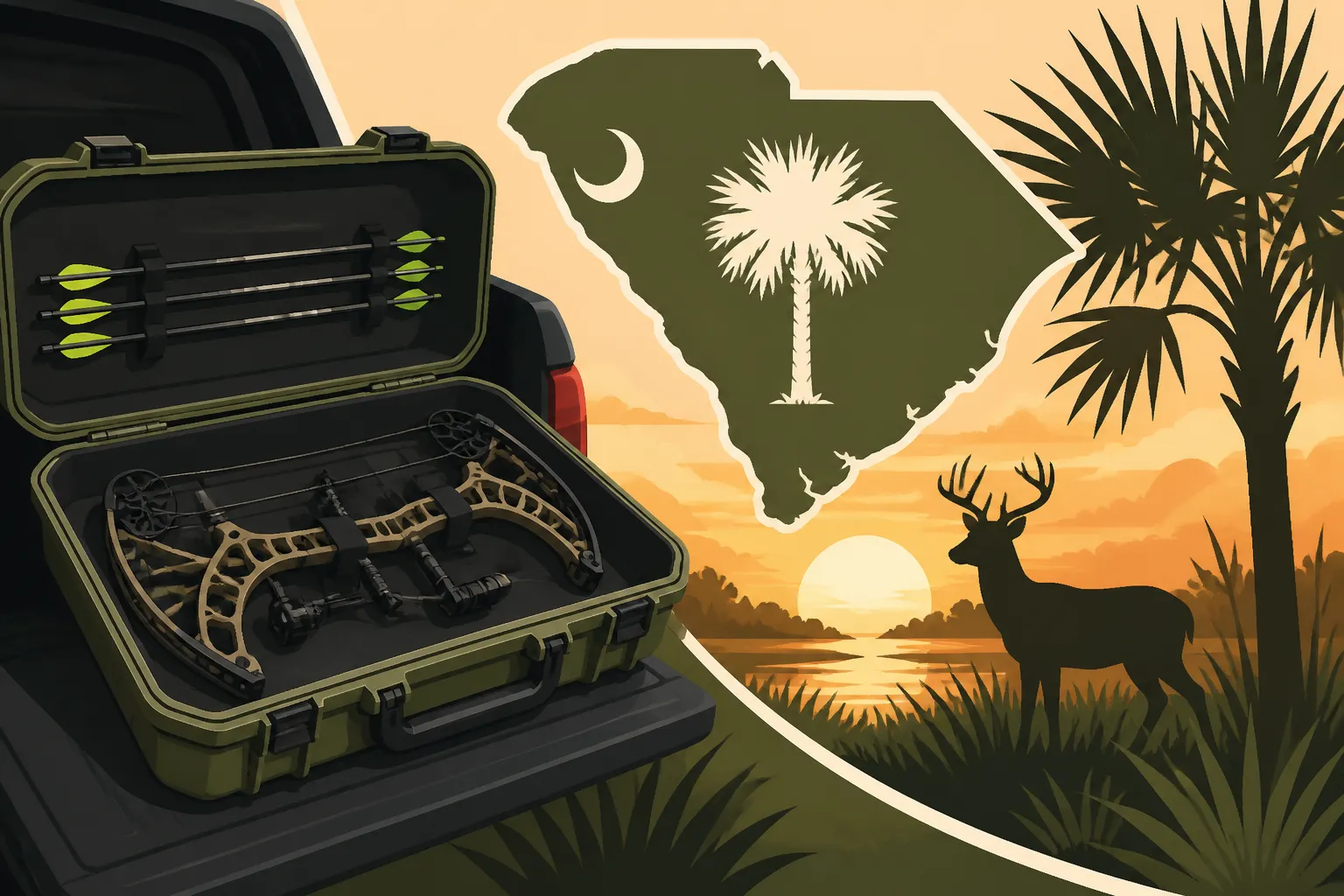
Bow Cases for Travel to South Carolina
There's nothing quite like the anticipation of a bowhunting trip to South Carolina, picturing those lowcountry swamps or upstate ridges. But before you can even think about drawing back on a Lowcountry buck, you've got to get your precious bow and all its delicate accessories from point A to point B without a hitch. The truth is, traveling with archery gear, especially by air, can be a headache filled with anxiety about damage or lost luggage. This guide will walk you through everything you need to know about choosing, packing, and preparing your bow case for seamless travel to the Palmetto State, ensuring your gear arrives as ready to hunt as you are.
Why a Dedicated Bow Case Isn't Just an Accessory, It's a Necessity for South Carolina Trips
When you've invested hundreds, if not thousands, of dollars into your bow, sights, rests, and arrows, throwing it into a flimsy bag for a cross-state or cross-country trip is just asking for trouble. South Carolina offers an incredibly long archery season, often starting in August in the coastal zones, which means you might be traveling in peak vacation season with crowded airports and bustling highways. A proper bow case isn't just about storage; it's about safeguarding your entire hunting endeavor.
Protecting Your Investment from the Rigors of Travel
Think about what your bow goes through during travel. It might be tossed into the back of a pickup truck with other gear, jostled in a car trunk, or, perhaps most concerning, handled by baggage carriers at an airport. A sight pin bent, a cam knocked out of alignment, or a limb scratched can mean the difference between a successful hunt and a frustrating, gear-fixing nightmare when you should be scouting. Imagine arriving in the Francis Marion National Forest, only to find your peep sight twisted because your case didn't offer enough internal support. That's a day, or even more, lost trying to fix something that could have been prevented. A quality case acts as an impenetrable fortress, absorbing impacts and resisting punctures, ensuring every delicate component arrives in pristine condition.
Beyond physical damage, moisture is another silent enemy, especially when traveling to South Carolina's humid climate. A good case, particularly a hard case, can offer a degree of protection against rain, dew, or even accidental spills. You don't want your strings and cables soaking up moisture before you even step foot in the woods. When you're dreaming of Bowhunting South Carolina's Long Archery Season, the last thing you want is a compromised bow.
Navigating Airline Regulations and Local Transport
Air travel with firearms and archery equipment has specific rules, and these can vary slightly by airline, although TSA regulations provide the baseline. Your bow case needs to meet certain criteria to be checked as luggage. Generally, this means it must be a hard-sided container, capable of being locked. A soft case simply won't cut it for airline travel.
Even if you're driving, the case plays a crucial role. Securing your bow in a vehicle prevents it from sliding around, potentially hitting hard surfaces, or having other gear fall onto it. Plus, having a proper case means you're less likely to draw unwanted attention, keeping your valuable equipment out of plain sight. Whether you're headed to the Upstate or the Lowcountry, knowing your bow is secure for the ride, whether on a plane or in the back of your SUV, is paramount. This is where researching and choosing the right case becomes as important as selecting the right broadhead for Broadheads for Swamp Timber Shots.
The Peace of Mind a Secure Case Provides
Honestly, the biggest benefit of a good bow case isn't just the physical protection; it's the mental peace it affords you. When you're traveling, especially for a highly anticipated hunt, stress levels can be high. Worrying about your gear on top of everything else is just extra baggage you don't need. Knowing that your Bow and Crossbow Setups for South Carolina are safely nestled in a robust, locked case frees your mind to focus on scouting reports, license requirements, or even just enjoying the journey.
Imagine this scenario: you've finally landed at Charleston International, retrieved your luggage, and your bow case rolls off the carousel looking exactly as it did when you checked it. You unlock it, peek inside, and everything is perfectly in place. That feeling is priceless. It sets the tone for your entire trip, allowing you to hit the ground running, knowing your equipment is ready to perform. This confidence allows you to spend more time focusing on tactics like Hunting the Rut in the Coastal Zones rather than troubleshooting gear.
Understanding Your Options: Types of Bow Cases for the Traveling Hunter
Just like there are different hunting styles and preferences, there are various types of bow cases, each with its own advantages and disadvantages. Choosing the right one depends heavily on your travel methods, the level of protection you need, and your budget.
Soft Cases: Lightweight and Convenient for Local Hauls
Soft cases are essentially padded bags, often made from durable Cordura or similar fabric. They typically have a zipper closure and various external pockets for accessories.
-
Pros:
- Lightweight: Easy to carry, especially for shorter distances from your vehicle to a campsite or a friend's house.
- Flexible: Can conform to odd spaces in a packed vehicle, making them good for quick local trips.
- Affordable: Generally the most budget-friendly option.
- Easy Storage: When empty, they can often be folded or rolled, taking up less space.
-
Cons:
- Minimal Protection: Offers limited protection against impacts, crushing, or punctures. A dropped item on top of a soft case can easily damage your bow.
- Not Airline Compliant: Most airlines will not accept a soft case for checked luggage, as it doesn't meet the hard-sided, lockable requirement.
- Vulnerable to Elements: Less protective against rain, mud, or extreme humidity.
-
Best Use: If you're only driving a short distance to a local range, a hunting buddy's land, or a weekend trip where your bow will stay in your personal vehicle and won't be subject to rough handling, a soft case might suffice. It's a convenient option for quick trips where maximum protection isn't the primary concern. However, for a serious trip like a South Carolina hunting adventure, especially if flying, this isn't your primary choice.
Hard Cases: The Gold Standard for Serious Travel Protection
Hard cases are constructed from rigid materials like molded plastic, fiberglass, or aluminum. They feature robust latches, often with built-in or reinforced locking points, and a solid outer shell.
-
Pros:
- Maximum Protection: Offers superior protection against impacts, crushing, and the elements. These cases are designed to take a beating and keep your bow safe.
- Airline Compliant: Essential for air travel, meeting all TSA and airline requirements for checked archery equipment.
- Secure: Excellent for deterring theft, especially when coupled with quality locks.
- Weather Resistant: Many hard cases are designed to be water-resistant or even waterproof, ideal for dealing with unexpected South Carolina downpours or high humidity.
-
Cons:
- Heavy and Bulky: Can be cumbersome to carry, especially larger models.
- More Expensive: Typically the most significant investment upfront.
- Fixed Shape: Takes up a lot of space, whether empty or full, which can be a consideration if you have limited vehicle cargo room.
-
Best Use: If you're flying to South Carolina, traveling long distances, or simply want the absolute best protection for your valuable archery gear, a hard case is non-negotiable. Brands like SKB and Pelican are renowned for their durability and reliability, offering options that can withstand even the roughest baggage handling. When you're planning a trip around a specific target like South Carolina's Black Bear Population in the Upstate, you absolutely need your gear to arrive ready.
Hybrid Cases: A Compromise Between Protection and Portability
Hybrid cases aim to blend the best features of soft and hard cases. They typically have a rigid frame (often internal) or hard panels on key areas, combined with a durable fabric exterior.
-
Pros:
- Enhanced Protection: Offers significantly more protection than a soft case, often enough to prevent common dents and dings.
- Lighter than Hard Cases: More portable and less cumbersome than a full hard case.
- More Pockets/Storage: Often feature more external and internal pockets than hard cases, making organization easier.
-
Cons:
- Not Always Airline Compliant: While offering more protection, many hybrid cases still do not meet the "hard-sided" requirement for checked airline baggage. Always double-check airline policies.
- Less Impact Resistance: Won't withstand severe crushing forces as well as a full hard case.
- Mid-Range Cost: Typically more expensive than soft cases but less than premium hard cases.
-
Best Use: A hybrid case can be a great option for extended road trips where you're the primary handler of your gear and want more protection than a soft case without the full bulk and weight of a hard case. It's an excellent choice for hunters who travel frequently by car within South Carolina, perhaps moving between hunting clubs or WMAs like those found in Sumter National Forest Hunting.
Comparison of Bow Case Types for Travel
| Feature | Soft Case | Hybrid Case | Hard Case |
|---|---|---|---|
| Protection Level | Low (Minor Bumps/Scratches) | Medium (Better Impact Resistance) | High (Crush, Impact, Weather) |
| Airline Compliant | No | Usually No (Check Policy) | Yes (Essential for Air Travel) |
| Weight | Light | Medium | Heavy |
| Cost | Low | Medium | High |
| Durability | Fabric, zippers prone to wear | Reinforced fabric, rigid frame | Molded plastic, metal, latches |
| Portability | Very Easy (Foldable) | Good (Lighter than Hard) | Can be cumbersome |
| Theft Deterrence | Low | Low-Medium | High (With good locks) |
| Best For | Local car travel, range trips | Road trips, careful handling | Air travel, maximum protection |
Key Features to Prioritize in a Travel-Ready Bow Case
Once you've decided on the general type of case, particularly if you're leaning towards a hard case for airline travel, it's time to dive into the specifics. Not all hard cases are created equal, and some features are non-negotiable for a truly travel-ready setup.
Robust Construction and Durable Materials
When you're entrusting your bow to an airline baggage handler or the bumpy roads leading to a remote WMA, the construction of your case is paramount. Look for cases made from high-density polyethylene (HDPE) or similar impact-resistant plastics. These materials are designed to flex and absorb shock rather than crack under pressure. Aluminum frames can add structural integrity, especially around the edges, preventing bending or warping.
Pay close attention to the hinges and latches. They should be heavy-duty, preferably with metal pins or reinforcements, and operate smoothly yet securely. Flimsy plastic latches are often the first point of failure. Some higher-end cases will even feature recessed latches to prevent them from being snagged or broken during transit. Brands like SKB, often found on sites like GoHunt, consistently deliver on this front, designing cases specifically for extreme travel conditions. You want something that can handle the grit, whether it's an airport conveyor belt or the back of a truck driving down a South Carolina logging road.
Secure Locking Mechanisms and TSA Compliance
This is critical for air travel. TSA regulations mandate that firearms (and archery equipment, often treated similarly for security purposes) must be transported in a locked, hard-sided container. The key is that only the passenger should have access to the keys or combination to the locks. TSA officers can request you open the case for inspection, but they cannot possess the means to open it themselves.
Therefore, your bow case needs:
- Hard-sided construction: As discussed, soft cases are out.
- Robust locking points: Many quality hard cases have built-in padlock holes reinforced with metal.
- Durable locks: Don't skimp on padlocks. Invest in good quality, hardened steel padlocks. Many hunters opt for non-TSA approved locks for this purpose, as TSA-approved locks allow anyone with a master key to open them, defeating the "only the passenger has access" rule. Double-check your airline's specific policy and the latest TSA guidelines.
- Multiple locking points: A case with several latches, each with its own locking capability, adds an extra layer of security. This is especially important for cases that might contain high-value items beyond just the bow, like your rangefinder or binoculars, essential for Optics for South Carolina Swamp and Farmland.
Internal Organization and Padding for All Your Gear
The outside of your case protects against external forces, but the inside is where your bow and accessories get their direct cushioning.
- Foam Inserts: Most hard cases come with pick-and-pluck foam or layered foam. This allows you to customize the fit precisely around your bow, arrows, quiver, sight, and other accessories. The goal is a snug fit where nothing moves when the case is closed and shaken. A perfect fit prevents components from rattling against each other or impacting the case walls, which can lead to misalignment or breakage. For a more permanent solution, some hunters opt for custom-cut foam inserts, which offer unparalleled protection.
- Velcro Straps: Many cases also include internal Velcro straps to further secure the bow and larger components, preventing them from shifting even if the foam compresses slightly.
- Accessory Compartments: Dedicated compartments or pockets for smaller items like broadheads, releases, extra string, or even your hunting license and permits (like those required for South Carolina Hunting Licenses and What They Cost) are incredibly useful. Keeping these items organized and secure within the case prevents them from becoming projectiles during transit.
- Waterproof Seals: Look for cases with an O-ring or gasket seal around the lid. This creates a watertight barrier, protecting your gear from moisture, which is a real concern in South Carolina's climate. Even if it's not submerged, preventing humidity from seeping in can protect your bow's finish and delicate electronics.
A well-organized interior means less time fumbling with gear upon arrival and more time focusing on getting into the woods. If you're using a planning tool like GoHunt to scout public land, you'll appreciate having your gear sorted and protected.
Packing Your Bow for the Journey: Tips for a Smooth Trip
Once you've chosen your champion of a bow case, the next step is to pack it properly. This isn't just about throwing your bow in and zipping it up; a thoughtful packing strategy can make all the difference in preventing damage and easing your travel experience.
Disassembly and Protecting Critical Components
For most bows, a certain level of disassembly is wise before packing, especially if you're using a more compact case or flying.
- Remove Your Sight: This is perhaps the most crucial step. Bow sights, especially modern multi-pin or single-pin adjustable sights, are incredibly delicate. The pins can bend, the fiber optics can break, or the entire housing can get knocked out of alignment. Remove your sight and place it in a dedicated, well-padded compartment within your case, or even a smaller, separate hard case if you have one.
- Remove Your Stabilizer: Long stabilizers can act as levers, placing undue stress on the bow riser if impacted. Take it off and secure it separately.
- Remove Your Quiver: Detach your quiver from the bow and pack it alongside, making sure broadheads are covered by a cap or secured in a separate case to prevent them from damaging other items or the case itself. This is especially important for Arrow Weight for Short Shots or any specific arrow setup.
- Lower Draw Weight/De-tension: While not always necessary, some archers feel more comfortable backing off the limb bolts a turn or two (never completely unthread them unless the manufacturer specifies). This can slightly reduce tension on the limbs during transit, though most modern bows are designed to withstand normal travel pressure. If you're concerned about Bow Draw Weight for South Carolina Whitetails changing, this might be a step to consider.
- Protect Cams: Ensure your cams are protected from direct impact. Often, the custom-cut foam in hard cases will create recesses for the cams. If not, consider adding extra padding around them.
Consolidating Accessories and Ammunition
You don't want a dozen small bags scattered around your luggage. Your bow case, especially a well-designed one, should be your central hub for archery-related gear.
- Arrows: Pack your arrows securely in a separate arrow tube (a hard-sided plastic tube is ideal) or a dedicated compartment within your bow case. Ensure fletchings are protected and broadheads are either removed and stored separately or covered to prevent damage.
- Release Aid: Store your release aid in a padded pocket or small box to protect its delicate mechanism.
- Tools: Bring an Allen wrench set or bow multi-tool. You never know when a small adjustment might be needed. Keep it in a secure pocket.
- Documentation: Always keep copies of your hunting license, permits, and any necessary tags (like those for South Carolina Deer Season Structure Explained) with you, not necessarily in the checked bow case, but easily accessible in your carry-on or personal bag. When checking a bow, you'll need to declare it, and having your ID and relevant documents handy simplifies the process.
- Scent Control: Any liquids, like scent eliminators, should be double-bagged to prevent leaks.
- No Flammables: Absolutely no fuel for hand warmers or other flammable liquids should be packed in your bow case or any checked luggage.
Remember that while you want to consolidate, airlines have weight limits for checked baggage. Keep an eye on the total weight of your bow case once packed. Exceeding limits can lead to hefty additional fees.
Labeling, Documentation, and Final Checks
Before you head to the airport or hit the road, a few final checks can save you a lot of hassle.
- Internal Labeling: Place a durable tag inside your bow case with your name, contact number, and destination address. If the outer tag gets ripped off, this internal ID can be a lifesaver.
- Outer Labeling: Affix a sturdy luggage tag to the handle of your case with your contact information. Make it easily identifiable but don't put anything like "BOWHUNTING GEAR" that screams "valuable contents."
- Know the Rules: Reconfirm TSA regulations and your specific airline's policy on sporting equipment a few days before you depart. Policies can change. Some airlines might have specific instructions regarding how to declare the bow at check-in. This preparation is as important as understanding Crossbow Rules During South Carolina Archery Season before you hunt.
- Take Photos: Before closing and locking your case, take a few photos of your bow and all its contents in the packed case. If anything goes missing or is damaged, these photos can be invaluable for insurance claims.
- Lock It Up: Once packed, use robust, non-TSA locks for maximum security, remembering that only you should have the keys. Declare your bow at the check-in counter, and be prepared for a quick inspection if required.
By taking these steps, you're not just packing a bow; you're preparing for a successful and stress-free hunting adventure in South Carolina. Whether you're Hunting Lowcountry Swamp Deer or chasing bucks in the Upstate, a well-traveled bow means you're ready to hit the ground running.
Disclaimer
This article is for general informational purposes only and does not constitute professional advice. Laws, prices and regulations vary by location and change over time. Consult a qualified professional for guidance on your specific situation.