Fogging Optics in South Carolina Humidity
There's nothing quite as frustrating as climbing into your stand before dawn, the air thick with that familiar South Carolina humidity, only to raise your binoculars or scope and find them completely fogged over. That crystal-clear view you need to identify a target buck or gobbler vanishes behind a milky veil, costing you precious seconds and potentially a shot opportunity. This guide is here to help you understand why your optics betray you in our notoriously damp climate and, more importantly, how to prevent and manage fogging so you can stay focused on the hunt.
Why Optics Fog Up in South Carolina
South Carolina's unique climate, characterized by its high humidity, particularly during the early archery and primitive weapons seasons, creates a perfect storm for optic fogging. It's a battle against the elements that every hunter here knows all too well.
The Science of Condensation and Humidity
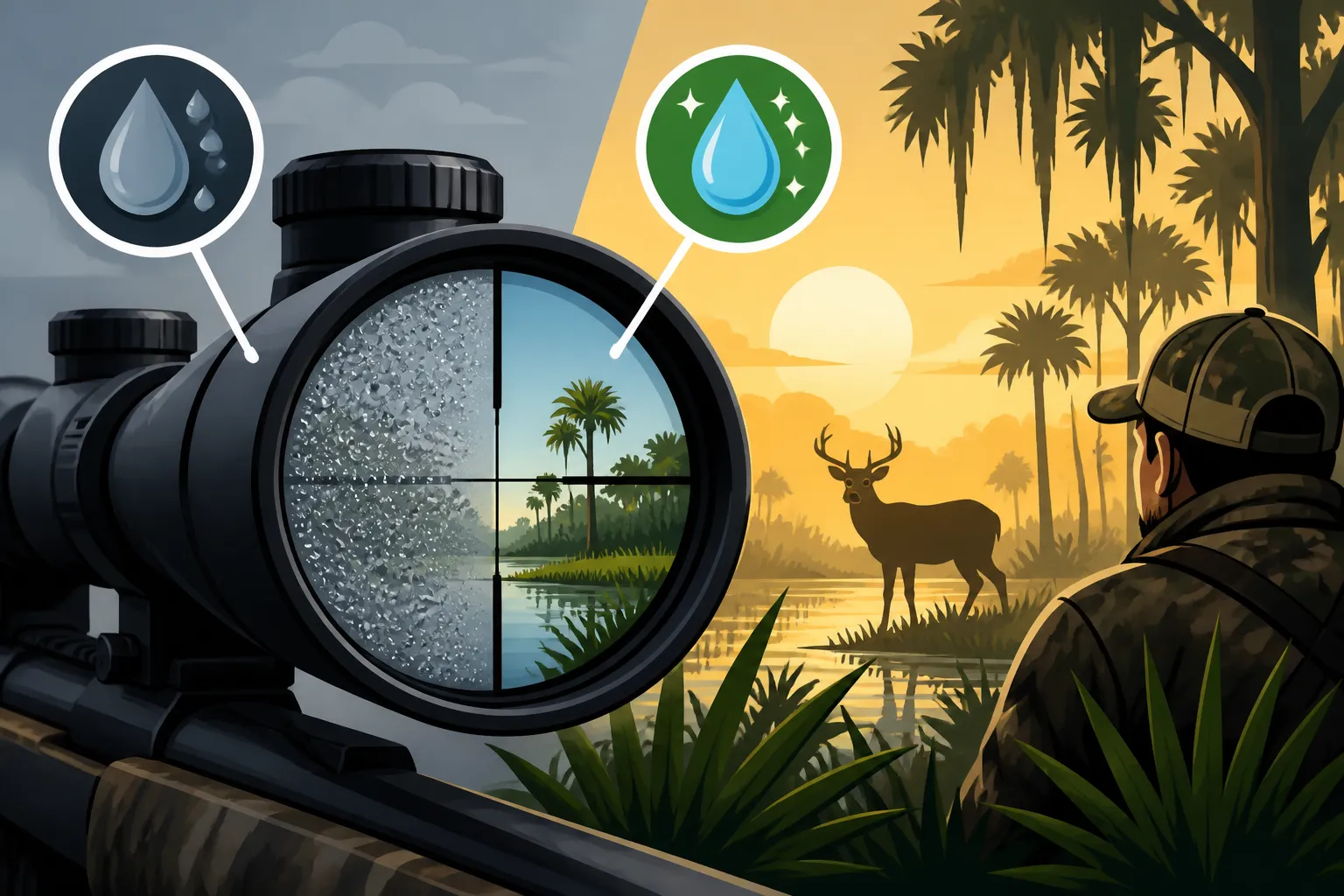
At its core, optic fogging is simply condensation. It happens when warm, moist air comes into contact with a cooler surface, causing the water vapor in the air to cool rapidly and turn into tiny liquid droplets. These droplets cling to the lens surface, scattering light and obscuring your view. In South Carolina, our dew points are often incredibly high, meaning there's a lot of moisture in the air just waiting for a chance to condense.
Think about stepping out of an air-conditioned truck into a muggy August morning; your glasses fog up instantly. The same principle applies to your binoculars or rifle scope. If your optics have been sitting in a cool environment, even just the inside of your vehicle overnight, and you bring them out into the warm, humid predawn air, they'll act as a condenser. Your own body heat can also play a role, especially if you're breathing heavily near your scope eyepiece or if you're just heating up from a long walk in. The temperature differential, no matter how subtle, is the enemy.
Common Scenarios for Fogging
You'll encounter fogging in South Carolina in various typical hunting situations. The most common is that early morning sit. As the sun begins to peek over the horizon, warming the air, the ground, and your stand, your optics might still be a few degrees cooler, leading to instant fog. This is especially true if you've been hoofing it through a dewy field or are sitting above a low-lying swamp that traps cooler, moist air.
Another frequent culprit is the sudden change in environment. Hauling your gear from a climate-controlled home or camp out into the sticky outdoor air often results in immediate fog. If you're duck hunting in the ACE Basin, pulling your binoculars out of a blind that's been in the shade can cause them to fog as soon as they hit the warmer, sun-drenched air. Even a slight drizzle or mist can turn into a major problem, as the fine water droplets collect on the lenses, mimicking internal fog. We've all been there, trying to make out a deer feeding on a distant field edge through a thick haze. Warm-Weather Sitting Strategy in South Carolina often includes managing this very issue.
Preventative Measures Before You Head Out
The best offense is a good defense, and that certainly holds true for combating fogged optics. Taking a few proactive steps before you even leave the house can save you a world of frustration afield.
Acclimation and Storage Strategies
One of the simplest yet most effective ways to prevent fogging is to acclimate your optics to the ambient temperature. If you know you're going to be hunting in humid conditions, avoid keeping your binoculars or scope in an overly air-conditioned space right up until hunt time. Instead, consider storing them in a slightly warmer, more humid environment, like a garage or porch, for a few hours before you need them. This allows the internal and external components of the optic to equalize with the outdoor temperature, minimizing the temperature differential that causes condensation.
When storing your optics, especially for short periods between scouting trips or hunts, avoid sealed cases. While hard cases are great for transport and long-term protection, they can trap cool air inside. A soft, breathable case or even just leaving them out on a shelf in a well-ventilated area can help them equalize more readily. For those intense early-season hunts, when you're already concerned about Warm-Weather Clothing for South Carolina Hunters, thinking about your optics' thermal state is just another layer of preparation. When you're scouting on your GoHunt app, pay attention to the contour lines and potential thermal sinks, as these areas might exacerbate fogging issues.
Anti-Fog Coatings and Treatments
Many quality optics these days come with factory-applied anti-fog coatings on their lenses. These microscopic coatings are designed to make water droplets spread out into a thin, uniform film rather than forming individual beads, thus reducing light scattering and maintaining clarity. If you're in the market for new optics, looking for models explicitly stating "fog-proof" or mentioning nitrogen/argon purging is a wise investment, especially for South Carolina's climate.
For optics without such coatings, or to provide an extra layer of protection, external anti-fog solutions are available. These come in various forms, including sprays, wipes, and gels. The key to using them effectively is to apply them to a clean, dry lens surface according to the manufacturer's instructions. A thin, even coat is usually best. While these treatments can be very effective, be mindful that they might need reapplication, and some can leave a slight residue or attract dust if not properly applied. Always test a new product before your hunt to ensure it performs as expected and doesn't damage your lenses.
Lens Cleaning Best Practices
A clean lens is a happy lens, and it's also less prone to fogging. Dust, dirt, and smudges on your lenses can provide nucleation sites for condensation, essentially giving water droplets more places to grab onto and grow. Before applying any anti-fog treatment or even just heading out, make sure your lenses are meticulously clean.
Start by using a soft brush or a can of compressed air (designed for electronics, not a regular air compressor!) to gently blow away any loose dust or grit. Never wipe a dirty lens, as this can scratch the delicate coatings. Once the loose debris is gone, use a specialized lens cleaning fluid and a clean microfiber cloth or a lens pen. Gently wipe the lenses in a circular motion, working from the center outwards. Avoid harsh chemicals or paper towels, which can scratch or damage the coatings. By keeping your optics spotless, you're giving yourself the best chance at a clear view, even when the air feels like soup.
Tactics for Dealing with Fogged Optics in the Field
Even with the best preparation, South Carolina's weather can be unpredictable. You might find yourself in a situation where your optics fog up despite your best efforts. Knowing how to react quickly and effectively can salvage your hunt.
Field-Expedient Solutions
If your optics fog up while you're in the stand or blind, your first instinct might be to frantically wipe them. Resist that urge! Wiping a fogged lens, especially with a dirty shirt sleeve, can just spread the moisture around, introduce grime, and potentially scratch the lens or its coatings. Instead, try to allow the optics to acclimate naturally.
The best approach is often patience. If the fogging is due to a temperature differential, simply allowing your optics to sit in the ambient air for a few minutes will often clear them. You can also gently warm the lenses with your breath (held a few inches away, to avoid adding more moisture) or even hold them against your skin for a moment. The warmth from your body can help bring the lens temperature up to match the air temperature, causing the condensation to evaporate. If you absolutely must wipe them, use a clean, dry, soft lens cloth that you've kept protected from moisture and dirt. Keeping one in a sealed plastic bag in your pack, alongside your Bug Repellent That Holds Up in a Tree Stand, is a smart move.
Carrying and Protecting Your Optics
How you carry your optics in the field significantly impacts their susceptibility to fogging and general wear. A good binocular harness is almost a necessity for South Carolina hunters. It keeps your binoculars secure, readily accessible, and close to your body. Being close to your body helps them maintain a more consistent temperature, reducing the shock of exposure to ambient air. Many harnesses also include partial covers that protect the lenses from light rain, mist, and dust while still allowing some air circulation.
When the weather turns particularly nasty—think heavy rain or dense, chilling fog—consider stowing your optics inside your pack temporarily. This offers a higher level of protection from moisture and temperature swings. While it might take a few extra seconds to retrieve them, it could mean the difference between having functional optics and a completely compromised view. The balance is between quick access and maximum protection, a decision often dictated by the current weather conditions and the type of hunting you're doing. A quality Binocular Harnesses Worth Wearing often comes with features that allow for both quick access and decent protection.
Long-Term Gear Care and Considerations
Investing in good optics is a significant decision, and proper care ensures they perform when it matters most, season after season. For South Carolina hunters, this often means choosing gear specifically designed to withstand our challenging environmental conditions.
Choosing Optics for South Carolina Conditions
When selecting binoculars or a rifle scope for hunting in South Carolina, paying close attention to their construction and stated features is paramount. Look for optics advertised as "waterproof" and "fog-proof." True fog-proofing usually involves purging the optical tubes with an inert gas like nitrogen or argon, and then sealing them to prevent moisture from entering. This internal purging prevents moisture inside the optic from condensing, which is a far more serious problem than external fogging. External fogging, while annoying, can usually be dealt with; internal fogging often means your optic needs professional service.
Many hunters, especially those relying on precise shot placement and detailed scouting via platforms like GoHunt, consider waterproof and fog-proof ratings non-negotiable. Don't cheap out on this feature. Good seals and internal purging are crucial for longevity in our damp environment. Think about the conditions you'll be hunting in – if you're primarily Hunting Lowcountry Swamp Deer in the thick, humid bottoms, robust fog-proofing should be at the top of your list. The clarity you need for Binocular Power for Swamp Edge Hunting or the precision for Rifle Scope Magnification for South Carolina Deer won't matter if your lenses are obscured.
Regular Maintenance and Storage
After every hunt, particularly those in wet or humid conditions, take the time to properly clean your optics. Even if they don't look dirty, accumulated moisture, salts, and microscopic debris can degrade coatings and seals over time. Follow the lens cleaning best practices mentioned earlier, and pay attention to the exterior of the optic, wiping down the body with a damp cloth to remove any mud or sweat, then drying it thoroughly.
For long-term storage, ensure your optics are completely dry before putting them away. Store them in a cool, dry place, ideally in a soft case that allows for some air circulation. Avoid storing them in excessively humid basements or sealed containers without proper ventilation, as this can still lead to mildew or degradation of materials. Periodically inspect your optics for any signs of internal fogging (a persistent haze that won't wipe off the exterior), which indicates a seal failure and requires professional repair. By following these simple maintenance steps, you'll ensure your valuable optics are ready for action whenever you are. A clean, well-maintained optic is as important as a Cleaning a Rifle After a Humid Sit.
When you're Scouting South Carolina Public Land Before Season, or even just Reading Aerial Photos for Upstate Deer, keeping your optics in top condition means you won't miss a thing when the moment of truth arrives. Many hunters rely on their GoHunt mapping tools to mark stand locations, but if their optics fail them, all that scouting effort could be for naught. Online hunting communities, often found through resources and discussions linked to platforms like GoHunt, frequently share advice on the best gear for specific conditions. A quick glance at the detailed weather overlays on a platform like GoHunt can give you a heads-up on approaching cold fronts or rising humidity, allowing you to prepare your gear accordingly.
Here's a quick comparison of various anti-fog strategies:
| Method/Feature | Description | Pros | Cons |
|---|---|---|---|
| Acclimation | Letting optics adjust to ambient temperature naturally over time. | Free, no chemicals, most reliable for internal fog prevention. | Requires planning, time, and might not always be feasible on short notice. |
| Anti-Fog Wipes/Sprays | Chemical treatments applied to the external lens surface. | Quick, immediate, temporary solution for external fogging. | Can streak, may need reapplication, can attract dust, not for internal fog. |
| Nitrogen/Argon Purging | Internal filling of optical tubes with dry inert gas, then sealed. | Permanent internal fog protection, found in quality optics. | Does not prevent external fogging, adds to optic cost. |
| Lens Caps/Covers | Physical barriers to protect lenses when not in use. | Protects from external moisture/dirt, slows temperature change. | Can be inconvenient to remove quickly, still requires acclimation. |
| Body Heat/Breath | Gently warming the lens with breath (from a distance) or skin contact. | Quick, immediate field fix, no extra gear needed. | Can add moisture if not careful, temporary, not suitable for internal fog. |
| Microfiber Cloth | A clean, lint-free cloth specifically designed for optics. | Removes condensation and smudges without scratching. | Must be kept clean and dry; wiping a dirty lens can still cause damage. |
Disclaimer
This article is for general informational purposes only and does not constitute professional advice. Laws, prices and regulations vary by location and change over time. Consult a qualified professional for guidance on your specific situation.