Hunting the South Carolina Rut by Zone
There's nothing quite as frustrating as anticipating the whitetail rut, only to find the deer seem to have vanished, leaving you wondering if you missed the boat entirely. It’s a common experience for many hunters, especially in a state as diverse as South Carolina, where the deer season stretches long and the deer behavior isn't uniform. Understanding that the rut, the peak breeding period, doesn't happen at the same time across our entire beautiful state is absolutely crucial for success. This guide will walk you through the distinct rut timings for each of South Carolina's game zones, helping you pinpoint those elusive weeks when bucks are most active and vulnerable.
Understanding the South Carolina Rut Puzzle
When we talk about "the rut," many of us picture that intense, frenzied week or two when bucks are chasing does relentlessly, making them less cautious and more susceptible to hunter tactics. However, in South Carolina, this isn't a singular event that sweeps across the state like a cold front. Our unique geography, combined with other factors, creates a fascinating, albeit sometimes confusing, patchwork of breeding timelines. It means that what might be a productive strategy in the Lowcountry in October could be a total bust in the Upstate in November.
Why the Rut Isn't a Statewide Event
The biggest misconception many new hunters, and even some seasoned ones, carry is that the rut will hit everywhere at once. You hear stories from your buddy up in Chester County about bucks going wild, and you expect the same to happen down in Berkeley. The reality is far more complex. The primary drivers of the rut are photoperiod (daylight length) and genetics, but local environmental conditions can influence its observable timing. While day length is consistent across the state, the genetics of our deer herd, shaped by historical reintroductions and adaptations to vastly different environments (from coastal swamps to mountain ridges), result in varied breeding schedules. Think about it: deer in the warm, lush Lowcountry don't face the same winter pressures as those in the colder, more rugged Upstate mountains. Nature has adapted their breeding cycles to give fawns the best chance of survival.
The Influence of Geography on Breeding
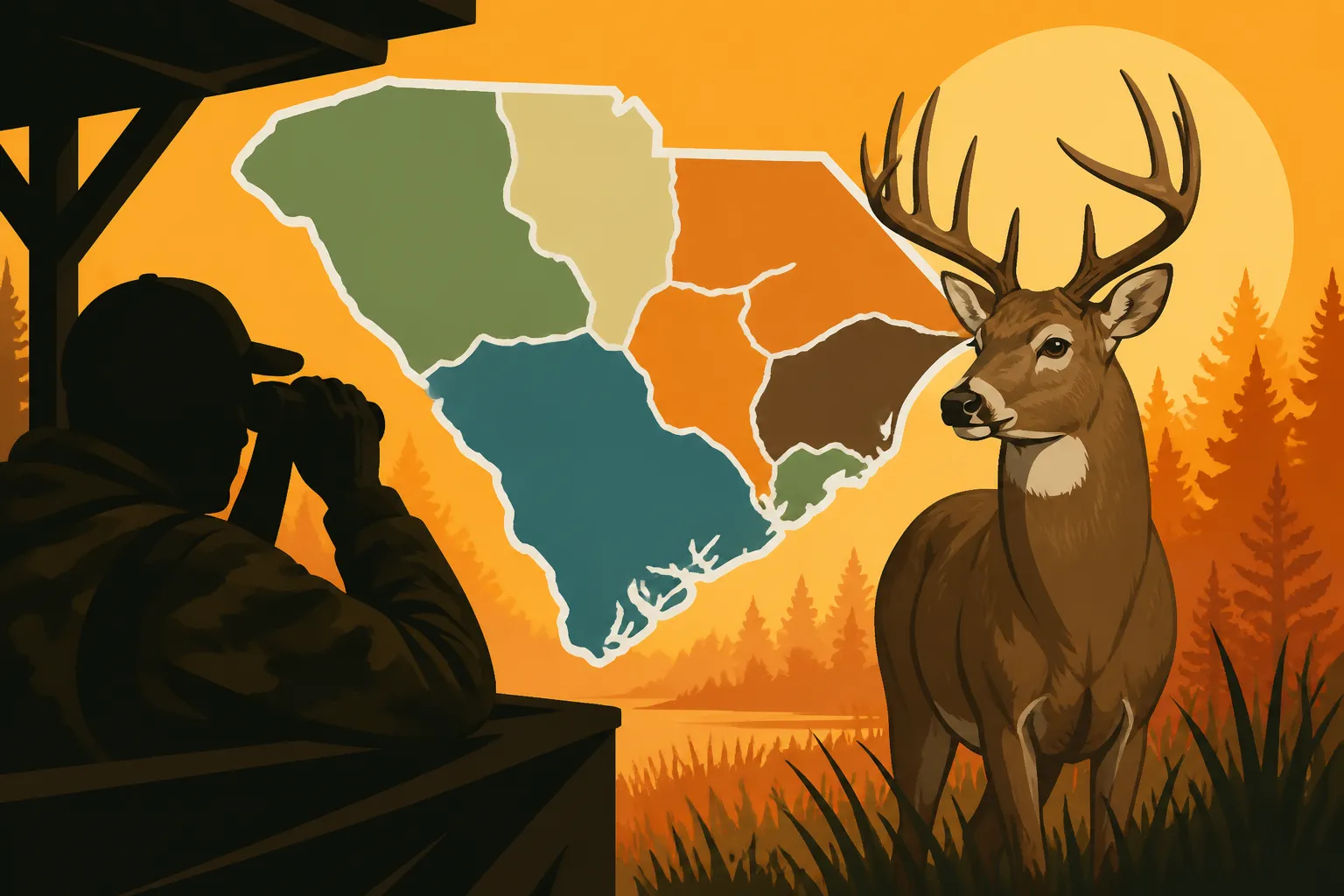
South Carolina is a state of dramatic contrasts, from the sprawling coastal marshes and pine plantations of the Lowcountry to the rolling Piedmont hills and the rugged peaks of the Blue Ridge Escarpment. These distinct geographical regions, defined by the South Carolina Department of Natural Resources (SCDNR) as our four game zones, each have a unique ecological footprint that influences everything from deer density to nutritional availability. Naturally, this also impacts the timing of the rut. Deer in different zones have evolved to breed at times that maximize the survival of their fawns, typically coinciding with the optimal forage availability in spring. This means the coastal areas often see an earlier rut, allowing fawns to drop before the intense heat and insect pressure of late spring and summer, while the cooler Upstate allows for a later drop. To truly be successful, you must understand South Carolina's Four Game Zones.
Zone 4: The Coastal Plain's Early Action
For those hunting the sprawling flatlands, cypress swamps, and agricultural fields of Game Zone 4 along South Carolina's coast, you're looking at some of the earliest rut activity in the entire Southeast. This zone, which includes counties like Beaufort, Charleston, Colleton, and Georgetown, offers a unique early season experience, and hunters who don't adjust to this early peak often miss out on the best action. The warm weather and abundant forage mean deer can breed earlier and still ensure fawns are born into favorable conditions.
Pinpointing Peak Breeding in the Lowcountry
The rut in Zone 4 typically kicks into high gear during the first two weeks of October. While you might see some pre-rut activity, like sparse rubs and scrapes, starting in late September, the true chasing and breeding behavior becomes most pronounced after the first significant cool-down in October. This isn't a hard and fast rule, of course, as individual does can come into estrus at different times, but if you're targeting that peak, mark your calendar for early to mid-October. This is when you'll consistently observe bucks actively trailing does, rubbing trees with intensity, and making fresh scrapes. Many hunters find that the period directly following a significant cold front in early October can ignite an almost immediate increase in activity, sending bucks into a frenzy of searching. This early timing makes Hunting the Rut in the Coastal Zones a distinctly different challenge than other parts of the state.
Tactics for the Early October Frenzy
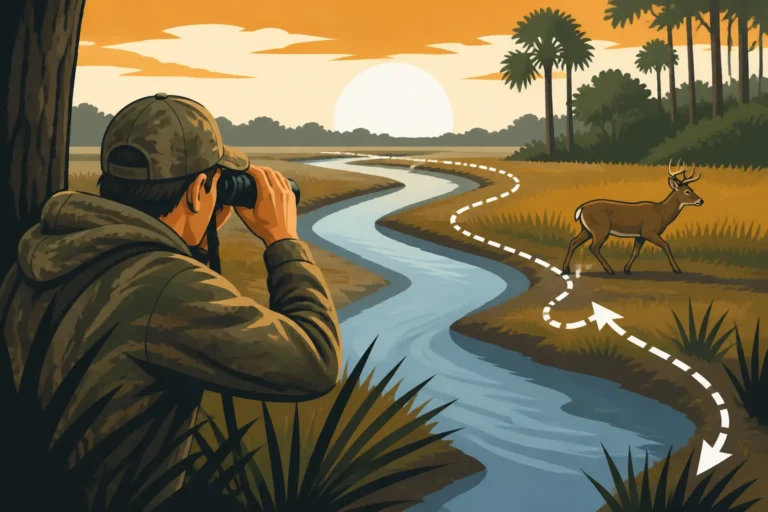
Hunting this early rut requires a different mindset than what you might be accustomed to in other regions. Food sources are still abundant, and temperatures can remain quite warm, even in October. Focus your efforts around natural funnels between bedding areas and food sources. Lowcountry deer often utilize thick cover, like pine thickets, cypress swamps, and dense regrowth, for bedding. Identifying these sanctuaries and setting up downwind on travel corridors leading to oak flats dropping acorns, cutover edges, or agricultural fields can be incredibly effective. Consider using a ground blind or even a portable treestand for quick adjustments, as deer patterns can shift rapidly during the rut. Don't be afraid to incorporate scent control measures stringently, as the warmer temperatures mean deer rely heavily on their noses, and a slight wind shift can ruin a hunt quickly. Also, since bucks are cruising, cover a lot of ground by still-hunting or using calls like a grunt tube or a doe bleat, especially if you haven't seen much activity. Remember to factor in your choice of attire; lightweight, breathable camo is essential for comfort and avoiding overheating.
Zone 3: Midlands: A More Traditional Timing
Moving inland to Game Zone 3, which encompasses a large portion of the Midlands, including counties like Aiken, Calhoun, Fairfield, and Richland, you'll find a rut timing that begins to align more closely with what many consider a "traditional" November rut. This zone is a mix of agricultural fields, mixed pine-hardwood forests, and river bottoms, offering a diverse habitat that supports a healthy deer population. The rut here strikes a balance, not as early as the coast, nor as late as the mountains, making it a favorite for many local hunters.
The November Sweet Spot in the Central Region
In Zone 3, the peak of breeding activity typically occurs around mid-November. You'll start to see significant pre-rut behavior – increased rubbing, scraping, and bucks becoming more visible during daylight hours – in late October and early November. This is the prime time when bucks are actively seeking does, moving more during daylight, and becoming less cautious. This "sweet spot" means hunters can often enjoy cooler, more comfortable hunting weather compared to the coastal opener, and the falling leaves can improve visibility in the woods. This is often the time when you will see When the South Carolina Rut Peaks by Zone for this area.
Adapting Strategies for Diverse Habitat
The varied landscape of Zone 3 calls for adaptive strategies. In areas dominated by agriculture, like many parts of Aiken County, focus your efforts on field edges, particularly where standing crops or cut fields meet dense timber. Bucks will cruise these edges looking for does. Consider using mapping tools like GoHunt to identify small timber fingers, creek bottoms, or drainage ditches that funnel deer movement into or out of fields. These often serve as natural travel corridors. In more forested areas, attention should shift to acorn flats, particularly white oaks, which are highly preferred food sources. Set up along ridges, saddles, and creek crossings that connect these feeding areas to known bedding thickets. Pay close attention to fresh sign: large rubs, active scrapes, and muddy tracks indicating heavy traffic. This is also a fantastic time to use scent lures, mock scrapes, and calling sequences. A combination of buck grunts and doe bleats can often bring a cruising buck into range, especially if he thinks there's a receptive doe nearby.
Zone 2: Piedmont's November Intensity
Game Zone 2 covers the beautiful Piedmont region, including counties such as Abbeville, Cherokee, Greenville, and York. This area is characterized by rolling hills, hardwood ridges, and creek drainages, interspersed with farmland. While still distinct from the mountains, the terrain here begins to become more varied and challenging. The rut timing in Zone 2 largely mirrors Zone 3, falling squarely in November, but with its own regional nuances influenced by the terrain and habitat.
Catching the Pre-Rut and Peak in the Rolling Hills
Just like its neighbor to the south, Zone 2 experiences its most intense rut activity during mid-November. However, the rolling topography of the Piedmont means bucks can cover ground quickly, using terrain features to their advantage. Pre-rut activity can be observed starting in early November, with bucks becoming increasingly territorial and active. This is the period when many hunters report seeing the most daytime buck movement, often associated with cruising for does or checking established scrape lines. Hunting during this time can be very productive if you understand how deer utilize the terrain. Focus on bottlenecks created by converging ridges or draws. This can be a prime time for Rattling and Grunting in South Carolina as bucks are often eager to investigate.
Scrapes, Rubs, and Chasing Activity
In Zone 2, look for well-used trails along ridge tops or in creek bottoms, particularly where they cross. These are often natural travel routes for deer, and during the rut, bucks will heavily scent-mark them. Scouting for fresh rubs (often on small saplings, but sometimes on larger trees as the rut progresses) and active scrapes is paramount. A "hot" scrape will often have freshly disturbed earth and a visible licking branch above it, indicating frequent visits. Setting up a stand near a cluster of fresh scrapes or a heavily used rub line can pay off big time. This area’s topography can also lead to more observable chasing activity. Bucks will push does across open fields or through timber, and knowing these likely escape routes can give you an advantage. Pay close attention to wind direction, especially on hilltops and in valleys, as thermals can shift, making a precise setup crucial. Learning to read the subtle changes in deer sign, from the freshness of a scrape to the size of a rub, will be your most valuable skill during this period.
Zone 1: Upstate Mountains' Late Bloom
Last but certainly not least, we come to Game Zone 1, encompassing the rugged beauty of the Upstate counties like Oconee, Pickens, and Greenville's western reaches. This is South Carolina's most mountainous region, characterized by steep terrain, dense forests, and cooler temperatures. True to its elevation and climate, Zone 1 hosts the latest rut in the state, often extending into the late season, providing a unique challenge and opportunity for hunters.
December's Last Chance for Mountain Bucks
For Upstate hunters, patience is truly a virtue, as the peak of the rut typically occurs in early to mid-December. While some pre-rut activity might be observed in late November, the majority of the intense chasing and breeding is reserved for the colder, later part of the season. This late rut provides a fantastic opportunity, as most deer seasons are winding down elsewhere. It means you might be bundling up, but you're also hunting when bucks are often at their most driven. The cooler weather also means deer are more inclined to move during daylight hours in search of food and does. This late peak is a defining characteristic of Hunting the Rut in the Upstate Zone.
Navigating Cold Weather and Steep Terrain
Hunting the December rut in Zone 1 demands specific tactics and a readiness for cooler conditions. Food sources shift dramatically by this time of year; acorns might be long gone or scarce, so focus on remaining mast, browse, and any late-season food plots if you're on private land. Thermal cover, such as thick stands of pines or laurel thickets, becomes vital. Bucks will often bed in these areas, especially on south-facing slopes that catch more sunlight. When hunting the Upstate, understanding Wind and Thermals on an Upstate Ridge is critical, as scent can carry in unpredictable ways. Scouting becomes even more essential; look for concentrations of deer tracks in snow or soft ground, and follow old logging roads or clear-cuts that funnel deer movement. A great tool like GoHunt can help you analyze topographical maps to pinpoint saddles, benches, and funnels that bucks will use. This is also a time when you might try aggressive calling tactics. Bucks are often eager to respond to calls, particularly if they haven't found a receptive doe. Consider setting up a mobile stand or saddle hunting rig, as you might need to quickly adjust your position based on fresh sign or observed movement. You might also want to consult with local resources for Late-Season Food Sources for South Carolina Whitetails in your particular hunting area.
Optimizing Your Rut Hunt by Zone
Understanding the general rut timing by zone is the first step, but truly optimizing your hunt means delving deeper into scouting, reading sign, and adjusting your tactics dynamically. The deer don't read the calendar, so while these are peak windows, there will always be early and late breeders. Staying flexible and observing current conditions is key.
Scouting for Zonal Rut Sign
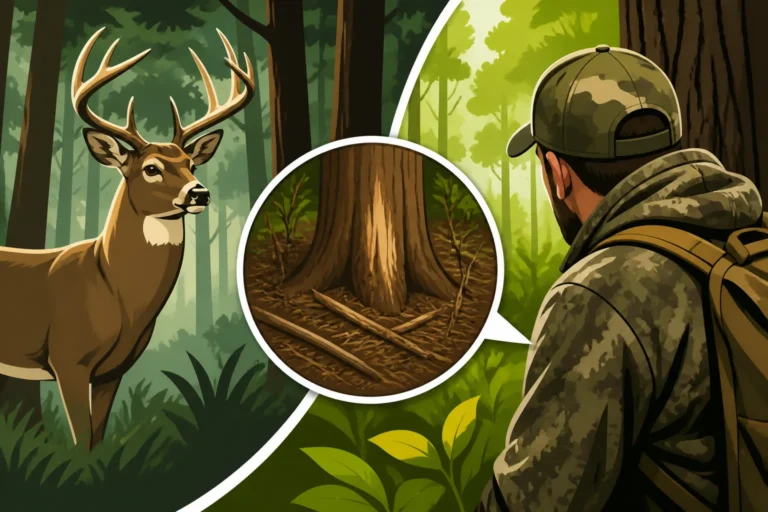
No matter which zone you're hunting, diligent scouting is the bedrock of rut success. Even if you've done your preseason homework, re-evaluate your hunting area as the rut approaches. Look for fresh rubs, especially larger ones on saplings or small trees, indicating a buck has been working them recently. Scrapes are another critical indicator; a scrape that's freshly pawed out with a strong smell of urine and tarsal gland is a hot sign. Pay attention to community scrapes, which are often larger and visited by multiple deer. Use trail cameras on these key areas to get a real-time understanding of what bucks are doing and when. This is where tools like GoHunt, with its mapping features, really shine, allowing you to mark every rub, scrape, and deer sighting, building a comprehensive picture of buck movement. You can learn more by checking out Scouting South Carolina Public Land Before Season, which provides a good foundation for year-round observation.
Beyond physical sign, pay attention to the deer you actually see. Are bucks with does? Are they chasing? Are they alone and cruising? This observational data is invaluable. For instance, if you're in Zone 4 in early October and seeing bucks already locked down with does, you might be at the tail end of the peak breeding, and your focus should shift to intercepting bucks still looking for that last receptive doe. Conversely, if you're in Zone 1 in late November and only seeing small rubs and bucks alone, you know the full intensity is still to come.
Adjusting Hunting Pressure and Stand Locations
Hunting the rut can be both exhilarating and frustrating. Bucks are moving, but so are other hunters, especially on public land. It's crucial to manage your hunting pressure carefully. If you hammer a spot too hard, you can push deer out of the area before the rut even peaks. For this reason, sometimes less is more. For public land hunters, consider areas that require a longer walk or have difficult access; these spots often hold less pressured deer. Remember, deer will often seek out thick, undesirable cover to escape hunting pressure, so don't overlook those nasty briar patches or overgrown clear-cuts.
When it comes to stand placement, think about pinch points and funnels. These are natural constrictions in the landscape that force deer into predictable travel paths. This could be a narrow strip of timber between two fields, a saddle between two ridges, or a creek crossing. Consider setting up on the downwind side of these funnels, as a rutting buck will often travel with the wind in his face, scent-checking for does. You might find success with a mobile setup, like a tree saddle or lightweight climbing stand, that allows you to quickly move and set up on fresh sign. For example, Hanging a Stand on a Sumter Forest Ridge can provide specific guidance for a common hunting scenario.
Calling is another tactic that becomes incredibly effective during the rut. A series of Grunt Calls in Mature South Carolina Timber can draw in a curious buck, while aggressive rattling sequences, particularly in areas with Rattling Volume in Thick Pine Cover, can simulate a fight and entice a dominant buck to investigate. The key is to match your calling intensity to the phase of the rut and the behavior of the deer you're observing.
| South Carolina Game Zone | Primary Rut Peak (Approximate) | Typical Habitat | Key Rut Behavior | Recommended Tactics |
|---|---|---|---|---|
| Zone 4 (Coastal Plain) | Early – Mid-October | Swamps, Pine Forests, Ag Fields | Early chasing, cruising | Hunt funnels near bedding, early morning sits |
| Zone 3 (Midlands) | Mid-November | Mixed Forests, River Bottoms, Ag Fields | Seeking, active scrapes, rubs | Hunt food sources, travel corridors, calling |
| Zone 2 (Piedmont) | Mid-November | Rolling Hills, Hardwood Ridges, Farmland | Aggressive seeking, chasing, intense scent marking | Focus on pinch points, terrain features, rattling |
| Zone 1 (Upstate) | Early – Mid-December | Mountains, Steep Terrain, Dense Forests | Late season seeking, cold weather movement | Hunt thermal cover, steep terrain funnels, calling |
By understanding these nuances and adapting your approach to the specific zone and conditions, you'll significantly increase your chances of intercepting that South Carolina buck during the most exciting time of the year.
Disclaimer
Hunting regulations and season dates are subject to change. Always consult the most current South Carolina Department of Natural Resources (SCDNR) hunting regulations before heading into the field. This guide is for informational purposes only and does not supersede official state regulations. Stay safe, be ethical, and know your local laws.