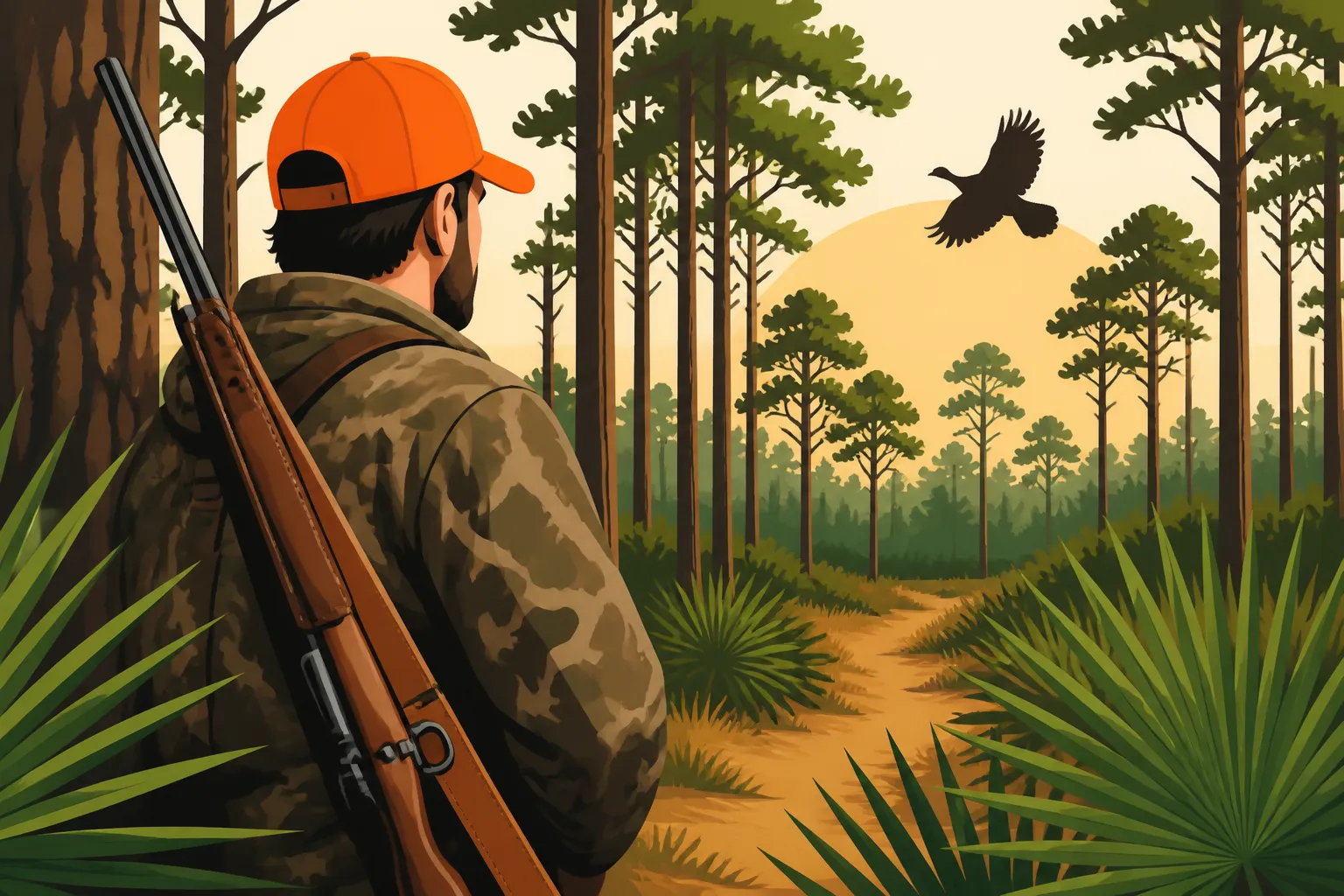
Slings for a Long Sumter Forest Walk
There’s nothing quite like the anticipation of a hunting trip into Sumter National Forest, but the sheer size and ruggedness of this public land can quickly turn that excitement into a grueling test of endurance, especially when you’re lugging your rifle by hand for miles. We’ve all been there: shoulders burning, hands cramping, and the constant worry of dropping your firearm. This guide is all about equipping you with the knowledge to choose and use the right sling, transforming those long treks into a comfortable and efficient part of your Sumter hunting experience.
Why a Quality Sling is Non-Negotiable in Sumter National Forest
Walking the vast expanse of Sumter National Forest is a truly rewarding experience, offering some of the best public land hunting opportunities in South Carolina. However, it’s also physically demanding. We’re not talking about short hops from the truck to a food plot on private land here. We're talking about real ground to cover, often far from any trail, and without a proper way to carry your rifle, that adventure can quickly turn into a misery march. A quality sling isn't just an accessory; it's a fundamental piece of gear that ensures you stay comfortable, safe, and ready for action.
The Reality of Sumter's Terrain and Distances
Sumter National Forest is a beautiful, diverse landscape, but it’s far from flat and manicured. You'll encounter steep ridges in the Andrew Pickens Ranger District, dense hardwood bottoms in the Long Cane, and thick pine plantations throughout. Whether you're navigating fallen timber, scrambling up an incline to Read a Ridge for Upstate Deer, or pushing through a creek bottom, your hands are often needed for balance, pushing aside branches, or steadying yourself. Trying to hold a rifle securely while doing all this is an exercise in futility and frustration.
Imagine a pre-dawn hike into a remote section, headlamp cutting through the darkness, and your hands are already stiff from gripping your rifle. The weight might not feel like much for the first mile, but after two or three, the barrel feels like it's pulling your arm out of its socket. The goal in Sumter is often to get deep, away from the initial public land pressure, and that means putting in the miles. Without a sling, you're constantly shifting the rifle, trying to find a comfortable grip, and ultimately expending energy that could be better used for scouting or staying alert.
Safety and Readiness
Beyond comfort, a sling significantly enhances safety and readiness in the field. When your rifle is slung properly, your hands are free. This means you can use trekking poles for stability on slick terrain, climb over downed logs without fumbling, or even use your binoculars to Scouting South Carolina Public Land Before Season without having to set your rifle down or awkwardly balance it. It minimizes the chances of an accidental fall that could damage your firearm or, worse, lead to an unsafe discharge.
Furthermore, a well-adjusted sling keeps your rifle close to your body, reducing snagging on brush or making noise. When you spot game, a quality sling allows for a smooth, quick transition from carry to a shooting position. You can bring the rifle to your shoulder with minimal movement, often in one fluid motion, which is critical when a wary Sumter whitetail gives you only a split second. Compare that to the awkward dance of trying to grab a rifle from your free hand, trying to get steady, and potentially missing your window of opportunity. It keeps your weapon secure, but always within arm's reach for when it truly counts.
Fatigue Reduction and Focus
The physical toll of carrying a rifle by hand over miles of varied terrain is immense. Your shoulders, back, and arms will ache, and that fatigue directly impacts your ability to focus. When you're tired, you're less observant, slower to react, and more prone to making mistakes. A good sling distributes the weight of your rifle more evenly across your body, primarily on your shoulder or back, freeing your hands and significantly reducing localized muscle strain. This allows you to conserve energy, maintain your posture, and keep your head in the game for longer.
Think about hunting during the late season when the temperatures might drop, and you’re wrapped in multiple layers of Warm-Weather Clothing for South Carolina Hunters. Trying to comfortably grip a cold rifle or fumble with it through thick gloves adds another layer of complexity. With a sling, the rifle feels like an extension of you, rather than a burdensome object you’re forced to carry. This reduced physical burden translates directly into increased mental focus. You can pay more attention to subtle deer sign, the rustle of leaves, or the direction of the Wind and Thermals on an Upstate Ridge, rather than the constant nagging discomfort of your rifle. Staying sharp, even after miles of walking, is invaluable in the woods.
Types of Slings for the South Carolina Hunter
When it comes to slings, it’s not a one-size-fits-all situation, especially when you consider the varied hunting styles and environments across South Carolina. While some hunters might gravitate towards tactical-style slings, for the kind of long-distance trekking we often do in Sumter, practicality, comfort, and durability are paramount. Let's break down the types most relevant for our pursuits.
Simple Two-Point Slings: The Tried and True Workhorse
The two-point sling is arguably the most common and versatile type of rifle sling. It attaches to the rifle at two points: usually near the buttstock and closer to the barrel or forend. Its simplicity is its strength. This design allows for various carrying positions, most commonly over one shoulder or across the back. For a hunter embarking on a serious walk in Sumter, a two-point sling offers a stable and secure way to transport your firearm while keeping your hands free for other tasks.
These slings come in a variety of materials. Classic leather slings offer a timeless look and incredible durability, molding to your body over time, though they can get a bit stiff when wet. Nylon or synthetic webbing slings are typically lighter, more resistant to the elements (a big plus in South Carolina's humidity and occasional downpours), and often more affordable. Some even incorporate neoprene, which provides a bit of stretch and cushioning, reducing perceived weight. A good two-point sling from a brand that understands hunting needs, like a robust one you might find through a gear search on GoHunt, prioritizes function over excessive features, which is exactly what you need when the miles start adding up. The straightforward nature of a two-point sling makes it easy to attach, adjust, and trust in the field.
Padded Slings: Comfort for the Long Haul
For those truly long walks, especially when you’re carrying a heavier rifle or planning to be out from dawn till dusk, a padded sling becomes a game-changer. These are essentially two-point slings with a significant upgrade in the form of a thick, often contoured, padded section designed to rest on your shoulder. The difference in comfort, particularly when you’re carrying a heavy rifle like some of the Rifle Setups for South Carolina Deer Hunting we use, is night and day.
The padding, usually made of neoprene, memory foam, or similar shock-absorbing materials, helps to distribute the rifle's weight over a larger area of your shoulder, preventing that sharp, digging discomfort that a thin strap can cause. This means less fatigue, fewer aches, and more energy to maintain your focus on the hunt itself. If you've ever felt that burning sensation where a thin nylon strap digs into your trapezius muscle after an hour's walk, you understand the value of a padded sling. While they might be slightly bulkier than a simple webbing sling, the comfort benefits for extended periods of carrying in rugged terrain make them well worth the trade-off. For serious hunters who commit to walking deep into Sumter, a padded sling is almost a necessity.
Single-Point and Multi-Point Slings: Adaptability for Different Scenarios
While two-point and padded slings are generally favored for long walks, it's worth briefly touching on single-point and multi-point (often three-point) slings, as they offer different advantages, particularly in fast-paced or tactical scenarios. A single-point sling attaches to the rifle at one central point, usually near the receiver or pistol grip. This allows for extremely quick transitions to the firing position, as the rifle hangs directly in front of you. However, for long walks, the rifle tends to swing freely, which can be annoying and less secure, making it less ideal for extensive trekking through thick brush or uneven terrain.
Three-point slings use a loop system, attaching at three points (or creating a third point of contact through its design) to secure the rifle more tightly to the body. They offer a good balance of security and quick deployment, acting almost like a hybrid between a two-point and a single-point. While they can be versatile, some hunters find them a bit more complex to adjust and prone to tangling if not managed properly. For most traditional hunting in Sumter National Forest, where long periods of carrying are interspersed with deliberate, patient movements, the simplicity and comfort of a good two-point or padded sling usually win out. However, if your hunting style involves very quick, close-quarters engagements or frequent transitions, these multi-point options might be something to explore.
| Sling Type | Primary Use Case | Key Advantage | Key Disadvantage | Best for Sumter Long Walks? |
|---|---|---|---|---|
| Two-Point | General carrying, versatile | Simple, secure, multiple carry options | Can dig into shoulder if unpadded | Yes, good all-rounder |
| Padded Two-Point | Extended carrying, heavier rifles | Superior comfort, fatigue reduction | Slightly bulkier | Definitely |
| Single-Point | Rapid transitions, close-quarters | Extremely fast to deploy | Rifle swings freely, less secure for travel | Less ideal |
| Three-Point | Tactical, balanced security and speed | Secure, reasonably quick deployment | Can be complex, prone to tangling | Situationally, often overkill |
Key Features to Look for in a Sumter-Ready Sling
Choosing a sling isn't just about picking one off the shelf; it's about selecting a tool that will perform reliably in the specific conditions of a South Carolina hunt, especially when you're covering serious ground in Sumter National Forest. The humid climate, the dense undergrowth, and the potential for long hours in the field all demand certain features from your sling. You need something that won't let you down when you're miles deep in the timber.
Material Durability and Weather Resistance
The material of your sling is paramount, particularly in South Carolina. Our weather can be notoriously fickle – a sunny morning can turn into a torrential downpour by afternoon, and humidity is a constant companion. A sling made from robust, weather-resistant materials will stand up to these conditions. Nylon webbing is an excellent choice for its strength, light weight, and resistance to moisture and rot. It dries quickly and won't get stiff or heavy when wet, unlike some traditional materials.
Leather, while beautiful and durable in its own right, requires more care in humid environments to prevent mildew and cracking, though high-quality treated leather can certainly hold up. Avoid anything that feels flimsy or cheap; stitching should be reinforced, and all hardware (swivels, buckles) should be made of durable metal, not plastic that could snap under stress or in cold weather. You want a sling that can handle being snagged on a rogue branch, dragged through wet leaves, or soaked by an unexpected storm without compromising its integrity or comfort. When you’re relying on your gear miles from the truck, these details matter immensely. A quick search on a site like GoHunt can help you compare reviews for durability.
Adjustability and Quick Detach Options
A sling needs to be adjustable, and easily so. Different layers of clothing (especially as seasons change), different carry positions, or even lending your rifle to a buddy with a different build, all necessitate quick length changes. Look for slings with smooth, reliable buckles or adjustment slides that allow you to cinch it down or loosen it with minimal fuss, even with gloves on. The ability to fine-tune the length means you can carry your rifle high and tight for navigating dense brush, or lower for a quicker draw when moving through more open timber.
Quick-detach (QD) swivels are another fantastic feature, offering both convenience and safety. These allow you to rapidly attach or remove your sling from your rifle with the push of a button. This is incredibly useful if you need to quickly remove the sling to place your rifle in a shooting rest, pack it into a case, or convert to a specific Treestand Setups in Francis Marion National Forest carry. They also make cleaning the sling or rifle much simpler. Ensure the QD swivels are heavy-duty and securely lock into place to prevent accidental detachment. Inferior swivels are a common failure point, and the last thing you want is your rifle hitting the ground because of a cheap piece of hardware.
Padding and Grip
As we touched on earlier, padding is a huge factor for comfort during those marathon walks into Sumter. The shoulder pad should be thick enough to genuinely distribute weight and absorb pressure, ideally with a contoured shape that fits the curve of your shoulder. Neoprene is a popular material for padding due to its elasticity and cushioning properties, often combined with a non-slip backing.
Speaking of non-slip, this is another critical feature. There’s nothing more annoying than a rifle constantly sliding off your shoulder as you walk, forcing you to adjust it every few steps. Look for slings that incorporate a textured or rubberized surface on the underside of the shoulder pad. This helps the sling grip your clothing and stay put, even when you're wearing a smooth jacket or traversing uneven ground. A sling that stays where you put it means less distraction, less effort, and ultimately, a more enjoyable and effective hunt. It’s a small detail, but one that makes a huge difference over a long day.
Best Practices for Carrying Your Rifle with a Sling
Having a great sling is one thing, but knowing how to properly adjust and utilize it makes all the difference. Many hunters simply throw a sling on and go, not realizing they’re missing out on significant comfort and efficiency improvements. Mastering a few key techniques can transform your experience in Sumter National Forest, keeping you ready for that unexpected opportunity.
Optimizing Sling Length and Position
The single most important factor for comfort and readiness is the proper adjustment of your sling's length. Too long, and your rifle will bounce and swing, snagging on brush or hitting your legs. Too short, and it will feel cramped and difficult to shoulder quickly. The ideal length allows the rifle to hang securely yet freely enough for movement, with the muzzle generally pointing downwards and away from your body or towards the ground. When carried over one shoulder, the buttstock should typically rest around your hip, allowing you to easily grab the forend with your support hand for stability, or bring it to bear.
For cross-body or "African carry" (more on that below), the sling needs to be slightly longer, allowing the rifle to sit comfortably across your back while still being accessible. Take the time to experiment with different lengths while wearing your typical hunting clothing and pack. Walk around, climb a small incline, and practice shouldering your rifle quickly. You'll find a sweet spot where the rifle feels secure but not restrictive, and where it doesn't interfere with your natural stride or ability to use your hands. Remember, an adjustable sling is only as good as the time you put into setting it up correctly for your body and your hunt.
Common Carrying Methods: Shoulder, Backpack, and African Carry
There are several effective ways to carry your rifle with a sling, each suited to different situations you might encounter while on Hunting Sumter Forest Ridges.
-
Traditional Shoulder Carry: This is the most common method, with the rifle slung over one shoulder, muzzle pointing up or down.
- Muzzle Up: Good for quick shots or when you need to navigate through dense, low brush. It keeps the barrel clear of obstructions, but be mindful of the muzzle sweeping others if you're hunting with a partner.
- Muzzle Down: Often preferred for safety, keeping the muzzle pointed towards the ground. It's less prone to snagging overhead branches, but the barrel might hit the ground if the sling is too long. This is generally my preferred method for walking, as it feels more natural and safer.
-
Backpack Carry: For long, strenuous hikes where you're not expecting an immediate shot, slinging the rifle across your back, almost like a single-strap backpack, can be very comfortable. The sling goes over one shoulder and diagonally across your chest. The rifle lays across your back, often secured by one hand or tucked under your armpit. This frees up both hands completely, making it ideal for climbing, navigating difficult terrain, or when you’re carrying Packs for a Sumter Forest Day Hunt with other gear. The downside is slower deployment, so it's best reserved for travel to and from your primary hunting area.
-
African Carry (Strong Side Sling): This method involves slinging the rifle over your strong side shoulder (e.g., right shoulder for a right-handed shooter) with the muzzle pointing forward, but the buttstock tucked under your armpit, almost cradling the rifle horizontally. The sling crosses your back diagonally. This offers incredibly fast deployment, as the rifle is already partially in a shooting position. It's fantastic for situations where game might appear suddenly in front of you, but it can be more prone to snagging on side brush and can be tiring for the arm that's cradling the butt. Many hunters modify this by letting the buttstock rest slightly lower, allowing for a more relaxed carry while retaining quick access.
Experiment with these methods to find what works best for your rifle, your body, and the specific terrain you're covering in Sumter. The goal is always comfort, security, and readiness.
Sling Maintenance for Longevity
Just like any other piece of your hunting kit, your sling benefits from a little care and maintenance, especially after being exposed to the elements in South Carolina. Neglecting it can lead to premature wear, mildew, or even failure when you least expect it.
After a hunt, particularly if the sling got wet or muddy:
- Clean It: Wipe down synthetic slings with a damp cloth to remove dirt, mud, and sweat. For leather slings, use a dedicated leather cleaner and conditioner. Don't use harsh chemicals that could damage the material.
- Dry It Thoroughly: Always ensure your sling is completely dry before storing it. Hang it in a well-ventilated area, away from direct sunlight or heat, to prevent mildew and rust on metal components. This is especially crucial in our humid climate.
- Inspect Hardware: Periodically check all buckles, adjustment slides, and swivels for any signs of wear, rust, or damage. Ensure swivels rotate smoothly and lock securely. If you notice any issues, address them immediately – replace worn parts or repair stitching.
- Storage: Store your sling in a cool, dry place. If it's attached to your rifle, ensure both are stored in an environment that won't promote rust or mildew.
Proper maintenance ensures your sling remains comfortable, functional, and safe for countless Sumter National Forest adventures to come. It's a small investment of time that pays off in reliability and peace of mind.
Disclaimer
This article is for general informational purposes only and does not constitute professional advice. Laws, prices and regulations vary by location and change over time. Consult a qualified professional for guidance on your specific situation.