Pee Dee River Public Access Points
The Pee Dee River, a lifeline weaving through the eastern part of South Carolina, offers some incredible hunting opportunities, but gaining access to its vast, wild stretches can feel like trying to solve a cryptic puzzle. Many hunters find themselves staring at maps, wondering where they can legally put boots on the ground or launch a boat to chase deer, hogs, or even ducks in its sprawling bottomlands. This guide is designed to cut through that confusion, helping you identify and utilize the various public access points along the Pee Dee River so you can confidently plan your next hunt.
The Unique Character of the Pee Dee River Basin for Hunting
The Pee Dee River basin is a truly special part of South Carolina, a place where time seems to slow down and the wild asserts itself. It's a vast network of waterways, oxbow lakes, sloughs, and dense bottomland hardwoods that define the landscape. This isn't your typical open pine plantation; we're talking about thick, often swampy terrain that demands a different approach to hunting. The sheer scale and ruggedness can be intimidating, but that's exactly what makes it such a sanctuary for game and a rewarding challenge for hunters.
Navigating the River's Dynamic Landscape
One of the biggest factors when considering hunting the Pee Dee is its dynamic nature. Water levels can change dramatically based on rainfall both upstream and locally, turning what was dry timber into a flooded cypress swamp overnight. This constant fluctuation means that yesterday's deer trail might be under three feet of water today, and tomorrow, it could be passable again. Hunters need to be prepared for mud, standing water, and strong currents if they plan to use a boat. This isn't just about finding a spot; it's about understanding how the river dictates game movement and hunter access. The thick undergrowth, often a mix of cane, privet, and briars, makes visibility challenging and requires hunters to rely more on subtle signs and strategic positioning rather than long-range glassing.
The beauty of these river bottoms is their raw, untamed feel. You're deep in the wilderness, often far from the sounds of civilization. That solitude is a huge draw for many of us who seek a genuine connection with nature during our hunts. However, it also means you need to be self-reliant and have a solid plan for safety, especially regarding navigation and communication, as cell service can be spotty at best in some of these remote areas.
Wildlife Opportunities in the River Bottoms
The rich, fertile soil and abundant water sources of the Pee Dee River basin create a prime habitat for a diverse array of game species. White-tailed deer thrive in this environment, often growing large due to plentiful food and relatively lower hunting pressure in the toughest-to-reach spots. You'll find them keying in on mast crops like acorns from the huge oaks and water oaks, as well as browsing on the myriad of green vegetation along sloughs and timber edges. Finding their travel corridors through the dense cover, especially along the subtle ridges and higher ground within the bottomlands, is paramount. Hunters who master Hunting Lowcountry Swamp Deer will find similar success here.
Beyond deer, feral hogs are incredibly prevalent throughout the Pee Dee basin. These resilient animals love the dense cover and muddy wallows found in the river bottoms, and they can be found year-round. Their destructive rooting habits are visible everywhere, making them an excellent target for hunters looking for action outside of deer season or simply to help landowners manage their populations. South Carolina Feral Hog Regulations allow for year-round hunting on private land, and many public lands also offer liberal seasons.
Waterfowl hunting can be phenomenal in the oxbow lakes, sloughs, and flooded timber scattered throughout the Pee Dee. Wood ducks, mallards, and various other dabblers utilize these rich wetlands during their migration. Early morning or late afternoon sits can yield exciting action, especially in those secluded pockets of water away from the main river channel. For those interested in pursuing turkeys, the mature bottomland hardwoods can hold good populations, particularly where they transition to drier uplands, offering roosting sites and strutting zones. South Carolina Waterfowl Zones and Seasons will be important to consult for specific dates.
Identifying Public Access Points Along the Pee Dee
Finding public land along a major river like the Pee Dee can be a challenge because much of the riverfront is privately owned. However, the South Carolina Department of Natural Resources (SCDNR) and other agencies manage significant tracts of land that offer excellent public hunting access. These areas often run right up to the river's edge, providing crucial entry points into the bottomlands.
State-Managed Wildlife Management Areas (WMAs)
The backbone of public hunting in South Carolina is its extensive system of Wildlife Management Areas (WMAs). Many of these WMAs are strategically located along major river systems, including the Pee Dee. These areas are managed specifically for wildlife habitat and public recreation, with hunting being a primary use. Examples might include portions of the Great Pee Dee River WMA or other smaller tracts. Each WMA will have its own specific rules and seasons, which can sometimes differ from statewide regulations. Always check the current WMA regulations booklet before you go; it's non-negotiable.
To hunt these areas, you'll almost certainly need a South Carolina WMA Permit Requirements in addition to your regular hunting license. These permits help fund the management efforts that make these areas so productive. When you're planning your trip, online tools and apps are invaluable. The SCDNR's "Go Outdoors SC" platform is fantastic for this, and digital mapping solutions like onX Hunt are game-changers for identifying WMA boundaries, property lines, and potential access points, even showing roads and trails that might not be on a standard paper map. I can't stress enough how much easier it is to navigate these complex river systems with a good mapping app in hand.
National and State Forest Lands
While the Pee Dee doesn't have the same vast National Forest presence right on its banks as some other regions, there are state-owned forest lands and smaller federal tracts that may offer access. These lands often have more general regulations than WMAs but still require careful review. Always look for signage and refer to maps to understand where you are and what the rules are for that specific property. Sometimes, these lands might be separated from the river by private holdings, requiring creative approaches to access, such as utilizing boat ramps or permission from adjacent landowners to cross.
Even if a large National Forest, like Sumter or Francis Marion, isn't directly on the Pee Dee, understanding their hunting access and rules can give you a template for how to approach other public lands. For instance, knowing Treestand Rules on South Carolina Public Land applies across various public areas.
Boat Ramps and Water Access
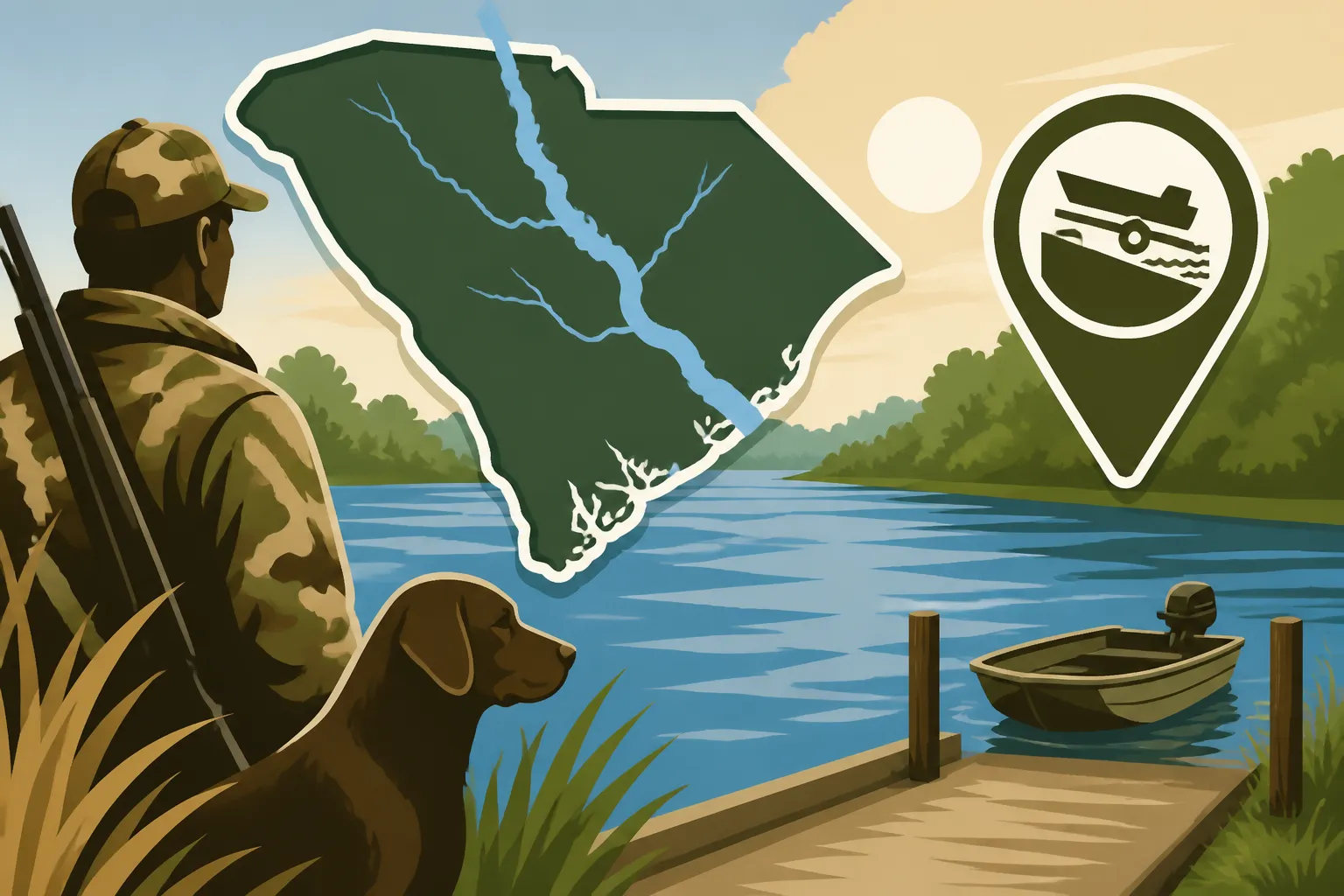
For river hunters, boat ramps are truly your best friend. Many of the most productive and least-pressured hunting spots along the Pee Dee are only accessible by water. SCDNR, counties, and even some private entities maintain public boat ramps at various points along the river. These ramps allow you to launch a boat and navigate upstream or downstream to public land. This approach offers incredible flexibility, letting you reach areas that are simply too far or too difficult to walk into from a road access point.
When scouting for these access points, use tools like onX Hunt to identify public boat ramps and then examine the surrounding landownership. Look for green-shaded public land that extends to the river, indicating legal access from the water. Just remember that navigating the Pee Dee requires attention to river conditions, obstacles, and knowing where to safely tie off your boat without trespassing.
| Access Type | Benefits | Challenges | Ideal Game/Tactics |
|---|---|---|---|
| WMA (Walk-in) | Regulated, often well-managed; less competition | Limited parking, long walks, dense cover, specific rules | Deer, hogs, small game; still-hunting, ground blinds |
| WMA (Boat Access) | Reaches remote spots; less pressure | Navigating river, changing water levels, boat issues | Deer, hogs, waterfowl; boat blinds, strategically placed stands |
| State/National Forest | Broader access rules (often); solitude | Less direct river frontage; may require more scouting | Deer, hogs, turkey; scouting, calling, long walks |
| Public Boat Ramp | Gateway to vast river sections | Limited parking, busy on weekends, security | All river species; mobile hunting, waterfowl setups |
Practicalities of Hunting Pee Dee River Public Lands
Once you've identified your potential access points, the real work of planning your hunt begins. Hunting the Pee Dee requires a blend of preparation, patience, and a healthy respect for the environment. It's a challenging but deeply rewarding experience.
Scouting and Entry Strategies
Effective scouting is absolutely critical when hunting the Pee Dee River bottomlands. You can't just show up and expect to find game quickly. Start by leveraging satellite imagery on apps like onX Hunt or GoHunt. These tools allow you to identify subtle elevation changes, oxbow lakes, old logging roads that may still be passable (or at least walkable), and areas of dense cover versus more open timber. Look for pinch points where deer might be funneled, or areas where different cover types meet. Scouting South Carolina Public Land Before Season is not just good advice, it's essential here.
Once you have a few promising spots identified, it’s time for boots-on-the-ground scouting. Be prepared for tough walking conditions. Look for fresh deer tracks in the mud, rubs and scrapes along old logging roads or on the edges of sloughs, and hog sign like rooting and wallows. Pay attention to natural food sources – which trees are dropping acorns? Are there persimmons or other soft mast? During the late season, understanding Late-Season Food Sources for South Carolina Whitetails can be key.
For entry, consider using a kayak or canoe if you're targeting areas a few hundred yards from a boat ramp. This silent approach allows you to slip into areas without alerting game. When walking in, always plan your entry and exit routes to be as quiet and scent-free as possible. Many of the best spots are a good distance from the road or ramp, so be ready for a substantial hike, potentially through mud and water. Always know your boundaries using your mapping app, especially because Finding South Carolina Property Lines is crucial to avoid trespassing on adjacent private tracts.
Essential Gear for River Bottom Hunting
The gear you choose for hunting the Pee Dee will directly impact your comfort, safety, and success. This isn't a place for lightweight hiking shoes. High-quality Rubber Boots for Swamp Walking are a must, ideally snake boots to protect against the numerous venomous snakes that call these bottoms home. For deeper water crossing, chest waders can be invaluable, especially if you're chasing waterfowl or accessing flooded timber for deer. Waders for South Carolina Tidal Marsh Hunting share many characteristics with what you'd need here.
Expect bugs, especially during the early archery season and warm spells. Pack serious insect repellent and consider head nets. A quality backpack, like those designed for a Packs for a Sumter Forest Day Hunt, capable of carrying all your essentials – water, snacks, first-aid kit, game processing tools, and extra layers – is crucial. A reliable GPS or a fully charged phone with a mapping app like onX Hunt is non-negotiable for navigation in these often disorienting environments.
When it comes to treestands, lightweight, mobile setups are often preferred, especially if you're packing in a long way or adjusting to game movement. Saddle hunting has gained popularity for its mobility in such terrains. Whatever your preference, always prioritize safety with a full-body harness and lifeline. Crossbow Rules During South Carolina Archery Season might be a consideration for some, as they can be easier to maneuver in dense cover from a stand or blind.
Understanding Regulations and Safety
Before heading out, familiarize yourself with all relevant hunting regulations. This includes statewide deer limits, bag limits for other species, and any specific rules for the WMA or public land you intend to hunt. Always carry your license and permits, either physically or digitally on your phone (but remember, cell service might drop out). South Carolina Blaze Orange Requirements are important for safety during gun seasons on public lands.
Beyond regulations, safety is paramount. Hunting alone in vast river bottoms carries inherent risks. Always tell someone where you are going and when you expect to return. Be aware of changing weather conditions and rising river levels. A small, portable first-aid kit is essential. If you're using a boat, ensure it's in good working order, you have all required safety gear, and you know how to navigate the river. The Pee Dee can have submerged logs and shifting sandbars, so operate with caution. Learning to identify Reading South Carolina Mud for Fresh Deer Movement isn't just about deer, it can also inform you of recent water levels and potential hazards.
Finally, remember that these public lands are shared resources. Respect other hunters, pack out everything you pack in, and leave no trace. Hunting the Pee Dee River is an incredible privilege, and by being responsible and prepared, we ensure these opportunities remain for generations to come.
Disclaimer
This article is for general informational purposes only and does not constitute professional advice. Laws, prices and regulations vary by location and change over time. Consult a qualified professional for guidance on your specific situation.