Why South Carolina Restricts Carcass Imports
It’s a truly disheartening moment when you’ve had a successful hunt out of state, filled your tags, and are brimming with stories and fresh venison, only to realize that bringing your prize home to South Carolina isn't as straightforward as you thought. Many hunters find themselves scratching their heads, wondering why the Palmetto State has strict rules about bringing deer carcasses across its borders. This guide is here to unravel the mystery behind those regulations, explain the crucial reasons they exist, and help you understand how to navigate them effectively to protect South Carolina's cherished deer herd.
Understanding the Threat of CWD to South Carolina's Deer Herd
South Carolina’s deer herd is a vibrant and integral part of our natural heritage and hunting culture. We take immense pride in our healthy whitetails, and a significant reason for the state's stringent regulations is to protect this valuable resource from a devastating disease known as Chronic Wasting Disease (CWD).
What Exactly is Chronic Wasting Disease?
Chronic Wasting Disease is a neurological disease that affects cervids – that's deer, elk, moose, and reindeer. It's caused by abnormal proteins called prions, which slowly attack the brain and nervous system of infected animals. Think of it as a zombie-like disease for deer. Animals infected with CWD might appear healthy for a long time, but eventually, they start exhibiting symptoms like drastic weight loss (wasting away), stumbling, listlessness, behavioral changes, and excessive salivation. The disease is progressive and, sadly, always fatal. There is no vaccine, no treatment, and once an animal contracts it, there's no recovery.
The scary part is how it spreads. CWD prions can be shed through saliva, urine, and feces, contaminating the soil and plants in an area. Other deer then come along, ingest these prions, and the cycle continues. It’s not like a typical virus or bacteria that can be easily killed; these prions are incredibly resilient. Learning about Why South Carolina Stays CWD-Free is a testament to the proactive measures in place.
Why CWD Poses Such a Unique Danger
CWD isn't just another animal illness; it presents unique challenges that make it particularly dangerous to manage. Unlike many diseases, CWD prions can persist in the environment for years, even decades. This means if a CWD-infected deer dies in a specific spot, that soil can remain contaminated and capable of infecting other deer long after the original carcass is gone. Imagine the devastating impact if CWD were to gain a foothold in our swamps, pine forests, or oak bottoms – the contamination would be incredibly difficult, if not impossible, to eradicate.
Another concerning factor is the long incubation period. A deer can be infected with CWD for months, or even years, before showing any outward signs of illness. During this time, it's shedding prions into the environment, unknowingly spreading the disease. This "silent spread" makes early detection challenging and underscores why preventing its introduction in the first place is paramount. Our state's commitment to avoiding this nightmare scenario is why South Carolina Carcass Import Restrictions are so crucial.
South Carolina's Proactive Defense Strategy
South Carolina has taken a firm, proactive stance to prevent CWD from ever reaching its borders. These aren't arbitrary rules; they are a critical line of defense for our deer population and our hunting heritage.
Carcass Import Restrictions as a Primary Barrier
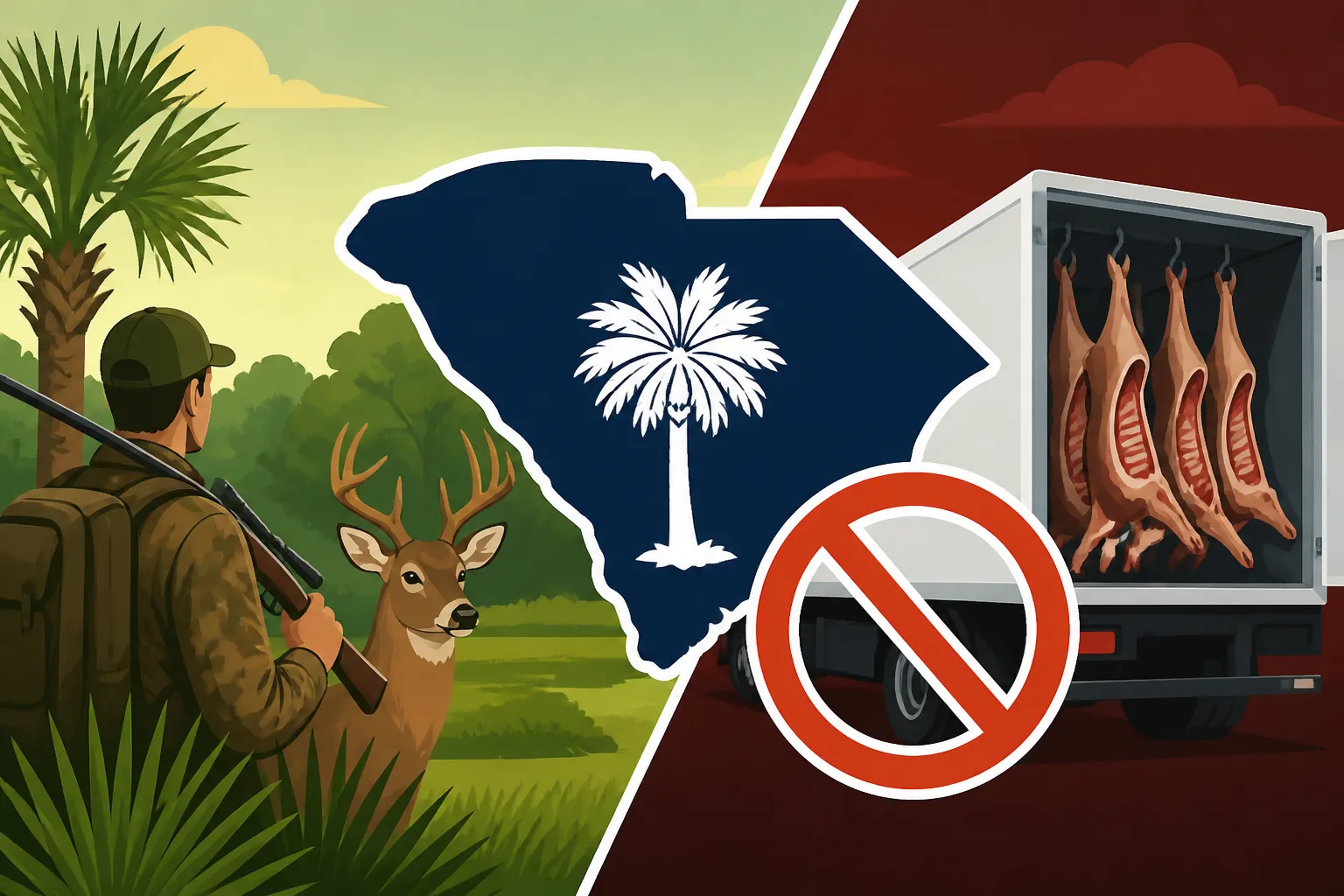
The most direct way CWD can be introduced into a new area is through the movement of infected carcasses or parts. That's why South Carolina, like many other states, has implemented strict regulations on importing certain deer, elk, and moose carcass parts from states or provinces where CWD has been detected. The core idea is simple: prevent the highest-risk parts, which concentrate the prions (like brain and spinal cord), from entering our state.
So, what does this mean practically? You generally cannot bring a whole deer carcass back into South Carolina from a CWD-positive area. This includes the head (especially the brain and eyes), spinal cord, and internal organs (except for the edible meat, of course). These are the parts most likely to harbor the infectious prions. For a more detailed look, you can always check Which Carcass Parts South Carolina Still Allows.
The Importance of a Multi-Layered Approach
While carcass restrictions are a cornerstone of the defense, they are just one part of a comprehensive, multi-layered strategy. South Carolina also maintains a robust CWD surveillance program. This involves collecting samples from harvested deer across the state each hunting season, especially in areas with high deer densities or near state borders. Hunters play a vital role in this by submitting samples when requested or by utilizing voluntary sampling stations. This diligent monitoring ensures that if CWD were ever to slip through, it could be detected as early as possible, allowing for rapid response and containment. Our state's efforts are continuous, as detailed in How South Carolina Tests for CWD Without a Case and South Carolina's CWD Surveillance Sampling.
Beyond sampling, hunter education is another critical component. Informed hunters are the best defense. Understanding the risks, recognizing suspicious animal behavior, and knowing how to properly handle and process carcasses are all essential to protecting our wildlife. Every hunter becomes an ambassador for CWD prevention.
Navigating the Rules for Hunters and Travelers
These rules might seem like a hassle, especially after a long and successful trip, but understanding them fully will save you a lot of headache and ensure you're doing your part to protect our state.
What Hunters from CWD-Positive States Need to Know
If you've hunted deer, elk, or moose in a state or province where CWD has been found, you absolutely must be aware of South Carolina's import regulations before you cross the state line. The golden rule is to process your animal appropriately before you leave the hunting area or the CWD-positive state. This typically means boning out all the meat, separating it from the bone, brain, and spinal column.
Imagine you're hunting in a neighboring state, say North Carolina, and you've tagged a beautiful buck. Instead of throwing the whole animal in the back of your truck and heading home, you'd need to field dress it, skin it, and then meticulously bone out the meat. The bones, head (especially the brain and eyes), and spinal column should be left in the state where the animal was harvested and disposed of properly according to their local regulations. Tools like GoHunt can be invaluable for quickly checking the latest regulations for both your hunting state and South Carolina, helping you plan your processing strategy.
Allowed Carcass Parts and Preparations
So, what can you bring back into South Carolina from a CWD-positive area? It boils down to parts that are considered extremely low risk for harboring prions. Here’s a breakdown:
- Boned-out meat: This is the most common and safest way to transport your harvest. All meat should be removed from the bone.
- Cleaned skull plates: Skull plates with antlers attached are fine, as long as all brain and nervous tissue has been completely removed and the skull plate is clean. You don't want any tissue remaining.
- Antlers: Naturally shed antlers or those detached from a skull are completely fine.
- Hides/Capes: Properly cleaned hides or capes for taxidermy are allowed, provided there's no brain or spinal tissue attached.
- Teeth: Individual teeth are also permissible.
Essentially, if it's not brain, spinal cord, or lymphatic tissue, and it's thoroughly cleaned, it's generally okay. This allows hunters to still enjoy the fruits of their labor – the delicious venison and the trophy antlers – without compromising South Carolina’s CWD-free status.
Resources for Staying Informed
Staying up-to-date on CWD regulations is vital, as they can change as the disease spreads or new scientific information emerges. The South Carolina Department of Natural Resources (SCDNR) website is your primary and most authoritative source for current regulations. They typically have dedicated sections on CWD, including maps of CWD-positive states and detailed lists of import rules.
Beyond the SCDNR, mobile applications like GoHunt can be incredibly helpful. These apps often provide easy access to state-specific regulations, license information, and even CWD zones, allowing you to quickly check rules on the go, even when you're in the field. Always cross-reference with the official SCDNR site, but these tools can be great for initial checks and planning. Knowing the specific rules around Why You Cannot Bring a Deer Carcass Into South Carolina is just one step; keeping current is another.
Here’s a quick reference table for clarity:
| Carcass Part | Allowed for Import into SC (from CWD-positive area) | Restrictions / Conditions |
|---|---|---|
| Boned-out meat | Yes | Must be completely deboned; no brain, spinal cord, or lymphatic tissue attached. |
| Cleaned skull plates with antlers | Yes | All brain and nervous tissue must be completely removed; plate must be clean and dry. |
| Antlers (shed or detached) | Yes | No tissue attached. |
| Hides / Capes | Yes | Must be free of any brain or spinal tissue; typically salted or otherwise preserved for taxidermy. |
| Individual teeth | Yes | |
| Whole carcasses (or parts not specified above) | No | Includes heads with brain tissue, spinal columns, internal organs (except edible meat), and any other parts containing nervous tissue. |
The Collective Effort to Keep South Carolina CWD-Free
Ultimately, the burden of keeping South Carolina free of CWD doesn't rest solely on the shoulders of wildlife agencies. It's a shared responsibility that falls to every single hunter, resident, and visitor who cares about our state's incredible outdoor resources.
Protecting a Valued Resource for Future Generations
Our white-tailed deer are more than just game animals; they are a keystone species that define our state's wild places. Deer hunting itself is a deeply rooted tradition, an economic driver for rural communities, and a cherished pastime for thousands of South Carolinians. The thought of CWD ravaging our deer population, reducing herd health, and potentially impacting hunting seasons or opportunities is a grim one. By adhering to these import restrictions, we are actively participating in protecting this resource for our children and grandchildren. It’s about ensuring that the sight of a healthy buck slipping through the pines, or a doe grazing in a field, remains a common and vibrant part of our landscape for generations to come. This aligns with broader efforts like South Carolina Wildlife Disease Monitoring and maintaining White-Tailed Deer Across South Carolina.
The Role of Every Hunter in Compliance
It’s easy to feel a pang of frustration when regulations seem to add extra steps or inconveniences to your hunting trip. However, for CWD prevention, compliance is absolutely critical. Every time a hunter knowingly or unknowingly brings a prohibited carcass part into South Carolina from a CWD-positive area, they are taking a gamble with our entire deer herd. It's not just about avoiding a fine or penalty; it's about being a responsible steward of our wildlife. We have a shared responsibility to understand and follow these rules. If you're unsure, always err on the side of caution or contact the SCDNR for clarification. Our efforts, combined with measures like Finding a South Carolina CWD Sampling Station, solidify our state’s defense against this devastating disease.
The rules around importing deer carcasses into South Carolina are designed with one paramount goal in mind: to safeguard our deer from Chronic Wasting Disease. While they may require extra planning and effort, these restrictions are a small price to pay to protect a resource that means so much to so many. Thank you for doing your part to keep South Carolina’s deer herd healthy and thriving.
Disclaimer
This article is for general informational purposes only and does not constitute professional advice. Laws, prices and regulations vary by location and change over time. Consult a qualified professional for guidance on your specific situation.