How South Carolina Tests for CWD Without a Case
The threat of Chronic Wasting Disease (CWD) looms large over deer populations across North America, and it's a constant worry for hunters who cherish South Carolina's robust whitetail resource. While our state has been fortunate enough to remain CWD-free, that's no accident. This comprehensive guide will walk you through the rigorous, proactive measures the South Carolina Department of Natural Resources (SCDNR) employs to test for CWD and safeguard our deer herd, even without a confirmed case.
Understanding Chronic Wasting Disease (CWD) and Its Threat
For many hunters, CWD feels like a phantom menace – something you hear about in other states, but hope never touches home. However, understanding what it is and why it's so dangerous is the first step in appreciating the efforts to keep it out of South Carolina. It’s not just a concern for biologists; it's a very real threat to our hunting heritage and the health of our deer.
What Exactly Is CWD?
CWD is a neurological disease that affects cervids, which include deer, elk, moose, and caribou. It's caused by abnormal proteins called prions, not a bacteria or virus, which makes it particularly insidious. These prions essentially corrupt normal proteins in the animal's brain and nervous system, leading to a slow, progressive degeneration. Think of it like a sponge forming in the brain. The affected animals eventually develop symptoms like extreme weight loss (hence "wasting"), stumbling, listlessness, behavioral changes, excessive salivation, and ultimately, death.
Unlike many diseases, CWD prions are incredibly resilient. They can persist in the environment – in soil, plants, and even water – for years, even decades. This environmental persistence makes containing an outbreak incredibly difficult once it takes root. It spreads through direct animal-to-animal contact, but also indirectly through contaminated environments, urine, feces, and saliva. The incubation period can be long, sometimes years, meaning an infected animal might look perfectly healthy while shedding prions and spreading the disease. This silent spread is what makes early detection so critical and difficult. It’s why vigilance, even in CWD-free areas, is paramount.
Why CWD Is Such a Concern for Hunters
Beyond the tragic impact on individual animals, CWD presents several profound concerns for the hunting community and wildlife management. First and foremost, a CWD outbreak can decimate deer populations. Imagine the impact on local ecosystems, not to mention the economic repercussions for rural communities that rely on hunting tourism and related businesses. For hunters, it’s not just about the numbers; it’s about the health of the deer they pursue. No one wants to harvest a sick animal.
Then there's the human health aspect. While there's currently no scientific evidence that CWD can be transmitted to humans, health agencies like the Centers for Disease Control and Prevention (CDC) advise against consuming meat from CWD-infected animals. This uncertainty creates apprehension and can significantly reduce hunter participation, which in turn impacts conservation funding, as license sales are a primary source of revenue for state wildlife agencies. It also changes the very nature of hunting, adding a layer of concern and complexity that traditionalists would prefer to avoid. If CWD were to ever arrive, it would dramatically alter how we approach deer management, potentially impacting everything from hunting seasons to bag limits. Maintaining a healthy deer herd is essential for the future of White-Tailed Deer Across South Carolina.
South Carolina's Proactive CWD Surveillance Program
South Carolina isn't just sitting back, hoping CWD never arrives. The SCDNR has implemented a robust, multi-faceted surveillance program designed to detect CWD early, should it ever be introduced. This proactive approach is a testament to their commitment to wildlife health and the state's hunting traditions. Their strategy is built on key pillars: widespread sampling, rigorous laboratory testing, and strict carcass import restrictions, all designed to identify the disease before it can establish a foothold. It's a continuous, year-round effort, not just something they do during hunting season.
The Backbone of Surveillance: Mandatory Sample Collection
At the heart of South Carolina's CWD prevention strategy is an extensive sample collection program. The SCDNR relies heavily on hunters, processors, and taxidermists to submit deer heads for testing during the hunting season. This isn't a small-scale operation; they aim to collect thousands of samples annually from across the state's diverse landscape. While it might seem like a chore to some, this hunter participation is absolutely vital. Each sample provides a piece of the puzzle, confirming the absence of CWD or, in the unfortunate event it ever shows up, helping pinpoint its location.
The sampling process is straightforward. SCDNR biologists and technicians set up voluntary check stations at various locations, often at popular public lands and during key hunting dates, especially during the opening weekends for deer across the state. They also partner with licensed deer processors and taxidermists who are trained to collect the necessary tissue samples – typically the obex (a part of the brainstem) and lymph nodes – from harvested deer. Hunters are encouraged to visit these stations or utilize participating businesses. By checking deer in this manner, hunters directly contribute to How South Carolina Monitors for CWD Every Year and help provide data that ensures the integrity of the state’s deer management efforts.
To make it even easier for hunters, SCDNR provides specific drop-off locations and sometimes even offers incentives. Tools like the Go Outdoors SC app can help hunters locate nearby sampling stations and stay informed about collection efforts. The goal is to collect a statistically significant number of samples from each of South Carolina's Four Game Zones, ensuring broad geographical coverage and a clear picture of the state's CWD status. Without this widespread, voluntary participation, the surveillance program wouldn't be nearly as effective.
Laboratory Analysis and Diagnostic Methods
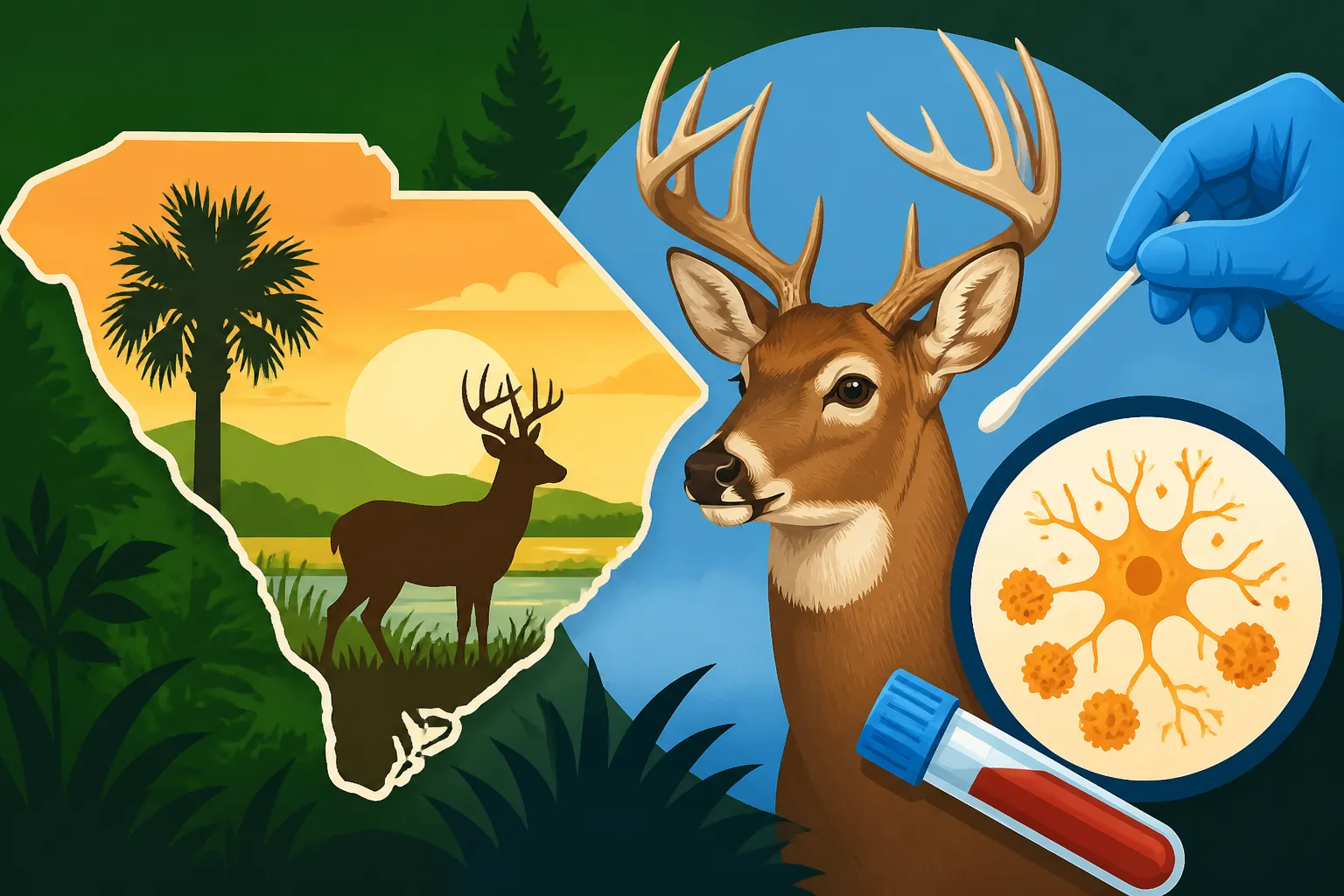
Once samples are collected, they embark on a journey to specialized diagnostic laboratories where they undergo rigorous testing. This is where the science really comes into play. The primary method used for CWD detection is immunohistochemistry (IHC) or enzyme-linked immunosorbent assay (ELISA). These tests are designed to detect the presence of the abnormal CWD prions in the brain and lymph node tissues.
Here's a simplified breakdown:
- Sample Preparation: The collected obex and lymph nodes are carefully removed and processed. This involves fixing the tissues in formalin and then embedding them in paraffin wax, which allows for very thin slices to be cut.
- Staining and Detection (IHC): These thin tissue slices are mounted on slides. Special antibodies, designed to bind specifically to the CWD prions, are then applied. If CWD prions are present, the antibodies will attach. A secondary staining process then makes these antibody-bound prions visible under a microscope, often as distinct brown or red deposits. This visual confirmation is crucial for a positive diagnosis.
- ELISA Testing: Some labs may also use ELISA (Enzyme-Linked Immunosorbent Assay) as a screening tool. This method works by detecting the CWD prions in tissue homogenates using a similar antibody-binding principle, but the result is usually read by a machine rather than a human looking through a microscope. Positive ELISA results are typically confirmed with IHC.
These diagnostic methods are highly sensitive and specific, meaning they are very good at both detecting CWD if it's there and not giving false positives. The samples are often sent to specialized veterinary diagnostic labs, such as the Clemson University Veterinary Diagnostic Center, which have the expertise and equipment to handle these complex analyses. Each sample is meticulously tracked, and results are typically processed within a few weeks. Should a suspicious or positive result ever occur, it would trigger a series of confirmatory tests and an immediate, coordinated response from the SCDNR. This stringent process is critical to Why South Carolina Stays CWD-Free.
Hunter Participation: Your Role in Keeping SC CWD-Free
As hunters, we are often the first line of defense in wildlife health management. Our presence in the field and our connection to the animals we pursue give us a unique vantage point. In the fight against CWD, this direct involvement is not just encouraged, it's essential. Every South Carolina hunter plays a critical role in maintaining the health of our deer herd, whether through direct sampling or simply being aware of the rules.
How Hunters Contribute to Surveillance
Your contribution to CWD surveillance doesn't necessarily mean becoming a wildlife biologist, but it does mean being an informed and responsible hunter. Here are the key ways you can help:
- Participate in Voluntary Sampling: Whenever possible, submit the head of your harvested deer for CWD testing. The SCDNR publicizes specific drop-off locations and collection events, particularly during peak hunting times. Utilize the GoHunt app or the SCDNR website to find the nearest South Carolina CWD Sampling Station. Every sample counts, especially from older bucks, as CWD prevalence tends to be higher in older animals.
- Report Sick or Abnormal Deer: If you encounter a deer exhibiting symptoms consistent with CWD – severe weight loss, lethargy, stumbling, drooling, or abnormal behavior – do not harvest or approach it. Instead, immediately contact the SCDNR wildlife office or local law enforcement. Provide specific details about the animal's location and observed symptoms. This prompt reporting is crucial for investigating potential disease outbreaks.
- Stay Informed: Keep up-to-date with SCDNR regulations and advisories regarding CWD. Wildlife management is dynamic, and rules can change based on new information or disease developments in neighboring states. Information is often shared through official channels, hunting publications, and online platforms like GoHunt.
By actively participating in these efforts, you're not just following rules; you're safeguarding the future of deer hunting in South Carolina. It’s a collective responsibility that pays dividends in a healthy, vibrant deer population.
Carcass Import Restrictions and Why They Matter
One of the most significant ways CWD spreads is through the movement of infected deer carcasses by hunters. Imagine harvesting a deer in a CWD-positive state, processing it poorly, and then bringing the infected parts into South Carolina. That's a direct pathway for the prions to enter our environment and potentially infect our native deer. This is precisely why South Carolina has strict carcass import restrictions in place.
Under SCDNR regulations, hunters are generally prohibited from bringing whole deer, elk, or moose carcasses or certain high-risk parts into South Carolina from any state or province that has documented CWD cases. This isn't an arbitrary rule; it's a scientifically backed preventative measure.
Permitted parts for import generally include:
| Carcass Part | Permitted for Import | Notes |
|---|---|---|
| Deboned meat | Yes | This is the safest way to transport game meat, as it removes all high-risk tissues. |
| Clean skull plate with antlers attached | Yes | Must be free of brain tissue and other soft tissues. Often referred to as a "European mount" after being cleaned. |
| Clean antlers | Yes | Free of any meat or tissue. |
| Hides/capes | Yes | Must be free of any meat or tissue. |
| Clean teeth | Yes | |
| Finished taxidermy products | Yes | Products that have been fully processed and mounted by a licensed taxidermist are generally considered safe. |
| Whole carcasses, uncleaned skull/antlers, brain, spinal cord, lymph nodes | No | These are considered high-risk parts due to the concentration of CWD prions and are strictly prohibited from entry. This is fundamental to Why You Cannot Bring a Deer Carcass Into South Carolina. |
The rationale behind these rules is simple: the CWD prions are most concentrated in the brain, spinal cord, lymph nodes, and spleen. By restricting the import of these specific tissues, the risk of introducing the disease is drastically reduced. It’s crucial to understand Which Carcass Parts South Carolina Still Allows to avoid unintentional violations. If you hunt out-of-state, ensure you know the CWD status of that state and process your animal according to South Carolina's regulations before you travel home. Ignoring these rules puts our entire deer herd at risk and could lead to significant penalties.
The Future of CWD Management in South Carolina
Even without a CWD case, the SCDNR’s work is far from over. Maintaining a CWD-free status requires ongoing vigilance, adaptive strategies, and continuous education. The threat is dynamic, with new cases appearing in nearby states, making South Carolina’s proactive stance even more critical.
Ongoing Monitoring and Adaptive Strategies
The SCDNR's CWD surveillance program is not a static plan; it's constantly evaluated and adjusted based on the latest scientific understanding of CWD and its spread. This involves several key components:
- Targeted Surveillance: While statewide sampling is important, the SCDNR often focuses intensified sampling efforts in areas considered higher risk. This could include counties bordering CWD-positive states, or areas with high deer densities, or places where deer movement patterns suggest increased potential for disease introduction. For example, if a neighboring county in North Carolina or Georgia were to detect CWD, South Carolina would immediately ramp up testing in its adjacent counties. Understanding Which States Border South Carolina With CWD is crucial for this targeted approach.
- Research and Collaboration: SCDNR biologists stay abreast of the latest CWD research, participating in national conferences and collaborating with other state and federal agencies. This sharing of knowledge ensures South Carolina's strategies are informed by the most current science. They also work closely with local universities like Clemson and their veterinary diagnostic labs to refine testing protocols and explore new detection methods.
- Contingency Planning: While we hope it never happens, the SCDNR has comprehensive contingency plans in place should CWD ever be detected in South Carolina. These plans outline rapid response protocols, including intensified sampling, potential herd reduction measures in affected areas, and further restrictions on carcass movement, all aimed at containing and eradicating the disease as quickly as possible. This readiness is a critical, though often unseen, part of their management strategy.
- Carcass Disposal Guidance: Even for deer harvested within South Carolina, responsible carcass disposal is an important, often overlooked, aspect of disease prevention. SCDNR often provides guidance on how to properly dispose of deer carcasses to minimize the potential spread of any pathogens, including CWD prions, should they ever be present.
These adaptive strategies mean that South Carolina's defense against CWD is always evolving, always strengthening.
Educational Outreach and Hunter Awareness
The success of any wildlife disease prevention program ultimately hinges on the informed cooperation of the public, particularly hunters. This is why educational outreach and hunter awareness are cornerstone efforts for the SCDNR.
- Public Information Campaigns: The SCDNR regularly disseminates information through its website, social media channels, press releases, and booths at hunting expos and outdoor shows. These campaigns aim to educate hunters about CWD, its risks, the importance of reporting sick deer, and compliance with carcass import regulations. They explain How South Carolina Guards Against CWD in a way that's accessible to everyone.
- Hunter Education: CWD awareness is integrated into hunter education courses, ensuring that new hunters understand their role in wildlife health from the outset. This early education creates a foundation of responsible practices.
- Partnerships with Hunting Organizations: Collaborating with local hunting clubs and conservation organizations helps amplify the message and foster a sense of shared responsibility. These groups often host events or share information directly with their members, reaching a broad audience.
- Digital Resources: Online platforms, including the SCDNR website and tools like GoHunt, serve as invaluable resources for real-time updates, maps of sampling stations, and frequently asked questions about CWD. Hunters can quickly access the information they need to comply with regulations and contribute to surveillance efforts, making their hunting experience both enjoyable and responsible. Utilizing these digital tools is becoming increasingly important for Scouting South Carolina Public Land Before Season and staying on top of regulations.
By fostering a well-informed hunting community, South Carolina strengthens its collective defense against CWD, ensuring that our deer herd remains healthy for generations to come. It’s a testament to the fact that conservation is a team effort, where every hunter plays a vital part.
Disclaimer
Please note that hunting regulations and wildlife disease information can change. Always consult the official South Carolina Department of Natural Resources (SCDNR) website and current hunting guides for the most up-to-date and accurate information before planning any hunting activities.