South Carolina Bison History Before Settlement
It's easy to picture American bison thundering across the Great Plains, a classic image of the American West. But for many folks, the idea that these majestic animals once roamed the sandy hills and dense forests of South Carolina can be a real head-scratcher. Most people are genuinely surprised to learn that bison were a significant part of the Palmetto State's wildlife long before European settlers ever set foot here. This guide will take a fascinating journey back in time, exploring the often-overlooked history of bison in South Carolina before the colonial era and the dramatic impact their presence had on the landscape and its earliest human inhabitants.
The Eastern Bison: South Carolina's Forgotten Giants
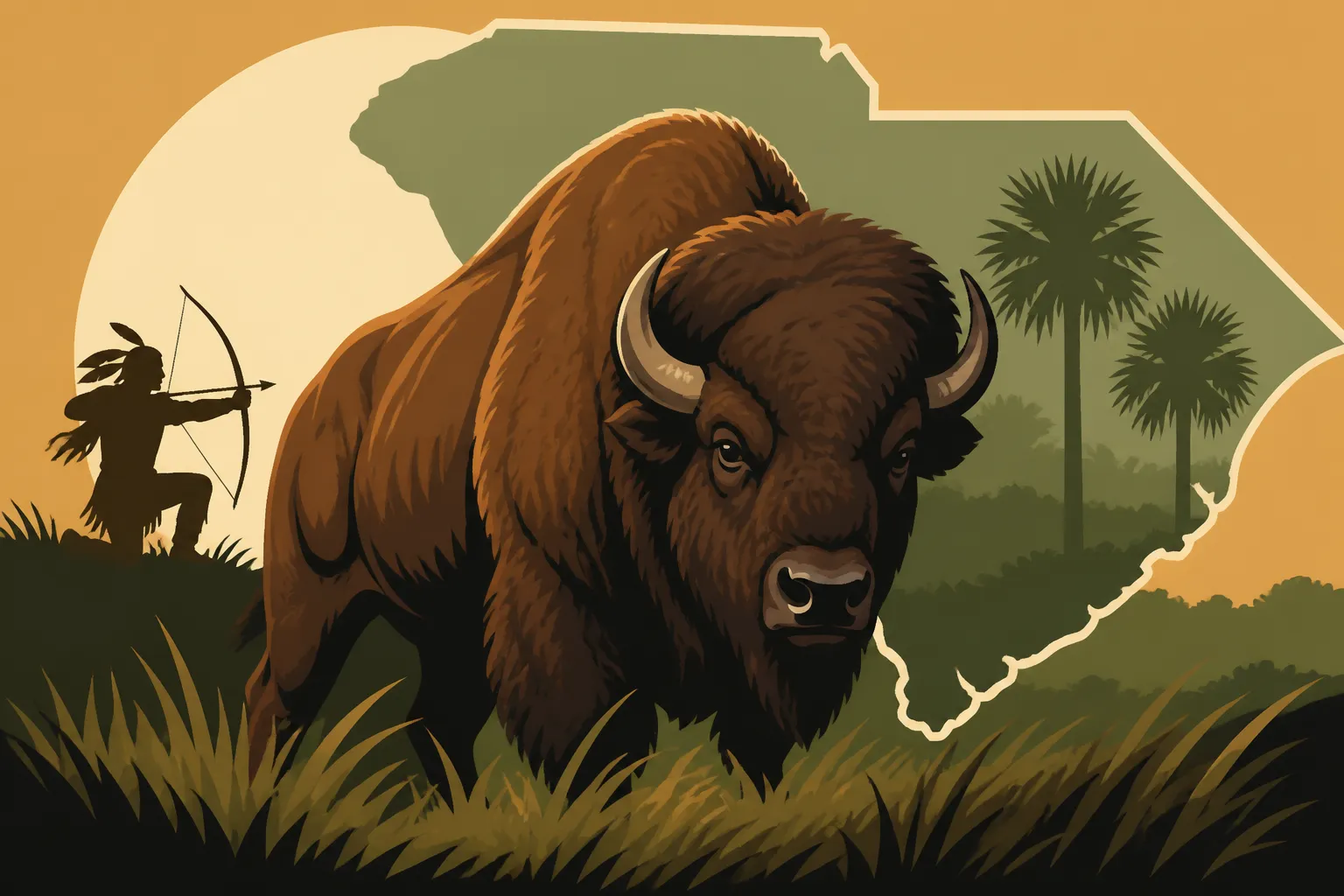
When we talk about bison in North America, most folks immediately think of the plains bison (Bison bison bison), the iconic shaggy beasts of the prairies. But there was another, lesser-known population, often referred to as the Eastern bison (sometimes considered a subspecies, Bison bison athabascae or a distinct ecotype), that made its home east of the Mississippi River, including right here in South Carolina. These wasn't just a few stragglers; historical accounts and archaeological evidence suggest they were once quite abundant across parts of the Southeast.
These Eastern bison weren't perfectly identical to their western cousins. While both were undeniably massive, the Eastern bison were generally thought to be more adapted to woodland and forest-edge environments rather than wide-open grasslands. They were still impressive animals, easily weighing over a ton, with powerful shoulders and shaggy coats designed to handle the various climates they encountered, from the cold northern winters to the humid southern summers. Imagine encountering one of these magnificent creatures in a cane break along a river or emerging from a dense pine thicket – it would have been a truly awe-inspiring sight, a testament to the wildness of this land centuries ago.
Their presence here tells us a lot about the historical landscape of South Carolina. It wasn't always the neatly managed forests or agricultural fields we see today. There were significant areas of open savanna, pine barrens, and naturally occurring clearings created by fire and other disturbances, all perfectly suited for grazing megafauna like bison. These animals were not just passing through; they were integral residents, shaping the very ecosystem around them.
Distinguishing Eastern Bison from Their Western Kin
While the physical differences between Eastern and Plains bison might not jump out at a casual observer, scientists have pieced together some fascinating insights. The Eastern bison likely had a slightly different build, perhaps a bit leaner, to navigate dense forests and undergrowth more easily. Their horns might have been less splayed than some plains bison, again, an adaptation for pushing through timber. More importantly, their behavior patterns were tailored to their woodland habitat. Instead of migrating in massive herds across vast, treeless plains, they likely moved in smaller groups, utilizing forest corridors and creating their own trails through the wilderness, much like South Carolina's Black Bear Population might do today through thicker cover.
Think about the challenging terrain: dense swamps, thickets, and rolling hills. A plains bison adapted to endless grasslands would struggle. The Eastern bison, however, thrived by finding and maintaining open grazing spots within these forested landscapes, creating a mosaic of habitats through their grazing, wallowing, and trampling. They were a force of nature, constantly interacting with and modifying their environment in ways that fostered biodiversity, much like a keystone species should.
Early Mentions and Evidence in South Carolina
Finding definitive proof of bison can be challenging, especially when we're talking about periods before extensive written records. However, archaeological digs across South Carolina have unearthed bison bones, sometimes alongside Native American artifacts, indicating their co-existence with indigenous peoples for thousands of years. Early European explorers and naturalists, though few ventured far inland initially, also recorded sightings or heard accounts from Native Americans about these large horned beasts.
For example, there are historical maps and accounts from the 17th and 18th centuries that denote "Buffalo Trails" or "Buffalo Savannahs" in areas that are now the Piedmont and upper Coastal Plain of South Carolina. These aren't just quaint place names; they are direct echoes of a time when bison regularly traversed these paths, leaving indelible marks on the landscape and in the memories of those who lived here. These early records serve as crucial puzzle pieces, helping us reconstruct a vibrant prehistoric ecosystem that is largely absent from our modern understanding.
Habitat and Range: What South Carolina Looked Like for Bison
South Carolina's diverse geography, from the Blue Ridge foothills to the coastal plains, offered a varied buffet of habitats for these ancient grazers. While we might not have had the expansive, uninterrupted grasslands of the Great Plains, the Palmetto State was far from a uniform, unbroken forest. Natural forces, particularly fire, played a crucial role in maintaining the open, savanna-like conditions that bison preferred.
Imagine vast stretches of South Carolina Longleaf Pine and Quail Habitat, regularly swept by low-intensity fires ignited by lightning or intentionally by Native Americans. These fires cleared out dense underbrush, promoted the growth of nutrient-rich grasses and forbs, and created open spaces ideal for grazing. These pine savannas, interspersed with hardwood hammocks and river bottoms, would have been prime bison territory. They provided both food and cover, allowing these large animals to thrive.
The Piedmont region, with its rolling hills and river valleys, would have also supported significant bison populations. River cane brakes along major waterways offered dense cover and forage, while the higher ground provided open woodlands and small prairies. The Midlands, too, likely hosted bison in areas where fire-maintained grasslands met the rich river bottoms of the Congaree and Wateree. Their range was likely concentrated in areas with a mix of open and semi-open forest, avoiding the densest, most impenetrable swamps of the far coast but utilizing the edges.
Forage and Feeding Habits
Bison are primarily grazers, meaning grasses make up the bulk of their diet. In South Carolina, they would have feasted on a variety of native grasses like switchgrass, indiangrass, and bluestem, all common in fire-maintained ecosystems. They weren't picky eaters, though, and would also browse on forbs, leaves, and twigs, especially during leaner times or in areas where grasses were less abundant. This mixed diet allowed them to exploit a range of vegetation types across different seasons.
Their extensive grazing had a profound impact on the landscape. By constantly munching down vegetation, they prevented successional growth and maintained open areas, effectively acting as natural landscape architects. This created a mosaic of habitats, benefiting countless other species that relied on these openings, from insects and small mammals to deer and turkeys. This constant, natural disturbance was a critical part of the ecological balance that existed before settlement.
Wallowing and Trail Systems
Bison are famous for their wallowing behavior, rolling in dusty depressions to remove insects and shed their winter coats. These wallows, over time, could become significant features on the landscape, creating temporary wetlands or bare patches that would then be colonized by specific types of plants. These seemingly simple actions contributed to the biodiversity of the ecosystem, creating microhabitats and increasing species richness.
Beyond wallows, bison created extensive trail systems. Much like modern deer trails we see through thick woods today, ancient bison carved wide, well-worn paths through the undergrowth as they moved between feeding grounds, water sources, and bedding areas. These "buffalo traces" would have been used by countless other animals, and later, by Native Americans and early European explorers as vital travel routes. Imagine following a path that was worn smooth by generations of these massive animals, a natural highway connecting different parts of the wild country. These trails often led to salt licks or mineral springs, which were essential for their health, just as South Carolina Deer Weight Averages by Region can be influenced by mineral availability today.
Bison's Role in Native American Life and Ecology
For the indigenous peoples of South Carolina, the Eastern bison was more than just another animal; it was a cornerstone of their existence, deeply woven into their culture, survival, and spiritual beliefs. Their lives were intrinsically linked to the movements and availability of these great beasts, much like the deep connection the plains tribes had with their western counterparts. The relationship was one of respect, reliance, and careful management.
Native American communities, such as the Catawba, Cherokee, and many others, were intimately familiar with the bison's habits, knowing where and when to find them. They developed sophisticated hunting techniques, often involving communal drives or carefully planned ambushes, to harvest these powerful animals efficiently and sustainably. Unlike the later European market hunters, Native Americans typically utilized every part of the animal, demonstrating a profound reverence for the life they took.
The bison provided sustenance, with its meat being a crucial source of protein, especially during winter months. Hides were tanned and used for clothing, shelters, and blankets, offering protection from the elements. Bones and horns were crafted into tools, weapons, and ceremonial objects. Even sinew was used for sewing and bowstrings. Nothing was wasted, reflecting a holistic view of nature and resource management.
Bison as a Keystone Species
In ecology, a keystone species is one that has a disproportionately large effect on its natural environment relative to its abundance, often defining an entire ecosystem. The Eastern bison was undeniably a keystone species in South Carolina. Their grazing, trampling, and wallowing significantly influenced plant communities, creating and maintaining open habitats like savannas and woodland clearings. Without them, these ecosystems would have changed dramatically, likely becoming much denser and less diverse.
By consuming vast quantities of grasses and forbs, bison kept woody vegetation in check, preventing forests from encroaching on open areas. This benefited other grazers, like white-tailed deer, and ground-nesting birds, similar to how South Carolina's Historic Quail Decline is often linked to the loss of open, managed habitats. Their movements also dispersed seeds, contributing to plant diversity, and their waste fertilized the soil, recycling nutrients back into the ecosystem. In essence, they were engineers of the landscape, shaping the very environment that supported a rich tapestry of life.
Sustainable Hunting by Native Americans
Contrary to the later destructive hunting practices of European settlers, Native American hunting of bison was generally sustainable. Their hunting methods, often relying on communal effort and spiritual rituals, were designed to meet the needs of the community without overexploiting the resource. They understood the delicate balance of nature and their place within it.
Their practices were a far cry from the wholesale slaughter that would eventually decimate bison populations. When looking at long-term archaeological records, there's no evidence of Native Americans causing the widespread collapse of bison numbers. Instead, their hunting was part of a balanced predator-prey relationship that had evolved over millennia, allowing both human communities and bison herds to thrive in tandem. This offers a powerful lesson in sustainable resource use, highlighting the contrast with later industrial-scale exploitation.
The Decline and Extirpation of South Carolina Bison
The story of the Eastern bison in South Carolina is, sadly, one of rapid decline and eventual disappearance, mirroring the fate of many other large game animals across North America. While they had thrived for thousands of years alongside Native Americans, the arrival of European settlers marked the beginning of the end for these magnificent creatures in the Southeast.
The primary drivers of their extirpation were a perfect storm of unsustainable hunting pressure, massive habitat destruction, and the introduction of diseases from domestic livestock. It was a tragic chapter, unfolding over a relatively short period, completely altering the ecological fabric of the state. The narrative often focuses on the Western bison, but the Eastern populations faced similar, if not more rapid, pressures due to earlier and denser European settlement.
The last wild bison in South Carolina were likely gone by the early to mid-1800s, perhaps even earlier in some areas. This was long before the plains bison faced their most severe culling. Their disappearance left a significant void in the ecosystem, altering plant communities, impacting other wildlife species, and forever changing the landscape that early settlers would encounter. It's a sobering reminder of how quickly human activities can impact even the most powerful of creatures. For comparison, the extirpation of elk in the region followed a similar pattern, as detailed in South Carolina Elk History and Extirpation.
Uncontrolled Market Hunting
European settlers brought with them a different philosophy towards wildlife. For many, game animals were not just for subsistence but also for commercial gain. Bison hides and meat became valuable commodities, fueling an unregulated market hunting industry. Hunters, often armed with more efficient firearms, could decimate herds in ways that traditional Native American methods never could.
Unlike subsistence hunting, market hunting sought to maximize profit, leading to the killing of bison in numbers far exceeding what was sustainable. There were no seasons, no bag limits, and little to no understanding of conservation. This relentless pressure, combined with the fact that bison reproduce relatively slowly compared to, say, South Carolina Deer Herd Size, meant that populations couldn't recover from the onslaught. The drive for profit tragically overshadowed any thought of ecological consequence.
Habitat Destruction and Fragmentation
As European settlements grew, so did the demand for agricultural land. Forests were cleared for farming, and open savannas were converted into pastures for cattle or planted with crops. This massive-scale habitat destruction directly eliminated the environments bison needed to survive. The contiguous landscapes they once roamed were fragmented into smaller, isolated patches, making it impossible for large, wide-ranging herds to thrive.
The very fire regimes that had maintained the open habitats for millennia were suppressed to protect farms and settlements. This led to the rapid encroachment of woody vegetation, further reducing the availability of preferred grazing areas. Imagine the challenges faced by bison trying to navigate a landscape increasingly dotted with farms, fences, and human activity – their traditional routes cut off, their food sources dwindling. The destruction was comprehensive and irreversible from the bison's perspective.
Disease and Other Contributing Factors
The introduction of diseases from domestic livestock, particularly cattle, also played a role in the bison's decline. Bison, having no natural immunity to these foreign pathogens, could have been susceptible to widespread die-offs, especially as their populations became stressed and fragmented. This hidden killer would have further weakened herds already reeling from hunting and habitat loss.
While less documented for Eastern bison, other factors like severe weather events or increased predation could also have contributed to local population declines. However, the overwhelming evidence points to human-driven causes as the primary force behind their disappearance. The story of the Eastern bison in South Carolina serves as a powerful cautionary tale about the consequences of unchecked exploitation and habitat alteration, and a reminder of the rich biodiversity that once characterized our state. Today, bison are considered a part of the Game You Cannot Hunt in South Carolina, a protected species if found within the state, though only in very specific, managed contexts.
| Era | Bison Presence in South Carolina | Contributing Factors | Outcome |
|---|---|---|---|
| Pre-European | Widespread and integrated into ecosystems | Natural fire regimes, Native American sustainable hunting, keystone species role. | Healthy, stable populations, shaping diverse habitats. |
| Early European | Declining, but still present in some areas | Increased market hunting pressure, initial habitat clearing for agriculture, disease introduction from livestock. | Population decline, increased fragmentation. |
| Late 1700s-1800s | Rapid extirpation, last sightings | Widespread market hunting, extensive habitat destruction due to agricultural expansion, disease proliferation. | Complete disappearance of wild bison from South Carolina. |
| Modern Era | Absent in wild, small numbers in private herds | Conservation efforts focused on western bison, no reintroduction of wild populations in South Carolina to date. | Bison remain an extirpated species in South Carolina's wild landscape. |
Disclaimer
This article is for general informational purposes only and does not constitute professional advice. Laws, prices and regulations vary by location and change over time. Consult a qualified professional for guidance on your specific situation.