South Carolina Record Book Gobblers
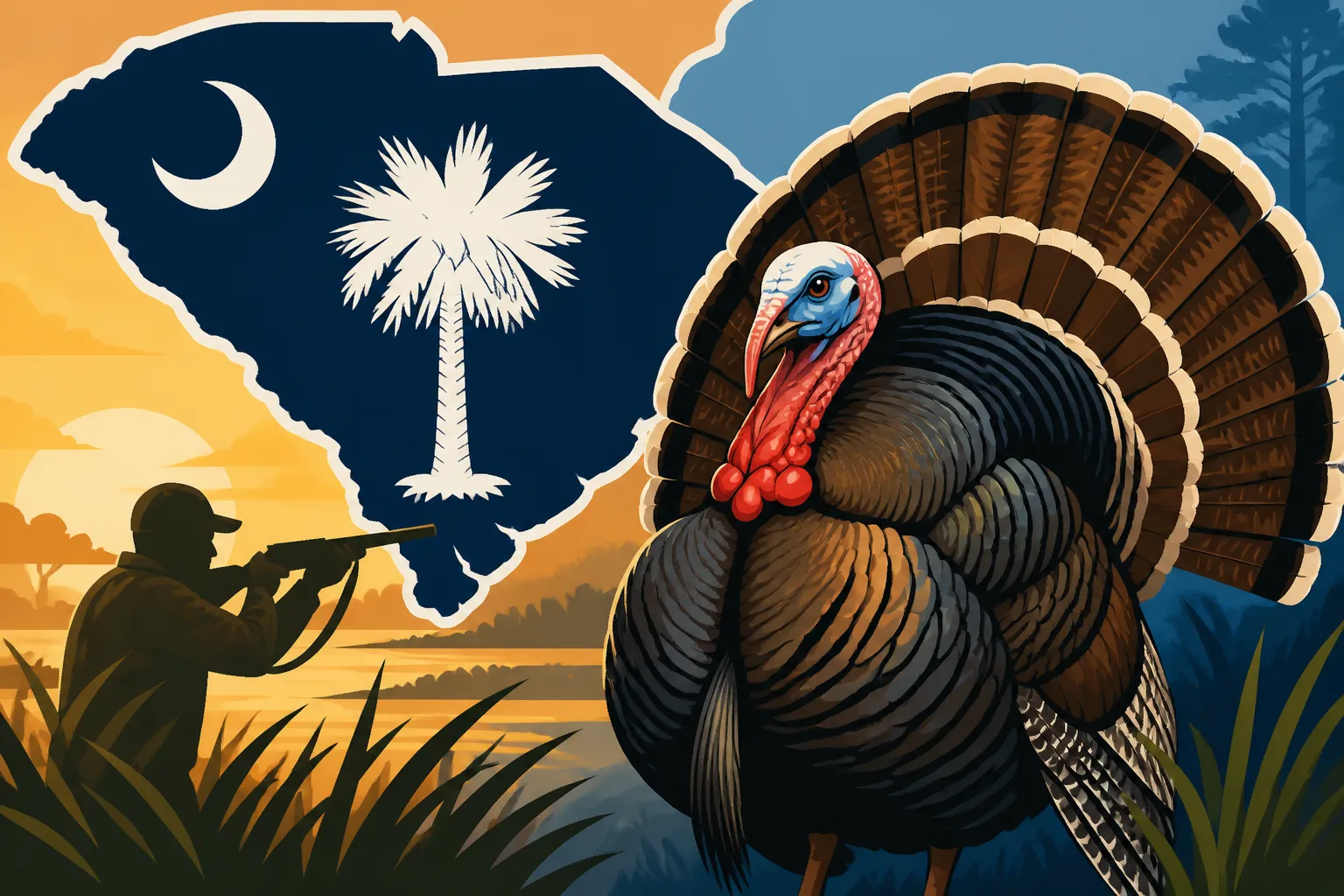
For many of us who love chasing longbeards through the South Carolina woods, there's a certain allure to a truly exceptional gobbler. We're talking about those birds that don't just fill the freezer but fill the conversation with awe – the ones that make you wonder, "Could this be a record?" It's a question many hunters ponder, especially when staring at a tom with thick, sharp spurs and a beard dragging the ground. This guide is all about demystifying what it takes for a South Carolina gobbler to enter the hallowed halls of the record books, offering practical insights into how these impressive birds are measured and how you can increase your chances of finding one of your own.
Understanding South Carolina's Record Book System
The dream of putting a gobbler in a record book isn't just about bragging rights; it's about celebrating a truly magnificent bird, a testament to its age, health, and often, your skill and persistence as a hunter. But before you can get that trophy tom officially recognized, you need to understand the system. It's not as simple as just "big spurs" or "long beard." There’s a specific methodology, and it's important to know what you're up against and what criteria the official scorers are looking for.
What Qualifies a Gobbler for the Books?
When it comes to record book gobblers, several key physical attributes contribute to a bird's overall score. These are universally recognized by major record-keeping organizations like the National Wild Turkey Federation (NWTF). The scoring system is designed to provide a comprehensive measure of the bird's maturity and dominance, rather than just one standout feature. You'll often hear hunters talking about "double-bearded" birds or exceptionally long spurs, and while these are certainly impressive, it's the combination of factors that truly counts.
First off, the bird's live weight is a critical component. A heavy tom generally indicates a healthy, mature bird that has had access to good food sources throughout its life. This isn't just a number on a scale; it's a reflection of the bird's overall condition. Then there are the spurs. These bony protrusions on the back of a gobbler's legs are perhaps the most iconic sign of an older, dominant tom. Their length is measured from the point where they emerge from the leg skin to the tip, and symmetry between the two spurs is also highly valued, though not explicitly scored in all systems. Finally, the beard length is a huge factor. While some gobblers might have multiple beards, the NWTF system measures the length of each beard from the center point where it emerges from the skin down to the longest bristle. Each of these measurements contributes to a total score that determines a bird's place in the record books. It’s a holistic view of the bird, recognizing that a truly exceptional gobbler excels in all these areas.
The Importance of Accurate Measurements
Once you’ve harvested a gobbler that you suspect might be record-worthy, the absolute most crucial step is accurate measurement. This isn't something you want to eyeball or guesstimate. Official record-keeping bodies have very precise methods that must be followed to ensure fairness and consistency across all entries. For instance, spurs are measured with calipers, often to the nearest sixteenth of an inch, and beard lengths are typically straightened and measured to the nearest sixteenth as well. The bird's weight must be taken accurately, usually on a certified scale.
Another critical detail is the drying period. For beards and spurs, there's usually a required drying period—often 60 days—before official measurements can be taken. This accounts for any natural shrinkage that might occur after harvest. Attempting to measure immediately can lead to an inflated initial score that won't hold up to official scrutiny. It’s always best to contact an official scorer affiliated with the record-keeping organization you're aiming for. These individuals are trained in the specific protocols and can guide you through the process, ensuring your bird gets a fair and accurate assessment. They can help avoid common mistakes that might disqualify an otherwise fantastic gobbler. You'll want to take detailed photos and keep meticulous records of all your preliminary measurements, noting the date of harvest and location, which county it was in, and even the type of call that might have sealed the deal, all of which are part of the story of your trophy.
Different Record Keeping Organizations
While most hunters think of "the record books" as a single entity, there are actually a few different organizations that maintain turkey hunting records, each with its own specific criteria and categories. The most prominent and widely recognized is the National Wild Turkey Federation (NWTF). Their Wild Turkey Records program is a comprehensive database that tracks turkeys harvested across North America, breaking them down by subspecies and state. They have categories for typical and atypical gobblers, accounting for things like multiple beards or unusual spur configurations.
Beyond the NWTF, some states, including South Carolina, might have their own state-specific record books or big game records programs. These often mirror the NWTF scoring system but focus specifically on birds harvested within the state's borders. Additionally, many local hunting clubs or conservation organizations might keep their own "club records" or "big bird" contests, which, while not national, can still be a source of local pride and recognition. For the ultimate turkey hunter achievement, there's also the NWTF Grand Slam, which isn't about the size of a single bird, but successfully harvesting all four of the common wild turkey subspecies in North America: the Eastern, Osceola, Rio Grande, and Merriam's. While not directly about South Carolina's largest gobblers, achieving a Grand Slam is a monumental feat that often includes a big Eastern bird from our state. Understanding which record book you're aiming for will help you prepare the right documentation and find the appropriate official scorer.
Table: Typical Score Components for Record Book Gobblers
| Component | Description | Measurement Unit | Common Impact on Score |
|---|---|---|---|
| Weight | Live weight of the harvested gobbler. | Pounds and ounces | Higher weight = higher score |
| Spur Length (each) | Length from the point of emergence from the leg skin to the sharp tip. Measured to nearest 1/16 inch. | Inches | Longer spurs = higher score |
| Beard Length (each) | Length of the longest bristle of each beard, measured from the base where it emerges from skin. Measured to nearest 1/16 inch. | Inches | Longer beards = higher score |
Note: Specific formulas combine these measurements, often with multipliers, to determine a total score. Consult the specific record book organization for exact calculation details.
Strategies for Chasing Trophy Gobblers
Hunting record book gobblers isn't just about luck; it's about strategic planning, deep understanding of turkey behavior, and a whole lot of persistence. While any spring turkey hunt has its challenges, pursuing a truly exceptional bird demands an even higher level of dedication and tactical prowess. You're not just looking for any gobbler; you're looking for an older, wiser, and often more elusive tom that has managed to survive previous seasons.
Locating Prime Habitat
Finding a record-class gobbler often starts long before opening day – it begins with identifying the right habitat. Mature toms, especially those carrying impressive spurs and beards, need consistent access to high-quality food, secure roosting areas, and relatively low hunting pressure. In South Carolina, this could mean scouting diverse landscapes. For instance, the sprawling bottomland hardwoods along major rivers like the Pee Dee or Congaree often offer excellent foraging grounds for acorns and insects, coupled with massive trees for secure roosting. Conversely, areas with mixed pine and hardwood stands, especially those near agricultural fields, can also hold big birds. You might find a big tom working the edges of a cut cornfield in the Midlands or strutting along a logging road deep in the Sumter National Forest.
Paying attention to South Carolina Turkey Population Trends and historical data for specific counties can give you a significant edge. Some areas consistently produce larger, older birds, often due to better habitat management or slightly less hunting pressure. Utilize modern tools, too. Mapping applications like GoHunt can be invaluable for pinpointing potential roost sites, identifying food sources like mature oak ridges, and locating less-pressured pockets of public land. Look for areas with a mosaic of habitat types: dense cover for security, open areas for strutting, and water sources. Remember, big gobblers didn't get big by being careless; they picked their homes wisely. Your job is to find those optimal homes.
Mastering the Call and Decoy Game
Once you've located a promising area, your next challenge is to get that trophy gobbler to commit. This is where your calling and decoy strategies become paramount. Older, smarter gobblers have heard every trick in the book, so subtlety and realism are often more effective than aggressive, loud calling. Start with soft tree yelps and clucks to gauge their interest, increasing the intensity only if the bird responds. Learning to differentiate between realistic hen sounds – assembly yelps, clucks, purrs, and cutts – and knowing when to use each is a true art. Sometimes, less is more; a few soft purrs from a slate call might be just enough to draw in a wary tom that's been hammered by aggressive callers.
Decoy placement is equally critical. For older, dominant gobblers, a single hen decoy or a jake decoy positioned aggressively can often challenge a tom's dominance, making him come in to investigate or fight. However, be cautious; a full strut tom decoy can sometimes intimidate a real gobbler if he's not the undisputed king of the woods, or if he's seen too many of them. Consider the lay of the land; position your decoy where it's visible but also where the gobbler has to come into your shooting lane to investigate. When considering Decoy Placement for Pressured South Carolina Birds, remember that eye-level or slightly elevated decoys can look more realistic in open fields, while ground-level setups might be better in thicker timber. Sometimes, the most effective "decoy" is just your own patience, knowing that a quiet approach and well-timed calls can be more powerful than any plastic bird.
Patience and Persistence
Chasing record book gobblers often tests the limits of a hunter's patience. These birds are not easily fooled. They’ve survived multiple seasons, outsmarting predators and hunters alike. You'll encounter birds that gobble their heads off on the roost but go silent the moment they hit the ground, or those that hang up just out of range, drumming and strutting frustratingly. It's during these moments that persistence pays off. Don't give up on a bird just because he didn't come running to your first call. Instead, analyze his behavior. Does he respond better to subtle calls or aggressive ones? Does he prefer to circle your position? Understanding these nuances is key.
Late-season tactics can also be incredibly effective for targeting these older birds. By late April or early May, many of the younger, more aggressive gobblers have been harvested, and the remaining mature toms are often more susceptible to calling as they desperately seek out the last receptive hens. However, When South Carolina Gobblers Go Quiet in May, you might need to shift from aggressive calling to more subtle tactics, focusing on soft hen yelps and purrs, or even silent hunts where you rely on scouting and ambushing birds in known strut zones. This is also where scouting with tools like GoHunt, even mid-season, can reveal patterns in a gobbler’s movement that weren't obvious earlier. The willingness to adapt, to sit longer, and to return to the same bird day after day, can ultimately lead to that unforgettable moment when a record-class gobbler finally steps into range.
Key Factors Influencing Gobbler Size
While hunting strategy plays a massive role in harvesting a record book gobbler, the bird itself is a product of its environment, genetics, and age. You can be the best caller in South Carolina, but if the local turkey population simply doesn't produce many older, healthier birds, your chances of a record are naturally lower. Understanding these underlying biological factors can help you focus your efforts on areas where true giants are more likely to roam.
Age and Genetics
It's a pretty straightforward concept: older gobblers generally mean larger gobblers. Spurs grow longer and sharper with each passing year, and beards, while sometimes breaking off, typically gain length over time. A tom with 1.5-inch spurs and a 10-inch beard isn't a first-year bird; he's likely a 3 or 4-year-old veteran of the woods. These older birds have learned to evade predators, find the best food sources, and navigate hunting pressure, which is why they're so challenging to hunt. When considering South Carolina Turkey Gobbling Activity Timing, remember that older birds may be more selective about when and how they gobble, often making them harder to pinpoint than eager jakes.
Beyond age, genetics play an often-underestimated role. Just like in deer, some turkey populations simply have the genetic predisposition to grow larger, thicker spurs or longer beards. While you can't change a wild turkey's genetic makeup, you can focus your hunting efforts on regions or even specific private land tracts known for producing larger-than-average birds. This kind of information often comes from local hunters, game wardens, or long-term observation. While every gobbler is a trophy in its own right, some regions of South Carolina consistently seem to produce those exceptional birds that turn heads and make the record books.
Nutrition and Habitat Quality
A gobbler's physical development, from its weight to the length and thickness of its spurs and beard, is heavily influenced by its nutrition and the overall quality of its habitat. A tom living in an area with abundant food sources – think lush fields, mast-producing hardwoods, and diverse insect populations – will generally be healthier, heavier, and have better spur and beard growth than a bird struggling in a nutrient-poor environment. For example, a severe drought year that impacts acorn crops or insect availability can affect the overall health and size of a turkey flock for years to come.
Areas with proactive habitat management, such as those that undergo prescribed burns to encourage new growth or have diverse food plots, tend to support healthier turkey populations. This is why you often hear of certain Wildlife Management Areas (WMAs) or large private land holdings producing exceptional birds. They invest in creating the ideal environment for turkeys to thrive. For instance, good pine management with regular burning can foster the understory and insect life that turkeys need. When you consider South Carolina Turkey Brood Survey Results, you'll see a direct correlation between habitat quality and poult survival, which directly impacts the number of mature birds available years down the road. Healthy hens produce healthy poults, which grow into healthy, large gobblers.
Hunting Pressure and Gobbler Behavior
South Carolina has a strong hunting tradition, and with that comes hunting pressure. This pressure significantly impacts gobbler behavior, especially that of older, wiser birds. A gobbler that has been called to, shot at, or simply seen too many hunters will become incredibly wary. They might become "call-shy," refusing to respond to even the most enticing hen calls, or "decoy-shy," giving a wide berth to any fake bird they see. This makes them notoriously difficult to hunt, even if they possess the physical attributes of a record-class bird.
However, this pressure can also indirectly contribute to larger birds. The most wary toms are often the ones that survive multiple seasons, growing those coveted long spurs and beards. Your challenge then becomes adapting your tactics to outsmart these seasoned veterans. This might involve hunting deeper into public lands where pressure is lighter, trying less conventional calling techniques, or focusing on Hunting the South Carolina Rut by Zone to capitalize on periods when even the wariest gobbler might let his guard down for a hen. Understanding how turkeys in your specific hunting area react to pressure, and adjusting your approach accordingly, is a critical skill for any hunter hoping to tag a record book gobbler.
Reporting Your Trophy and Preserving the Memory
Finally, after all the hard work, scouting, calling, and patience, you've done it – you've harvested a gobbler that you believe might qualify for the record books. The hunt itself is a memory that will last a lifetime, but officially recognizing your bird and properly preserving it ensures that memory, and the bird's impressive stats, can be shared and appreciated for years to come.
The Official Scoring Process
Once you have that exceptional gobbler in hand, and you’ve waited the necessary drying period for the spurs and beard, the next step is to find an official scorer. For NWTF records, you'll need to locate an NWTF-certified measurer. These individuals have undergone training to ensure they apply the scoring rules consistently and accurately. You can usually find a list of certified scorers on the NWTF website or through state-level turkey hunting organizations. Before meeting with a scorer, gather all the necessary documentation: your hunting license, turkey tag, photos of the bird, and details of the harvest (date, time, county, weapon used). The scorer will meticulously measure the weight, spurs, and beard(s) according to the official formula, and help you fill out the required paperwork. This process ensures the integrity of the record books and validates the achievement of your trophy gobbler. Remember that some organizations, like the NWTF, require a small fee to process the entry, but it's a small price to pay for official recognition of a truly outstanding bird.
Taxidermy and Mount Care
For a record book gobbler, a high-quality taxidermy mount is often the chosen way to preserve the memory and showcase the bird's impressive features. Choosing the right taxidermist is crucial. Look for someone with a strong portfolio of turkey mounts, as turkeys can be notoriously challenging to mount well. Discuss your vision for the mount – a full strut, a half-mount, or just a tail fan and beard plaque – and get references from other hunters. A good taxidermist will understand the importance of preserving the natural color and texture of the feathers, the intricate detail of the head, and the striking appearance of those record-worthy spurs and beard.
Once you have your mount home, proper care is essential to ensure its longevity. Keep it out of direct sunlight to prevent fading, and away from extreme temperature fluctuations. Regular dusting with a soft brush or compressed air will prevent dust and insects from accumulating. If you notice any signs of insect damage, consult your taxidermist immediately. A well-cared-for mount will be a stunning reminder of your hunt for decades, allowing you to relive the excitement of that morning in the South Carolina woods every time you look at it.
Celebrating the Achievement
Harvesting a record book gobbler is a significant achievement, a testament to your dedication and skill as a hunter. It's an accomplishment worth celebrating and sharing! Beyond the official recognition, the real joy often comes from sharing the story of the hunt with friends and family. Talk about the long hours of scouting, the challenging calls, the patience required, and the thrill of seeing that magnificent bird finally come into range. Submit your story and photos to local hunting magazines, online forums, or even your hunting club newsletter.
Connecting with other hunters who appreciate the pursuit of trophy birds can also enrich the experience. Sharing tips, tactics, and stories with fellow enthusiasts helps build community and fosters a deeper appreciation for the sport. Whether your bird makes the very top of the NWTF rankings or simply sets a new personal best for you, take pride in the experience. Every hunter dreams of that exceptional animal, and when you finally get one, it's a moment to cherish. It's about more than just numbers; it's about the journey, the challenge, and the profound connection to the wild.
Disclaimer
This article is for general informational purposes only and does not constitute professional advice. Laws, prices and regulations vary by location and change over time. Consult a qualified professional for guidance on your specific situation.