How South Carolina Monitors for CWD Every Year
Hunters across South Carolina are often worried about Chronic Wasting Disease (CWD) – a silent, always-fatal neurological disease that devastates deer populations in other states. It's a valid concern, especially when you hear the horror stories from states that are already battling it, and the potential impact on White-Tailed Deer Across South Carolina. Thankfully, South Carolina has remained CWD-free, but that's not by accident. This comprehensive guide will walk you through exactly how South Carolina proactively monitors for CWD every single year, ensuring our deer herd stays healthy and robust, and what role you, as a hunter, play in keeping it that way.
Understanding Chronic Wasting Disease CWD and Its Threat
When we talk about CWD, it’s easy to get lost in scientific jargon. But for hunters, it boils down to one terrifying fact: it's a disease that attacks the brain and nervous system of deer, elk, and moose, and it’s always fatal. There’s no cure, no vaccine, and once it takes hold in a population, it’s incredibly difficult to eradicate. The idea of losing our beloved whitetails to such a devastating illness is enough to keep any passionate South Carolina deer hunter up at night.
What is CWD and Why Is It So Concerning?
Chronic Wasting Disease is a transmissible spongiform encephalopathy (TSE), similar to mad cow disease. It's caused by abnormal proteins called prions, which can persist in the environment for years, making it incredibly resilient. Imagine an invisible killer that lingers in the soil, on plants, and in water sources, waiting to infect the next animal. It's not a bacterium or a virus that you can easily target with antibiotics or vaccines; prions are much more insidious. This persistence is why CWD is so much more challenging to manage than other wildlife diseases. It's a long-game threat.
The disease can take a long time to manifest, sometimes years after initial infection. An infected deer might look perfectly healthy, acting normally, while silently shedding prions through saliva, urine, and feces. This means an animal can be spreading the disease without showing any outward symptoms, making early detection and containment incredibly difficult. This delayed onset is one of the primary reasons why aggressive monitoring is so crucial, allowing wildlife agencies to identify and respond to potential outbreaks before they become widespread. It’s a game of trying to catch something before it even looks like it's there, which speaks to the dedication behind Why South Carolina Stays CWD-Free.
The Devastating Impact on Deer Populations
The long-term impacts of CWD on deer populations can be catastrophic. In areas where CWD is endemic, deer populations have seen significant declines. It doesn't just kill individual deer; it slowly erodes the health and viability of the entire herd. For hunters, this translates to fewer deer, a harder time filling tags, and the heartbreaking reality of seeing sick animals in the woods. Beyond hunting, healthy deer populations are vital to the ecosystem, influencing everything from forest regeneration to predator-prey dynamics, and even affecting other South Carolina Small Game and Furbearers indirectly.
Beyond the biological impact, CWD creates immense challenges for wildlife management agencies and significantly impacts hunting traditions. When CWD is confirmed, regulations often become stricter, including carcass transport restrictions and mandatory testing. Hunters might face added costs for testing, limited hunting opportunities, or simply the psychological burden of knowing their local herd is compromised. No one wants to hunt in a landscape where every deer you see could be a carrier, or worse, exhibiting the tell-tale signs of the disease. It affects the very joy and purpose of hunting, making even the consideration of a South Carolina Deer Season Structure Explained feel fraught with anxiety.
South Carolina's Proactive CWD Surveillance Program
South Carolina has taken a very serious, proactive stance against CWD, understanding that preventing its entry and spread is far easier than trying to control it once it's here. The state’s wildlife agency, SCDNR, operates a comprehensive surveillance program that involves thousands of deer samples collected and tested annually. This isn't just a casual check; it's a dedicated, multi-faceted effort designed to catch any potential CWD case as early as possible. This commitment is why South Carolina remains one of the few states in the Southeast without a confirmed CWD case.
Annual Sampling Efforts and Locations
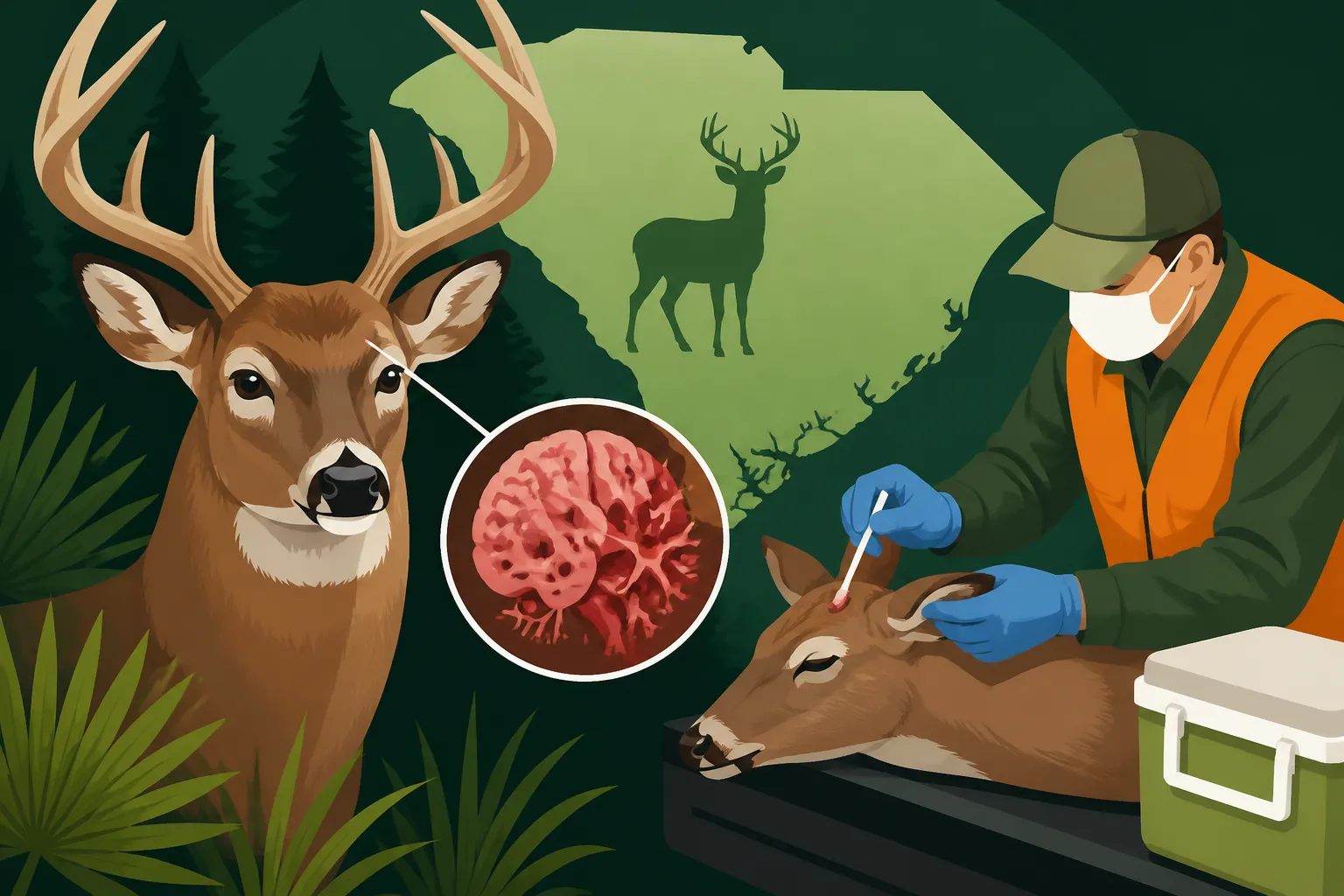
Every year, SCDNR collects thousands of tissue samples from harvested deer across the state. These samples, typically from the brainstem and lymph nodes, are the gold standard for CWD detection. Hunters are often instrumental in this process, either by submitting samples voluntarily at check stations or through targeted sampling efforts in specific areas. The goal is to obtain a statistically significant number of samples from each of the state's four game zones, covering various habitats and deer densities. This thoroughness ensures that if CWD were to appear, it wouldn't go unnoticed for long. The program covers areas from Hunting Upstate South Carolina to the South Carolina Lowcountry.
Sampling efforts are particularly focused on areas considered higher risk, such as counties bordering other states where CWD has been detected. Additionally, any deer exhibiting neurological symptoms or unusually emaciated behavior is prioritized for testing. SCDNR also partners with meat processors and taxidermists, who are often the first to handle a large number of harvested deer and can assist in collecting samples. It’s a collaborative effort that relies heavily on the cooperation of hunters and wildlife professionals alike. Using platforms like GoHunt can help hunters stay informed about specific sampling locations or requirements in their hunting zones, including those found on South Carolina Wildlife Management Areas.
Partnering with Hunters and Processors
Hunters are the frontline defense against CWD. Their participation in surveillance is not just encouraged; it's absolutely vital. Many hunters participate by bringing their harvested deer to designated sampling stations or by allowing SCDNR biologists to take samples at deer check stations or during routine field checks. This partnership is a testament to the strong conservation ethic within the South Carolina hunting community. Without hunter cooperation, the scale and effectiveness of the annual sampling program would be severely limited.
The process is generally straightforward. A hunter harvests a deer, brings it to a sampling station or processor, and a biologist or trained technician takes the necessary samples. The deer carcass is then returned to the hunter for processing. While it adds a small step to the post-harvest routine, most hunters understand the importance of this contribution. Agencies regularly update hunters on the importance of submitting samples, particularly for bucks that appear to be older or those harvested in specific areas. Information about South Carolina Deer Reporting Requirements is often provided alongside CWD information.
Carcass Import Restrictions and Prevention
One of the most critical preventative measures South Carolina has in place is its stringent carcass import restrictions. To prevent CWD from entering the state, it is generally illegal to import whole deer, elk, or moose carcasses from any state or province where CWD has been detected. This is a huge deal, and it's something every hunter needs to be acutely aware of, especially if you travel out of state for a hunt. You can't just bring back a deer head or an entire carcass from a hunt in, say, Wisconsin or Pennsylvania. This regulation directly addresses Why You Cannot Bring a Deer Carcass Into South Carolina.
Instead, hunters returning from CWD-positive areas are typically only allowed to bring back deboned meat, clean skull plates, antlers, capes, and taxidermy products. These parts are considered low-risk for CWD prions. This regulation, while sometimes seen as an inconvenience, is a direct response to how CWD can spread. Prions are concentrated in lymphoid tissues, the brain, and spinal cord, making intact carcasses a primary vector for disease introduction. Understanding South Carolina Carcass Import Restrictions is crucial for protecting our state's herd. It's a small sacrifice to make to keep our state free of this devastating disease, and similar rules apply for What You Can Import From an Elk or Moose Hunt.
The Hunter's Role in CWD Monitoring and Prevention
As hunters, we are the eyes and ears of the forest. We spend countless hours scouting, observing, and tracking deer. This intimate knowledge of our local deer populations puts us in a unique position to aid in CWD monitoring and prevention. It's not just about what the state agency does; it's about our collective responsibility to protect the future of hunting in South Carolina. Every hunter has a part to play, big or small, in keeping CWD out.
Recognizing and Reporting Sick Animals
While CWD is often asymptomatic in its early stages, infected deer eventually develop noticeable symptoms. These can include drastic weight loss (wasting away), neurological signs like stumbling, head tremors, drooling, lethargy, and a general lack of fear of humans. Imagine seeing a deer that looks like it's starving, even when there's plenty of food around, or one that just stands there glassy-eyed as you approach. These are red flags. If you observe any deer exhibiting these behaviors, it is absolutely critical to report it immediately to SCDNR. Do not attempt to harvest or handle a visibly sick animal without guidance from wildlife officials.
Your keen observation skills are invaluable. A quick call to SCDNR can trigger an investigation and prompt targeted testing, potentially identifying a CWD case before it has a chance to spread widely. Hunters using tools like GoHunt to track their observations can even include notes on animal behavior, which could be useful if they later need to report a suspected case. This vigilance helps maintain Why South Carolina Stays CWD-Free and protects the broader deer population, even potentially protecting species like South Carolina's Black Bear Population from indirect impacts on their food sources.
Participating in Surveillance and Sampling Programs
Beyond reporting sick animals, actively participating in SCDNR's annual surveillance program is perhaps the most direct way hunters can help. When SCDNR sets up voluntary sampling stations or requests samples from specific areas, taking the time to contribute your harvested deer for testing is an act of conservation. It might add a half-hour to your trip home, but that half-hour could provide critical data points to ensure the long-term health of our herd.
Think of it as contributing to a statewide health check-up for our deer. Each sample provides a piece of the puzzle, helping biologists confirm the absence of CWD or, in the unfortunate event it arrives, pinpoint its location early. Whether you hunt on Public Hunting Land in South Carolina or private tracts, your participation matters. Staying informed about South Carolina's CWD Surveillance Sampling schedule and locations through official SCDNR channels or apps like GoHunt is key. This diligence is as important as carrying your South Carolina Hunting Licenses and What They Cost when afield.
Understanding and Adhering to Carcass Regulations
This point cannot be stressed enough: Know and follow the carcass import regulations. If you hunt deer, elk, or moose outside of South Carolina, it is your responsibility to understand the rules for bringing parts back into the state. Ignorance of the law is not an excuse, and violating these rules could inadvertently introduce CWD. Imagine being the person who unknowingly brings CWD into our state because you didn't debone a deer from an out-of-state hunt. The thought alone should be enough to make anyone pause.
Here's a quick reference for generally allowed and prohibited items from CWD-positive states:
| Allowed to Bring into SC (from CWD-positive states) | Prohibited from Bringing into SC (from CWD-positive states) |
|---|---|
| Deboned meat | Whole carcasses or intact heads |
| Clean skull plates (no brain tissue) | Spinal columns, brains, or other nervous system tissue |
| Antlers (shed or attached to clean skull plate) | Lymph nodes, tonsils, spleen, or eyes |
| Capes (no brain or spinal tissue) | Any carcass part containing high-risk tissues |
| Finished taxidermy mounts | Parts that are visibly contaminated with blood or tissue |
Always double-check the latest regulations with SCDNR before traveling for an out-of-state hunt, as rules can change. This commitment is vital for every hunter concerned about the South Carolina Deer Season Structure Explained and the long-term viability of our deer herd. The information available through Using the Go Outdoors SC App can often clarify these vital regulations on the fly.
Staying Vigilant: What the Future Holds for CWD in South Carolina
While South Carolina has been successful in keeping CWD out so far, the threat is constant and evolving. The disease continues to spread in other parts of the country, putting increasing pressure on states like ours that remain CWD-free. Vigilance isn't a one-time effort; it's a perpetual commitment that requires ongoing adaptation and the continued cooperation of everyone involved. We cannot afford to become complacent.
The Ever-Present Threat from Neighboring States
CWD is a regional problem, not just a local one. As neighboring states grapple with CWD outbreaks, the risk of its introduction to South Carolina naturally increases. Deer don't recognize state lines, and a CWD-positive deer could theoretically migrate across a border, though direct deer migration over long distances is less common than human-assisted spread. However, the most significant risk remains the movement of infected carcasses or parts by hunters who are unaware of or ignore regulations.
This is why SCDNR's efforts to educate hunters about South Carolina Carcass Import Restrictions are so crucial. Every time a hunter brings game back from an out-of-state hunt, there's a potential pathway for CWD. The continued spread of CWD in states to our north and west means the pressure on South Carolina's borders grows year after year. We have to be more diligent, not less, as the threat inches closer, impacting even how we think about South Carolina's Four Game Zones.
Ongoing Research and Adaptive Management Strategies
SCDNR doesn't just stick to the same plan year after year. They continually monitor CWD research, adapt their surveillance methods, and refine their strategies based on the latest scientific understanding of the disease. This might include adjusting sampling locations, increasing sample numbers in specific areas, or exploring new, more efficient testing methods. It's an adaptive management approach, meaning they learn, adjust, and improve based on new information and changing circumstances.
This commitment to staying current helps ensure that South Carolina's program remains effective against an ever-evolving threat. They are always asking: "What more can we do? What new knowledge can we apply?" For instance, researchers are constantly working on new ways to detect prions, understand transmission, and even explore potential genetic resistances in deer populations. All this work informs how South Carolina plans its next steps, including how South Carolina WMAs Are Managed to mitigate risk.
Long-Term Commitment to a CWD-Free South Carolina
Ultimately, keeping South Carolina CWD-free requires a long-term, unwavering commitment from everyone: state agencies, hunters, landowners, and the general public. It's a testament to the idea that conservation is a shared responsibility. The financial and logistical resources dedicated to annual surveillance, public education, and regulatory enforcement are substantial, but they are a necessary investment in the health of our wildlife and the future of our hunting heritage.
Our success so far is a source of pride, but it's not a reason to relax. Every deer season, every out-of-state hunt, every conversation about wildlife health is an opportunity to reinforce the importance of CWD prevention. It's about preserving not just deer, but a way of life. When you use tools like GoHunt to plan your hunts or check regulations, remember that part of that information infrastructure supports these critical conservation efforts. Let's all commit to ensuring future generations of South Carolina hunters can enjoy a healthy, CWD-free deer herd, just as we do today.
Disclaimer
This article is for general informational purposes only and does not constitute professional advice. Laws, prices and regulations vary by location and change over time. Consult a qualified professional for guidance on your specific situation.