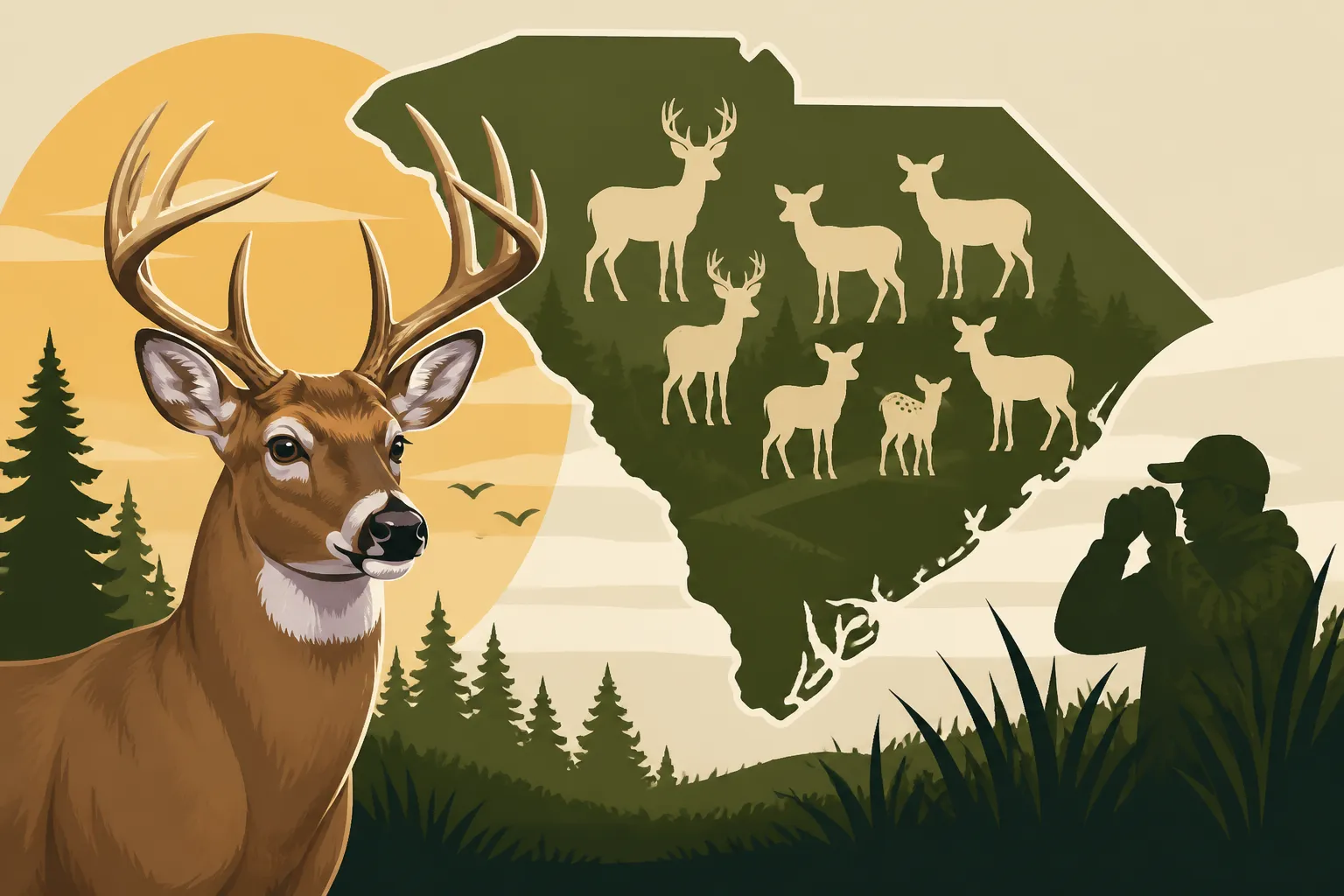
South Carolina Deer Population Estimate
It can be incredibly frustrating to plan a deer hunt in South Carolina, pouring over maps and scouting reports, only to feel like you're guessing at where the deer actually are. You wonder if you're truly hunting an area with a healthy, abundant population or just a few stragglers. This guide aims to clear up some of that confusion by diving deep into how South Carolina's deer population is estimated, what those numbers actually mean for you as a hunter, and how these figures break down across our diverse game zones.
Understanding South Carolina's Deer Numbers
Trying to get a solid grasp on exactly how many white-tailed deer roam the pine forests, swamps, and agricultural fields of South Carolina can feel like an impossible task. They’re elusive, they move, and they certainly don’t line up to be counted. Yet, understanding these numbers, even estimates, is absolutely critical for effective wildlife management and, frankly, for your success in the field. It’s not just about bragging rights; it's about the health of the herd and the future of hunting in our state.
Why Population Estimates Matter to Hunters
For us hunters, population estimates are more than just dry statistics; they're a window into the opportunities and challenges we face each season. When you know an area has a high deer density, it influences your scouting efforts, your stand placement, and even your choice of hunting method. Conversely, if you know a particular zone or county has lower numbers, it might lead you to adjust your expectations, focus more intensely on sign, or even shift your hunting location. These estimates inform the regulations, like bag limits and season lengths, which directly impact how and when we can pursue deer. Without some understanding of the overall herd health and size, we'd be hunting blind, and the state's wildlife agency, SCDNR, would be managing in the dark. It’s a vital feedback loop, helping to ensure sustainable hunting for generations to come.
The Challenges of Counting Whitetails
Let's be real: counting deer isn't like counting cars on a highway. Deer are wild animals, masters of camouflage, and they move constantly, especially across vast and varied landscapes like ours. South Carolina encompasses everything from dense coastal plain swamps to expansive agricultural fields and mountainous Upstate forests. Each of these habitats presents unique challenges to accurate counting. Dense cover makes visual observation difficult, while nocturnal movements mean many deer are simply never seen during daylight hours. Furthermore, populations fluctuate seasonally due to fawning, hunting pressure, and natural mortality. The sheer scale and diversity of the state's geography mean that any population figure will inherently be an estimate, a sophisticated best guess rather than a precise tally. It’s a complex puzzle, and wildlife biologists are constantly refining their methods to get the clearest possible picture.
How SCDNR Estimates the Deer Herd
The South Carolina Department of Natural Resources (SCDNR) doesn't just pull numbers out of thin air. They employ a combination of scientific methods and invaluable hunter cooperation to piece together the puzzle of the state's deer population. It's a continuous effort that involves both direct observation and indirect data collection, all aimed at painting the most accurate picture possible of our deer resource. This dedication allows them to make informed decisions about hunting regulations and habitat management.
Spotlight Surveys and Their Role
One of the primary direct methods SCDNR uses to estimate deer populations is spotlight surveys. Imagine driving slowly through designated routes at night, often on specific public lands or WMA roads, shining powerful spotlights into the darkness, looking for those tell-tale eye reflections. Biologists record every deer they see, noting sex and age class where possible. These routes are standardized, meaning they cover the same ground year after year, allowing for consistent comparisons over time. While a spotlight survey doesn't count every deer in an entire zone, it provides a valuable index of relative abundance. If numbers on a survey route increase, it suggests the overall population in that area is likely growing. Conversely, a decrease signals a potential decline. These surveys are especially useful for tracking trends in specific habitats and providing a snapshot of deer density in different regions.
Harvest Data and Hunter Reporting
Beyond direct observation, harvest data is perhaps the single most important tool for estimating deer populations in South Carolina. Every time a hunter harvests a deer, they are required to report it through the SCDNR's Game Check system. This reporting provides a treasure trove of information: the date of harvest, the county, the sex of the deer, and whether it was antlered or antlerless. Over time, this data allows biologists to calculate harvest rates, understand hunter effort, and observe trends in the buck-to-doe ratio and age structure of the herd. When combined with information like the number of hunting licenses sold, it helps estimate the total population. For instance, if the harvest rate remains stable but hunter effort increases, it might suggest a declining population. If you want to dive deeper into the process, you can learn more about South Carolina Deer Reporting Requirements. The more diligently hunters report their harvests, the more accurate and robust these estimates become, directly benefiting future deer management.
Integrating Multiple Data Sources for Accuracy
The real magic happens when SCDNR biologists integrate all these different data sources. They don't rely on just spotlight surveys or just harvest data. Instead, they combine information from aerial surveys, hunter surveys, fawning rates, roadkill statistics, and habitat assessments with the spotlight and harvest data. This multi-faceted approach creates a more robust and reliable estimate. For example, satellite imagery and ground-truthing can help determine the quality and quantity of available deer habitat, which directly influences how many deer an area can support. When you combine this with a strong understanding of How SCDNR Counts the South Carolina Deer Herd, you start to see a more complete picture. Tools like GoHunt can even help hunters visualize some of this data overlaid on maps, giving you a competitive edge in understanding potential deer hotspots. By looking at the big picture from several different angles, SCDNR can mitigate the limitations of any single method, resulting in a more comprehensive and accurate assessment of the state's deer population.
Regional Differences in Deer Density Across South Carolina
South Carolina isn't a monolith when it comes to deer. Our state is incredibly diverse geographically, and that diversity directly impacts where deer thrive, how numerous they are, and what hunting opportunities exist. Understanding these regional variations is key to predicting where you might find more action, or conversely, where you'll need to work harder for a shot. The SCDNR has recognized this by establishing South Carolina's Four Game Zones, each with its own unique characteristics.
The Abundance of Coastal Plain Deer
The Lowcountry and Coastal Plain regions, generally encompassing Game Zone 4, are historically known for having some of the highest deer densities in the state. This area, with its rich, fertile soils, extensive agricultural lands (think soybeans, corn, and peanuts), and sprawling bottomland hardwoods and cypress swamps, provides an ideal buffet for whitetails. The mild climate means a longer growing season, which translates to abundant natural forage and consistent food plots. Deer here tend to be smaller-bodied on average than their Upstate counterparts, but they often have higher reproductive rates, leading to more consistent fawning success. When you consider Hunting Lowcountry Swamp Deer, you're often hunting areas where deer feel comfortable in dense cover and have easy access to food. However, this high density can also lead to increased pressure on habitat and potential for crop damage, which influences management decisions.
Upstate Deer Densities and Habitat Variation
As you move into the Upstate, particularly Game Zone 1, the landscape shifts dramatically, and so do the deer dynamics. Here, you'll find the foothills and mountains, with more rugged terrain, mature hardwood forests, and less widespread agriculture compared to the Lowcountry. Deer densities in the Upstate are generally lower than on the Coastal Plain, but this doesn't mean fewer opportunities. What the Upstate often lacks in sheer numbers, it can make up for in the quality of individual bucks. The richer mast crops (acorns, hickory nuts) in some areas, combined with cooler temperatures and a different genetic makeup, can lead to larger-bodied deer with impressive antler growth. Hunters often face more challenging conditions, traversing steeper slopes and denser timber. Understanding the nuances of Upstate Versus Lowcountry Deer is crucial for success, as tactics that work on the coast might be less effective in the mountains. Scouting here, often relying on contour maps and apps like GoHunt, becomes even more critical for identifying those prime pockets where deer concentrate.
Midlands Balance of Agriculture and Timber
The Midlands, primarily Game Zones 2 and 3, often represent a compelling blend of the other two regions. Here, you'll find a mix of agricultural fields, extensive pine plantations, and river bottom hardwood drainages. This varied habitat offers a fantastic balance that can support healthy deer populations. The presence of agriculture provides consistent food sources, similar to the coastal plain, while the diverse timberlands offer excellent cover and mast production, albeit on a different scale than the mountains. Many hunters believe the Midlands offer some of the best opportunities for mature bucks, as the blend of food and cover allows deer to reach older age classes. In fact, some of our biggest deer often come from these areas, giving credence to the thought process behind Why the Midlands Grows Big Bucks. The relatively lower human population density in some rural Midlands areas compared to the immediate coast or highly developed Upstate also means certain tracts may experience less hunting pressure, allowing deer to thrive.
Here's a quick look at how deer densities can vary across South Carolina:
| Game Zone | Primary Landscape Type | General Deer Density (Relative) | Average Buck Size (Relative) | Common Hunting Style |
|---|---|---|---|---|
| Zone 1 (Upstate) | Mountains, Piedmont, Hardwood Forests | Moderate | Larger | Still-hunting, Spot-and-stalk |
| Zone 2 (Midlands) | Mixed Agriculture, Pine Plantations, River Bottoms | High | Medium to Large | Stand hunting, Food plot hunting |
| Zone 3 (Midlands) | Mixed Agriculture, Pine Plantations, River Bottoms | High | Medium to Large | Stand hunting, Food plot hunting |
| Zone 4 (Coastal Plain) | Swamps, Agriculture, Coastal Forests | Very High | Smaller | Still-hunting, Dog drives, Stand hunting |
Note: These are general observations and can vary greatly within each zone based on specific habitat and pressure.
Key Factors Influencing Deer Population Trends
Deer populations aren't static; they ebb and flow based on a complex interplay of environmental factors, human activity, and natural processes. Understanding these dynamics is crucial not just for wildlife biologists, but also for hunters who want to adapt their strategies and advocate for sound conservation practices. There's so much more to a healthy deer herd than just looking at the number of fawns born each spring.
Habitat Quality and Food Availability
At the heart of any wildlife population is its habitat. For South Carolina deer, the quality and availability of food and cover are paramount. A landscape rich in diverse forage—acorns, browse, agricultural crops, and native grasses—can support a larger, healthier deer herd. Conversely, poor habitat, perhaps due to urban development, extensive monoculture farming, or a lack of proper forest management, will inevitably lead to fewer deer. Timber practices, such as clear-cutting and prescribed burns, can create early successional growth that provides excellent browse, but dense, mature timber with a closed canopy often limits understory forage. This is why you see such an emphasis on Habitat Work on South Carolina WMAs – these managed areas are designed to provide optimal conditions. When natural food sources are scarce, like after a poor acorn crop, deer become more reliant on planted food plots or agricultural fields, which can concentrate them and make them more susceptible to disease or predation.
Predation, Disease, and Environmental Stressors
Beyond habitat, a myriad of natural forces constantly influence deer populations. Predation, primarily from coyotes, can significantly impact fawn survival rates, especially in areas with high coyote densities. While adult deer are less vulnerable to coyotes, continuous pressure can weaken the herd. Diseases like Hemorrhagic Disease (HD), often called EHD or "blue tongue," can cause localized die-offs, particularly during hot, dry summers. While South Carolina hasn't experienced Chronic Wasting Disease (CWD), it remains a serious concern, and constant vigilance through South Carolina CWD Surveillance Program is crucial. Environmental stressors, such as severe droughts or prolonged flooding, can also reduce forage, increase stress, and make deer more vulnerable to other threats. Understanding these pressures helps explain fluctuations in deer numbers and highlights why a balanced ecosystem is vital for a resilient deer population.
Hunting Pressure and Harvest Regulations
Perhaps the most direct human influence on deer populations is hunting itself. Hunting pressure, how many hunters are in an area and how actively they pursue deer, can certainly affect local deer behavior and population density. However, carefully crafted harvest regulations are designed to manage the population effectively. South Carolina's liberal statewide antlerless bag limits and flexible season dates, particularly in the Coastal Plain, are tools used to control overall deer numbers and maintain a healthy buck-to-doe ratio. Where deer populations are high and causing conflicts with agriculture or vehicle collisions, managers may encourage higher antlerless harvests. Conversely, in areas where populations are lower or managers want to promote older age structures in bucks, regulations might be more restrictive. The SCDNR continuously analyzes South Carolina Deer Harvest Records to fine-tune these regulations, ensuring that hunting remains sustainable and the deer herd remains robust.
The Impact of Deer Management on Population Health
South Carolina's deer management strategies are constantly evolving, adapting to current population trends, ecological understanding, and hunter input. These strategies aren't just about setting seasons and bag limits; they're about fostering a healthy, balanced ecosystem and ensuring a sustainable future for hunting. It's a testament to the dedication of SCDNR biologists and the cooperation of hunters across the state.
Antlerless Harvest and Herd Control
One of the most powerful tools in South Carolina's deer management arsenal is the allowance for antlerless harvest. For years, the focus was primarily on harvesting bucks, but biologists recognized that to truly manage population numbers and health, controlling the female segment of the herd was paramount. When deer populations become too dense, competition for food increases, leading to smaller body sizes, reduced antler growth, and lower fawn survival rates. An aggressive antlerless harvest helps bring the population into balance with its habitat, ensuring that the remaining deer have ample resources. This strategy is particularly important in the high-density Coastal Plain, where deer can reproduce rapidly. Understanding the impact of antlerless tags, and knowing How Many Antlerless Deer You Can Take Per Day, empowers hunters to be active participants in managing the herd effectively. It’s a crucial component of responsible hunting and vital for the long-term health of our deer.
Public Land Management and Habitat Improvements
South Carolina boasts a significant amount of public hunting land, including national forests and a network of Wildlife Management Areas (WMAs). The management of these lands plays a critical role in supporting deer populations. Foresters and wildlife biologists often collaborate to implement habitat improvement projects, such as prescribed burning to promote new growth and reduce wildfire risk, selective timber harvests to create diverse age classes of trees, and planting beneficial forage. These practices not only provide food and cover for deer but also enhance biodiversity for other wildlife. For instance, in the Francis Marion National Forest, specific zones are managed to create ideal conditions. This hands-on management on public lands ensures that even without private land access, hunters have opportunities in areas specifically designed to support healthy deer. If you're looking for new spots, the Go Outdoors SC App is an invaluable tool for understanding these areas and planning your hunts.
CWD Surveillance and Disease Prevention
The specter of Chronic Wasting Disease (CWD) looms large over the deer hunting community nationwide. While South Carolina has remained CWD-free, intense vigilance and proactive measures are cornerstones of SCDNR's management strategy. These efforts include a robust surveillance program, where deer carcasses are sampled for CWD testing at various locations across the state, including taxidermists and processing facilities. Hunters are encouraged to participate by submitting samples, providing valuable data. Additionally, strict regulations are in place regarding the importation of deer carcasses from CWD-positive states to prevent the disease from entering South Carolina. For instance, you can't bring certain parts of a deer into the state if harvested from an area with CWD, which is a vital part of Why You Cannot Bring a Deer Carcass Into South Carolina. These measures are critical for protecting our deer herd and preserving the future of hunting in our state. Every hunter's awareness and cooperation are essential in this ongoing fight.
Disclaimer
Please note that hunting regulations, season dates, and license requirements are subject to change. Always consult the latest South Carolina Department of Natural Resources (SCDNR) regulations guide before engaging in any hunting activities. The information provided in this article is for informational purposes only and should not be considered legal advice.