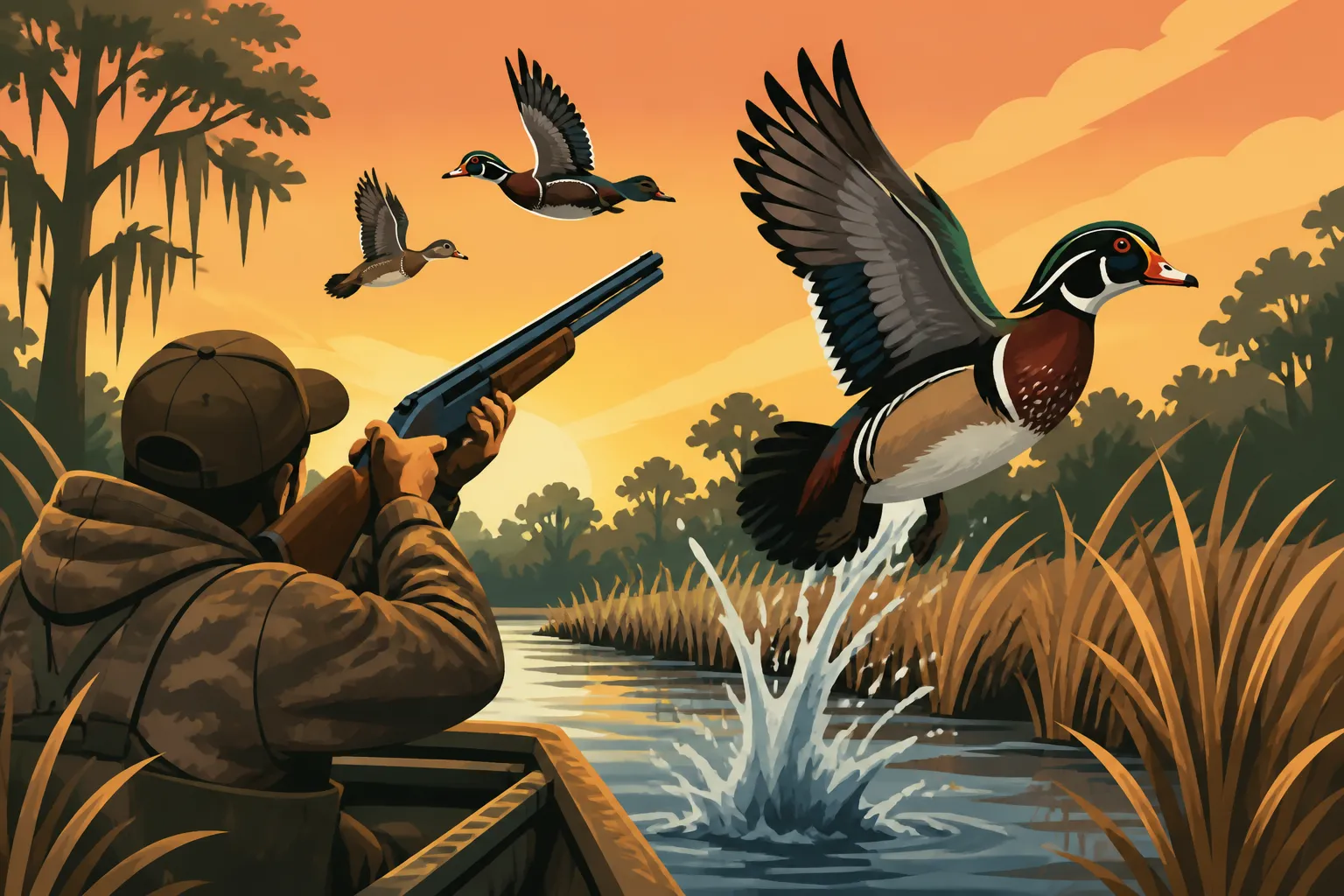
Jump-Shooting South Carolina Creeks for Wood Ducks
There's a special thrill to hunting wood ducks in South Carolina, a challenge that traditional decoy spreads and large open water often can't capture. If you've ever felt the frustration of watching those beautiful, jewel-toned birds zip by too quickly, or knew they were in a winding creek but couldn't get a shot, you're not alone. This comprehensive guide is here to equip you with the knowledge, tactics, and gear needed to successfully jump-shoot South Carolina's numerous creek systems for wood ducks, turning those fleeting glimpses into memorable hunts.
Decoding South Carolina Wood Duck Habits in Creek Environments
Wood ducks, often affectionately called "woodies," are truly unique among waterfowl, with their dazzling plumage and preference for flooded timber and tight, winding waterways. Understanding why they choose South Carolina's creeks and how they use them is the first step to a successful jump-shooting adventure. These aren't your typical open-water divers or field-feeding dabblers; woodies have a distinct lifestyle that plays right into the hands of an attentive jump-shooter.
The Allure of the Wooded Creek: Why "Woodies" Love Them
South Carolina's landscape is crisscrossed with countless creeks, small rivers, and blackwater drains that wind through dense hardwood bottoms, pine plantations, and coastal swamps. For wood ducks, these aren't just pathways; they're homes. They offer a unique combination of food, cover, and refuge that larger bodies of water often lack. The dense canopy overhead provides immediate security from aerial predators like hawks and eagles, allowing them to feel safe even during daylight hours. Unlike big lakes or wide rivers, these narrow corridors naturally funnel bird movement, making them predictable in certain situations.
The water itself is typically shallower, allowing them to dabble comfortably, and often carries a slower current, making foraging easier. These creeks are often lined with trees that drop crucial mast, particularly acorns from oaks like water oaks, willow oaks, and pin oaks, which are a primary food source. They also gorge on seeds, aquatic insects, and small invertebrates found in the soft bottom of these creeks. This rich, sheltered environment is precisely why wood ducks flock to them, especially in the early seasons before colder weather pushes them to more open, permanent water sources. The intricate nature of these creek systems also provides ample escape routes and hiding spots, making them a challenge but also a prime target for hunters willing to put in the effort.
Identifying Prime Habitat: What to Look For
Not every creek is created equal when it comes to jump-shooting woodies. Successful hunters learn to "read" the water and the surrounding terrain to identify the most promising stretches. You're looking for specific features that concentrate ducks and offer you an advantage. Start by examining aerial maps. Tools like GoHunt can be invaluable here, allowing you to scrutinize satellite imagery for winding creeks, beaver ponds, and areas where creeks merge or create oxbows. These pinch points and changes in water flow are natural gathering spots.
Focus on areas where the creek is relatively narrow and shaded, with plenty of overhead cover from mature hardwoods, especially those known to drop acorns. Look for sections where the water widens slightly into small pools or slack-water eddies, as these provide ideal resting and foraging areas. Beaver activity is a huge indicator; dams often create flooded pockets and dead timber, which are wood duck magnets. Pay attention to bends in the creek; ducks will often loaf or feed just around a bend, relying on the visual obstruction for safety. Also, areas where smaller feeder ditches or sloughs enter the main creek can be hotspots, as they offer additional avenues for ducks to move and find food. Understanding these key habitat preferences will allow you to narrow down your scouting efforts significantly and focus on the most productive sections of public lands like Francis Marion National Forest or certain Wildlife Management Areas (WMAs).
Daily Patterns: When and Where to Find Them
Wood ducks are creatures of habit, and understanding their daily routines is crucial for timing your jump-shooting efforts. Generally, woodies will leave their roosts (often in large, old trees over water) at dawn, flying to feeding areas. These feeding areas are typically the shallow, mast-rich sections of creeks or flooded timber we've discussed. They'll spend the early morning hours feeding actively. As the sun gets higher and hunting pressure potentially increases, they'll often move to loafing areas – dense, secluded stretches of creek, often with thick overhead cover, where they can rest and digest in peace.
Your best chances for jump-shooting usually come in the early morning, just after first light, as they are actively feeding and less wary, or in the late afternoon, as they stage before heading back to roost. During the midday, they'll be scattered and hunkered down, making them much harder to locate and flush. Look for signs of recent activity: fresh droppings on logs, disturbed mud along the banks, or even floating feathers. The quieter you are, and the more you learn their local patterns in specific creeks, the better your odds. Remember, these birds are masters of camouflage in their preferred habitat, so a sharp eye and keen ear for subtle movements or splashing sounds are paramount.
Gearing Up for Stealth and Success on the Water
Jump-shooting wood ducks is a very mobile and active form of hunting, quite different from sitting in a blind. Your gear choices need to reflect this, prioritizing stealth, mobility, and the ability to operate effectively in potentially challenging, wet environments. Having the right tools won't just improve your chances; it'll also make the experience safer and more enjoyable.
Shotgun, Choke, and Ammunition Choices
When you're jump-shooting, speed and maneuverability are key. You'll likely be shouldering your shotgun quickly, often in tight quarters, for fast-flushing birds. This means a lighter, more nimble shotgun is often preferred over a heavy, long-barreled magnum. Many hunters opt for a 12-gauge or even a 20-gauge, which can be lighter to carry and quicker to swing. Pump-action or semi-automatic shotguns are both excellent choices, offering reliable follow-up shots.
For chokes, remember that your shots will likely be at close to medium range, usually within 35-40 yards, as the ducks flush relatively close from around a bend. A Modified choke is a popular all-around choice, providing a good balance of spread and pattern density. Some hunters even prefer an Improved Cylinder choke for even wider patterns at very close ranges, especially in dense cover where reaction time is minimal.
Ammunition is critical. Federal regulations require the use of non-toxic shot for all waterfowl hunting. Steel shot is the most common and economical option. For wood ducks, #4 or #6 steel shot are excellent choices. The smaller #6 shot offers a higher pellet count, which is advantageous for hitting fast-moving birds at close ranges, while #4 steel provides a bit more knockdown power if a shot stretches out slightly. Always ensure your shotgun is rated for steel shot, especially if you're using an older firearm. For more details on these requirements, check out Where Nontoxic Shot Is Required in South Carolina.
Navigating Creeks: Boats, Waders, and Footwear
How you move through the creek system will largely depend on the specific creek's depth, width, and current. Often, the most effective method is simply wading. Breathable chest waders are an absolute must. They'll keep you dry and comfortable, allowing you to walk through shallow sections and stand in the water to get a better angle on flushing birds. Look for waders with good ankle support and durable, puncture-resistant material, as you'll be navigating through submerged branches and uneven bottoms. Pair them with sturdy wading boots that provide excellent grip on slippery rocks and mud.
For deeper or wider creeks, a small, quiet boat can be incredibly effective. A canoe, kayak, or even a small jon boat (if the creek allows) can provide a silent way to cover more ground. The key is silence. Avoid dragging paddles, bumping against the banks, or making any unnecessary noise. Use a push pole in shallow areas to avoid splashing with oars or paddles. Some hunters even bring a small, quiet trolling motor for larger stretches, but be mindful of battery life and potential noise.
Creek Navigation & Gear Checklist
| Item | Purpose | Key Considerations |
|---|---|---|
| Chest Waders | Stay dry, allow wading | Breathable, durable, good ankle support |
| Wading Boots | Grip on slippery surfaces, foot protection | Sturdy, good traction, comfortable for walking |
| Small Boat | Cover distance silently (canoe, kayak, jon boat) | Lightweight, quiet, easy to maneuver in tight spaces |
| Push Pole | Silent propulsion in shallow water | Strong, lightweight, appropriate length |
| Life Vest | Essential safety | Always wear when in a boat, even in shallow water |
| Waterproof Bag | Protect essentials (phone, license, keys) | Durable, fully submersible if possible |
| GPS/Map App | Navigation, marking hotspots, property lines | GoHunt, onX Hunt, Go Outdoors SC app with offline maps |
Remember, safety is paramount. Always wear a life vest when using a boat, and let someone know your float plan and expected return time, especially when hunting remote areas.
Camouflage and Essential Small Gear
Blending into the environment is critical for jump-shooting. Wood ducks have excellent eyesight, and even a slight contrast against the dense foliage can give you away. Choose camouflage patterns that match the typical South Carolina creek environment: patterns with browns, greens, and grays that mimic tree bark, reeds, and shadows. A full face mask and gloves are essential to break up your human outline.
Beyond your main setup, a few small items can make a big difference:
- Decoys (Optional but Useful): While this is a jump-shooting guide, a single hen wood duck decoy or two can sometimes be deployed quickly to help hold birds or give you a shot at a late arrival.
- Whistle or Locator Call: A sharp whistle can sometimes make a flushing bird "cup" its wings momentarily, giving you a precious extra second for a shot.
- Headlamp: Crucial for navigating to your spot before dawn or walking out after dusk.
- Thermos with Coffee/Water: Hydration is important, especially during warm early season hunts.
- Small Dry Bag: For your phone, wallet, keys, and license. You don't want these items getting wet.
- Game Vest or Small Pack: To carry your ducks, extra shells, and small gear, keeping your hands free for your shotgun.
- Compass/GPS: Even with a map app on your phone, a traditional compass can be a lifesaver in dense woods without cell service. Scouting With the Go Outdoors SC App can help you download offline maps for this very reason.
- Snake Boots: Depending on the time of year and specific location, snake boots can provide peace of mind in swampy, brushy terrain.
Mastering the Art of the Jump-Shoot
Jump-shooting is a dance of stealth, anticipation, and quick reflexes. It's about outsmarting a bird in its natural environment, using the terrain to your advantage, and being ready when the moment arrives. This isn't a sit-and-wait game; it's an active pursuit that demands constant attention and calculated movement.
Stealthy Approach and Movement Techniques
The cardinal rule of jump-shooting wood ducks is silence. These birds are incredibly wary, and any unnatural noise will send them scattering long before you get a shot. Move slowly, deliberately, and with purpose. Hug the bank, using any available cover—bushes, fallen logs, bends in the creek—to break up your silhouette. Think like a predator, using every available feature to mask your approach.
When wading, lift your feet and place them down gently, avoiding splashing or crunching leaves. If you're in a boat, use a push pole rather than paddles in shallow sections to minimize noise, or paddle only when absolutely necessary, keeping the blade feathered to reduce drips. Never rush around a blind corner; instead, approach slowly, shotgun at the ready, peering around the bend with just your eyes before exposing your body. This allows you to spot birds before they spot you, giving you a precious fraction of a second to react. Many successful jump-shooters move against the current if wading or floating, as it makes for a quieter approach and any sound you do make will be carried away from the birds.
Listen intently. Wood ducks are chatty birds, and you'll often hear their distinctive "whistle" or "o-eek" call before you see them. A sudden splash or wing beat is also a clear indicator. When you hear these sounds, freeze, listen, and prepare.
Reading the Water and Anticipating Flushes
Experience teaches you to "read" the creek and anticipate where ducks are likely to be. As you approach a bend, expect birds to be just around it. If you see a log spanning the creek or partially submerged, expect birds to be resting on it or just beyond it. Overhanging branches or areas of dense submerged vegetation are also prime locations.
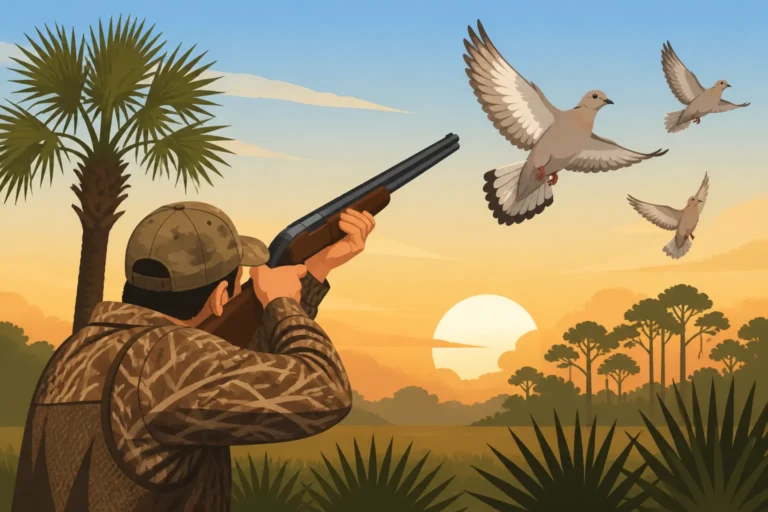
The key to anticipating the flush is to maintain a constant state of readiness. Your shotgun should be shouldered or held in a low-ready position, allowing for a swift swing. When ducks flush, they often explode vertically or dart quickly upstream or downstream. They're incredibly agile, so your shot needs to be instinctive. Don't try to track them for too long; instead, pick a target, swing through, and pull the trigger. Often, the first birds up are the ones you get the best shot at.
It’s also important to be aware of your backdrop. Always know what’s beyond your target to ensure a safe shot. You’ll frequently be in areas with dense trees, so knowing your shot will be clear and safe is paramount. This can be tricky in the winding creeks of the Lowcountry, such as those found while Hunting Lowcountry Swamp Deer, so constant vigilance is needed.
Shot Placement and Follow-Through
Wood ducks are relatively small and fast. A quick, decisive shot is usually the most effective. Aim for the bird's head and neck if possible, or lead the bird adequately if it's streaking away. Because they often flush vertically, a straight-up shot can be common. Practice mounting your shotgun quickly and swinging smoothly at home or on the range to build muscle memory.
After you take a shot, always follow through. Don't immediately drop your gun to see if the bird fell. Keep it mounted and be ready for a second shot, either at the same bird if it's still flying or at another bird from the flock that might have flushed moments later. Wood ducks often fly in small groups, and sometimes not all will flush at the exact same instant. If you drop a bird, immediately mark its landing spot mentally with a landmark – a distinct tree, a bend in the creek, a unique bush. This immediate marking is crucial for retrieval, especially in dense cover.
Beyond the Shot: Retrieval, Regulations, and Responsible Hunting
The hunt doesn't end when the shot is fired. Successfully retrieving your game, adhering to regulations, and practicing ethical hunting are all integral parts of the jump-shooting experience. In South Carolina's sometimes challenging terrain, these aspects require just as much thought and preparation as the shot itself.
Effective Retrieval Strategies in Thick Cover
Retrieving a downed wood duck from a thick, brushy creek bank or even from the water can be incredibly challenging. These environments are often tangles of submerged logs, dense briars, and mucky bottoms. This is where a good retriever dog truly shines. A well-trained Labrador or Chesapeake Bay Retriever can dramatically increase your recovery rate, as they can navigate the tough terrain and sniff out birds that would be impossible for a human to find.
If you don't hunt with a dog, you'll need to rely on your keen observation and persistence. As soon as a bird goes down, mark its location with multiple reference points. If it falls in the water, watch for current, as it can carry a bird surprisingly quickly. If it falls on land, scan for a distinct tree, a specific patch of brush, or anything that stands out. Wade directly to the spot if possible. If the bank is too thick, try to approach from a slightly different angle to get a better view. A long stick or a small gaff can be useful for reaching birds slightly out of arm's reach.
Be prepared for mud, thorns, and wet feet. It’s better to spend an extra 15-20 minutes meticulously searching for a downed bird than to give up too soon. Every effort to recover game is a testament to ethical hunting and respect for the animal.
Navigating South Carolina's Waterfowl Regulations
Hunting waterfowl in South Carolina comes with specific rules and regulations that every hunter must understand and follow. These are put in place to manage the population and ensure sustainable hunting opportunities for years to come.
First, you'll need the appropriate licenses. This includes a valid South Carolina hunting license, a South Carolina migratory bird permit (HIP certification), and a federal duck stamp. You can typically purchase these through the Go Outdoors SC website or app. Always carry proof of these licenses with you while hunting. For more details on these, refer to South Carolina HIP Certification for Bird Hunters and South Carolina Federal Duck Stamp Requirement.
Daily bag limits are strictly enforced. For wood ducks, the limit can vary, so always check the current South Carolina Department of Natural Resources (SCDNR) regulations for the specific season you are hunting. This information is typically found in the annual hunting guide or on the SCDNR website. The South Carolina Duck Daily Bag Limit outlines these crucial numbers. Additionally, be aware of shooting hours, which are typically from 30 minutes before sunrise to sunset.
Here’s a quick overview of key regulations:
| Regulation Aspect | Requirement |
|---|---|
| Hunting License | Valid South Carolina hunting license. |
| Migratory Bird Permit | HIP (Harvest Information Program) certification required for all migratory bird hunters. |
| Federal Duck Stamp | Required for all waterfowl hunters aged 16 and older. |
| Non-Toxic Shot | Mandatory for all waterfowl hunting throughout South Carolina. Steel shot is common, bismuth or tungsten alloys are alternatives. |
| Bag Limit | Specific daily and possession limits for wood ducks. Check current SCDNR regulations as these can change. |
| Shooting Hours | Generally 30 minutes before sunrise to sunset. Confirm exact times for your hunt date. |
| Firearms | Shotguns are limited to a maximum capacity of three shells (one in the chamber, two in the magazine). Plug must be installed to comply. |
| Baiting | Illegal to hunt waterfowl over bait. |
| Transportation | Birds must retain a feathered wing until they reach your home or a processing facility to allow for species identification. |
Familiarize yourself with South Carolina Waterfowl Zones and Seasons to ensure you are hunting within the legal dates for your specific location.
Embracing Safety and Conservation on Every Hunt
Jump-shooting, like all hunting, carries inherent risks. Prioritize safety above all else. Always treat your firearm as if it's loaded, keep the muzzle pointed in a safe direction, keep your finger off the trigger until ready to shoot, and be sure of your target and what's beyond it. In the dense, winding creek environments, knowing your shooting lane and background is especially important. Never shoot at low-flying birds if there's any chance a person or structure could be in the line of fire.
Conservation is the bedrock of hunting. By following regulations, practicing ethical retrieval, and understanding the ecology of the game you pursue, you contribute to healthy wildlife populations. Report any illegal activity to SCDNR officials. Consider joining local conservation groups that work to preserve and enhance wetland habitats crucial for wood ducks and other waterfowl. Every jump-shooting trip is not just an opportunity to harvest game, but also a chance to connect with nature, hone your skills, and uphold the proud tradition of responsible hunting in South Carolina.
Disclaimer
Please be aware that hunting regulations, license requirements, and season dates can change annually. Always consult the most current South Carolina Department of Natural Resources (SCDNR) regulations and guidelines before planning any hunting trip. This article is intended for informational purposes only and does not supersede official legal requirements.