Run-and-Gun on South Carolina Public Land
Hunting South Carolina's public lands can feel like a daunting task, especially when you're up against crowded access points, seemingly endless timber, and deer or turkeys that vanish as soon as pressure mounts. Many hunters get stuck in the same old spots, frustrated by ghost-town conditions or bumping game every time they try to move. This guide is all about embracing a different approach: the run-and-gun method, giving you the tools and mindset to effectively cover ground, adapt on the fly, and find success where others simply can't.
Why Run-and-Gun Works on South Carolina Public Land
South Carolina's public hunting lands, from the vast expanses of the National Forests to the numerous Wildlife Management Areas, offer incredible opportunities but also present unique challenges. The sheer size, coupled with varying habitat types and often significant hunting pressure, means that stationary hunting from a single stand can often leave you empty-handed. This is where a run-and-gun strategy truly shines, giving you the flexibility to react to conditions and locate game.
The Nature of Public Land Pressure
Let's be honest, public land in South Carolina can get hit hard. Opening day, especially for deer or turkey, often sees hunters pouring into easily accessible areas, setting up shop near truck roads or well-worn trails. This immediate influx of human activity pushes game deeper into thicker cover or forces them to alter their daily patterns. A mature buck isn't going to casually stroll through an area full of human scent and noise if he has other options. Similarly, a gobbler that's been called to ten times by midday isn't going to respond to static setups. The run-and-gun hunter understands this and doesn't commit to a single spot that might already be blown out. They are looking for the pockets of undisturbed habitat or the travel corridors that pressured game will use to avoid others.
The frustration of showing up to your "secret spot" only to find another truck parked there is all too real. Instead of throwing in the towel, the run-and-gun philosophy encourages you to pack light and keep moving. You're not relying on one isolated piece of information; you're constantly seeking fresh sign, listening for distant gobblers, or observing the subtle cues that tell you where game has moved. This dynamic approach means you're always adapting to the actual conditions on the ground, rather than hoping game conforms to your pre-planned, possibly outdated, strategy.
Covering Ground Effectively
South Carolina public lands are massive. Take a place like the Francis Marion National Forest, for example; it's huge, and trying to scout or hunt it effectively by sitting in one spot is like trying to drain the ocean with a teacup. The run-and-gun method inherently focuses on covering significant ground, but doing so intelligently. This isn't just about aimlessly wandering; it's about systematically working areas, often focusing on transition zones, pinch points, or specific habitat features that are likely to hold game.
By staying mobile, you increase the odds of encountering fresh sign, busting a hidden deer from its bed, or getting a hot gobbler to respond that might have been out of earshot from a stationary setup. This approach is particularly effective in diverse South Carolina landscapes, from the thick, swampy bottoms of the Lowcountry to the rolling ridges of the Upstate. The ability to quickly move from a pine plantation edge to a hardwood drain, or from a creek bottom to a higher ridge, allows you to thoroughly investigate different micro-habitats where deer or turkeys might be seeking food, cover, or escape routes. The key is to move deliberately, using your senses constantly, rather than just covering miles.
Adapting to Changing Conditions
One thing's for sure: South Carolina weather and wildlife behavior are rarely static. A cold front might push deer to different food sources, heavy rain could make specific areas impassable, or sudden hunting pressure could shift turkey roosts. A run-and-gun hunter thrives on this unpredictability. You're not locked into a pre-set plan; your plan is to have no fixed plan beyond a general area of interest.
Imagine you've started hunting a known food source on a WMA, but after an hour, you're seeing no fresh sign and hear other hunters moving nearby. Instead of sticking it out, a run-and-gun hunter might pull stakes and head to a thick bedding area, or check a different block of timber further afield. This rapid adaptation can be the difference between a successful hunt and a frustrating one. It requires confidence in your scouting, your gear, and your ability to make quick, informed decisions.
Essential Gear for the Mobile Hunter
Going light and staying agile is the core of run-and-gun hunting. This isn't the time to pack every gadget under the sun. Every item in your pack should serve a crucial purpose, allowing you to move quickly, quietly, and efficiently without sacrificing comfort or safety.
Lightweight Mobility Setup
Your primary concern is minimizing weight. For deer hunting, this often means foregoing a traditional ladder stand or heavy hang-on in favor of a saddle hunting system or a lightweight hang-on stand with minimal climbing sticks. A good saddle setup, for instance, allows for 360-degree shooting, excellent concealment, and incredibly efficient setups and take-downs. It's a game-changer for those who are constantly relocating. You might want to explore articles like "Portable Stands for Public Land Mobility" for more ideas. For turkey hunting, the mobility setup is even simpler: a comfortable turkey vest with a kickstand seat, good knee pads, and only essential calls.
Beyond your primary elevated position or seat, think about your clothing. Lightweight layering is paramount, especially given South Carolina's often warm and humid conditions, even into the fall. You'll be working up a sweat as you move, so breathable, moisture-wicking fabrics are your friends. Consider "Lightweight Layering for Warm-Weather Sits" to optimize your apparel. Good quality, lightweight boots are also critical – something supportive for varied terrain but not overly bulky. And don't forget snake boots, especially in the Lowcountry swamps, as you'll be traversing ground others might avoid.
Navigation and Communication Tools
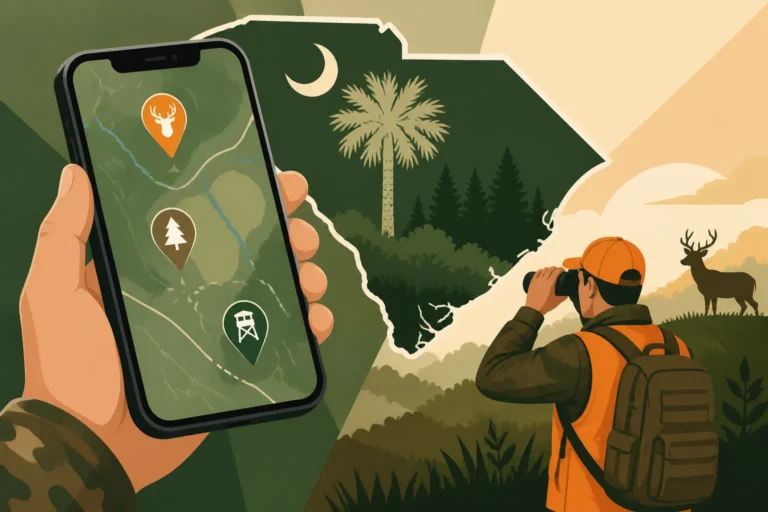
Getting lost on vast public land is a real concern, especially when you're pushing into new territory. A reliable GPS unit or a robust mapping app on your phone is non-negotiable. Apps like GoHunt are invaluable for pre-scouting, marking waypoints, and navigating in the field. They allow you to drop pins on fresh sign, potential stand sites, or even game trails you discover while on the move. Make sure you download offline maps, as cell service is often nonexistent in remote WMA or National Forest tracts. For more insights on digital tools, check out "GPS Units Versus Phone Apps."
Beyond navigation, consider how you'll communicate. A fully charged phone is essential, but a small, reliable two-way radio can be a lifesaver if you're hunting with a buddy, especially if you get separated or need to coordinate a deer drive (though deer drives might be less common for a solo run-and-gun hunter). Always let someone know your general hunting area and expected return time. Finally, a quality headlamp with fresh batteries is a must, not just for walking in and out in the dark, but also for blood trailing a deer after a successful shot.
Minimizing Scent and Noise
When you're constantly on the move, you're constantly leaving a scent trail. While it's impossible to be 100% scent-free, taking steps to minimize your human odor is crucial. This includes using scent-eliminating sprays, washing clothes in scent-free detergent, and storing them in airtight containers. More importantly, play the wind aggressively. As a run-and-gun hunter, you have the flexibility to reposition if the wind shifts, unlike a stationary hunter. This constant awareness of wind direction is your best defense against a whitetail's nose.
Noise is the other big betrayer. Every step, every brush against a branch, every zipper can alert game. Choose clothing that is quiet, and make sure your gear doesn't clank or rattle as you walk. Even subtle sounds, like a metallic buckle hitting a stand post, can carry far in the quiet woods. Practice setting up your saddle or stand silently at home, so that in the field, it becomes second nature. This mindfulness about noise extends to how you move through the woods – slow, deliberate steps, carefully picking your footing, avoiding dry leaves or crunchy sticks whenever possible.
Scouting and Strategy for Success
You can't just wander aimlessly and expect to find game. A successful run-and-gun approach starts long before you ever step foot in the woods, with strategic scouting and a deep understanding of South Carolina's diverse habitats. This preparation helps you narrow down vast public lands to high-potential areas, allowing your mobility to be truly effective.
Pre-Season Digital Reconnaissance
Before you ever put boots on the ground, spend significant time studying maps. Apps like GoHunt, and resources such as the Go Outdoors SC map tool, provide invaluable insights. Look for key features:
- Water sources: Creeks, swamps, beaver ponds. These are vital for all game and often create natural travel corridors or pinch points. Consider "Hunting a Funnel Between Two Swamps" as a prime example.
- Topography: Ridges, draws, saddles, benches. Especially in the Upstate, these dictate how deer and turkeys move. An article on "Reading a Ridge for Upstate Deer" can be incredibly helpful.
- Habitat changes: Transitions from pine plantations to hardwoods, clear-cuts, thickets, logging roads, old fields, power line cuts. These edges are natural magnets for game.
- Access points and pressure: Note where roads and trails are, and look for more remote sections that might see less human activity. You're trying to find "Finding Ground Others Walk Past" that others overlook.
Mark potential entry and exit routes, likely bedding areas, and historical feeding zones. This digital homework helps you formulate a game plan, even if that plan is simply a series of potential areas to investigate with your run-and-gun mobility.
On-the-Ground Speed Scouting
Once you've identified promising areas digitally, it's time for speed scouting. This is not about spending hours meticulously gridding a small area; it's about covering a lot of ground quickly, looking for fresh, actionable sign. This could be a few weeks before the season, or even the day before a hunt if you're exploring a new block of public land. Focus on recent activity:
- Deer: Fresh tracks, droppings, rubs, scrapes (especially as the rut approaches). Look for trails that connect different habitat types, indicating regular travel.
- Turkey: Roost trees (look for droppings and feathers underneath), scratching in leaves, strut zones, and fresh tracks.
Pay close attention to subtle details. Is the browse line heavy? Are there acorns dropping? Is there a noticeable shift in vegetation from one side of a creek to another? This rapid assessment allows you to quickly decide if an area holds current promise or if you should move on to the next digitally identified hotspot. Your backpack should always be ready for "Packs for a Sumter Forest Day Hunt" to facilitate this mobile scouting.
Reading the Landscape for Deer and Turkey
The true art of run-and-gun lies in your ability to read the landscape in real-time. This isn't just about finding sign, but understanding why that sign is there and what it tells you about animal movement.
- Thermals and Wind: On cooler mornings, thermals will pull your scent downhill. As the day warms, they reverse and rise. Always consider this when moving and setting up. Similarly, constantly monitor the wind direction, using a wind checker or even a handful of dust. Deer will almost always try to use the wind to their advantage, circling downwind of perceived threats.
- Food Sources: What's currently available? Are acorns dropping? Is there fresh green browse? In the Lowcountry, deer might key into specific swamp plants or even agricultural field edges.
- Cover and Escape Routes: Where will deer or turkeys go if pressured? Thick clear-cuts, deep swamps, dense pine thickets, or steep draws offer sanctuary. Your goal is to intercept them as they move between these areas and their feeding grounds.
This constant assessment allows you to adapt your movements. If you bump a deer, instead of giving up, think about where it's likely to go and if you can circle around to get ahead of it, or if it has alerted every other animal in a quarter-mile radius. It's a continuous chess match against smart, pressured game.
Here's a quick overview of how a mobile setup compares to a stationary setup:
| Feature | Run-and-Gun / Mobile Setup | Stationary / Fixed Stand Setup |
|---|---|---|
| Gear Weight | Very light (saddle, lightweight sticks, minimal pack) | Heavy (ladder stands, large hang-ons, gear hoist) |
| Setup Time | Fast (10-20 minutes, silent execution) | Longer (30-60+ minutes, often requires pre-setup) |
| Flexibility | High (can move multiple times per hunt) | Low (committed to one location for the entire hunt) |
| Scouting Focus | Broad, speed scouting, digital reconnaissance | Intensive, micro-scouting a small, specific area |
| Pressure Adapt. | Excellent (can relocate away from pressure) | Poor (stuck if spot is pressured or game shifts) |
| Visibility | 360 degrees (saddle), limited in ground blinds | Often limited by stand location, may have blind spots |
| Ideal Terrain | Diverse, vast public lands, changing conditions | Consistent game patterns, isolated private land |
Executing Your Run-and-Gun Hunt
The real excitement and challenge of run-and-gun hunting comes in the execution. It's about being fluid, making smart decisions on the fly, and trusting your instincts as you interact with the wild environment of South Carolina public land.
Setting Up Quickly and Quietly
Once you've located fresh sign, heard a gobble, or spotted movement, the clock starts ticking. Your ability to set up quickly and, more importantly, quietly, is paramount. For deer, this means selecting a tree, ascending with your climbing sticks and saddle, and getting settled with minimal fuss. Every branch you break, every metal-on-metal clang, increases the chances of spooking game that might be just out of sight. Practice this in your backyard until it's second nature. The goal is to be in position and ready to hunt within minutes of deciding on a spot.
For turkey hunting, this might involve quickly assessing the terrain, finding a suitable calling position with good visibility and a clear backdrop, and getting your calls and gun ready. Sometimes it's as simple as kneeling behind a blowdown or a thick palmetto clump. You might only have a few minutes before that gobbler comes into range, or before a deer feeding in a thicket makes its way out. The "run" part of run-and-gun is about getting to the right place; the "gun" part is about being prepared to capitalize instantly. This efficiency is why experienced run-and-gunners prioritize minimal, high-quality gear.
When to Move and When to Hold
This is arguably the trickiest part of the run-and-gun strategy and comes with experience. Knowing when to pack up and relocate versus when to patiently hold your position is a constant internal debate.
- Move when:
- You've thoroughly worked an area with no fresh sign or activity.
- You hear other hunters or witness increased pressure in your vicinity.
- The wind shifts unfavorably and you can't ethically reposition.
- You hear or see game activity that's clearly moving away from you, and you believe you can intercept it.
- For turkey, if a gobbler goes silent or clearly moves off to another part of the woods after a few calling sequences.
- Hold when:
- You've just heard or seen activity and believe game is working its way towards you.
- You're in a prime pinch point or travel corridor where patience is likely to pay off.
- For turkey, if a gobbler is consistently answering your calls and getting closer, even if slowly. Sometimes, less is more when they are committed.
It's a delicate balance. Too much movement, and you risk bumping more game or leaving too much scent. Too little movement, and you might miss opportunities or sit in a dead zone. Trust your gut and the information the woods are giving you. This is also where good "Scouting South Carolina Public Land Before Season" truly pays dividends, as it gives you confidence in your initial decision-making.
Post-Shot Recovery in Dynamic Terrain
Even with the best preparation, recovering an animal on South Carolina's public land can be challenging, especially in the thick cover often found in WMAs or National Forests. If you've just made a good shot, your run-and-gun mobility takes a backseat to patience.
- Give it time: For deer, unless you saw it drop, give it at least 30 minutes for a good lung shot, and several hours for a gut shot. This waiting period is critical to prevent pushing a wounded animal further into dense cover.
- Mark the spot: Mark your shot location and the animal's last known direction of travel with physical markers (toilet paper, flagging tape) or your GPS.
- Blood trailing: Proceed slowly and methodically, looking for blood, broken twigs, or disturbed leaves. If blood becomes scarce, expand your search in circles.
- Know your limits: If darkness falls or you lose the trail, back out and return in the morning with fresh eyes and possibly more help. A good headlamp is essential for this. Knowing the rules for "Blood Trailing After Dark in South Carolina" is also crucial, as regulations vary.
The run-and-gun approach often means you're in less accessible areas, so be prepared for a difficult extraction. A lightweight game cart can be invaluable for deer, but in very swampy or steep terrain, you might need to bone out the animal and pack it out in stages. Always ensure you have a plan for meat care, especially in South Carolina's warmer weather.
Disclaimer
Hunting is an inherently dangerous activity. Always prioritize safety, understand and follow all South Carolina Department of Natural Resources (SCDNR) regulations, and ensure you have the proper licenses and permits before heading into the field. This guide offers general advice and should not replace professional instruction or local regulations.