Setting Up Against a Big Oak
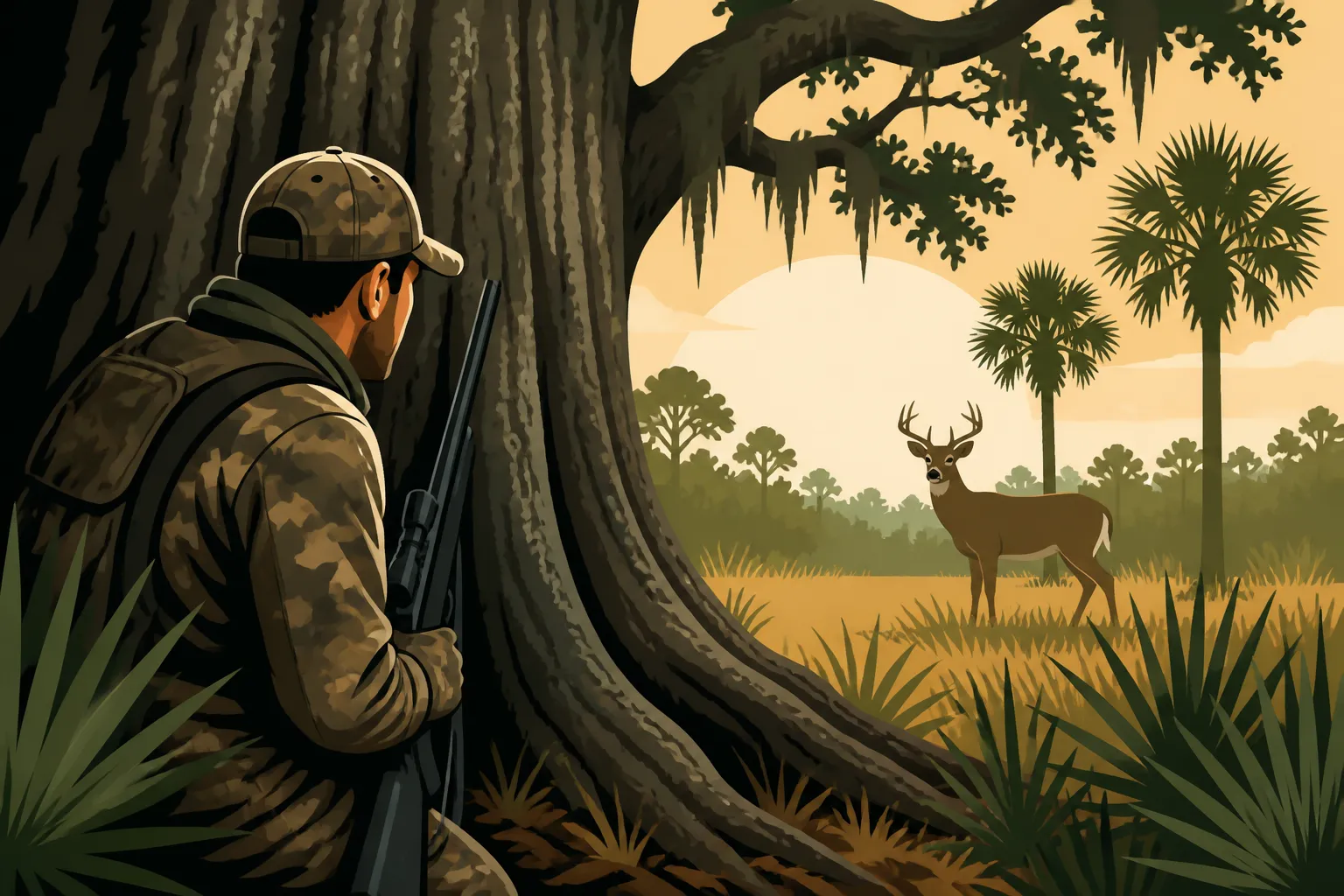
There’s a unique thrill that comes with scouting timber in South Carolina and spotting that absolute monarch of the forest – a sprawling, ancient oak, heavy with acorns, standing sentinel over a promising patch of woods. It just screams "deer haven," doesn't it? But then the reality sets in: how do you actually hunt a tree that impressive, especially when it might be too big for your stand, or everyone else has the same idea? This guide is all about turning that frustration into a fantastic hunting opportunity, detailing exactly how to scout, set up, and time your hunts around these magnificent, game-rich big oaks.
Why the Big Oak is Always a Winner (and a Challenge)
You see that massive oak, its branches reaching wide, its trunk thicker than you can wrap your arms around, and your mind immediately goes to big bucks. And you’re not wrong. These trees are magnets for game, but their very appeal also brings unique challenges. Understanding both sides of this coin is your first step to success.
The Draw of the Mighty Oak Food and Cover
For a deer, a big oak isn't just a tree; it's a grocery store, a refuge, and often, a landmark. Acorns are an absolute powerhouse of nutrition for South Carolina deer, packed with fats and carbohydrates that bucks and does need to put on weight for the rut and endure the colder months. Different species of oaks drop their acorns at different times, creating a buffet that can last for months. White oaks, for example, tend to drop earlier, usually in late August through September, providing a critical early season food source. Red oaks often follow, dropping their acorns later into fall and even winter, making them a consistent draw when other food sources might be scarce. Live oaks, common in our coastal plain, can even hold acorns well into winter and spring.
But it's not just the food. The sheer size and dense canopy of these mature oaks often provide excellent overhead cover, making deer feel secure. In areas with less dense understory, a massive oak can offer a crucial visual break, allowing deer to move with confidence. This combination of abundant, preferred food and reliable cover makes them irresistible, not just to deer, but also to turkeys, squirrels, and even bears in the Upstate.
The Downsides of a Desirable Location Pressure and Visibility
Here’s the rub, though: if you’ve spotted that prime oak, chances are other hunters have too, or they will. High-traffic areas around highly desirable oaks, especially on public land like the Francis Marion National Forest or sections of the Sumter National Forest, can quickly become pressured. Deer, being the intelligent creatures they are, will adapt. They might become primarily nocturnal, feeding under the cover of darkness, or approach these areas with extreme caution. This means your setup needs to be even more meticulous to avoid alerting them.
Another challenge is the tree itself. That massive trunk that looks so appealing from a distance can be a nightmare to climb or attach a traditional hang-on stand to. The sheer girth can make your standard climbing sticks or stand straps too short, forcing you to get creative or look for alternative setup options. Furthermore, depending on the oak's location, the canopy or surrounding undergrowth might be too dense, limiting your shooting lanes, or conversely, too open, leaving you exposed and easily spotted by approaching game. Finding that sweet spot with adequate cover for concealment but enough visibility for a clean shot is a delicate balance.
Scouting and Selection: Beyond Just "Big Oak"
Just because a tree is a big oak doesn't automatically mean it's the right big oak to hunt. Effective scouting goes far beyond simply identifying a mast-producing tree. You need to become a detective, piecing together the story of deer movement around that particular oak, understanding how they use the terrain, and how the invisible forces of wind and thermals will affect your hunt.
Reading the Ground Underneath Sign and Scrapes
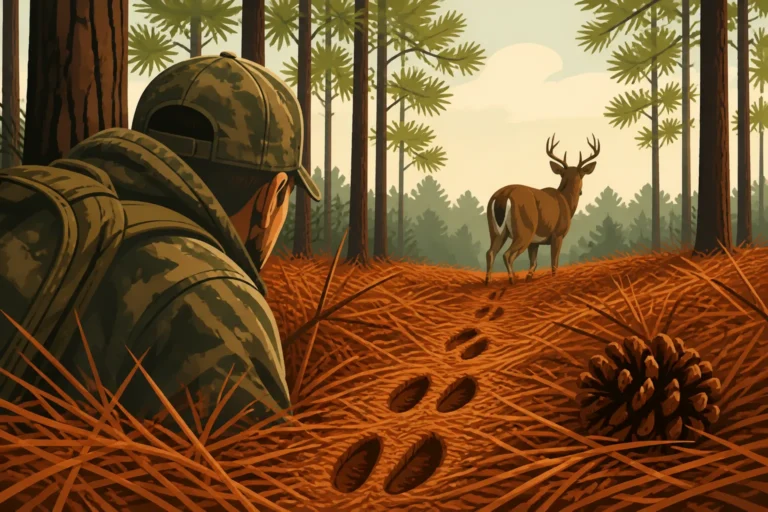
Once you've located a promising oak, your real work begins on the ground. You need to confirm that deer are actively using this tree as a food source. Start by looking for disturbed leaves and fresh tracks in the soil beneath the canopy. Are there areas where the leaves have been pawed away, revealing the rich earth below, indicating deer digging for fallen acorns? Fresh tracks are key; look for crisp edges, not ones that are washed out by rain or blurred by time.
Deer droppings can also tell you a lot. Small, shiny, pellet-like droppings indicate fresh activity, especially if they're soft. Older droppings will be dry and brittle. If you find a variety of sizes, it suggests multiple deer are visiting, including fawns and mature animals. Don't just focus directly under the oak, though. Expand your search to radiating trails leading to and from the tree. Are there well-worn deer trails, or faint, intermittent paths? A distinct trail leading to a known bedding area or a water source is a goldmine. You might even find a scrape line along a logging road nearby, indicating bucks are cruising the area and checking for does. A fresh scrape, often identifiable by the strong smell of urine and freshly disturbed earth, means a buck is actively marking his territory.
Considering the Surrounding Habitat Travel Corridors and Bedding
No oak stands in isolation. Its value is often amplified by its proximity to other critical deer habitat elements. Think about the path deer will take to get to that oak. Are there natural funnels, such as narrow strips of timber between two open fields, or a saddle in an Upstate ridge line that concentrates deer movement? Creek bottoms often serve as excellent travel corridors, providing cover and water, making an oak situated along one particularly appealing.
Consider the prevailing wind direction and how it interacts with the topography. Deer almost always approach a food source from downwind, circling to catch any scent ahead of them before committing. Understanding this behavior will guide your stand placement. Also, scout for nearby bedding areas. Thick pine plantations, dense swamps, or heavy cover on hillsides can serve as daytime bedding locations. An oak that is within a reasonable distance of a secure bedding area, connected by a concealed travel route, is far more likely to see daytime deer activity. Tools like GoHunt can be invaluable here, allowing you to study satellite imagery and topographic maps to identify these key habitat features and potential travel routes before you even step foot in the woods. This helps you narrow down your search and maximize your precious scouting time.
Wind and Thermals Your Invisible Enemy or Ally
You simply cannot overstate the importance of wind direction and thermals when hunting an oak, especially in South Carolina's varied terrain. Your scent is your biggest enemy. Deer can smell you from hundreds of yards away, and if they catch a whiff, your hunt is over before it begins. Always, and I mean always, try to hunt with the wind in your favor, blowing your scent away from where you expect deer to approach or bed.
Thermals, which are rising or falling air currents, play a significant role, particularly in the mountainous regions of the Upstate or along the intricate edges of a Lowcountry swamp. In the morning, as the sun warms the earth, thermals tend to rise, carrying your scent upwards. This can be great for a ridge-top stand but terrible if you're set up low. In the evening, as the air cools, thermals reverse and fall, pushing your scent downwards into creek bottoms and ravines. An oak positioned on an Upstate ridge, for example, might be best hunted in the morning as your scent rises, while an evening hunt might be better closer to the bottom, allowing your scent to be carried downhill away from incoming deer. This nuanced understanding of wind and thermals is what separates a good hunter from a consistently successful one.
Tactical Setups for Maximum Success
Once you've identified that promising big oak and thoroughly scouted the area, it's time to consider your setup. The size and location of these trees often demand creative solutions beyond just strapping on a regular stand. You need to think about stand stability, concealment, and your shot opportunities.
Tree Stand Strategies for Big Trunks
Hunting from a treestand near a big oak can provide a distinct advantage by getting your scent off the ground and offering a wider view. However, those massive trunks can present challenges. Traditional climbing stands might not wrap around them, and even hang-on stands can struggle with strap length. This is where options like ladder stands shine; they're stable, don't require wrapping around the trunk, and can be relatively easy to set up. If you're committed to a hang-on, invest in longer straps or additional strapping solutions specifically designed for larger diameter trees. Remember to always use a full-body safety harness and a lifeline from the moment your feet leave the ground until you're back down. Safety is non-negotiable.
For ultimate flexibility and silent maneuvering around a large, irregular trunk, consider Saddle Hunting in South Carolina Hardwoods. Saddle hunting allows you to hug the tree, using its bulk for concealment, and gives you a 360-degree shooting range that traditional stands often restrict. Whatever your choice, remember that proper Treestand Setups in Francis Marion National Forest or Hanging a Stand on a Sumter Forest Ridge require not just finding the right tree but also clearing shooting lanes before the season. This means strategically trimming small branches that might deflect an arrow or obscure a rifle shot. You want clear paths to vital areas where deer are most likely to appear, remembering that even a small twig can ruin a shot.
Ground Blind Options When a Stand Won't Work
Sometimes, a treestand just isn't feasible or desirable around a particular big oak. Maybe there isn't a suitable limb for a hang-on, the trunk is too large for your climber, or perhaps you prefer hunting closer to the ground. This is where a ground blind becomes an excellent alternative. Modern pop-up ground blinds offer exceptional concealment, breaking up your silhouette and containing much of your scent. They're also a comfortable option for long sits, especially during cooler weather or if you’re hunting with a youth hunter during Hunting the South Carolina Youth Deer Weekend.
The key to success with a ground blind is placement and brushing in. Don't just plop it down in the open. Position your blind against a natural backdrop, like a thicket, a fallen log, or a line of pine saplings, to further break up its outline. Then, meticulously Brushing In a Blind on a Field Edge is crucial. Use natural vegetation from the immediate area – branches, palmetto fronds, pine boughs, whatever blends in – to make the blind disappear into its surroundings. Set it up several days or even weeks before you plan to hunt, if possible, to allow deer to get accustomed to its presence. Always ensure your entry and exit routes are concealed and won't alert deer approaching the oak. For more insights on this approach, check out Using a Ground Blind on South Carolina Public Land.
Camouflage and Concealment Breaking Up Your Outline
Whether you're 20 feet up in a treestand or tucked into a ground blind, your ability to blend in is paramount. South Carolina's diverse habitats, from coastal maritime forests to Upstate hardwood ridges, mean you need versatile camouflage. While a generic leafy pattern is often good, think about matching the dominant colors and textures of your specific hunting area. In early season, with lush green foliage, a greener pattern works. As fall progresses and leaves turn brown and drop, more muted, earthy tones are better.
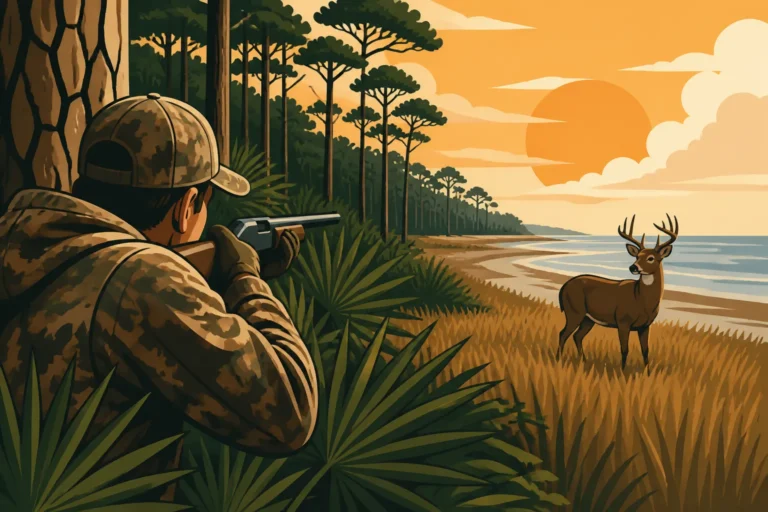
The goal isn't just to match the background, but to break up your human outline. Look for camo patterns with irregular shapes and depth. Even more important than the pattern is stillness. Deer are masters of detecting movement. A hunter in perfect camo who fidgets constantly will be spotted far quicker than someone in less ideal gear who sits absolutely motionless. Practice drawing your bow or raising your rifle slowly and silently. Pay attention to your face and hands – these are often exposed and can reflect light or stand out against the natural backdrop. A face mask, gloves, and even dark eyewear can make a significant difference in your overall concealment.
Timing is Everything: When to Hunt That Oak
You've done the hard work of scouting and setting up; now it's about knowing when to be in that stand or blind. Hunting a big oak effectively isn't just about being there; it's about being there at the right time, when deer are most likely to be active and vulnerable.
The Acorn Drop A Race Against Time
The timing of the acorn drop is perhaps the single most critical factor when hunting a big oak. It’s a race against time and other hungry critters. As soon as acorns start falling, deer will shift their feeding patterns to capitalize on this abundant food source. White oaks, dropping earlier, can be a hotspot in late August and September, drawing deer from all over. Later-dropping red oaks or live oaks can hold deer well into winter.
Your scouting should involve not just looking for sign but actively monitoring the oak. Are acorns beginning to fall? Are squirrels, turkeys, and other forest critters already feasting? Once you confirm the drop is on, that's your window of opportunity. However, remember that acorns won't last forever. Deer, hogs, and squirrels will quickly consume them. This means you might only have a few weeks, or even days, of peak activity under a specific tree. If you're Hunting After a Poor Acorn Year, deer patterns will be different, as they'll likely disperse to other food sources like persimmons, muscadines, or agricultural fields. This underscores the need for constant scouting and adaptability in your approach.
Peak Rut Activity and Persistent Food Sources
Even when the primary acorn drop has slowed or ended, a big oak can still be a productive place to hunt, especially during the rut. As bucks begin chasing does, their focus shifts from pure feeding to breeding. However, does still need to eat, and they will continue to visit reliable food sources. This means that a big oak, particularly one with a fresh Scrape Lines Along a Logging Road nearby, can become a cruising highway for rutting bucks checking for receptive does.
During the peak of Hunting the Rut in the Coastal Zones or Hunting the Rut in the Upstate Zone, bucks will cover a lot of ground, often retracing their steps through traditional feeding areas. An oak that has been a consistent food source for does throughout the early season will likely continue to draw them, making it an ideal ambush point for a buck on the prowl. Even in the late season, after most acorns are gone, some oaks, particularly red oaks, may still hold a few remaining acorns, providing vital Late-Season Food Sources for South Carolina Whitetails when other options are scarce. This can be an excellent time to catch a wary buck trying to put on weight after the rigors of the rut. Always consider the full calendar when evaluating the potential of your big oak.
| Setup Type | Pros for Big Oaks | Cons for Big Oaks | Ideal Scenario |
|---|---|---|---|
| Hang-on Stand | Good for concealment (using trunk), flexible placement for shot angles. | May require extra-long straps for large trunks, requires climbing sticks. | Oak has good limbs, surrounding cover, and clear shooting lanes. |
| Ladder Stand | Very stable, easy access, doesn't rely on trunk girth for attachment. | Less mobile, takes more time to set up, can be bulky to transport. | Longer term setup, lower hunting pressure area, good visibility. |
| Saddle Hunt | Excellent concealment (hugs tree), 360-degree shooting, highly mobile. | Learning curve, requires specific gear, can be uncomfortable for long sits. | Irregularly shaped oak, high pressure, need flexibility and stealth. |
| Ground Blind | Excellent concealment, warm/dry, good for large groups/youth, contains scent. | Limited visibility, requires diligent brushing-in, can spook wary deer if new. | No suitable stand tree, bad wind direction, high cover areas near oak. |
Disclaimer
Hunting is an inherently dangerous activity. Always prioritize safety, understand and follow all South Carolina Department of Natural Resources (SCDNR) regulations, and ensure you have the necessary licenses and permits. The information provided here is for educational purposes and should not replace proper hunter education or professional guidance. Hunting conditions and regulations can change, so always consult the latest SCDNR guidelines before heading afield.