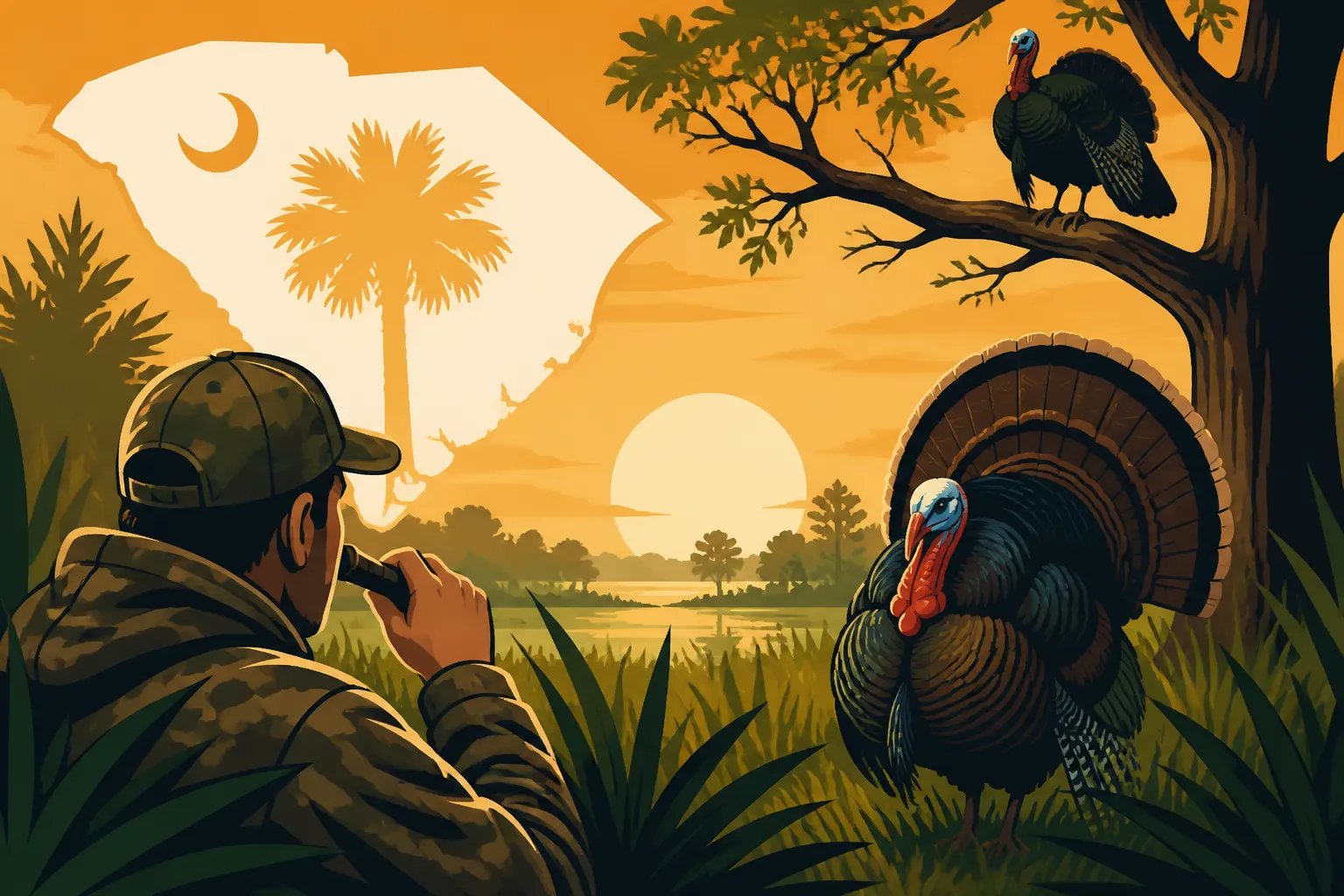
Calling a South Carolina Gobbler Off the Roost
There’s almost nothing more frustrating in spring turkey hunting than hearing a gobbler absolutely hammer it on the roost, pouring out enthusiasm from his limb, only for him to clam up the moment he flies down and completely ignore your best calling efforts. We've all been there, scratching our heads as the woods go silent, wondering what went wrong. This guide aims to break down the nuances of calling a South Carolina gobbler off the roost, covering everything from strategic setup to subtle calling techniques that can make all the difference between a silent walk back to the truck and a successful morning in the spring woods.
Understanding the Roosting Behavior of South Carolina Gobblers
To consistently call a gobbler off the roost, you first need to understand why he’s up there and what he’s likely thinking. These birds aren't just sleeping; they're making tactical decisions about their safety and their morning routine even before their eyes open.
Why Gobblers Roost Where They Do
Gobblers don't just pick any old tree. Their choice of roost often comes down to a few key factors: safety, visibility, and proximity to where they want to be first thing in the morning. In the South Carolina Lowcountry, you might find them in tall pines overlooking a cypress swamp, giving them a high vantage point over potential predators like coyotes or bobcats. Upstate, they might favor a prominent oak on a ridge line, offering a clear view down into a creek bottom or an open field. They want to be able to see danger approaching from a distance, and being high off the ground provides that security. Furthermore, a gobbler will often choose a roost tree close to a preferred strutting area or feeding zone, making his morning commute as efficient as possible. If you've been doing your scouting, especially using a tool like the GoHunt app to mark potential roosting spots, you'll start to notice patterns in the types of trees and terrain features they prefer. These consistent choices are a huge clue for future hunts.
The Dynamics of the Pre-Dawn Woods
As the first hint of light paints the eastern sky, the woods begin to stir. For a turkey hunter, this is prime time. Sound carries incredibly well in the still, cool air before dawn. You’ll hear barred owls, coyotes, and often other birds, all of which can sometimes trigger a shock gobble from a roosted bird. This period is critical for pinpointing his exact location if you haven’t already. Gobblers will typically begin with soft "tree yelps" – quiet, contented calls from the limb – before escalating into full-blown gobbling as the light strengthens. They're communicating their presence, trying to attract hens, and establishing their dominance. Understanding this progression helps you time your calls. You don't want to overcall too early, but you also don't want to miss the opportunity to get his attention before he's focused solely on a real hen flying down next to him. Pay close attention to these pre-dawn vocalizations; they're essentially giving you a roadmap of their morning intentions.
The Art of the Morning Roost Setup
Once you’ve located a gobbler on the roost, your next move is arguably the most crucial step in the entire hunt. A poor setup can doom your chances before you even make a sound.
Approaching the Roost Quietly and Strategically
Stealth is paramount. Imagine trying to sneak into a deer stand in the dark; now imagine that deer can hear you from 500 yards away and is perched high in a tree. That’s essentially what you’re up against. Your approach needs to be as quiet as possible, utilizing terrain features and natural cover to mask your movement. Avoid crunching leaves or breaking twigs. Many seasoned hunters will use the cover of darkness and natural sound breaks, like a passing train or even distant highway noise, to make their final approach. Aim to get within 100 to 150 yards of the roost tree, if possible, without crossing any obvious open areas or exposing yourself to his potential line of sight. Wind direction is also crucial; you don't want your scent wafting directly towards him or any other turkeys in the area. Getting too close can spook him, causing him to fly down in the opposite direction or even sail off a limb and completely out of the area. On the other hand, being too far away might make your calls less effective, especially if other gobblers or real hens are closer. Remember, the goal is to make him think you're a hen heading towards him, not a threat. For public land hunts, especially on heavily pressured areas like those found in the Sumter National Forest, it’s even more vital to be extra cautious, as these birds are keenly aware of human presence. You can learn more about general public land turkey rules by checking out our guide on South Carolina WMA Turkey Rules.
Optimal Calling Positions
Your calling position isn't just about comfort; it's about concealment and visibility. You need to set up with adequate back cover, like a wide tree trunk or a dense brush pile, to break up your silhouette. This is especially important for Setting Up Against a Big Oak or any other large tree where you can melt into the background. Having a clear view in the direction you expect the gobbler to come from is essential for spotting him as he approaches and making the shot. Also, consider your shooting lanes. Can you swing your gun effectively if he comes in from an unexpected angle? Avoid setting up in a spot where you have to move significantly to shoot, as any movement will likely bust you. Think about the sun's position – you want the sun at your back, if possible, to illuminate the approaching gobbler and keep him looking into the glare. Having a good understanding of the land, perhaps by using mapping features on GoHunt, can help you scout and pre-select these optimal positions before you even step foot in the woods.
Decoy Strategies for Roosted Birds
Decoys can be a game-changer, but they need to be deployed thoughtfully, especially for a roosted bird. For early morning setups, a single hen decoy, or even a pair (one standing, one feeding), placed about 20-30 yards from your position and in a visible spot from the roost, can be incredibly effective. The visual cue of a hen on the ground can be just enough to entice a gobbler to fly down in her direction. If you're targeting a dominant gobbler, a jake or even a full strut tom decoy might work, but be wary of using these if you know there are other, smaller gobblers in the area, as it could intimidate them. Always ensure your decoys are placed where they can be seen by the gobbler on the limb but also where they won't interfere with your shot. Don't set them so close that the gobbler looks past your position to get to the decoy. Learn more about effective Decoy Placement for Pressured South Carolina Birds to maximize your success.
The Initial Roost Call Sequence
Once you're set up, the real interaction begins. Your calling sequence for a roosted bird is a delicate dance of enticing and teasing, never overplaying your hand.
Soft Tree Yelps and Fly-Down Cackles
When it’s still fairly dark, before actual fly-down time, your initial calls should be soft and unassuming. Start with a few subtle tree yelps – quiet, sleepy sounding clucks and purrs, perhaps an occasional soft yelp. You’re trying to sound like a hen waking up on the roost. Wait for a response. If he gobbles, you know you’ve got his attention. Don’t gobble back. Let him do the talking. As the light gets stronger and he starts to get restless, you can gradually increase the volume and enthusiasm of your yelps. Once you hear him stretching his wings or see him getting ready to pitch down, that’s your cue for a fly-down cackle. This call mimics a hen flying off the roost, usually a series of rapid, excited yelps and cackles. The goal is to make him believe a hen just flew down right into your setup, and he should follow suit. Mastering these nuances can be the difference between him landing 100 yards away and him pitching down practically in your lap. For more insights on general turkey calling, consider our resource on Turkey Calls Worth Carrying in South Carolina.
Reading the Gobbler's Response
Every gobbler is a unique individual, and reading his response is key to knowing what to do next. Is he gobbling enthusiastically every time you call, or is he hesitant, only responding to loud calls? Is he gobbling on the limb but not flying down? If he's "cutting" you off with his gobble, he's eager and possibly already looking for you. If he’s only gobbling when an owl hoots or a crow caws, he might be more stubborn. Listen closely to the direction of his gobble. Is it getting louder, indicating he's turning your way, or is it fading, meaning he's looking the other direction or even moving away? Sometimes, he might "soft gobble" – a much quieter, almost muffled gobble – which indicates he's very close or suspicious. This is where patience is key; don't make a move or call loudly if you hear this. Being able to interpret these subtle cues allows you to adjust your calling strategy on the fly.
Patience and Knowing When to Be Quiet
One of the hardest lessons to learn in turkey hunting is when to keep quiet. It's so tempting to call incessantly, especially when a gobbler is hammering. But often, less is more. Once you’ve established contact and he’s gobbling, let him work. He knows you’re there. If you sound too eager or too aggressive, he might get suspicious or assume you’ll just come to him. The goal is to make him want to come find you. If he’s gobbling furiously, give him some silence after he flies down. Let the anticipation build. He might be expecting you to come to him, and by staying silent, you force him to make the next move. If he's flying down and moving your way, the last thing you want to do is make a loud, aggressive call that might cause him to pinpoint your exact location or get spooked. This patience is especially critical during the South Carolina Spring Turkey Season Rules when birds can be pressured.
Troubleshooting and Adaptability
Sometimes, despite your best efforts, a gobbler just won't cooperate. That's when you need to switch gears and adapt.
When He Hangs Up
The "hang-up" is a classic turkey hunting frustration. You’ve got him gobbling, he flies down, and he gets to about 80-100 yards, then stops. He just stands there, gobbling, waiting for you to come to him. This often happens when he's with real hens, or if he's seen something suspicious. One tactic is to "go silent." Stop calling entirely. Make him wonder where that eager hen went. Sometimes, that curiosity is enough to pull him those last few yards. Another strategy is to try a "walk-away" call – make some soft yelps and clucks while gently raking the leaves, as if a hen is slowly moving away. This can sometimes make him nervous enough to commit. If you have a decoy, sometimes a jake or gobbler decoy that he feels he needs to confront can push him over the edge. It's a gamble, but sometimes you have to break the stalemate. On your GoHunt app, you can mark where these hang-up spots are, which might indicate a hidden fence line, creek, or thicker brush that he's hesitant to cross.
The Silent Fly-Down
Perhaps even more maddening is the gobbler that gobbles a few times on the roost, then completely disappears. You hear him pitch down, but he never makes another sound and you can't tell where he went. In this scenario, he's likely with a group of hens or he's just a wary old bird. Your best bet here is to wait a good 15-20 minutes after fly-down. Don't move, don't call. Let him sort himself out. Often, if he's with hens, they will eventually move off, and he might come looking. After that waiting period, if you still haven't heard anything, start with some soft, inquisitive clucks and yelps. If no response, you might have to resort to "run-and-gun" tactics, which involves moving a few hundred yards, making a series of calls, and then waiting, hoping to strike a bird. This can be especially effective on larger tracts of public land. We cover more active hunting strategies in our article, Run-and-Gun Turkey Tactics on Public Land.
Moving on a Stubborn Bird
Generally, you don't want to move on a bird that's actively gobbling and knows where you are. But sometimes, a gobbler is truly hung up, or he's moved off in a direction you didn't anticipate. If you've tried everything and he's not budging after a good 30-45 minutes on the ground, a carefully executed repositioning might be your only choice. Use terrain features, such as a ridge line or a thick band of trees, to cover your movement. If possible, circle around him to try and get ahead of his likely travel path, or to cut off his escape route. Only move if you can do so completely silently and out of his line of sight. This is a high-risk, high-reward maneuver, but sometimes it's necessary to salvage a hunt. If you notice a pattern of gobblers going quiet after May, you might want to read about When South Carolina Gobblers Go Quiet in May for more insights into late-season behavior.
Here's a quick overview of common gobbler responses and how you might adjust your calling:
| Gobbler Response | Implication | Suggested Calling Strategy | Next Steps/Considerations |
|---|---|---|---|
| Aggressive Gobbling | Eager, excited, possibly coming. | Soft, contented tree yelps then fly-down cackle. Vary volume. | Be patient, less is more. He knows you're there. Spot him early. |
| Gobbling, then Quiet | Heard your call, evaluating, possibly suspicious. | Go silent for 10-15 mins. Soft clucks if no response. | Check for visual hang-ups (e.g., fence, creek). Decoy? |
| Frequent Gobbling, No Movement (on ground) | Hung up, expecting you to come to him, or with hens. | Silent treatment, soft walk-away calls. Jake/gobbler decoy. | Reconceal, wait him out. If no movement, cautious reposition. |
| Gobbling, Moves Away | Heading to real hens or a different area. | Aggressive cutts/yelps to try to stop him. If unsuccessful, reposition. | Mark his direction on GoHunt. Try to get ahead. |
| Silent Fly-Down | Wary, with hens, or moved off unseen. | Wait 15-20 mins. Soft, inquisitive calls. | Be patient. If no response, consider a run-and-gun approach. |
| Shock Gobbles Only | Responding to loud noises, not your calls. | Use a locator call (owl, crow). If he gobbles, switch to hen calls. | He might be alone. Try to pinpoint his location precisely. |
Calling a South Carolina gobbler off the roost is an experience that truly gets the blood pumping. It's a test of patience, skill, and your ability to read the individual bird. By understanding their behavior, setting up meticulously, and adapting your calling, you'll greatly increase your odds of punching that South Carolina Spring Turkey Bag Limit tag and enjoying a truly rewarding morning in the spring woods.
Disclaimer
Hunting is an inherently dangerous activity. Always prioritize safety, wear appropriate blaze orange when required, know and follow all South Carolina Department of Natural Resources (SCDNR) regulations, and be aware of your surroundings. This content is for informational purposes only and should not replace proper hunter education or professional guidance. Always double-check current regulations before heading afield, as rules and seasons can change.