Using a Ground Blind on South Carolina Public Land
It’s a scenario many South Carolina hunters know all too well: you’ve scouted a prime piece of public land, found incredible deer sign—tracks, rubs, scrapes, even a well-worn trail leading to a hidden food source—but there’s not a single suitable tree in sight for a treestand. Or maybe the weather is just too brutal for an exposed sit, or you need to hunt with a young child. That's where a ground blind can be an absolute game-changer, opening up access to spots you might have otherwise written off. This guide will walk you through everything you need to know to effectively utilize a ground blind on South Carolina's public hunting grounds.
The Undeniable Advantages of Ground Blinds on SC Public Land
Hunting public land in South Carolina presents unique challenges, from dense, tangled undergrowth to unpredictable weather. While treestands are a popular choice, they aren't always the best or even a feasible option. Ground blinds step in to fill that void, offering flexibility, concealment, and comfort that can significantly boost your success rates.
Overcoming Treestand Limitations and Poor Habitat
One of the biggest frustrations for public land hunters, especially in the Lowcountry, is the sheer lack of ideal treestand trees. You might find yourself in an area of Hunting Lowcountry Swamp Deer, where the only trees are scraggly pines too small to support a climber, or water oaks with branches too low and twisted for a hang-on stand. Sometimes, the best sign is found in dense palmetto thickets, overgrown clear-cuts, or field edges where mature timber is scarce. Trying to force a treestand into these spots often means compromising safety, comfort, or concealment, or simply giving up on what could be a hot spot.
A ground blind completely bypasses this issue. It allows you to set up shop right where the deer are, regardless of tree cover. Imagine a small, overlooked patch of hardwoods on a WMA, surrounded by a sea of pines, where the deer are funneling through a narrow corridor. If there are no good trees there, a ground blind allows you to capitalize on that choke point. It's about adapting to the terrain, not forcing the terrain to fit your hunting style. This flexibility means you can hunt more spots, for longer periods, and often in closer proximity to game without being detected.
Enhanced Concealment, Comfort, and Weather Protection
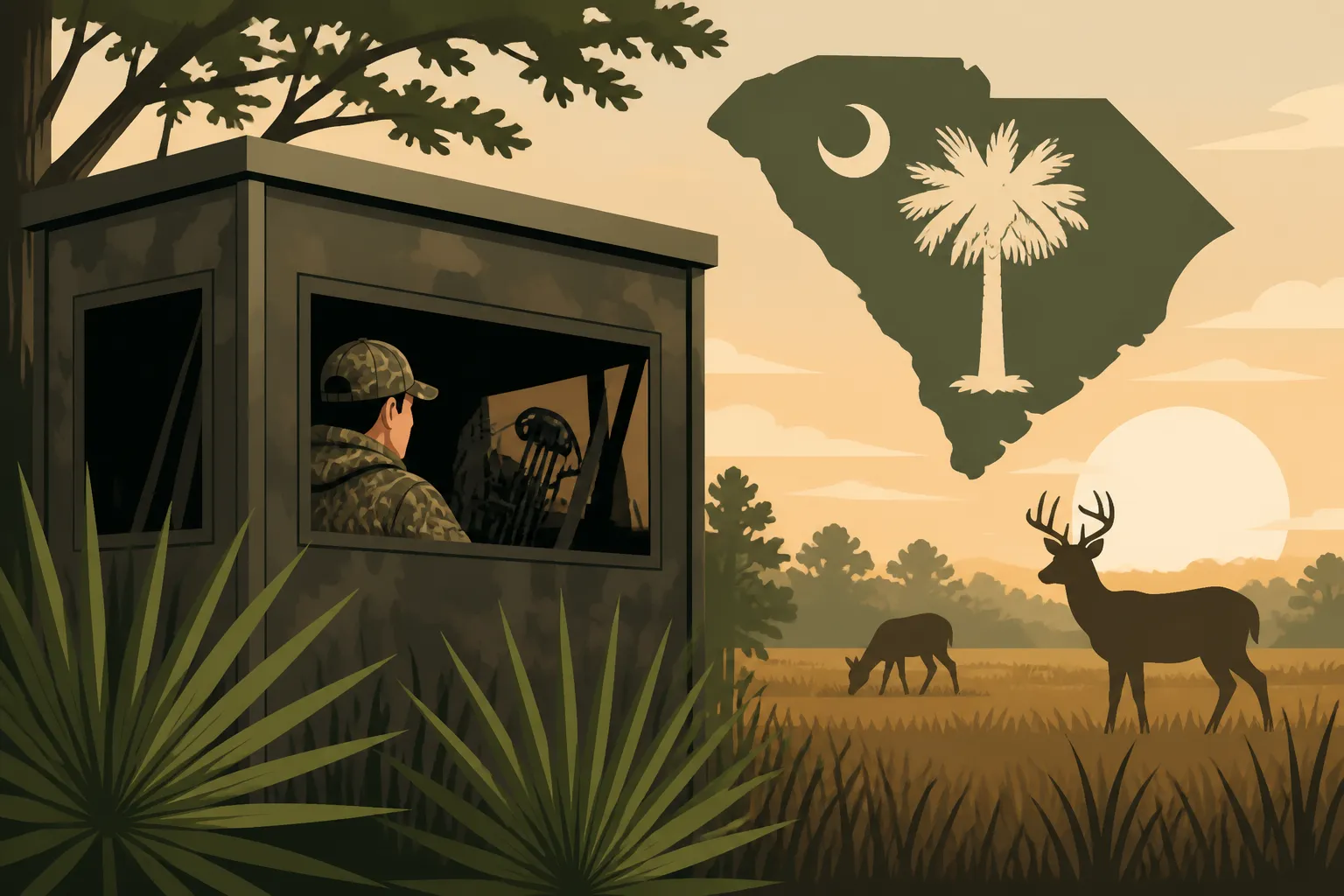
Let's be honest, hours in a treestand can take their toll. Between the constant need for stillness, the biting cold of a late-season morning, or the relentless buzz of mosquitoes during the early archery season, comfort is often sacrificed. This is where ground blinds shine. They offer a 360-degree cocoon of concealment, allowing you to stretch, adjust your position, or even discreetly check your phone or a map without revealing your presence. No more agonizing over that glint of sun off your face or the subtle shift in weight that a deer might pick up.
More than just concealment, a ground blind provides incredible protection from South Carolina's often unpredictable weather. Heavy dew, sudden downpours, biting winds, or even scorching sun can make a hunt miserable and cut it short. A quality blind acts as your personal fortress, keeping you dry, warmer in cold weather, and cooler in the heat. Many hunters find that this added comfort extends their ability to stay in the woods for longer periods, increasing their chances of encountering game. Plus, for those hunting with younger, less patient companions, a ground blind allows for a bit more wiggle room and activity without ruining the hunt. This makes them an excellent tool for South Carolina Youth Deer Weekend hunts, providing a more enjoyable experience for everyone.
Selecting the Perfect Ground Blind for Your SC Public Land Hunt
Choosing the right ground blind for South Carolina public land isn't just about picking one off the shelf. It requires careful consideration of features that align with the specific demands of our varied terrain and climate. You're not just buying a blind; you're investing in a piece of gear that will either make or break your hunt.
Key Features: Portability, Durability, and Camouflage
When you're hoofing it deep into a WMA or a section of the Francis Marion National Forest Hunting, every ounce of gear matters. This means portability is paramount. Look for blinds that are lightweight, compact when folded, and come with a decent carrying bag or straps. You don't want to be dragging a heavy, awkward blind through thick underbrush or across muddy creek bottoms. Brands like Primos and Barronett often offer models designed with public land hunters in mind, focusing on ease of transport.
Durability is another non-negotiable. South Carolina weather can be brutal, from intense sun that fades fabrics to sudden thunderstorms that can shred flimsy materials. The blind needs to stand up to heavy use, UV exposure, and high winds. Check the fabric quality, pole construction (fiberglass or aluminum), and zipper strength. There’s nothing worse than investing in a blind only to have it fall apart after a few hunts. You'll be setting it up and taking it down, brushing it in, and potentially leaving it out for a day or two, so it needs to be robust.
Finally, camouflage pattern is crucial. South Carolina's landscapes are incredibly diverse. Do you primarily hunt dense pine plantations, hardwood bottoms, or open field edges? A pattern that excels in a snowy northern forest will stick out like a sore thumb in our green, humid environment. Look for patterns that mimic our local vegetation, with plenty of browns, greens, and darker tones. Mossy Oak Bottomland, Realtree Edge, or even generic patterns with a good mix of textures can work well, especially when paired with proper brushing in. GoHunt, a great resource for hunting information, often reviews blinds and discusses which patterns are most effective in different regions, so it’s worth checking their insights before you buy. Remember, the goal is to break up the blind's outline and make it disappear, not just to match a single leaf.
Choosing the Right Style: Pop-Ups, Hubs, or Custom Builds
The market offers several styles of ground blinds, each with its own advantages and disadvantages for public land hunting:
- Pop-Up Blinds: These are typically the lightest and fastest to deploy. They literally "pop up" from a compact disc shape into a functional blind in seconds. They're fantastic for mobile hunting, allowing you to quickly relocate if deer movement shifts. However, they can sometimes be less durable and less stable in high winds compared to hub-style blinds. Think of a Barronett Big Mike for quick setups and decent space.
- Hub-Style Blinds: These are generally more robust and spacious. They use a system of hubs and poles to create a more rigid frame, offering greater stability in windy conditions and more interior room. Brands like Primos (especially their Double Bull series) are renowned for their hub blinds. They are heavier and take a bit longer to set up than pop-ups, but the added durability and comfort can be worth it for longer sits or in areas where you might leave the blind out for a few days (if WMA rules allow, always check South Carolina WMA Permit Requirements).
- Custom Builds (Natural Blinds): Sometimes, the best ground blind isn't bought, but crafted on-site from natural materials. This involves using fallen logs, branches, palmetto fronds, and other local vegetation to create a perfectly camouflaged hide. This method is incredibly effective for ultimate concealment, costs nothing but time, and leaves no synthetic footprint. It's a prime tactic for Primitive Weapons Deer Hunting in South Carolina where deep woods stealth is critical. The downside is the time required for construction, and you can't just pick it up and move it. However, if you find a killer spot and plan to hunt it repeatedly, a well-built natural blind can be superior to any manufactured option.
Masterful Placement and Setup for Stealth and Success
Having the right blind is only half the battle; knowing where and how to set it up is equally, if not more, important. A poorly placed or uncamouflaged blind will alert game quicker than you can say "missed opportunity." Public land deer are often more wary, so stealth is paramount.
Scouting the Spot and Planning Your Approach
Before you even think about deploying your blind, meticulous scouting is essential. You need to identify key deer sign—fresh tracks, active scrapes along a logging road, well-used trails leading to bedding areas or water sources, and especially rub lines indicating a buck's travel. Use tools like the Go Outdoors SC App or onX Hunt to study aerial photos and topography. Look for natural funnels, pinch points, and cover edges where deer are likely to travel during legal hunting hours. Reading Aerial Photos for Upstate Deer can help you pinpoint these hidden gems even from your couch.
Once you have a few potential spots, consider the prevailing wind directions for your planned hunting times. A ground blind, despite its concealment, doesn't magically eliminate your scent. You must place your blind downwind or crosswind of where you expect deer to approach. Nothing will bust a hunt faster than your scent blowing directly into a deer's nose.
Crucially, plan your entry and exit routes. You want to be able to approach your blind in the dark without bumping deer from their bedding areas or feeding grounds, and leave after dark without spooking them as they head to their nighttime activities. Walk slowly, quietly, and use existing cover or terrain features to shield your movement. Many hunters prefer to set up their blinds a few days or even a week before they intend to hunt, allowing local wildlife to get accustomed to its presence.
Brushing In Your Blind for Ultimate Concealment
This is arguably the most critical step in ground blind hunting. Simply popping up a blind and sitting in it is a rookie mistake. Even the best camouflage patterns will appear as a dark, unnatural blob to a deer's keen eyes. You must brush in your blind. This means using local, natural vegetation to break up the blind's hard lines and help it blend seamlessly into the environment.
Start by placing your blind in front of natural cover—a thick bush, a fallen log, or the edge of a dense thicket. This immediately helps with concealment. Then, gather branches, pine boughs, palmetto fronds, tall grasses, and anything else that matches the surrounding landscape. Weave these materials into the blind's external brush straps (if it has them) or simply pile them strategically around the blind. The goal is to make it look like just another part of the natural flora. Check out tips for Brushing In a Blind on a Field Edge for more practical advice.
Don't overdo it in one spot, creating an obvious "bush pile," but don't underdo it either. Step back periodically to look at your blind from a deer's perspective, from different angles and distances. Pay special attention to the roof and top edges, as these are often visible against the skyline. Remember to account for the sun's movement throughout the day; a perfectly concealed blind in the morning might cast a revealing shadow by midday.
Tactical Tips for Hunting Effectively from a Ground Blind
Once your blind is expertly placed and brushed in, the real hunting begins. Maximizing your chances of success from a ground blind involves a few key tactical considerations, focusing on scent, movement, and shot readiness.
Scent Control and Managing Movement
Hunting from the ground amplifies the challenge of scent control. While the blind offers a barrier, it’s far from airtight. Your scent can still waft out of windows, zippers, and vents. Therefore, all your standard scent control practices become even more vital. This means washing your hunting clothes in scent-free detergent, showering with scent-free soap before the hunt, and using scent-eliminating sprays on your gear. Pay particular attention to the wind direction, as previously mentioned. Even on mild days, thermals can carry your scent further than you think. You might also consider portable ozone units like those from Ozonics, particularly for the confined space of a ground blind, though many hunters debate their full effectiveness. For more on this, check out Scent Control Gear for South Carolina Humidity.
Inside the blind, managing movement is key. Even though you're mostly hidden, sudden or jerky movements can still be detected through mesh windows or if a deer happens to look directly into an open shooting port. Think slow and deliberate. If you need to shift, do it slowly. If you're bringing a child, discuss these rules beforehand. The enclosed space can offer a false sense of security, so always act as if a deer is staring directly at your blind. Minimize unnecessary rustling, whispers, or gadget use that could spook game.
Window Management and Shot Opportunities
Effective window management is crucial for both concealment and shot opportunities. Don't open all the windows. Only open the shooting ports you absolutely need for visibility and clear shots. Too many open windows turn your blind into a less effective hide and make it easier for deer to spot movement inside. Position yourself so you can see your primary shooting lanes without having to make excessive movements to look out different windows.
Before the season, practice shooting from your blind. The angles and confined space are different from an open treestand. Kneeling, sitting, or even standing in a blind can change your shooting posture, especially with a bow or crossbow. Ensure your broadheads won't hit the blind's window frame on release. This is also a good time to confirm your rangefinder works effectively through the mesh or if you need to pop open a small window for a clear reading. Being prepared for shots at various ranges is essential, particularly when Hunting the Rut in the Coastal Zones where deer can appear unexpectedly close.
Consider your weapon. For rifle hunters, make sure you have a solid rest inside the blind – a small bipod, shooting sticks, or a sandbag on the window sill can provide stability. For archery, ensure you have enough clearance for your draw cycle and that your arrows don't snag anything on the way out. Many blinds have specialized "shoot-through" mesh windows, but always test them with field tips first to ensure accuracy. Being ready for the shot means having your weapon staged, your release aid on (for archery), and your mind focused, minimizing last-second movements that might alert a wary deer.
Remember that Warm-Weather Sitting Strategy in South Carolina also applies to ground blinds. Dress in layers, stay hydrated, and be prepared for those long, quiet hours. A good ground blind helps manage the elements, but your personal preparation is what truly makes a successful hunt.
Ground Blind Considerations for Different SC Public Lands
South Carolina's public hunting lands are incredibly diverse, from the mountainous terrain of the Sumter National Forest to the coastal marshes of the ACE Basin. Understanding how to adapt your ground blind strategy to these different environments is key to consistent success. GoHunt often features articles on regional hunting, so keep an eye out for specific tips.
National Forests: Sumter and Francis Marion
In the Sumter National Forest, especially in the Upstate, you'll encounter more rolling hills, mature hardwood ridges, and pine timber. Here, ground blinds can be excellent for hunting natural funnels, saddles on ridges, or areas around mast crops like acorns. However, the terrain can be rugged, so portability is a premium. You'll likely be packing your blind in, so a lightweight pop-up or a hub-style blind that packs down small is ideal. Brushing in is critical here, using pine boughs and hardwood branches to blend with the natural canopy. Don't forget to scout thoroughly for Finding Sign in Big Sumter Forest Timber.
The Francis Marion National Forest, a jewel of the Lowcountry, offers a different challenge. Think dense palmetto thickets, cypress swamps, and mixed pine-hardwood forests. Treestands can be difficult to impossible in many areas. Ground blinds shine here, allowing you to set up on the edge of a thicket, along a deer trail near a water source, or overlooking a small opening in the pines. The humidity is intense, so a durable, weather-resistant blind is important. Natural blinds made from palmetto fronds and swamp vegetation can be incredibly effective here, offering unparalleled concealment. Remember to check specific rules for trail cameras on public land if you're using them for pre-season scouting.
Wildlife Management Areas (WMAs)
South Carolina's extensive network of Wildlife Management Areas offers a huge variety of habitats. Many WMAs, particularly in the coastal plain and Pee Dee regions, feature agricultural fields, clear-cuts, or managed pine stands where open areas and thick cover abound. Here, ground blinds are exceptionally versatile. They allow you to hunt cut cornfields, soybean fields, or the edges of thick clear-cuts where deer are bedding and feeding. You might even find success on the edges of flooded timber or old rice fields.
For WMA hunting, pay close attention to the specific regulations for blind placement. Some WMAs have rules about how long a blind can be left unattended, if at all. Always check the SCDNR regulations for the specific WMA you plan to hunt. Portability is still important, as many WMA access points might require a good walk. Remember to scout for active food sources and transition areas. You can find detailed information about WMAs and their regulations on the Go Outdoors SC App, which is invaluable for planning your hunts. A great way to prepare for these hunts is by Scouting South Carolina Public Land Before Season to identify key areas.
| Feature / Location | Upstate (Sumter NF) | Lowcountry (Francis Marion NF) | WMA (Mixed Habitat) |
|---|---|---|---|
| Terrain | Hilly, hardwoods, pine | Flat, palmettos, swamp, mixed | Fields, clear-cuts, diverse |
| Blind Style | Lightweight pop-up, hub | Hub-style, natural build | Pop-up, hub |
| Camo Focus | Earth tones, tree bark | Greens, browns, dense foliage | Versatile, terrain specific |
| Key Spots | Ridges, saddles, mast crops | Thickets, swamp edges, openings | Field edges, funnels, clear-cuts |
| Brushing In | Pine boughs, hardwood branches | Palmetto fronds, swamp vegetation | Local grasses, crop stubble |
| Portability | High (long walks) | Moderate (dense cover often close to access) | High (varied distances) |
| Durability | Good (weather exposure) | High (humidity, rain, sun) | Good (regular use, transport) |
| Scent Mgmt. | Wind and thermals | Humidity, stagnant air | Wind, open spaces |
No matter where you choose to hunt on South Carolina's public lands, a well-chosen and expertly deployed ground blind can transform your hunting experience. It offers a level of comfort, concealment, and versatility that's hard to beat, allowing you to stay in the game longer and truly immerse yourself in the natural world.
Disclaimer
Always consult the latest South Carolina Department of Natural Resources (SCDNR) regulations before hunting, as rules and seasons can change. This guide is for informational purposes only and does not supersede official hunting laws or safety guidelines.