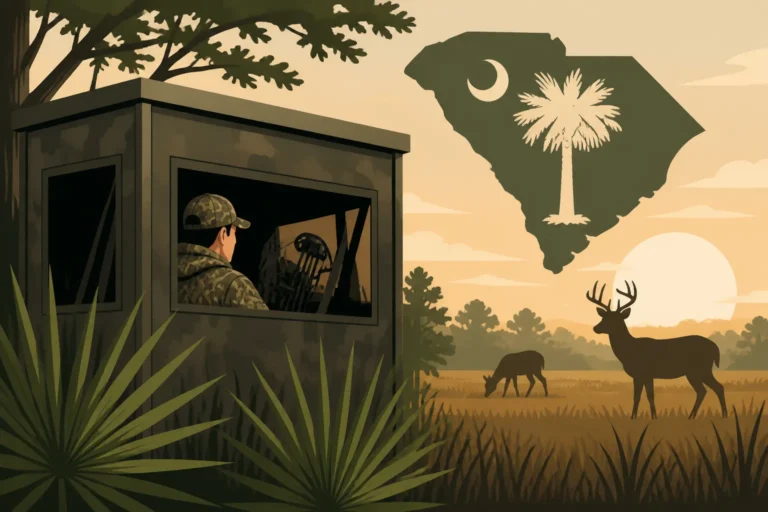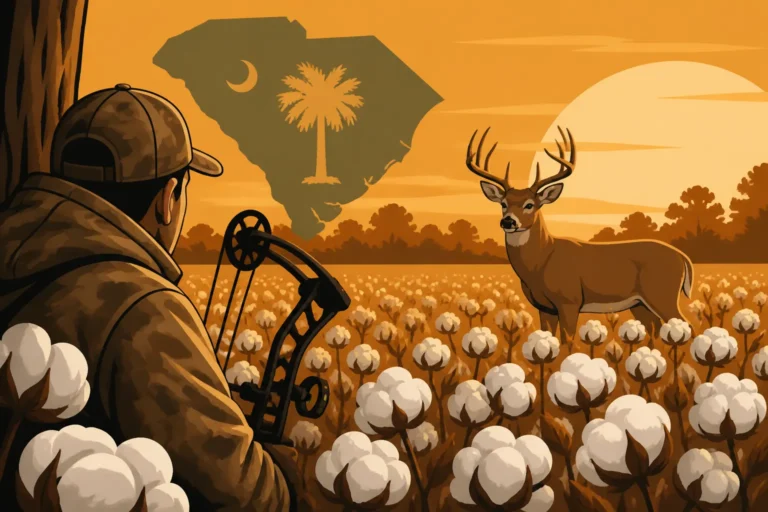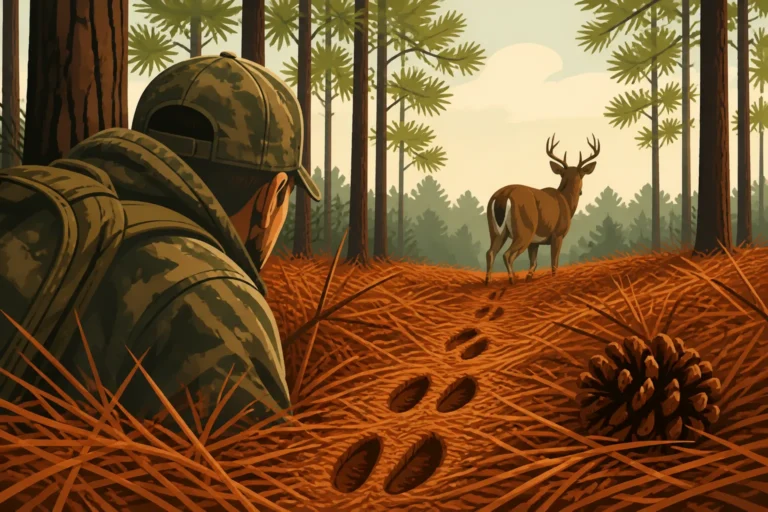
Setting Up on a Lowcountry Field Edge
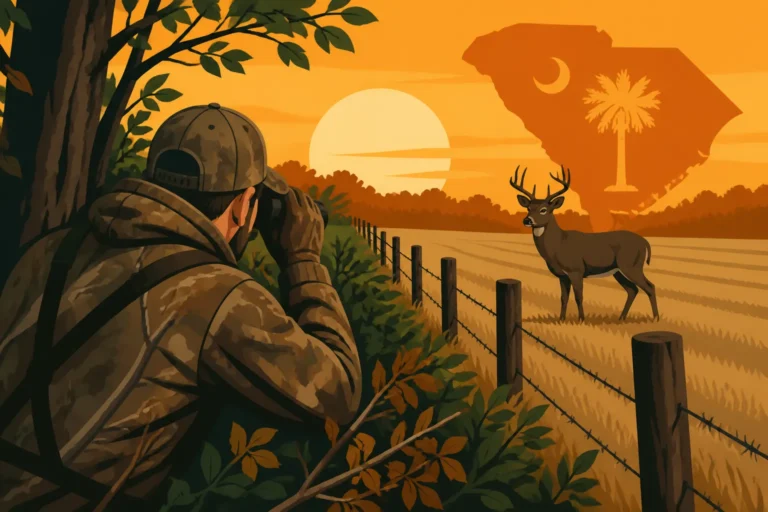
There’s nothing quite like the anticipation of watching a South Carolina Lowcountry field edge come alive at dusk or dawn. However, turning that picturesque scene into a successful hunt requires far more than just picking a pretty spot. Many hunters find themselves frustrated when deer seem to vanish into thin air or never quite make it to their preferred feeding areas, often due to an overlooked detail in their setup. This comprehensive guide will walk you through the nuances of scouting, choosing your stand, and executing a flawless plan to maximize your chances when hunting those productive Lowcountry field edges.
Understanding the Lowcountry Field Edge Environment
Hunting Lowcountry field edges offers some of the most exciting opportunities for deer hunters in South Carolina, but it comes with its own unique set of characteristics and challenges. These aren't your typical Midwest ag fields; they're often bordered by dense, thick cover, sometimes swampy bottoms, and the deer here are often accustomed to slightly different patterns.
The Allure and Challenges of Field Edges
Field edges, whether they’re agriculture fields like soybeans, corn, or peanuts, or even well-maintained food plots, act as magnets for deer. They provide readily available food, often high in nutrition, and offer a clear transition point between bedding cover and feeding areas. The allure is obvious: you can observe deer moving from the safety of the woods into the open, offering potential shot opportunities. The open nature of fields also allows for better visibility, making it easier to spot approaching game.
However, these edges also present significant challenges. Deer using these areas are often incredibly wary. They know they're exposed and will typically approach fields with extreme caution, often waiting until the last sliver of daylight or the first hint of dawn. The dense cover often surrounding these fields in the Lowcountry means deer can emerge almost silently and disappear just as quickly. Furthermore, in the early archery season, the heat and humidity of the South Carolina Lowcountry can make scent control and comfortable waiting a real battle. If you're not meticulous about your approach and wind, you'll educate more deer than you harvest.
Typical Lowcountry Field Characteristics
The "Lowcountry" in South Carolina covers a vast and varied landscape, but generally, when we talk about field edges, we're thinking about agricultural areas or managed wildlife food plots. You'll encounter sprawling soybean or cornfields in counties like Orangeburg, Clarendon, and Sumter, often bordered by pine timber, mixed hardwoods, or even impenetrable thickets of briars and palmettos. Other areas might feature peanut fields or vast stretches of cutovers and planted pines that are just starting to grow back, providing incredible bedding. In coastal zones, you might even find fields adjacent to old rice impoundments or tidal marshes. The key is that these fields rarely exist in isolation; they are almost always part of a larger, complex habitat matrix that includes thick cover, water sources, and diverse vegetation. Understanding these surrounding elements is crucial for anticipating deer movement. For more on hunting the specific habitat of the coastal areas, check out our guide on Hunting Coastal Rice Field Edges.
Deer Behavior on the Edge
Lowcountry deer tend to be creatures of habit, but they are also incredibly adaptable and sensitive to pressure. On field edges, deer typically utilize them most heavily during the low light hours of dawn and dusk. Mature bucks, in particular, will often stage in the thick cover bordering a field for a long time, sometimes an hour or more, before finally stepping out. They're watching, listening, and scent-checking the field for danger. Does and younger bucks might venture out earlier, but if a field is pressured, even they will become nocturnal quickly.
During the early season, deer are often seeking out high-energy food sources that aren't yet available in the woods, or they're just topping off before heading to bed. As the season progresses and other food sources become available (like acorns dropping), their reliance on agricultural fields might shift, though they will almost always be an option. Later in the season, after harvests, deer might switch to gleaning leftover crops, or targeting planted winter greens. Knowing when the Rut in the Coastal Zones peaks can also tell you when bucks might be more active around fields, cruising for does.
Strategic Scouting for the Perfect Setup
Before you even think about hanging a stand or setting up a blind, dedicated, strategic scouting is paramount. This isn't just a walk in the woods; it's detective work, piecing together the story of how deer use the field edge. Digital scouting can kickstart this, but boots on the ground confirm the details.
Reading the Signs
Deer leave a clear trail of breadcrumbs for the observant hunter. When scouting a Lowcountry field edge, look for fresh tracks entering and exiting the field, especially along specific trails or funnels. Tracks can tell you size, direction of travel, and how recently deer were in the area. Droppings indicate recent feeding activity and can give you an idea of herd health and diet. Rubs and scrapes, particularly those along the edge or just inside the treeline, are gold. Fresh rubs (where bucks have rubbed their antlers on saplings) signal a buck's presence and travel routes, while scrapes (patches of bare earth pawed by deer, often with an overhanging branch) are communication hubs, especially during the pre-rut and rut. A heavily worked scrape line along a logging road leading to a field edge, for example, is a prime location.
Don't just look for obvious sign; pay attention to browsed vegetation, especially on young plants or bushes near the field. This indicates consistent feeding. Remember to use mapping tools like those available through services like GoHunt to mark every piece of sign you find. This helps you build a comprehensive picture of deer activity over time.
Identifying Entry and Exit Routes
This is arguably the most critical aspect of field edge scouting. Deer rarely just pop out anywhere along a long field edge. They use specific entry and exit points, often dictated by the thickest cover, terrain features, or the path of least resistance. Look for worn trails, especially where the treeline is particularly dense, or where a slight dip in the terrain offers concealment. A small ditch, a row of thick cedars, or a finger of woods extending into the field can act as natural funnels.
Your goal is to identify these preferred routes and then find a setup location that intercepts deer before they step fully into the field, or as they are just entering. This gives you a shot opportunity while they still feel somewhat secure, and often provides a closer, easier shot. Don't forget to consider how deer might travel through the field as well; for instance, a small island of trees within a larger field can be a staging area or a cross-field travel route. Understanding Entry Routes Through Standing Soybeans or Hunting a Standing Cornfield in Farm Country is crucial for maximizing your chances.
Considering Wind and Thermals
In the Lowcountry, wind and thermals are constant variables that can make or break a hunt. With generally flatter terrain compared to the Upstate, thermals might not be as pronounced as they are on a ridgeline, but they still exist, especially around water sources or elevation changes, however subtle. Early in the morning, as the sun warms the earth, thermals will typically rise. In the evening, as the air cools, they will fall. This means your scent can be carried differently depending on the time of day.
Always, always plan your setup around the prevailing wind direction for your chosen hunting time. Your scent must be carried away from where you expect deer to approach or cross. This often means having multiple stand locations for different wind directions. If you're hunting a morning sit, consider how your scent will rise and potentially blow over the field. For an evening hunt, think about how falling thermals might carry your scent into the woods where deer are staging. Tools within GoHunt can often help predict wind and thermal patterns, allowing for more precise stand placement.
Choosing Your Stand Location and Type
Once you’ve done your homework and identified prime entry points and travel corridors, it’s time to choose how you’ll hunt it. The Lowcountry's varied cover types lend themselves to different approaches, and having a diverse toolkit for stand setups is key.
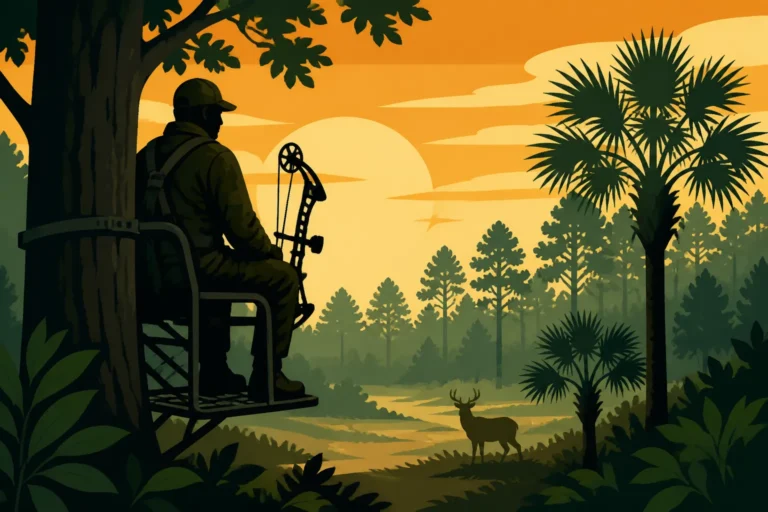
Treestand Advantages and Disadvantages
Treestands are a classic for a reason. Getting elevated offers a number of key advantages when hunting field edges:
- Wider View: You can see more of the field and the approaching cover, giving you more time to react.
- Scent Control: Being higher off the ground helps your scent disperse above the immediate deer travel lanes, although it's not a foolproof solution.
- Better Shot Angles: Elevated shots can be safer and often offer better vital access, particularly with archery equipment.
However, treestands have drawbacks. Finding a suitable tree on a field edge can sometimes be a challenge, especially if the border is young pines or brush. Many Lowcountry trees are also not ideally straight for traditional climbers, and you might need a lock-on stand with climbing sticks. Furthermore, getting into and out of a treestand quietly and undetected is critical, especially when deer are already near the field. For tips on navigating specific terrains, consider how you might need to adapt from advice like Hanging a Stand on a Sumter Forest Ridge to flatter Lowcountry ground.
Ground Blind Benefits and Drawbacks
Ground blinds offer an excellent alternative, or complement, to treestands, especially in the Lowcountry.
- Concealment: A well-brushed-in ground blind can offer incredible concealment, allowing for more movement inside without being detected. This is a huge benefit for archers, crossbow hunters, or anyone who struggles to sit still.
- Accessibility: They're great for hunters who can't or prefer not to climb trees, and they're generally faster to set up.
- Wind/Weather Protection: They offer a degree of protection from the elements, which can be a blessing during a South Carolina downpour or chilly late-season winds.
On the flip side, ground blinds can be quite visible if not properly camouflaged and brushed in. Deer can often spot new, unfamiliar objects in their environment. Your scent cone will be at ground level, making wind management even more critical. You'll also have a more restricted view, which can make spotting approaching deer from a distance harder. For specific advice, our guide on Using a Ground Blind on South Carolina Public Land offers general strategies, and Brushing In a Blind on a Field Edge is directly applicable.
Natural Cover Versus Man-Made Blinds
Sometimes, the best blind isn't one you buy. Utilizing natural cover is an art form. A thick clump of palmettos, a dense thicket of briars, or even a fallen log can provide enough concealment for a successful ambush. The advantage here is that it's already part of the environment, so deer are less likely to perceive it as a threat. The downside is that you have to work with what's available, which might not always be perfectly positioned for your shot or wind direction.
A hybrid approach is often best: select a spot with good natural cover, then enhance it with a few cut branches, camouflage netting, or a pop-up ground blind that you meticulously brush into its surroundings. The goal is to become one with the environment.
Here's a quick comparison of popular field edge setup options:
| Setup Type | Pros | Cons | Best Use Case |
|---|---|---|---|
| Treestand | Elevated view, better scent dispersion, good shot angles | Requires suitable tree, noisier setup, less movement | Defined deer trails, strong wind direction, archery |
| Ground Blind | Excellent concealment, weather protection, comfortable, accessible | Limited view, critical scent control, can appear unnatural | Hunting with kids, archery in thick cover, changing winds |
| Natural Cover | Blends seamlessly, no setup cost, minimal disturbance | Limited options, less mobile, minimal weather protection | Stealthy ambush, low-pressure areas, scouting-intensive |
Managing Scent and Access
You've scouted, you've chosen your stand. Now comes the execution. In the Lowcountry, with its often warm temperatures and light breezes, scent control and quiet access are not just good ideas—they are absolutely essential.
Playing the Wind: The Golden Rule
I've said it before, and I'll say it again: Always play the wind. This is the single most important factor for success on a field edge, especially when hunting wary Lowcountry deer. Your stand location should always put the wind in your favor, blowing your scent away from where deer are expected to approach or pass. If the wind isn't right for your primary spot, go to a secondary spot. If you don't have a secondary spot for that wind, it's better to stay home or hunt a different area entirely. Hunting the wrong wind will educate deer and burn out your spot faster than anything else.
Consider how air currents might swirl at the edge of a field, particularly if there are gaps in the treeline or small draws. These subtle shifts can betray you. Using a wind checker puff bottle religiously before and during your sit is non-negotiable.
Minimizing Scent Contamination
Scent control isn't just about cover sprays; it's a comprehensive approach.
- Laundry: Wash your hunting clothes in scent-free detergent and store them in airtight containers or bags.
- Hygiene: Shower with scent-free soap and shampoo before heading out.
- Gear: Keep your boots, backpack, and other gear free of foreign odors. Even the gas smell from your truck or the coffee you drank can alert a deer.
- Transport: Avoid wearing your hunting clothes until you're near your hunting area. Change into them at your truck or a safe distance away.
- Wind Direction: Again, even with the best scent control regimen, if the wind is blowing directly at the deer, they will smell you.
Quiet Entry and Exit Strategies
Getting to and from your stand without alerting every deer in the county is often the most overlooked part of the hunt.
- Path Planning: Plan your approach and departure routes to avoid known bedding areas, heavy travel corridors, or areas where deer are likely to be feeding. Using natural terrain features, ditches, or existing trails that parallel the field but are deep within cover can help.
- Timing: For morning hunts, arrive well before daylight, giving yourself ample time to get settled. For evening hunts, go in during the midday lull when deer activity is typically lower.
- Stealth: Move slowly and deliberately. Watch where you step, avoid breaking branches, and try to make as little noise as possible. If you need to cross a short open area, do so quickly and efficiently.
- Headlamps: If walking in the dark, use a red light filter on your headlamp. Deer are less likely to be alarmed by red light.
Think about how you'll move through the dense Lowcountry cover. Sometimes, Hunting a Funnel Between Two Swamps means a quiet canoe paddle, other times it means carefully picking your way through thick palmettos. When the temperatures are high, as they often are during Warm-Weather Sitting Strategy in South Carolina, minimizing the physical exertion of your entry can help keep your body temperature, and therefore your scent, lower.
By meticulously scouting, choosing the right setup for the conditions, and diligently managing your scent and access, you'll transform those beautiful Lowcountry field edges into consistent producers, season after season. Remember that constant observation and adapting to changing deer patterns are part of the game.
Disclaimer
Hunting is an inherently dangerous activity. Always prioritize safety, follow all local and state hunting regulations, and ensure you have the proper training and equipment. The information provided in this guide is for informational purposes only and should not be considered a substitute for professional instruction or official game regulations. Be aware of your surroundings and hunt responsibly.