Hunting the Rut in the Coastal Zones
For many of us, the idea of the deer rut conjures images of crisp autumn air, steam pouring from a buck’s nostrils, and chasing does across open fields. But if you’ve hunted South Carolina’s coastal zones, you know the reality is often quite different. The dense, subtropical environment and persistent warm weather can make pinpointing and effectively hunting the rut a unique challenge. This guide dives deep into the specific conditions and tactics you need to master the rut in the Palmetto State’s lowcountry.
Understanding the Coastal Rut Timing and Characteristics
Hunting the rut successfully starts with understanding when it actually happens and what it looks like on the ground in a specific area. In South Carolina’s coastal zones, often referred to as Zone 4, the rut is a different beast entirely from what you might experience in the Midwest or even the Upstate.
When the Coastal Rut Truly Kicks Off
Unlike the more geographically predictable ruts found in northern states, the timing of the rut in South Carolina's coastal plain, primarily Zone 4, can feel a bit more fluid. Generally, you’ll start seeing the first signs of intensified buck activity, often called the pre-rut, in late September. The peak breeding activity typically unfolds from mid-October through the first couple of weeks of November. This means you won’t always have that traditional mid-November frenzy that some hunters are accustomed to. It's a longer, more drawn-out affair, heavily influenced by individual doe cycles and local conditions.
The warmer temperatures that persist well into fall here also play a significant role. Bucks in these areas aren't often running helter-skelter across wide-open spaces in broad daylight like their northern counterparts. Instead, they tend to move more frequently during the cooler parts of the day—dawn, dusk, and sometimes even midday when a cold front finally pushes through. This makes long, all-day sits challenging, but also means that being in your stand during these prime windows is absolutely critical. For a broader overview of how timing varies across the state, check out Hunting the South Carolina Rut by Zone.
Key Indicators of Pre-Rut and Peak Rut Activity
Even with the differences, deer sign during the coastal rut will still tell you a story if you know how to read it. One of the earliest and most exciting signs of the pre-rut heating up is the appearance of fresh rubs. Bucks, feeling that surge of testosterone, will start rubbing their antlers on saplings and small trees, polishing them and leaving behind scent. These rubs serve as visual and olfactory communication, letting other deer know a buck is in the area and ready to breed. Look for clusters of rubs, especially along travel corridors or on the edges of bedding areas.
As the rut progresses, scrapes become more prevalent. These are patches of bare earth, typically under an overhanging branch, that bucks paw out and then scent-mark by urinating over their tarsal glands. The overhanging branch is usually licked and rubbed by the buck, adding more scent. Does will also visit these scrapes, leaving their own scent. A "community" scrape, one that is visited by multiple deer, can be a hot spot during the rut. While you might not see the same frenzied scrape activity as in colder climates, fresh scrapes indicate active buck movement and a keen interest in finding receptive does. Keeping an eye on these signs is paramount, as they confirm that bucks are actively seeking out does.
| Rut Sign | Description | What It Means | Typical Visibility in Coastal Zones |
|---|---|---|---|
| Fresh Rubs | Bark scraped off saplings/trees, often with antler marks. | Buck actively marking territory, asserting dominance, ready to breed. | Moderate to High |
| Fresh Scrapes | Pawed-out bare earth, often under a licking branch. | Bucks checking for does, communicating status and presence. | Moderate |
| Chasing Behavior | Bucks actively pursuing does, often loudly. | Does are nearing estrus, peak breeding activity. | Low to Moderate (often nocturnal) |
| Tending Grunts | Short, guttural sounds from bucks following does. | Buck is "tending" a doe, trying to keep her close. | Low (requires close proximity) |
| Enlarged Neck | Buck's neck appears swollen. | Increased testosterone, common during peak rut. | Moderate (visual confirmation) |
Adapting Your Scouting and Stand Placement for Coastal Zones
The dense, often swampy terrain of South Carolina’s coastal zones demands a specialized approach to scouting and choosing your stand locations during the rut. What works in an open hardwood forest won't always cut it when you're battling palmetto thickets and cypress knees.
Identifying High-Traffic Funnels and Bedding Areas
In the lowcountry, deer are experts at disappearing into the thickest cover imaginable. This dense vegetation, while challenging for hunters, actually creates natural funnels and pinch points that you can exploit. Look for areas where impenetrable cover narrows down into a more walkable strip, perhaps between two swamps, along the edge of a pine plantation, or where a slight rise of dry ground creates a travel corridor. These natural corridors are prime locations where bucks will travel as they cruise for does.
Using advanced mapping tools like GoHunt to dissect terrain can be incredibly beneficial here. Satellite imagery can reveal those subtle elevation changes, small drainages, or breaks in vegetation that might not be obvious on the ground. Pay close attention to the edges of clear-cuts, the transition lines between different timber types (like mature pines meeting a hardwood bottom), or even old logging roads that have grown in but still offer easier travel. Bucks will often use the path of least resistance when seeking does, especially if it keeps them concealed. Consider how deer might move between feeding areas, which could be planted food plots, agricultural fields, or areas with abundant natural mast like acorns or persimmons, and their preferred bedding thickets.
Strategic Stand Setups for Warm-Weather Rut Hunts
Given the thick cover and often unpredictable winds in coastal South Carolina, flexibility in your stand setups is key. A traditional fixed treestand might work if you have a perfectly consistent wind, but often, you’ll need more options. Portable climbing treestands or even saddle hunting setups offer excellent mobility, allowing you to quickly adapt to changing conditions and follow deer sign. When Hanging a Stand on a Sumter Forest Ridge or in similar lowcountry terrain, consider multiple access points and routes to minimize your disturbance.
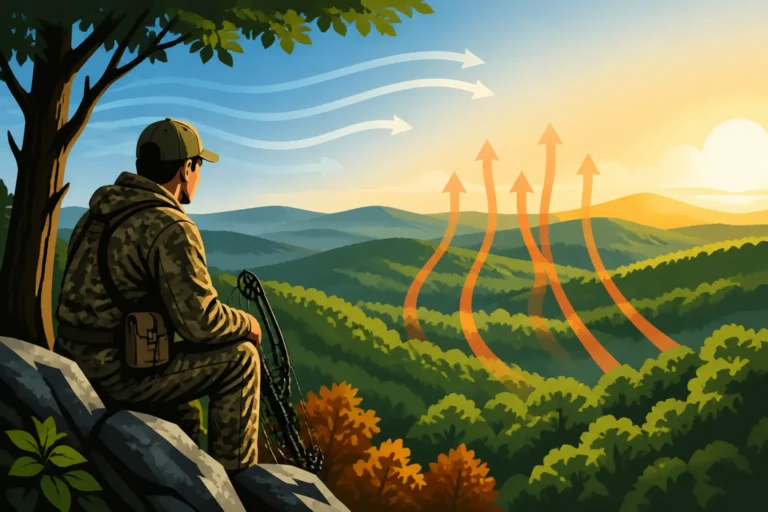
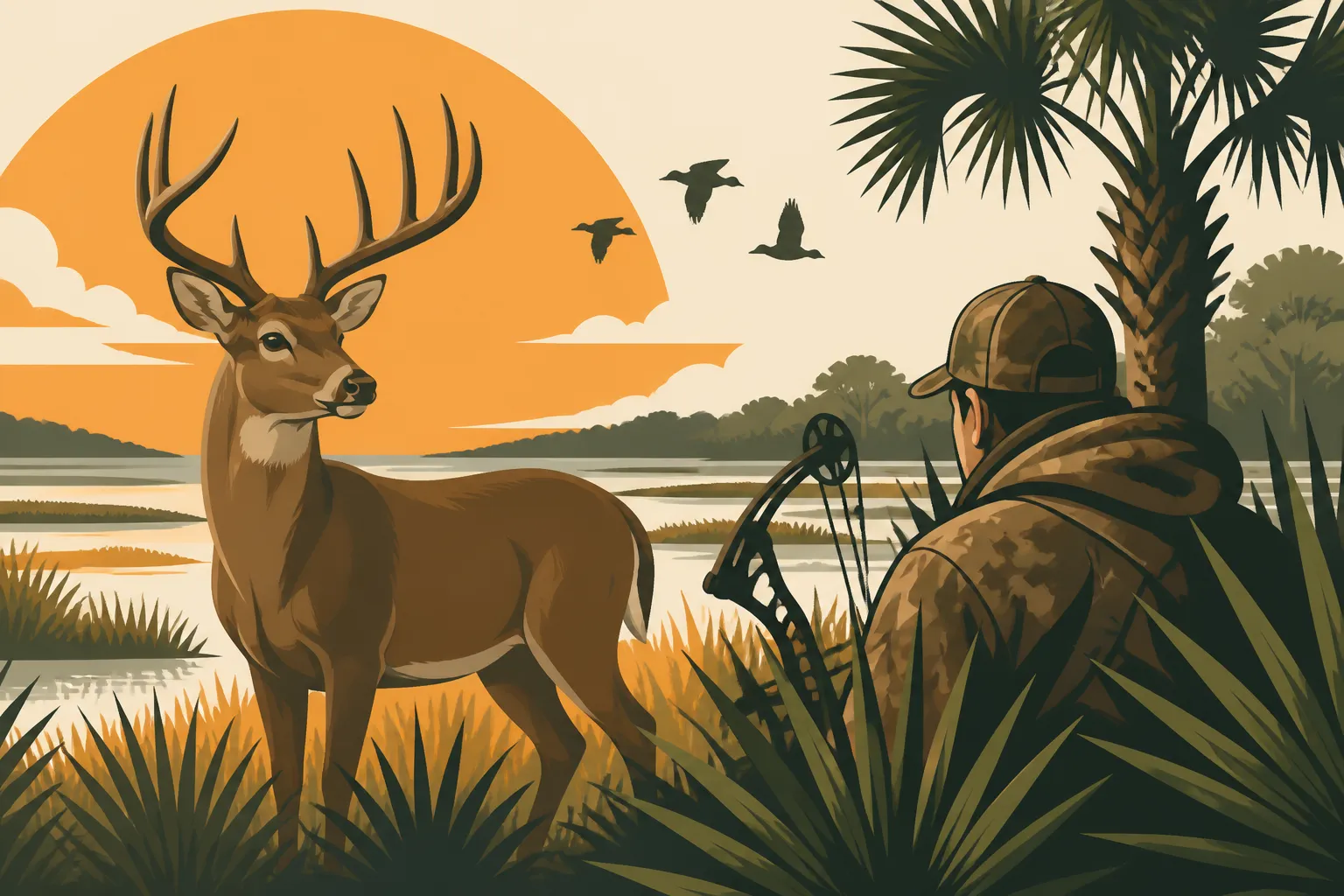
For ground setups, well-brushed-in ground blinds can be incredibly effective, especially if positioned on a field edge or overlooking a scrape line in a thicket. The dense undergrowth of the coastal plain actually makes ground blinds easier to conceal than in more open woods. Always prioritize the wind direction. Even a slight breeze can carry your scent further than you think, especially when temperatures are warmer. Pay attention to thermals, which are air currents caused by temperature differences. In the morning, air typically flows downhill or toward lower, cooler ground (like a swamp). In the evening, it reverses, flowing uphill or toward higher, warmer ground. Understanding these patterns, even if subtle, is crucial for staying undetected, especially when Hunting Lowcountry Swamp Deer. Having two or three stand locations for different wind directions around a promising area will drastically increase your odds of success.
Effective Hunting Tactics During the Coastal Rut
Once you understand the timing and have your stand locations dialed in, it’s time to talk about the actual hunting. The coastal rut demands a blend of patience, strategic calling, and sometimes, a more active approach.
Calling and Decoying Strategies in Thick Cover
The effectiveness of calling during the coastal rut can vary greatly, but it's definitely a tool you should have in your arsenal. Because of the dense cover, aggressive rattling might not always be the best approach. Instead, softer, more frequent grunts or doe bleats can often be more effective. A tending grunt, mimicking a buck following a hot doe, can often pique the interest of a cruising buck without immediately alarming him. Remember, in thick cover, sound doesn’t travel as far, so you might need to call a bit more often and be prepared for a deer to appear silently and quickly. For advice on how loud to be, consider the tips in Rattling Volume in Thick Pine Cover.
Decoys can also be highly effective in the right situation. A small doe decoy, placed where it’s visible but not too exposed, can draw a cruising buck into shooting range. If you're feeling bold, a small buck decoy can challenge an aggressive dominant buck. The key is placement: ensure the decoy is visible from a distance but has a clear shooting lane around it. Avoid placing decoys where approaching deer will wind you before they see the decoy. Always be ready for a shot, as bucks often approach decoys cautiously, circling downwind to catch a scent before committing.
Still-Hunting and Tracking Bucks in Dense Areas
While sitting a stand is productive, sometimes the coastal rut calls for a more proactive approach, especially if you're not seeing consistent movement from a fixed position. Still-hunting, moving slowly and deliberately through the woods, can be incredibly effective in the dense coastal cover. The goal isn’t to cover ground quickly, but to move silently, taking a few steps, then stopping for several minutes to observe and listen. Use your binoculars to pick apart every shadow and thicket.
Focus on areas with fresh sign, like new rubs or scrapes, or along the edges of known bedding areas. As you move, you're looking for subtle cues: a flick of an ear, a patch of brown hide, or the sound of rustling leaves. This method requires immense patience and keen observation skills. If you jump a buck, don't immediately give up. If he doesn't crash off too far, he might circle back or simply stop within a short distance. Give it 15-20 minutes, then slowly try to track him. Reading the ground for fresh tracks, especially after a rain, can be a game-changer when Reading South Carolina Mud for Fresh Deer Movement.
Leveraging Food Sources and Water During the Rut
Even when bucks are primarily focused on does, they, along with the does, still need to eat and drink. During the coastal rut, food sources can act as magnets, drawing does and subsequently, the bucks that are chasing them. Look for areas with natural food sources like white oak acorns, persimmons, or wild grapes. If a local farmer has planted fields of soybeans, corn, or winter wheat, these can also be prime locations for deer activity. Deer will often congregate in these areas during the cooler evening hours.
Water sources are also crucial, especially in the often-humid and warmer conditions of the lowcountry. Ponds, creeks, and even stagnant water holes within the swamp can become hotspots. Bucks cruising for does might follow these water features, using them as travel corridors or stopping for a quick drink. Setting up on a funnel that leads to a prime food source or runs along a reliable water source can significantly increase your chances of intercepting a rutting buck. Remember, does will use these areas, and where the does are, the bucks will eventually follow.
Gear and Safety Considerations for Coastal Rut Hunting
Hunting the South Carolina coastal rut means dealing with specific environmental challenges that require particular gear and diligent safety practices. The unique climate and terrain demand a thoughtful approach to what you carry into the woods.
Essential Gear for Warm, Humid Conditions
First and foremost, comfort is key to long, productive sits. Lightweight, breathable hunting clothing is absolutely essential. Forget the heavy insulation you might use up north; even in October, daytime temperatures can easily climb into the 70s or 80s, especially in the sun. Layering is still wise, but focus on moisture-wicking base layers that can be shed as the day warms. Keep a light rain jacket handy, as pop-up showers are common.
Protection from the elements, particularly the ground elements, is critical. Snake Boots for South Carolina Swamp Ground are not an option; they're a necessity. Eastern diamondbacks, canebrakes, and cottonmouths are active well into the fall, and wading through thick vegetation puts you at risk. Equally important is effective insect repellent. Mosquitoes, ticks, and gnats thrive in the humid coastal environment. Carrying a Thermacell or using a high-quality permethrin spray on your clothing and a DEET-based repellent on exposed skin will make your hunt far more tolerable, as highlighted in Bug Repellent That Holds Up in a Tree Stand. Finally, always carry plenty of water. Dehydration can sneak up on you in the heat and humidity, diminishing your focus and making a long walk out even more arduous.
Post-Harvest Care in High Temperatures
One of the biggest concerns when harvesting a deer in South Carolina's warmer rut period is proper meat care. The clock starts ticking the moment you make the shot. Immediate and thorough field dressing is paramount to cooling the carcass down as quickly as possible. Remove all internal organs, wipe out the cavity, and get air circulating. If you're on public land like Francis Marion National Forest, where long drags are common, consider the "gutless method" to remove the meat from the bone right there and pack it out in game bags.
Once you’ve retrieved your deer, getting it on ice or into a cooler is the next critical step. For those warm August and September kills, you’ll need to employ strategies like those discussed in Coolers for a Warm August Kill or Field Dressing a Deer in Warm Weather. Even in October, temperatures can be high enough to spoil meat quickly. Have large coolers packed with ice ready at your vehicle or camp. If you can quarter the deer and get the meat submerged in an ice bath, that's often the best approach for rapid cooling and preservation before taking it to a processor or butchering it yourself. Don't underestimate the heat; an hour or two in warm temperatures can significantly degrade the quality of your hard-earned venison.
Disclaimer
Hunting is an inherently dangerous activity. Always prioritize safety, follow all local and state regulations, and ensure you have the proper training and licensing. The information provided in this guide is for informational purposes only and should not replace professional advice or official hunting regulations.