Hunting Zone 4 Coastal Bears
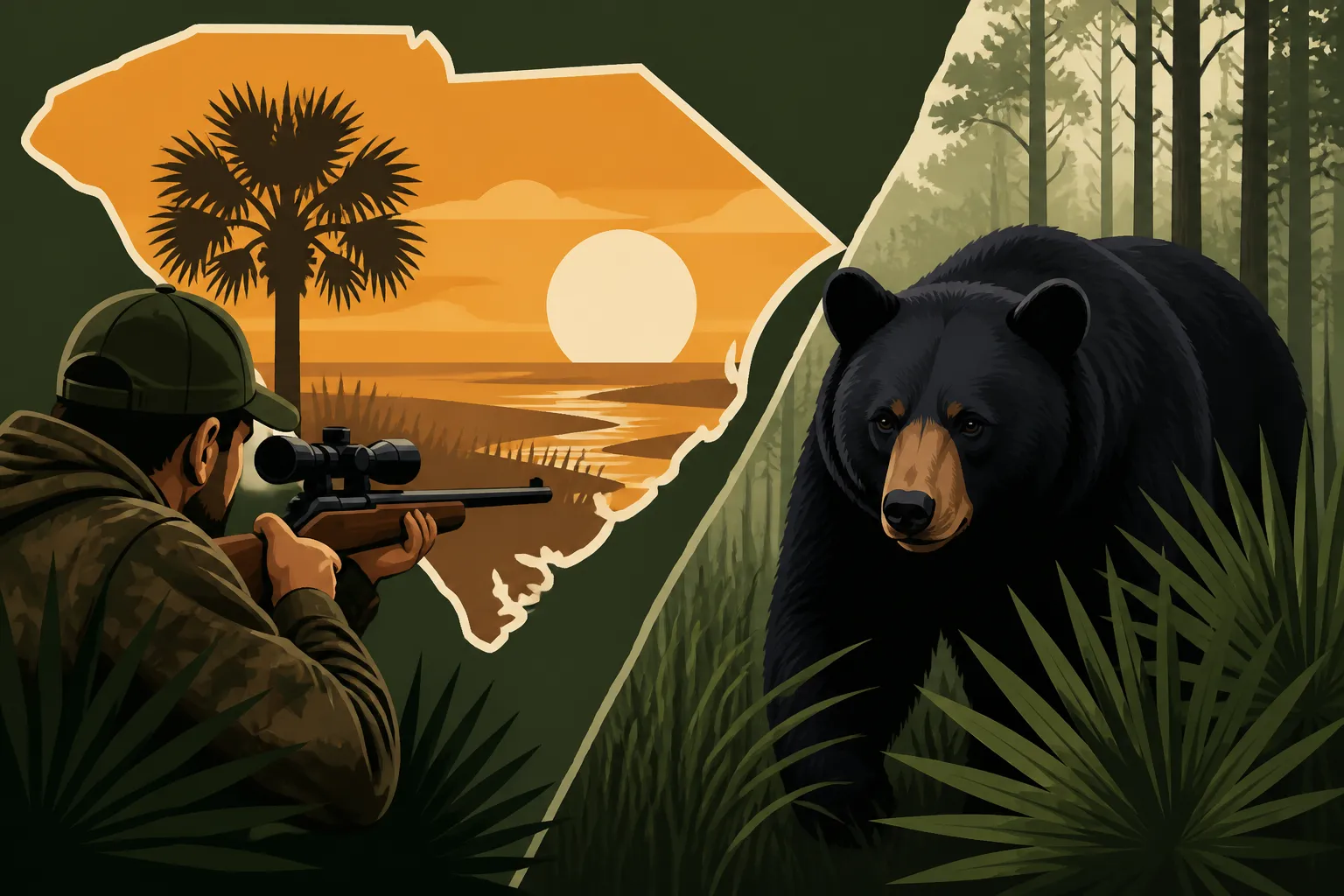
Hunting black bear in South Carolina's coastal Zone 4 is a completely different ballgame than chasing deer in the lowcountry swamps or mountains. It presents unique challenges that can frustrate even the most seasoned hunter—from navigating dense, mosquito-ridden thickets to understanding the elusive movements of bears in a region where they often feel like phantoms. This comprehensive guide will pull back the curtain on the ins and outs of tackling a Zone 4 coastal bear hunt, offering up practical strategies, gear recommendations, and insights into their behavior to help you improve your chances of success.
Understanding South Carolina's Zone 4 Coastal Bear Season
Hunting black bear in South Carolina is a truly special opportunity, and the coastal Zone 4 offers a unique experience unlike anywhere else in the state. Unlike the more recognized bear hunting in the mountains, the lowcountry bears are often associated with dense swamps, agricultural fields, and expansive private timberlands. The season here is typically quite short, sometimes only a few days or even just a single weekend, making preparation and scouting absolutely critical to capitalize on the limited window.
Coastal Bear Season Dates and Regulations
The specifics of the Zone 4 Coastal Bear Season Rules can vary from year to year, so your very first step should always be to consult the South Carolina Department of Natural Resources (SCDNR) regulations guide. Generally, the season is held in the fall, often overlapping with early deer seasons, which can present both opportunities and challenges. Hunters must possess a valid South Carolina hunting license and a specific bear tag, which usually carries a separate fee. It's crucial to understand the bag limits, which are typically very restrictive, often one bear per hunter per season, and sometimes even fewer based on the specific management goals for the coastal population. Make sure you understand the requirements for South Carolina Bear Tag Requirements before heading afield.
Beyond season dates and tags, there are often specific regulations concerning legal hunting methods. While some areas may allow still-hunting, others might permit the use of dogs, though this is less common on public lands in coastal areas compared to private, larger tracts. Baiting regulations are also a major point of consideration; while baiting is a common method for bear hunting in many states, South Carolina has strict rules that vary by zone and even by specific WMA. Always confirm if baiting is permitted in your specific hunting area and what the requirements are for bait site management, such as distance from property lines or roads, and checking periods.
Identifying Zone 4 Bear Hotspots
Zone 4 encompasses a significant portion of South Carolina's coastal plain, stretching from the Pee Dee region down to the lower Savannah River. Within this vast area, bear populations are not evenly distributed. Historically, counties like Georgetown and Horry have had more consistent bear activity, particularly in areas bordering large tracts of public land like Francis Marion National Forest or extensive private timber holdings. These areas often feature a mosaic of habitat types including mature pine forests, dense hardwood bottoms, and agricultural fields that provide abundant food sources.
When you're looking for a place to hunt, don't just focus on the largest tracts of land. Bears in the lowcountry are incredibly adaptable and will utilize smaller, overlooked pockets of cover, especially those adjacent to cornfields, soybean fields, or even residential areas if there's enough thick cover for them to feel secure. River bottoms, especially those with cypress-tupelo swamps, are natural travel corridors and bedding areas. You'll often find the most success where these dense, wet areas meet uplands with seasonal food sources. Using tools like the GoHunt app can be incredibly helpful for Reading Aerial Photos for Upstate Deer (though for bear, look for thick cover and food sources) and identifying these transitional zones and potential hotspots from home before you even set foot in the woods.
Coastal Bear Behavior and Habitat
Understanding the nuances of coastal bear behavior and their preferred habitats is paramount to success in Zone 4. These aren't your mountain bears that rely heavily on mast crops from oak ridges. Lowcountry bears have a more diverse diet and often operate in denser, wetter environments, which dictates their movements and patterns.
Diet and Food Sources in the Lowcountry
Coastal black bears are opportunistic omnivores, meaning they'll eat just about anything they can get their paws on. Their diet is heavily influenced by seasonal availability. In early fall, leading up to and during the short bear season, they are often intensely focused on hyperphagia – gorging themselves to put on fat reserves for the coming winter. This means they will be aggressively seeking out high-calorie foods.
Agricultural fields are a massive draw. Corn and soybeans are absolute magnets for bears, and farmers in areas like Horry and Georgetown counties often deal with significant crop damage. Bears will raid fields, sometimes repeatedly, creating clear trails and feeding patterns. Beyond agriculture, natural food sources include a variety of berries (blackberries, blueberries, palmetto berries), soft mast like persimmons and wild grapes, and hard mast such as acorns from various oak species found in hardwood bottoms. While oak acorns are important, they might not be as dominant as in mountain regions, meaning bears are often more widely distributed across different food types. Keep an eye out for disturbed ground, scat, and tracks around these food sources – these are crucial indicators when Scouting South Carolina Public Land Before Season.
Bear Movement and Bedding Patterns
Coastal bears are masters of stealth, especially in the thick, often impenetrable cover of lowcountry swamps and dense pine plantations. Their movements are largely dictated by food availability and the need for secure bedding areas. During daylight hours, especially if hunting pressure is present, they will often retreat deep into the thickest, nastiest cover they can find – cypress-tupelo swamps, overgrown clear-cuts, or dense briar patches along river systems.
Movement often peaks during crepuscular hours (dawn and dusk) as they travel from bedding areas to feeding grounds. However, if food is abundant and cover is close, they might move at any time of day. Bears are powerful swimmers and will readily cross creeks and rivers, utilizing these water features as travel corridors. Look for fresh tracks along muddy creek banks, trails leading into dense cover from field edges, and signs of travel through thickets. They tend to follow established game trails, but also create their own distinct "bear trails" through heavy brush, which can be identified by bent or broken saplings and large, splayed tracks. Understanding these patterns is key to Hunting Lowcountry Swamp Deer, and the principles apply equally to bears in the same habitats.
Effective Scouting Strategies for Coastal Bears
Scouting for coastal bears is often a sweaty, buggy affair, but it’s absolutely non-negotiable for success. With such a short season, you can't afford to waste time trying to figure out where the bears are once opening day arrives. This means boots on the ground long before the season, identifying key areas, and understanding current bear activity.
Pre-Season Scouting and Sign Recognition
Your pre-season scouting should begin weeks, if not months, before the opener. Start by using aerial maps to identify potential bear habitat: large blocks of timber, dense swamps, river corridors, and proximity to agricultural fields. Areas bordering established wildlife management areas or National Forests, like sections of Francis Marion National Forest, are prime starting points. Pay close attention to any areas that have a mix of dense cover and potential food sources.
Once you’ve identified potential areas, it's time for boots on the ground. Look for classic bear sign:
- Tracks: Large, splayed paw prints, especially in soft soil along logging roads, creek banks, or field edges. Look for claw marks well ahead of the pad.
- Scat: Bears have a diverse diet, so their droppings will vary, but they’re typically large and cylindrical, often containing berries, seeds, or corn kernels depending on their recent meals.
- Rub Trees: Bears will rub their backs against trees, leaving hair and sometimes claw marks higher up the trunk. These are often scent-marking behaviors.
- Diggings: Bears will dig for roots, grubs, and insects. Look for overturned earth, especially in softer soils.
- Broken Branches/Damaged Crops: Evidence of bears feeding in fields or breaking branches to access fruit or nuts.
Don't forget to check the edges of any agricultural fields nearby. Fresh damage to a standing corn crop is a huge indicator of current bear activity. A helpful tool like GoHunt can help you overlay public land boundaries and agricultural zones, allowing you to focus your efforts efficiently.
Trail Camera Placement for Bears
Trail cameras are your eyes in the woods when you're not there, and they are incredibly effective for monitoring bear activity. Given the coastal bears' often nocturnal or crepuscular movements, cameras are essential for determining not just if bears are in an area, but when they are most active.
Placement is key:
- Field Edges: Place cameras overlooking entry points into corn, soybean, or peanut fields. Bears will often use specific trails to access these fields.
- Funnels and Travel Corridors: Identify natural funnels between dense cover and food sources, such as narrow strips of woods, creek crossings, or old logging roads.
- Natural Food Sources: If you find a patch of persimmon trees dropping fruit, or a heavy mast crop, placing a camera there can reveal daytime activity.
- Bear Trails: If you’ve found distinct bear trails through thickets, position a camera to capture images of animals traveling these paths.
When setting up cameras, secure them well to prevent theft and bear damage (yes, bears will investigate and sometimes destroy cameras!). Position them slightly higher than you would for deer, around 4-5 feet off the ground, and angle them down to get a good full body shot. If permitted and used responsibly, a small amount of an attractant like a sweet-smelling lure or an apple can sometimes help keep a bear in front of the camera longer, but always check local regulations regarding attractants.
Hunting Tactics for Zone 4 Bears
Once you’ve done your homework and found some promising sign, it's time to think about how you're actually going to hunt these elusive animals in their dense coastal environment. The tactics will often mirror those used for deer in similar habitats, but with a few bear-specific considerations.
Still-Hunting and Stand Placement
Still-hunting for bears in Zone 4 means being exceptionally patient, quiet, and aware of your surroundings. The coastal terrain is often flat, thick, and can be very noisy underfoot with leaf litter and palmetto fronds. Your approach should be painstakingly slow, taking just a few steps at a time, and pausing for several minutes to glass and listen. Focus on working through areas with dense cover, along the edges of swamps, or where thickets meet more open timber. Wind direction is critical; bears have an incredible sense of smell, so always hunt into the wind.
Stand placement, whether it's a treestand or a ground blind, should be done with extreme care. Given the often-short shooting distances in thick coastal woods, you need to maximize your visibility while remaining concealed.
- Treestands: Position a treestand overlooking a well-used trail leading into a feeding area, or along a known travel corridor between bedding and food. Consider how to Hang a Stand on a Sumter Forest Ridge, adapting those principles for the lowcountry's different terrain features. Look for areas where trails pinch down or cross water features. Aim for 15-20 feet up in a tree that offers good cover.
- Ground Blinds: Ground blinds can be highly effective, especially if you’re hunting near a field edge where bears might enter from heavy cover. They offer great concealment and can help contain your scent. Brush in your blind meticulously to blend it into the surroundings. Ensure your shooting lanes are clear, but not so wide that they look unnatural. Remember to pick a spot that offers a clear shot at the anticipated travel path or feeding area.
Hunting Over Food Sources
As mentioned, coastal bears are heavily food-driven, especially during the fall hyperphagia period. Hunting over or near a primary food source is arguably your best bet for success.
- Agricultural Fields: If you have access to land bordering corn, soybean, or peanut fields, setting up on an active entry point can be highly effective. Bears will often create distinct "tunnels" through the thick vegetation surrounding these fields. Set up a ground blind or treestand where you can intercept them as they emerge or enter the cover. Pay attention to the wind, as bears often approach fields from downwind to scent-check for danger.
- Natural Mast Crops: While not as consistent as agricultural fields, natural food sources like persimmon trees, wild grapevines, or patches of oak trees dropping acorns can be fantastic draw cards. Spend time scouting these areas for fresh sign. If you find a concentrated area with significant bear activity, that’s your spot. These areas are also great for trail camera placement to confirm bear patterns before the hunt. Remember that bears can be quite habitual, sometimes returning to the same food source night after night until it's depleted.
Hunting over food sources requires patience. You might sit for hours without seeing anything, only for a bear to magically appear as dusk settles. Early morning and late evening are usually the most productive times, but don’t rule out midday activity, especially if hunting pressure is low and food is abundant.
Essential Gear and Preparation for Coastal Bear Hunts
Coastal bear hunting in South Carolina is not for the faint of heart, and your gear needs to be up to the challenge of the humid, often wet, and incredibly dense environment. Preparing properly can make the difference between a successful, comfortable hunt and a miserable, bug-infested experience.
Firearms and Ammunition Choices
When it comes to firearms for black bear, you need something with enough knockdown power to ensure a quick, ethical harvest. While deer calibers like a .30-06 or .308 are certainly adequate, many hunters prefer something a bit heavier for bears, especially given their dense bone and muscle structure.
- Rifles: Common choices include .30-06, .308, .270, .300 Win Mag, or even a .45-70 lever action. The key is to use a quality, heavy-for-caliber bullet designed for deep penetration and controlled expansion. Think bonded bullets or those with robust jacket construction. Avoid lightweight, frangible deer bullets. Given the thick cover, shots are often relatively close, so absolute long-range accuracy isn't as critical as bullet performance at moderate distances. You'll want to choose a Rifle Setups for South Carolina Deer Hunting that is robust enough for bear.
- Shotguns: If you prefer a shotgun, a 12-gauge loaded with slugs is a potent option for bears at closer ranges. Again, choose heavy, high-quality slugs designed for big game.
- Muzzleloaders: For those hunting during Primitive Weapons Deer Hunting in South Carolina, a .50 caliber muzzleloader with a heavy conical or sabot bullet can be very effective.
Regardless of your chosen firearm, practice extensively with your hunting ammunition to ensure accuracy and confidence in your shot placement. A bear's vitals are protected by a thick layer of fat and muscle, so a precise shot is crucial.
Clothing, Footwear, and Bug Protection
The lowcountry can be brutally hot and humid, even into the fall. Your clothing needs to reflect this reality, while also providing protection from thorns, ticks, and relentless mosquitoes.
- Clothing: Lightweight, breathable, moisture-wicking layers are essential. Long-sleeved shirts and pants, even in warm weather, will help protect you from insects and briars. Quick-drying synthetic fabrics are a better choice than cotton, which holds moisture and stays wet. Consider camo patterns that blend well with the dense, green foliage of the lowcountry. In early season, you'll want to plan for Warm-Weather Sitting Strategy in South Carolina.
- Footwear: Snake boots are highly recommended. Water moccasins (cottonmouths) and rattlesnakes are common in coastal swamps and thickets. Good quality, waterproof snake boots with substantial ankle support will not only protect you from snakebites but also help you navigate wet, uneven terrain.
- Bug Protection: This cannot be overstated. Mosquitoes, gnats, and ticks are pervasive. Pack a high-percentage DEET repellent or permethrin-treated clothing. A Thermacell unit can be a literal lifesaver in a stand or blind, creating a mosquito-free bubble. Headnets can also be invaluable if the bugs are particularly aggressive.
Navigation and Safety Gear
Navigating the dense, often featureless swamps and woods of Zone 4 requires reliable tools and a commitment to safety.
- Navigation: A reliable GPS unit (like a Garmin) or a robust hunting app on your phone (such as GoHunt or onX Hunt) is critical. Battery banks for charging your phone are a must. These tools allow you to mark your stand, track your path, and find your way back to your vehicle, especially in areas with little to no cell service. Familiarize yourself with the area beforehand by studying maps. You'll want to use these tools for Scouting With the Go Outdoors SC App and related applications.
- First Aid Kit: Always carry a well-stocked first aid kit with essentials for cuts, scrapes, snakebites (though antivenom is only available at hospitals, you can carry a bite kit for initial cleaning), allergic reactions (especially for bee stings or insect bites), and pain relievers.
- Communication: A fully charged cell phone is a given, but consider carrying a two-way radio if hunting with partners, or even a satellite messenger/GPS device for true off-grid emergencies, particularly if you're venturing deep into remote swamps.
- Knife/Tools: A sharp hunting knife for field dressing, a headlamp for walking out in the dark, and perhaps a small saw for clearing shooting lanes or breaking down bone are all good additions.
- Water and Snacks: Always carry more water than you think you’ll need, especially in the heat and humidity. Energy-dense snacks will keep you going during long sits.
After the Shot: Recovery and Reporting
Successfully taking a bear is only half the battle. Recovering the animal in dense coastal cover and properly reporting it are crucial final steps. This is where your planning and preparation truly pay off.
Tracking a Bear in Coastal Habitat
Black bears are incredibly tough animals, and even a well-placed shot might not drop them instantly. They can travel a surprising distance, especially into thick cover. Tracking a bear in the lowcountry can be one of the most challenging aspects of the hunt.
- Wait Time: Unless you see the bear drop in sight, give it time. For a good shot, wait at least 30 minutes to an hour. For a questionable shot, extend that to several hours, or even overnight if conditions allow (cool weather, no rain). Rushing in can push a wounded bear further into impenetrable cover.
- Blood Trailing: Bears have thick fat layers, and blood trails can be sparse, especially initially. Look not only for blood on the ground but also on brush, broken branches, and bent saplings. Pay attention to the color and consistency of the blood—bright red and frothy often indicates a lung hit, while darker blood might suggest a liver or gut shot.
- Identifying Bear Sign: Beyond blood, look for other signs: disturbed ground, torn-up vegetation, broken branches from the bear crashing through cover. Bears often leave distinct tracks in soft ground as they flee.
- Utilize a Dog: If legal and available, a trained tracking dog can be an invaluable asset for recovering a wounded bear, especially in the challenging lowcountry terrain. There are often local tracking dog services that can be called upon. You'll need to know the rules for Tracking a Deer Through South Carolina Pine Straw, which apply in principle to bears.
Be prepared for difficult terrain. Coastal swamps can be mucky, buggy, and full of obstacles. Having a strong headlamp for Blood Trailing After Dark in South Carolina is essential, and often bringing a hunting partner or two can make the recovery much safer and more efficient.
Field Dressing and Checking Requirements
Once the bear is recovered, prompt field dressing is paramount, especially in warmer coastal temperatures. Bears have thick fat, and the meat can spoil quickly if not cooled.
- Field Dressing: Start by immediately gutting the bear. Remove all internal organs to allow the carcass to cool as quickly as possible. If you plan to weigh the bear whole, ensure you do so before field dressing. Some hunters will skin the bear in the field, especially if it’s a long drag out.
- Cooling the Carcass: Get the bear out of the sun and into the coolest environment possible. If you’re far from a vehicle, consider quartering the bear to make it easier to pack out in game bags, which will also aid in cooling. Large coolers packed with ice will be necessary for transport.
- Checking Requirements: South Carolina has strict bear checking requirements. You must report your bear harvest to the SCDNR through their Game Check system. This often involves providing specific information, and in some cases, the SCDNR may require a physical check of the bear (or specific parts like a tooth for aging) at a designated check station. This data is vital for wildlife management. Always carry your bear tag and mark it immediately upon harvest. Failure to properly check your bear can result in significant penalties. Make sure you understand South Carolina Bear Checking Requirements thoroughly.
Successfully hunting a Zone 4 coastal bear is a challenging but incredibly rewarding experience. It demands extensive preparation, a deep understanding of local bear behavior, and a commitment to ethical hunting practices. By following these guidelines, you'll be well on your way to earning your coastal bear.
Disclaimer
All hunting regulations and seasons are subject to change. Always consult the official South Carolina Department of Natural Resources (SCDNR) regulations guide before engaging in any hunting activities. This guide is for informational purposes only and does not supersede state law.