Scent Control Gear for South Carolina Humidity
Hunting in South Carolina is an absolute passion for many of us, but let's be honest, the relentless heat and oppressive humidity can make even the simplest task, like staying scent-free, feel like an uphill battle. You’ve probably sweated through countless early season hunts, only to have a wary buck snort and blow, leaving you wondering if all your efforts were for nothing. This guide is here to tackle that exact frustration, offering realistic advice and gear considerations for battling the unique scent challenges of the Palmetto State's climate.
The Unforgiving Reality of Scent Control in South Carolina's Humidity
We all know the drill: shower with scent-free soap, wash clothes in special detergent, spray down head-to-toe. But here in South Carolina, it often feels like the moment you step out the door, the humidity hits you like a wet blanket, and you start sweating before you even reach your truck. This isn't just about feeling uncomfortable; it's a direct assault on your scent control efforts. Deer, with their incredibly sensitive noses, are already on high alert, and our humid environment makes every human scent molecule cling and linger. It’s a struggle we all face, and it requires a multi-layered approach to even stand a chance.
Why Our Climate Makes It So Tough
Think about a typical August or September morning in the Lowcountry, or even a surprisingly warm October day in the Upstate. The air is thick, often still, and your body is producing sweat at an alarming rate. This isn't the dry, crisp air of a northern deer woods where scent might dissipate more quickly. Here, moisture in the air acts like a superhighway for odor molecules. Your sweat, which carries a ton of human scent, doesn't evaporate as efficiently. Instead, it sits on your skin and clothes, creating a constant plume of "you" that the deer can easily pick up. Warm-Weather Sitting Strategy in South Carolina becomes absolutely critical when you're battling this kind of environmental factor. It's not just about managing your comfort; it's about minimizing the biological processes that make you detectable. The warm, moist air also means that any odors you've picked up from your truck, your morning coffee, or even your dog, are magnified and carried farther. It's a constant battle against physics and biology.
Understanding Deer Noses and Air Movement
Deer don't just smell "a hunter"; they can often distinguish individual human scent, and they can certainly tell a fresh scent from an old one. Their olfactory capabilities are astonishing, far surpassing even the best tracking dogs. When the air is heavy with humidity, these tiny scent particles stay suspended longer and travel more predictably with even the slightest air currents. That's why understanding wind and thermals, even on seemingly calm days, is paramount. You might think there's no wind, but a deer's nose will tell a different story. In hilly terrain like parts of the Sumter National Forest, thermals will rise in the morning and fall in the evening, carrying your scent accordingly, regardless of the overall wind direction. On flat coastal plains, a subtle breeze can be the difference between a successful hunt and a blown stalk. Using tools to track real-time wind data can be incredibly helpful here. For example, some hunters use apps like GoHunt to get detailed wind forecasts, which can make a huge difference in planning your approach and stand placement, especially if you're trying to hunt a field edge or a specific trail.
Essential Scent Control Gear Beyond the Spray Bottle
While the scent-eliminating sprays have their place, relying solely on them in South Carolina's humidity is like bringing a squirt gun to a wildfire. True scent control is a system, involving everything from what touches your skin to how you transport your gear. It's about proactive prevention, not just reactive masking.
Specialized Scent Control Clothing
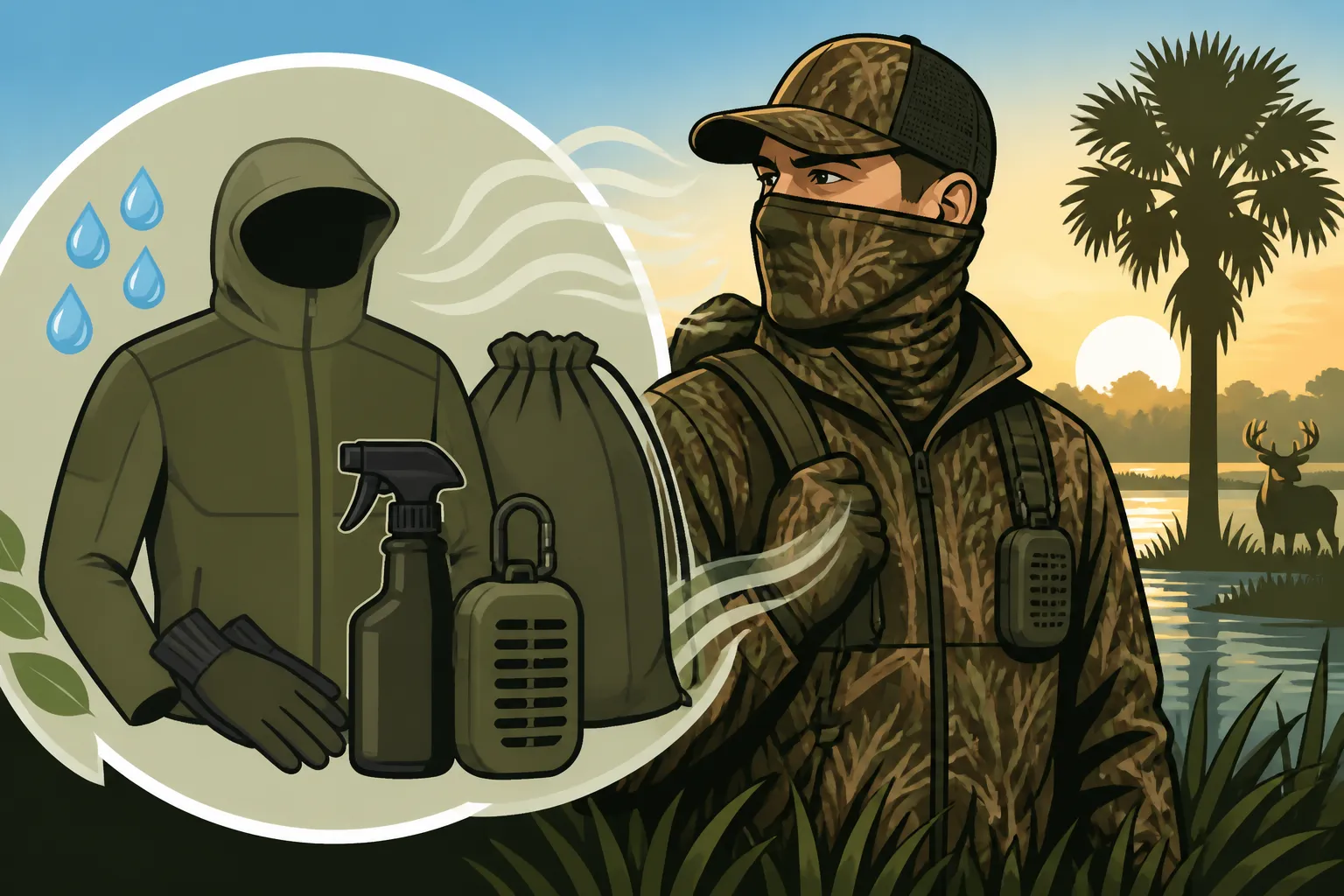
Gone are the days of just throwing on any old camo. Modern scent control clothing is designed to absorb, neutralize, or prevent the growth of odor-causing bacteria. These garments often incorporate technologies like activated carbon, silver ions, or zeolites into the fabric. The key is to have layers that work together. Start with a good base layer that wicks moisture away from your skin, because moisture is the breeding ground for bacteria that cause odor. Then, a mid-layer and outer layer that are also treated.
Imagine a warm morning during Bowhunting South Carolina's Long Archery Season. You've walked a good half-mile to your stand, and you're already feeling clammy. High-quality base layers made from synthetic materials or merino wool, treated with anti-microbial agents, can make a significant difference. They pull that sweat away from your body, allowing it to evaporate more efficiently and reducing the bacterial load. Don't forget your headwear and gloves; your hands and scalp are big scent emitters too. Investing in a full set of scent-controlled clothing, from head to toe, can dramatically reduce your overall scent profile.
Footwear and Storage Solutions
Your feet are powerhouse scent producers, especially when you're walking through damp woods or across a dewy field. Standard hunting boots, while comfortable, can trap moisture and odor like nobody's business. Rubber boots are often a hunter's best friend in South Carolina, not just for keeping your feet dry in lowcountry swamps or after a rain, but also for minimizing the scent you leave behind. They don't absorb human odor like leather or fabric boots do, and they are much easier to clean thoroughly. After each hunt, wash the outside of your rubber boots with scent-free soap and let them air dry.
Storage is another critical, yet often overlooked, component. What's the point of meticulously washing your gear if you then throw it in your truck bed with your gas can, dog kennel, and last week's fast-food wrappers? Scent-free bags, often made of durable, airtight materials, are essential for transporting your hunting clothes. These range from large duffels to individual garment bags. Some even come with internal ozone generators to further neutralize odors between hunts. Keeping your washed gear isolated from household and vehicle odors is non-negotiable. Think about using a dedicated plastic tote with a tight-fitting lid for storing your rubber boots and other hard-to-wash items. This prevents them from picking up ambient odors in your garage or truck cab.
Scent Eliminating Sprays and Wipes
While not a magic bullet, scent-eliminating sprays and wipes play a crucial supporting role. They're best used as a final step before you head into the woods, or for quick touch-ups if you need to relieve yourself or handle food. Look for sprays that chemically neutralize odors rather than just masking them with a cover scent. Apply them generously to your outer layers, your backpack, and even the brim of your hat. Wipes are fantastic for cleaning your hands after handling anything with a strong odor or for a quick refresh if you've been sitting in a stand for hours and feel like you're starting to get ripe. Carry them in a small, easily accessible pouch in your pack. The key is to remember they are the last line of defense, not the first.
Practical Strategies for Minimizing Your Scent Footprint
Gear is just one piece of the puzzle. How you behave, both before and during your hunt, dramatically impacts your scent profile. It’s about building a routine that incorporates every possible advantage against a deer’s incredible sense of smell. From laundry to your approach to the stand, every step matters.
Pre-Hunt Preparation: Laundry and Hygiene
This is where the real work begins. Your hunting clothes should be washed exclusively in scent-free detergent and dried without dryer sheets, which often contain heavy perfumes. After washing, store them immediately in those airtight, scent-free bags or containers we discussed. It's a good practice to wash your clothes the night before, or even better, right after the last hunt, so they're ready to go. When you shower before a hunt, use scent-free soap, shampoo, and deodorant. Avoid any scented products, even if they're "lightly" scented. Your toothpaste, shaving cream, and even your hand soap at home can leave a detectable residue. Some dedicated hunters even do a "hunting season only" personal hygiene product swap. This meticulous approach means that when you suit up, the primary odor you're emitting is your own, and hopefully, that's been minimized. Think about how much effort goes into South Carolina Spring Turkey Season Rules, the same level of detail needs to apply here.
In the Field Tactics: Wind, Approach, and Minimizing Disturbance
Once you're in the field, everything you do affects your scent dispersion. The most critical factor is the wind. Always, always hunt with the wind in your favor. This means walking in, approaching your stand, and sitting in a way that the prevailing wind carries your scent away from where you expect deer to come from. Even if you think you're scent-free, a direct shot of human odor will spook a deer every time. This is where scouting with tools like GoHunt's wind maps can be a game-changer. Before you even leave the house, check the forecast and have a backup plan for different wind directions.
Consider your entry and exit routes. Can you approach your stand without crossing a well-used deer trail? Are there natural barriers that can help funnel your scent away from bedding or feeding areas? Every step you take leaves a residual scent, so walk slowly, avoid touching foliage unnecessarily, and minimize breaking branches. If you need to relieve yourself, do it away from high-traffic areas and use a scent-eliminating wipe. Even things like scratching an itch or adjusting your gear can release more scent. It's a continuous awareness of your presence in their world. When you're thinking about Scouting South Carolina Public Land Before Season, also be thinking about optimal wind-based entry and exit strategies.
| Scent Control Component | Purpose | Key Considerations for SC Humidity |
|---|---|---|
| Scent-Free Clothing | Wicks moisture, neutralizes odor at source | Quick-drying synthetics, merino wool. Anti-microbial treatments. |
| Rubber Boots | Contains foot odor, prevents absorption | Easy to clean. Essential for damp ground and swampy areas. |
| Airtight Storage | Protects clean gear from external odors | Hard totes or specialized bags. Prevents cross-contamination. |
| Scent Eliminating Sprays | Neutralizes surface odors, refreshes | Use as a final step, focus on outer layers and gear. Not a primary solution. |
| Scent-Free Hygiene | Minimizes body odor from the start | Unscented soaps, shampoos, deodorants. Crucial for pre-hunt. |
| Wind & Thermal Awareness | Dictates stand placement, approach | Critical for every hunt. Use apps like GoHunt for real-time data. |
| Minimizing Physical Exertion | Reduces sweat production | Walk slowly, carry lightweight gear. Packs Built for a Sumter Forest Day Hunt can help with comfort. |
Post-Hunt Protocol and Gear Maintenance
Your scent control efforts don't end when you leave the stand. As soon as you're done hunting, get your dirty clothes out of your vehicle and into a dedicated hamper or straight into the wash. Don't let them sit and ferment, soaking up more odors. Clean your rubber boots thoroughly. If you use a ground blind, spray it down with a scent eliminator after each hunt and air it out. For treestands and climbing sticks, wipe them down with scent-free wipes, especially the parts you handle frequently. The goal is to prevent any lingering human scent from contaminating your gear for the next outing. It's an ongoing process that demands consistency. This diligent maintenance applies whether you're chasing deer on Hunting the ACE Basin for Deer or pursuing small game.
Integrating Technology and Advanced Tactics
Beyond the basics, there are some more advanced tools and strategies that South Carolina hunters are increasingly using to gain an edge in the perpetual battle against scent. These often leverage technology to either neutralize odor more aggressively or to give you better environmental awareness.
Ozone Generators
Ozone generators, either portable units for your gear bags or larger ones for your truck or shed, actively neutralize odors. Ozone (O3) molecules attach to odor-causing molecules, oxidizing them and essentially destroying the smell. Hunters use these for their clothing, boots, and even entire vehicle interiors. While they are a significant investment, many swear by their effectiveness, especially in areas with high humidity where traditional methods might struggle. They're particularly useful for getting rid of deep-set odors in items like boots, backpacks, and safety harnesses that are harder to wash conventionally. Just remember to use them safely, as ozone in high concentrations isn't good for your lungs – use them in unoccupied spaces.
Advanced Scouting Tools for Wind and Thermals
We touched on this earlier, but it bears repeating: modern technology can give you an unprecedented advantage in understanding air movement. Apps like GoHunt offer detailed topographical maps, satellite imagery, and weather overlays that include real-time wind speed and direction, even at different elevations. This allows you to plan your approach to a stand or track deer movement based on the exact wind patterns for that moment. Imagine you're hunting in a rolling area of the Midlands or Upstate; knowing how thermals will behave as the sun rises or sets can be the difference between a deer scenting you from a quarter-mile away and one walking right into your shooting lane. You can mark potential stand locations, observe historical wind patterns for those spots, and make informed decisions that go beyond just a general sense of the wind. This kind of detailed planning is crucial, especially when tackling public lands that might see higher Hunting Pressure on South Carolina Public Land.
Strategic Stand Placement with Scent in Mind
The best scent control in the world can't overcome a poorly placed stand. When you're scouting, always think about wind first. Can you get to and from your stand without blowing your scent into a bedding area? Is there a prevailing wind that will keep your scent clear of travel corridors? In areas with dense cover, like many of our pine plantations or thick swamp edges, deer can pop up quickly, giving you less time to react. Placing your stand not just for shooting lanes, but also for ideal scent dispersion, is paramount. Consider funnel points, natural bottlenecks, and areas where deer are likely to cross downwind of your position. For example, if you are Hanging a Stand on a Sumter Forest Ridge, understanding how the wind and thermals interact with that specific terrain feature is far more important than just finding a pretty tree. A deer might pick up your scent long before you even see it.
Disclaimer
This article is for general informational purposes only and does not constitute professional advice. Laws, prices and regulations vary by location and change over time. Consult a qualified professional for guidance on your specific situation.