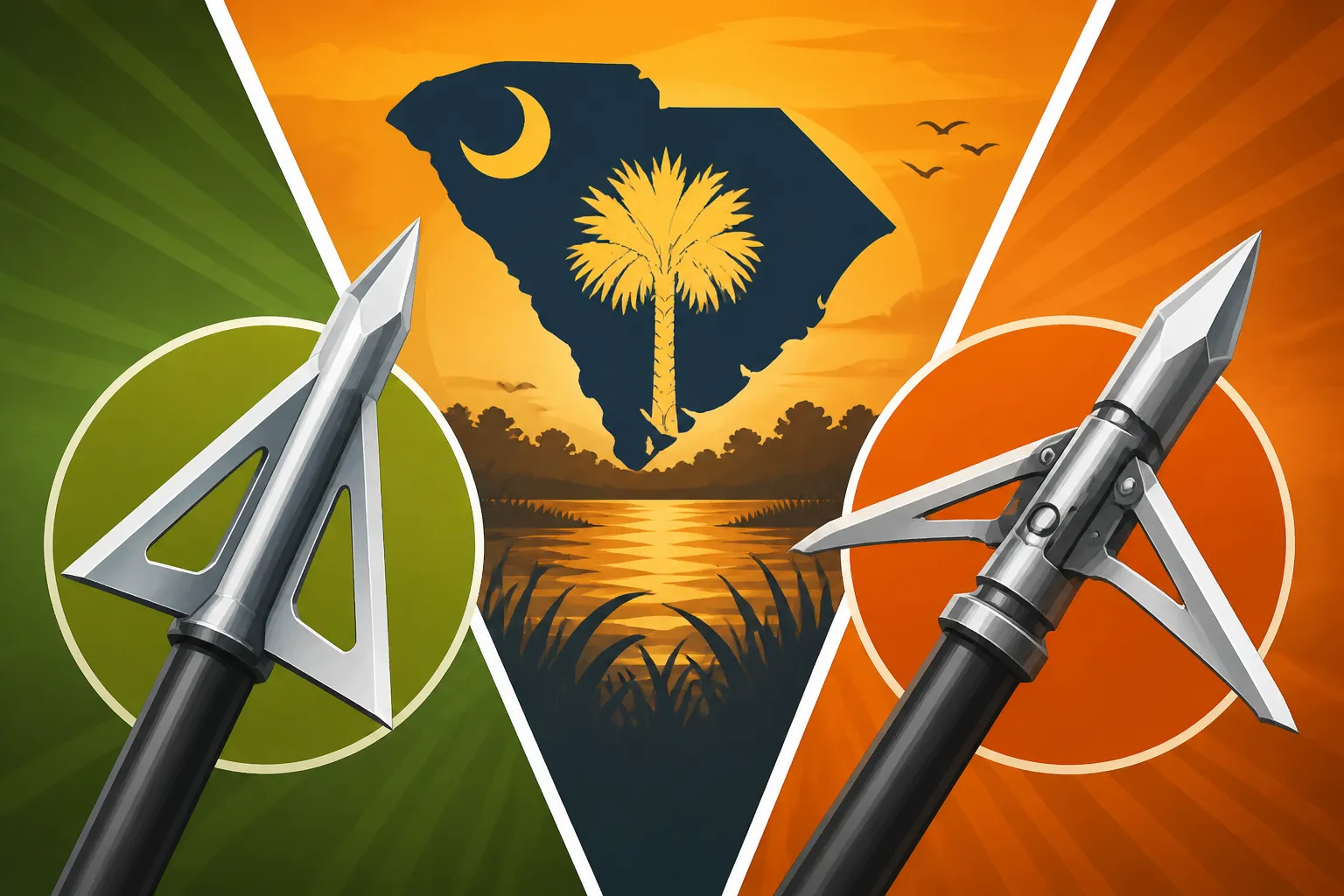
Fixed Versus Mechanical Broadheads
It’s a tale as old as bowhunting itself, especially here in South Carolina where our archery season kicks off when the air is still thick with summer heat and deer can be a bit spooky. You've spent countless hours practicing with your bow, making sure your form is solid and your arrows fly true. But then comes that crucial decision, the one that can weigh heavy on a bowhunter’s mind: what broadhead should you screw onto the end of those perfectly fletched shafts? This isn't just about sharp blades; it's about confidence, ethical harvesting, and making sure your hard work in the stand pays off when that moment of truth arrives. This guide is going to dig deep into the world of fixed versus mechanical broadheads, helping you cut through the confusion and choose the best option for your South Carolina deer hunt.
Understanding Fixed-Blade Broadheads
Fixed-blade broadheads are the OGs of the bowhunting world. They've been around forever, evolving from primitive stone points to the razor-sharp, precisely machined steel we use today. There's a reason they've stuck around: they work, and they work incredibly well when chosen and tuned correctly. For many South Carolina bowhunters, especially those of us who grew up with them, they represent reliability and a no-nonsense approach to getting the job done.
The Enduring Appeal of Fixed Blades
What is it about a fixed-blade broadhead that makes so many hunters swear by them? It boils down to simplicity and brute-force effectiveness. There are no moving parts to worry about, no springs to fail, no blades to accidentally deploy in your quiver or, worse yet, not deploy when they hit the animal. When that arrow leaves your string, those blades are exactly where they're supposed to be, ready to do their job. This design ensures maximum structural integrity, meaning the broadhead is built to withstand impacts with bone, gristle, and the thick hide of a South Carolina buck or boar.
For us hunting in the varied terrain of South Carolina – from the dense pine thickets and swamp bottoms of the Lowcountry to the rocky, hardwood ridges of the Upstate – that reliability is a huge comfort. We often find ourselves taking shots that might involve a twig or two, or hitting a deer at a slightly quartering-away angle. In these situations, a fixed blade’s robust construction often means better penetration and a cleaner pass-through, even if the shot isn't absolutely perfect. They're designed to punch through, making them a favorite for those seeking deep, devastating wound channels every time.
Pros and Cons in South Carolina Hunting Conditions
Let's get down to the nitty-gritty and look at how fixed blades stack up specifically for us hunting here in the Palmetto State.
Pros of Fixed Blades
First off, durability is a massive advantage. You can pull a fixed-blade broadhead out of the dirt after a pass-through, resharpen it (or replace the blades on some models), and potentially use it again. This translates to cost savings over time and peace of mind that your equipment can handle the rigors of the hunt. Secondly, their deep penetration is legendary. Because all the arrow's energy is concentrated into driving those fixed blades forward, they tend to penetrate deeper, especially through bone. This is critical when you might hit a rib or the shoulder blade of a big buck or, even more so, a tough old feral hog. We often deal with Hunting South Carolina's Year-Round Feral Hogs, and their gristly shields can make you appreciate every bit of penetration you can get.
Another huge benefit, particularly for hunters using lower poundage bows or those just starting out, is that no moving parts to fail means every bit of kinetic energy is transferred directly to the cut. You don't lose energy overcoming springs or blade resistance upon impact. This can make a real difference in achieving a pass-through, which is what we're always striving for here in our warm climate to get that good blood trail. Lastly, if your bow is meticulously tuned, fixed blades can be incredibly accurate, flying just like your field points.
Cons of Fixed Blades
Now, for the downsides. The biggest one for many hunters is that fixed blades can be less forgiving on tuning. If your bow isn't perfectly tuned – meaning your arrow flies perfectly straight out of the bow – those fixed blades can act like little rudders, causing your arrow to plane or "kite" in flight. This can lead to significant accuracy issues, especially at longer distances. It means more time on the practice range, meticulously making sure your bow is perfectly dialed in.
They often have a smaller cutting diameter compared to many mechanical broadheads. While they penetrate well, the initial wound channel might not be as wide, which can sometimes result in less expansive blood trails if the animal doesn't bleed from both sides. This is a real concern in our thick South Carolina cover, where a good blood trail is often the only thing leading you to your deer. Finally, that potential for wind drift if not perfectly tuned means you need to be extra vigilant on windy days, which we certainly get in our open fields and along coastal marsh edges.
Exploring Mechanical Broadheads
Mechanical broadheads, also known as expandable broadheads, represent a more modern approach to bowhunting. They’re designed to fly like field points for superior accuracy and then deploy their blades upon impact, creating a devastatingly large cutting diameter. When they first hit the market, they were a game-changer for many, promising a blend of accuracy and immense wound channels.
The Rise of Expanding Technology
The core concept behind mechanical broadheads is ingenious: why compromise accuracy for cutting surface, or vice-versa, when you can have both? These broadheads feature blades that are tucked away during flight, often held in place by O-rings, collars, or retention clips. This sleek, low-profile design minimizes drag and greatly reduces the "planing" effect that can plague fixed blades if the bow isn't perfectly tuned. The idea is that your practice sessions with field points will translate almost exactly to your broadhead shots, boosting confidence significantly.
Upon impact with the target, the force causes these blades to deploy or "expand," creating a much wider cutting diameter than their fixed-blade counterparts. We're talking about blades that open up to 1.5, 2, or even 2.5 inches wide, creating a massive wound channel. The theory is simple: a bigger hole means more blood loss and a quicker, more ethical harvest. For hunters looking to maximize their odds of a short blood trail in the notoriously thick South Carolina woods, this promise of a wider cut is incredibly appealing.
Advantages and Drawbacks for South Carolina Bowhunters
So, do mechanical broadheads live up to the hype in our South Carolina hunting scenarios? Let's weigh the good with the bad.
Advantages of Mechanical Broadheads
Perhaps the most celebrated advantage is their field-point accuracy. Many hunters find that mechanical broadheads fly almost identically to their practice field points, making the transition from target practice to hunting season much smoother. This is a huge confidence booster, especially when you're shooting at deer that might only offer a small window through the pines or palmettos. This ease of tuning means less frustration and more time building muscle memory with your setup.
Next up is the larger cutting diameter. When those blades deploy, they create a significantly wider wound channel than most fixed blades. This can translate to a much better blood trail, which, again, is invaluable in South Carolina's dense undergrowth. A wide-open blood trail can mean the difference between recovering a deer quickly and spending hours on a frustrating search, especially during the warm early season where spoilage is a concern. The wider cut often creates more tissue damage, leading to a faster and more humane expiration for the animal. Many bowhunters using a heavier South Carolina Bow Draw Weight for South Carolina Whitetails might opt for mechanicals to maximize this cutting power.
Drawbacks of Mechanical Broadheads
Despite their advantages, mechanical broadheads come with their own set of potential headaches. The most common concern is the potential for mechanical failure. Blades might not deploy fully, or they could deploy prematurely if they snag a twig or brush in flight. While modern mechanicals are incredibly reliable, any moving part introduces a tiny element of risk that a fixed blade simply doesn't have. If the blades don't open as designed, you're essentially hitting the animal with a glorified field point, which is far from ideal.
Another drawback is that they can lose energy on impact. The act of deploying the blades requires some kinetic energy from the arrow, meaning that energy isn't fully going into penetration. This can be a factor on marginal shots, especially if you hit a deer at a sharp quartering angle or encounter heavy bone. In such scenarios, a mechanical might not achieve the same depth of penetration as a robust fixed blade. This is particularly relevant when considering Broadheads for Swamp Timber Shots where shots can sometimes be tight and at odd angles. They are generally recommended for higher poundage bows that can afford to "lose" a bit of energy during deployment, ensuring adequate penetration.
Finally, while not a widespread issue in South Carolina, it's always good practice to check WMA regulations. While mechanicals are generally legal, some specific hunting areas or states might have restrictions on certain broadhead types. Always confirm the rules for your specific hunting spot, especially when hunting public land like the Francis Marion National Forest or any of our Wildlife Management Areas. Always double-check your South Carolina WMA Permit Requirements before heading out.
Making the Right Choice for Your Hunt
Deciding between fixed and mechanical broadheads isn't about one being inherently "better" than the other. It's about finding the right tool for your specific bow setup, hunting style, and the conditions you face here in South Carolina. There's no one-size-fits-all answer, and any hunter who tells you otherwise is probably selling something!
Factors to Consider: Bow Setup, Shot Placement, and Game
Let's break down the key elements that should influence your decision.
First, your bow setup is paramount. What's your draw weight? Are you shooting a heavy arrow, or a lighter, faster setup? Generally, bows with lower draw weights (say, under 50-55 pounds) often benefit from the maximum penetration offered by fixed blades, as they simply have less kinetic energy to spare for blade deployment. Higher poundage bows, on the other hand, can usually drive mechanicals with plenty of energy for deep penetration and full blade expansion. The overall tune of your bow is also critical. If your bow is impeccably tuned, fixed blades can be incredibly accurate. If you struggle with tuning, or prefer a simpler approach to arrow flight, mechanicals often offer that "field point accuracy" out of the box. Consider your Arrow Weight for Short Shots as well, as heavier arrows tend to penetrate better with either type.
Next, think about shot placement and your confidence in it. We all strive for that perfect broadside double-lung shot, but hunting isn't always textbook. Are you comfortable with more challenging angles? Mechanical broadheads, with their energy-expending deployment and wider cut, can be less forgiving on a steep quartering shot that might hit the shoulder blade, potentially leading to less penetration. Fixed blades often excel in these tougher scenarios, maintaining their integrity and punching through bone more reliably. Ultimately, ethical shots are paramount regardless of your broadhead choice. If you're going to take a shot, make sure it's one you're absolutely confident in.
Finally, consider your game. While we're mostly talking about white-tailed deer here, many of us also hunt the tough-as-nails feral hogs that roam South Carolina. Their gristly shoulder plates and thick hides demand maximum penetration. Many experienced hog hunters lean towards fixed blades for this reason, as they tend to bust through tougher material with less energy loss. For deer, either can be highly effective, but again, consider the factors above.
Practice, Practice, Practice
I cannot stress this enough: practice with your hunting broadheads! It sounds obvious, but you'd be surprised how many hunters only shoot field points until opening day. Your broadheads, whether fixed or mechanical, will fly differently than your field points. The subtle differences in aerodynamics and weight distribution can significantly change your point of impact, even if only by an inch or two at 30 yards. That's enough to turn a lethal shot into a wound.
Shoot your actual broadheads at various distances you expect to hunt. Watch how they fly. Listen for any weird sounds. Get to know their tendencies. If you’re seeing planing with fixed blades, you might need to adjust your arrow rest, nocking point, or even your grip. If you're noticing inconsistencies with mechanicals, check for blade retention issues or potential fletching contact. Your confidence comes from knowing exactly where your arrow is going to hit when it leaves your bow with a broadhead on the front. This is crucial for Bowhunting South Carolina's Long Archery Season when accuracy means everything.
South Carolina Specific Considerations and Regulations
Hunting in South Carolina presents unique challenges and opportunities that can influence your broadhead choice. We don't just hunt in "the woods"; we hunt in distinct ecological regions with different types of cover and game behavior.
Terrain, Vegetation, and Typical Shot Scenarios
Think about where you mostly hunt in South Carolina. Are you in the dense, often swampy lowcountry, where shot distances are typically close, and the cover is incredibly thick? In places like the Francis Marion National Forest or around the ACE Basin, shots through heavy brush or tight lanes are common. Here, a fixed blade's ability to resist deflection and punch through minor obstacles might be an advantage. The sheer thickness of vegetation often limits your visibility and shot distance, making reliable penetration paramount.
Or perhaps you hunt the more open, rolling terrain of the Upstate or Midlands, where timber stands might be taller, and clear cuts offer longer shot opportunities. While longer shots might favor the accuracy of mechanicals, the presence of thicker bone in larger, older bucks (which the Midlands is known for producing) still makes deep penetration a priority. Regardless, understanding typical shot distances in our varied woods will inform whether you prioritize accuracy over penetration, or vice-versa. Often, our shots are well under 40 yards, even in fairly open areas.
Checking Local WMA Rules
While South Carolina's statewide hunting regulations are fairly consistent regarding broadhead types – essentially, they must have at least two cutting edges and be at least 7/8 inch wide – it is always a good idea to double-check specific Wildlife Management Area (WMA) rules. While I've never encountered a WMA that restricts types of broadheads (fixed vs. mechanical), WMAs often have specific rules regarding other equipment like Crossbow Rules During South Carolina Archery Season or specific hunting methods.
It's just good practice to always review the latest South Carolina Department of Natural Resources (SCDNR) regulations booklet and any specific WMA handouts before each season. You can usually find these online or at your local license vendor. This diligent approach ensures you're always hunting legally and ethically, allowing you to focus on the hunt itself rather than worrying about compliance.
Here's a quick comparison to help visualize the differences:
| Feature | Fixed-Blade Broadheads | Mechanical Broadheads |
|---|---|---|
| Design | Blades are stationary, non-moving | Blades deploy or expand upon impact |
| Flight Accuracy | Requires precise bow tuning to fly like field points | Often flies like field points, easier tuning |
| Cutting Diameter | Generally smaller (1" to 1.25") | Generally larger (1.5" to 2.5"+) |
| Penetration | Excellent, especially through bone; less energy loss | Good, but some energy lost to blade deployment |
| Reliability | Extremely high, no moving parts to fail | High, but small risk of mechanical failure |
| Durability | Very durable, often reusable | Blades can be damaged or bent, usually replaceable |
| Wind Drift | More susceptible if not perfectly tuned | Less susceptible due to sleek flight profile |
| Recommended Bow Weight | Great for all draw weights, especially lower poundage | Best for higher draw weights (55lbs+) to ensure deployment |
| Ideal SC Conditions | Thick cover, potential for bone hits (hogs), lower poundage bows | Open field edges, easy tuning, higher poundage bows |
Ultimately, the best broadhead for you is the one you have the most confidence in, the one that is tuned perfectly with your bow, and the one that flies exactly where you look. Take the time to experiment, practice, and gain that critical confidence before you head into the South Carolina woods.
Disclaimer
This article is for general informational purposes only and does not constitute professional advice. Laws, prices and regulations vary by location and change over time. Consult a qualified professional for guidance on your specific situation.