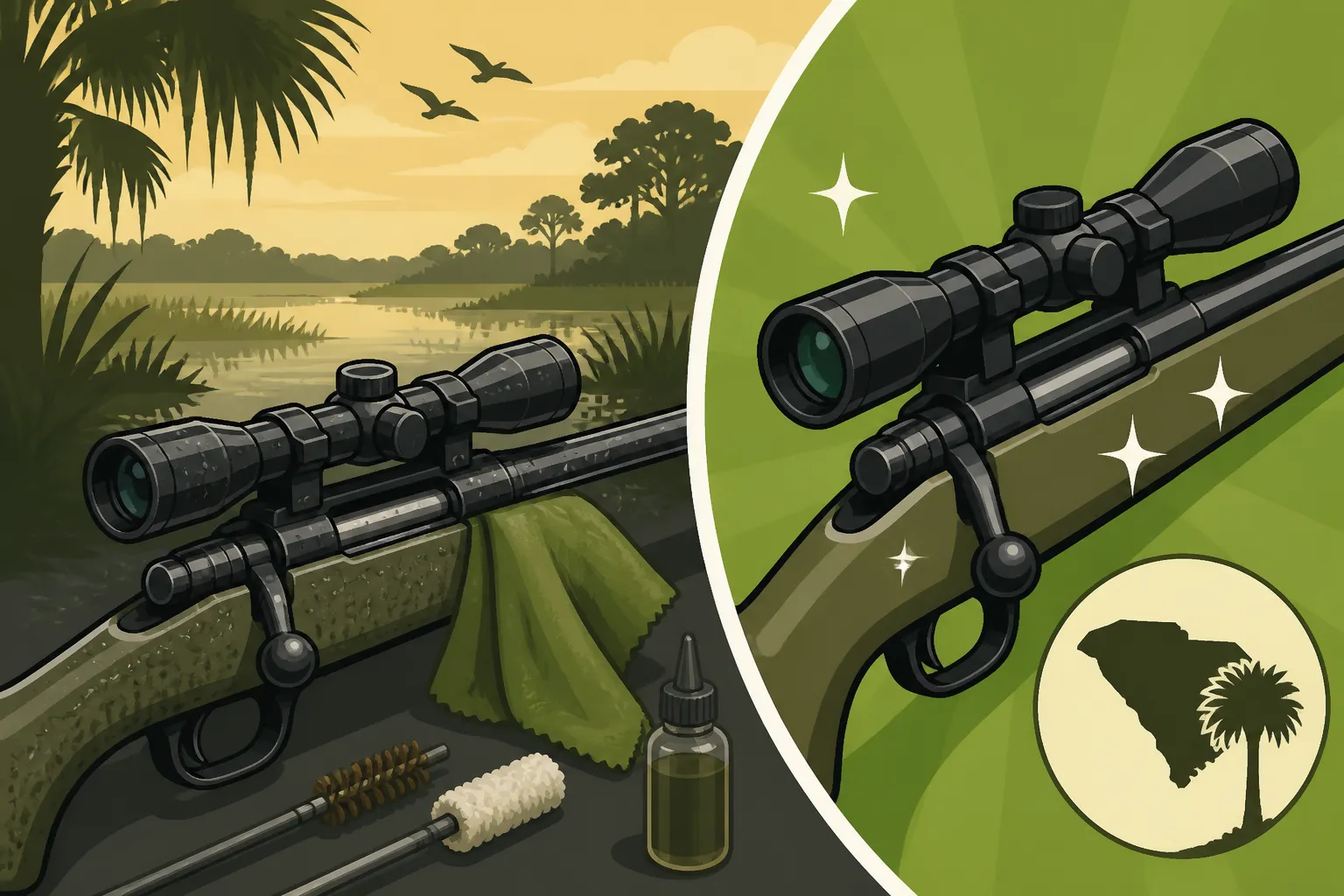
Cleaning a Rifle After a Humid Sit
Oh, the joy of hunting in South Carolina! Those crisp autumn mornings or even those sweltering early archery season afternoons are pure magic, aren't they? But let's be real, the moment you step out of the humid woods, you know your rifle has just endured a gauntlet. That sticky, moisture-laden air, especially near the coast or in one of our many swampy bottomlands, can wreak havoc on your prized firearm if you don't take immediate and proper care. This guide is all about giving you the straight scoop on how to clean and protect your rifle after it's been soaked in that famously damp South Carolina air, ensuring it's always ready for your next hunt.
The Silent Threat: Why South Carolina Humidity Demands Special Rifle Care
You've just spent a long, satisfying sit in a treestand, maybe tucked deep in the Francis Marion National Forest, hoping for that big buck to step out. The air was thick, the kind where you could almost chew it, and while your sweat might have dried, that moisture clung to everything, including your rifle. It’s not just rain you have to worry about; South Carolina’s pervasive humidity is a silent, relentless enemy to your firearm, quietly eating away at its integrity if left unchecked.
Understanding Humidity's Impact on Metal and Wood
Humidity isn't just about feeling sticky; it's about water vapor in the air finding every tiny crevice and surface to condense upon. For metal components on your rifle, this means a constant battle against rust and corrosion. You might wipe down the exterior of your barrel, but what about inside the bore? Or tucked away under the stock? Microscopic moisture droplets will settle, and given enough time, they'll initiate surface rust, which can quickly evolve into destructive pitting. Pitting, especially in the bore, is a death sentence for accuracy, slowly eroding the precision you rely on for ethical shots. It's a frustrating reality for hunters in our beautiful, yet damp, state.
And it’s not just metal. If you're running a classic rifle with a beautiful walnut stock, that humidity is a real concern. Wood is a natural material that breathes, meaning it absorbs and releases moisture. When it absorbs too much, it can swell, warp, and crack. This can impact the rifle's fit and finish, potentially loosening components or degrading the integrity of the stock itself. Imagine the heartache of seeing your grandfather's heirloom rifle, perfectly preserved for generations, start to show signs of damage from just a few humid hunts because it wasn't cared for properly. Even synthetic stocks, while more resistant, can trap moisture against metal parts they encase, leading to hidden corrosion.
The Hidden Dangers of Lingering Moisture
Beyond the obvious rust on the exterior, lingering moisture can create much more insidious problems. Think about your rifle's trigger mechanism – a complex series of springs and pins that need to move freely and predictably. If moisture works its way in there, it can cause tiny rust spots that lead to a gritty, inconsistent trigger pull, or even worse, a malfunction. The same goes for your bolt and action. Rust on the locking lugs or in the receiver can make the action stiff, difficult to cycle, or even prevent it from closing fully, compromising safety and reliability when it matters most.
Then there are your optics. That premium scope you invested in for those low-light swamp edge shots? Humidity can fog up the lenses externally, which is annoying enough, but it can also lead to internal moisture if seals are compromised, causing permanent damage or growing mold within the scope body. This isn't just a minor inconvenience; it's a critical failure that can cost you a shot at a deer or bear. Rifle Scopes for Low-Light Swamp Edges delves deeper into choosing and caring for optics in these conditions. Even your magazine, if it's external, can suffer from internal rust, leading to feed issues when you really need those rounds to cycle smoothly. This is why a simple wipe-down is rarely enough; the humidity here demands a deeper, more intentional approach to rifle maintenance.
Immediate Post-Hunt Care: Your First Line of Defense
You've had a great hunt, maybe tagged out with a nice buck, or perhaps just enjoyed the peace and quiet of the woods. Regardless of the outcome, the work isn't over when you climb out of that stand. In fact, some of the most critical cleaning begins before you even step inside your house or cabin. This immediate care is your first, best defense against the relentless assault of South Carolina's humidity.
The Field Strip and Initial Wipe-Down
As soon as you’re out of the woods and before heading indoors, take a moment to address your rifle. This isn't about a full, meticulous cleaning yet, but rather getting the visible and easily accessible moisture off. Start by making sure your rifle is unloaded, always. Then, perform a basic field strip. For most bolt-action rifles, this means removing the bolt. For semi-autos, you might pop out the charging handle and bolt carrier group if it's a simple process.
With the action open and the bolt removed, grab a clean, dry rag or paper towel. Wipe down every external surface you can reach. Pay special attention to the barrel exterior, the receiver, the bolt body, and any exposed metal. Don't forget the nooks and crannies around the trigger guard and magazine well. For the bore, run a dry patch or two down it using your cleaning rod, from the breech end if possible, to push out any immediate moisture or loose debris. This quick, initial wipe-down prevents moisture from sitting and starting its corrosive work while you're driving home or settling in for the evening. It might feel like an extra step, but trust me, it saves you headaches down the road. This is especially true after those warm-weather sits we often experience during the early season. Warm-Weather Sitting Strategy in South Carolina can help you prepare for those conditions.
Moisture Displacement and Protection
Once you’ve done the initial wipe-down, the next crucial step in a humid environment is moisture displacement. Many folks grab their trusty multi-purpose lubricant, but what you really need is a product designed to displace water, not just lubricate. Products like WD-40 (and others designed specifically for firearms, such as those from GoHunt's extensive cleaning section) are excellent at this. They have a higher affinity for metal than water, literally pushing the moisture away from the surface.
Spray a light coat over all external metal surfaces, inside the receiver, and on the bolt. Don't drench it, just a fine mist. Then, use another clean rag to wipe it dry, which also helps spread the displacing agent evenly. For the bore, you can spray a patch and run it through, or lightly spray directly into the bore from the chamber end, then follow with a dry patch. The key here is to get rid of all the microscopic water droplets. Only after you've displaced the moisture should you apply a very light coat of your preferred gun oil for initial protection. This two-step process is crucial because applying oil over trapped moisture effectively seals it against the metal, accelerating corrosion. This technique is particularly vital if you've been hunting in a lowcountry swamp, where standing water and high humidity are constants. Hunting a Funnel Between Two Swamps often means getting your gear wet.
The Deep Clean: Restoring Your Rifle to Prime Condition
After the immediate post-hunt care, and ideally within a day or two of getting home, it’s time for the deep clean. This is where you meticulously remove all traces of fouling, grime, and any hidden moisture that might have been missed, ensuring your rifle is not just clean, but truly protected and ready for its next outing. This isn't a quick job; it's a methodical process that truly extends the life and reliability of your firearm.
Disassembly and Inspection
For a truly thorough cleaning in a humid climate, a full disassembly beyond just the field strip is often necessary. This means removing the stock from the action and barrel, and if you're comfortable and knowledgeable, even taking apart the trigger group (though consult your rifle's manual first, as some are more complex than others). This level of disassembly allows you to get into those hidden areas where moisture and grit love to accumulate.
Lay out your components on a clean, designated workbench or surface. Now, with everything exposed, you can perform a detailed inspection. Look for any signs of rust developing in places you couldn't see before: under the stock, inside the receiver where the trigger group sits, or along the barrel where it meets the fore-end. Check for any dirt, grit, or plant matter that might have worked its way into the action. You’ll need a good set of tools for this: appropriate screwdrivers (often hollow-ground gunsmithing drivers to prevent marring screw heads), possibly some punches for pins, your trusty cleaning rod, an assortment of patches and brushes, and a good gun-specific solvent. Many hunters find tools and supplies from reputable outdoor retailers, like those found through GoHunt, to be invaluable for this task.
Bore and Chamber Cleaning
The bore and chamber are the heart of your rifle's accuracy, and they take a beating from powder residue, carbon, and copper or lead fouling. Start by applying a good quality bore solvent to a patch and running it through the bore. Let the solvent work for a few minutes, as directed by its manufacturer. This chemical action helps break down the fouling.
Next, attach a bore brush (bronze or nylon, matching your caliber) to your cleaning rod. Push the brush through the bore from the breech end, if possible, and then pull it back out. Do this several times – typically 5-10 strokes. The brush will scrub away loosened fouling. After brushing, run more solvent-soaked patches through, followed by dry patches, until they come out clean. Sometimes, especially with heavy copper fouling, you might see blue or green residue on your patches; this indicates the solvent is working on copper. Repeat the solvent and dry patch steps until no more blue/green appears. Finally, run a patch lightly coated with gun oil through the bore to protect it. Remember, always clean from the breech to the muzzle to protect the rifling at the crown, which is critical for accuracy.
Action, Bolt, and External Metal Care
The action and bolt are crucial for your rifle's reliable operation. After disassembly, thoroughly clean the bolt face, where the cartridge sits, and inspect the extractor and ejector for any buildup. Use solvent and a small brush (an old toothbrush works great for these areas) to remove carbon and grime from the locking lugs, bolt body, and inside the receiver. Pay attention to the firing pin channel and ensure it's free of debris, as a clogged channel can lead to misfires.
Once clean, wipe everything down with a dry rag, and then apply a thin coat of appropriate gun oil. For blued finishes, oil is essential for corrosion protection. For stainless steel, while more corrosion-resistant, a light coat of oil still offers a protective barrier. Ensure all moving parts are lightly lubricated but avoid over-oiling, which can attract dust and grit, turning lubrication into a grinding paste over time. This meticulous care extends the life of components, ensuring your rifle cycles smoothly every time you go hunting. For carrying your rifle, Rifle Cases for Travel to South Carolina are essential to protect it from dings and additional moisture while in transit.
Stock and Optics Maintenance
Your rifle's stock, whether wood or synthetic, also needs attention. For wood stocks, after removing them from the action, wipe them down with a slightly damp cloth to remove dirt, then immediately dry thoroughly. Inspect the wood for any cracks, dents, or signs of swelling. Apply a good quality wood oil or stock wax, working it into the grain. This not only protects the wood but also helps repel moisture and brings out its natural beauty.
Synthetic stocks are generally easier to care for; a simple wipe-down with a damp cloth and mild soap (if needed) is usually sufficient. Avoid harsh chemical solvents, which can damage the finish. Check any sling swivel studs or accessory attachment points for tightness and ensure no moisture is trapped underneath.
Your optics also deserve gentle care. Use a dedicated lens cleaning solution and a microfiber cloth. Breathe lightly on the lenses to create some condensation, then gently wipe with the cloth to remove dust and smudges. Avoid paper towels or harsh cloths, which can scratch delicate lens coatings. Never spray cleaning solutions directly onto the lenses; apply them to the cloth first. Ensure objective and ocular lens caps are in good condition and used when not actively hunting to protect against dust and moisture. If you notice any internal fogging, it’s best to consult a professional, as that indicates a seal breach that requires specialized repair.
| Cleaning Agent Type | Primary Use | Application Notes |
|---|---|---|
| Bore Solvent | Removes powder, carbon, copper, lead fouling | Apply to patches, let dwell, use with brush. |
| Moisture Displacer | Pushes water away from metal surfaces | Use before lubricant in humid conditions; light spray, then wipe dry. |
| Gun Oil (Light) | Lubrication, short-term rust prevention | Thin coat on all moving parts and external metal after cleaning. |
| Gun Oil (Heavy/Grease) | Long-term storage, heavy wear points | For extended storage or specific high-friction areas. Use sparingly. |
| Stock Wax/Oil | Protects wood stocks, repels moisture | Apply and buff into wood grain; reapply periodically. |
| Lens Cleaner | Safely cleans optical glass surfaces | Apply to microfiber cloth, never directly to lens. |
Long-Term Storage and Humidity Control
You've put in the hard work of thoroughly cleaning your rifle, and now it's shining and ready for whatever the South Carolina woods throw at it next. But the battle against humidity doesn't end there. How you store your rifle, particularly in our subtropical climate, is just as crucial as the cleaning process itself. Proper long-term storage and environmental control are paramount to prevent all your hard work from being undone.
Proper Lubrication for Storage
For long-term storage, especially if your rifle will be put away for more than a few weeks, you might want to consider a slightly heavier layer of protection than a standard light gun oil. There are dedicated rust-preventative oils and gun greases available that offer a more robust barrier against moisture. The key is to apply a thin, even coat over all metal surfaces – inside the bore, on the bolt, in the receiver, and on the barrel exterior.
When I say "thin," I mean it. You're not trying to dunk the rifle in grease. A thin film is all that's needed to create a protective barrier. Too much oil, especially if it's thick, can actually attract dust and lint over time, which can then hold moisture against the metal or gunk up delicate mechanisms. Think of it as putting a protective skin on your rifle. Some hunters even apply a thin layer of wax over their blued finishes for an extra measure of protection against moisture. This is an important step that many overlook, but it's vital for maintaining your rifle's pristine condition through the off-season.
Environmental Control in Your Gun Safe
This is arguably the most critical aspect of long-term rifle protection in South Carolina. Simply putting your clean rifle into a sealed gun safe without any environmental control is a recipe for disaster. That safe, with its insulated walls, can become a humid, stagnant box, creating a perfect breeding ground for rust. You might open it up one day to find tiny orange spots blooming on your barrel, and that's a heartbreaker.
The solution is active humidity control. Many hunters opt for electric dehumidifier rods that plug into an outlet and gently warm the air inside the safe, preventing condensation. These are a great investment. Alternatively, desiccant packs or rechargeable dehumidifiers, like those from a reputable brand such as GoHunt, can absorb moisture from the air. Whichever method you choose, it's absolutely essential to include a hygrometer (a humidity gauge) inside your safe. This allows you to monitor the humidity level and ensure it stays below 50%, ideally closer to 30-40%. If you notice the humidity creeping up, you know it's time to recharge your desiccant or adjust your electric dehumidifier. Without this vigilance, all the meticulous cleaning in the world won't save your rifle from our famously persistent South Carolina humidity.
Remember that early season can also bring a lot of bugs, so make sure your clothing choices for hunting also reflect the need to combat humidity, heat, and insects. Bug Protection for Early Archery Season and Warm-Weather Clothing for South Carolina Hunters can give you some good pointers there. Take pride in caring for your firearms, just as you take pride in the hunt itself.
Disclaimer
This article is for general informational purposes only and does not constitute professional advice. Laws, prices and regulations vary by location and change over time. Consult a qualified professional for guidance on your specific situation.