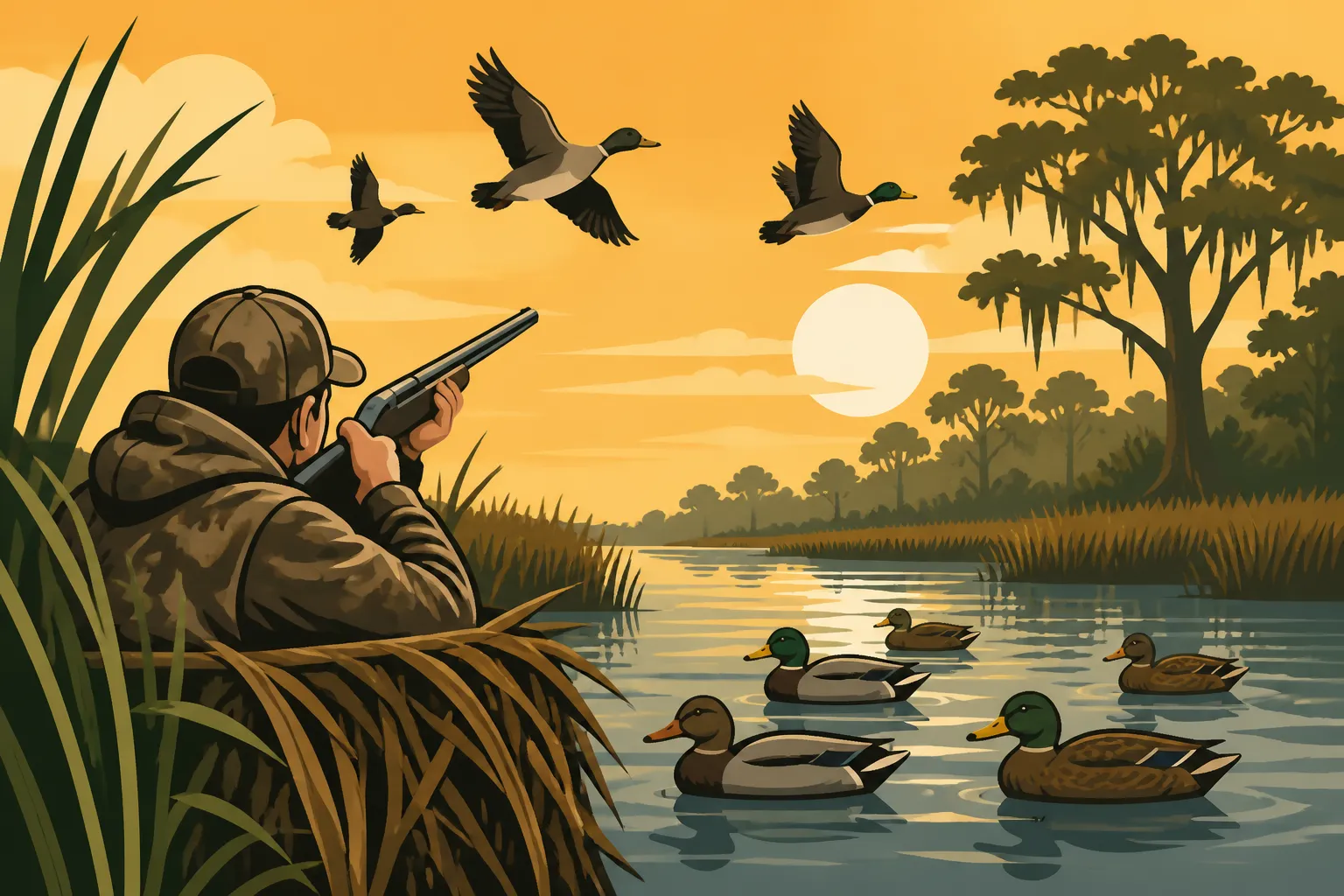
Decoy Spreads for ACE Basin Divers
One of the most thrilling parts of hunting diver ducks in South Carolina's magnificent ACE Basin is getting those fast-flying birds to commit to your spread. It can be incredibly frustrating when flocks just zip by, refusing to give you a look, especially after you've put in all that effort setting out dozens of decoys in the pre-dawn dark. This guide will walk you through the nuances of crafting effective decoy spreads specifically for diver ducks in the unique tidal waters of the ACE Basin, helping you understand how to attract these challenging waterfowl.
Understanding the ACE Basin Environment for Divers
The ACE Basin, encompassing the Ashepoo, Combahee, and Edisto Rivers, is a mosaic of tidal marshes, estuaries, and brackish impoundments. It's a critical wintering ground for a multitude of waterfowl, including a strong contingent of diver ducks. Unlike puddle ducks that often feed in shallow water, divers prefer deeper, open water where they can dive for submerged vegetation and invertebrates. Understanding this unique habitat and the behavior of the birds it attracts is fundamental to setting effective decoy spreads.
Tidal Influence and Water Movement
The ACE Basin is heavily influenced by the Atlantic tides, which means water levels and currents are constantly changing. What might be a perfect decoy setup at high tide could be high and dry, or completely discombobulated by a strong current, just an hour or two later. You've got to think like the tide. Strong outgoing tides can pull your decoys downstream, tangling lines and ruining your carefully arranged spread. Incoming tides can push them into shallow banks, making them look unnatural. This constant motion means your rigging has to be robust, and your chosen spots need to account for significant water fluctuation. For instance, a shallow flat that holds feeding divers at high tide might be too exposed as the water drops, forcing them into deeper channels. Hunting the ACE Basin for Waterfowl demands an intimate knowledge of these movements, which can sometimes feel like a chess match against nature itself.
Target Diver Species and Their Behavior
The ACE Basin attracts several species of diver ducks, each with slightly different behaviors and preferences that influence how you set your decoys. Scaup (both Greater and Lesser), Ring-necked Ducks, Redheads, and Canvasbacks are common visitors, with Buffleheads and Goldeneyes making appearances as well. Scaup and Ringnecks often raft up in large groups, feeding on submerged vegetation and small invertebrates. Redheads and Canvasbacks are prized for their speed and beauty, and often prefer vast, open water expanses, though Redheads will also utilize brackish impoundments. Buffleheads and Goldeneyes are smaller, often found in tighter groups, and can be seen in slightly more sheltered areas, but still prefer clear, deeper water for diving. Knowing which species you're primarily targeting on a given hunt, or which species are most abundant in the specific area you've chosen, will inform the size, density, and configuration of your spread.
Habitat Features of the ACE Basin
The ACE Basin offers a diverse range of habitats, from vast, open brackish bays and river channels to narrower tidal creeks and managed impoundments. Diver ducks typically gravitate towards areas with deeper water and abundant submerged aquatic vegetation (SAV), which is their primary food source. Areas where freshwater runoff meets the saltwater can create productive zones, offering a mix of salinity and nutrients that foster diverse forage. Look for wide-open stretches of water, especially near points, islands, or along the edges of channels, where divers feel safe and have easy access to deep water. While puddle ducks might hug the marsh edges, divers are often found further out, where they have clear flight paths and plenty of room to raft. Reading a Tidal Marsh for a Morning Flight involves identifying these deeper sections and understanding how divers use them.
Key Decoy Spread Principles for Diver Ducks
Attracting diver ducks requires a different mindset than hunting puddle ducks. Divers are typically less inclined to fly into tight, timber-filled pockets. They want open water, clear landing strips, and the comfort of numbers. Your decoy spread needs to convey these elements convincingly, drawing them in from afar and giving them the confidence to pitch down.
Visibility and Realism
Diver ducks are often cruising at speed, sometimes quite high, over large expanses of water. Your spread needs to grab their attention from a distance. This means using larger decoys when possible, and ensuring good contrast against the water. A spread of all black decoys on dark water on an overcast day might disappear. Mixing in white-sided scaup or the bright flanks of redheads can create visual pop. Realism is also crucial, especially as they get closer. Decoys should ride naturally on the water, without leaning or sitting too low. Quality paint jobs that mimic the actual feather patterns, even if just subtly, make a difference. Using a mix of drakes and hens, with a slightly higher proportion of drakes for species like scaup and ringnecks, can often be effective, as drakes tend to be more brightly colored and visible. Many hunters find using high-quality decoys from manufacturers like those found when researching on GoHunt, can make a noticeable difference in their success.
Landing Zones and Confidence
Divers, particularly Redheads and Canvasbacks, are notoriously wary. They want a wide-open, clear "runway" to land in, feeling secure that they won't hit anything or feel trapped. This means creating a large, open pocket or "hole" within your spread, strategically positioned downwind of your blind. This landing zone should be easily visible to approaching birds and free of any obstructions. The surrounding decoys act as confidence builders, signaling to the flying birds that this is a safe, popular spot. The size of this pocket should be generous – remember, divers often drop in with speed and need room to set their wings and glide. If your landing zone is too small or appears cluttered, they'll often flare off.
Motion and Dynamics
Static decoy spreads can look lifeless, especially on calm days. Adding motion can be a game-changer, mimicking the natural movements of feeding and preening ducks. While spinning-wing decoys are generally more associated with puddle ducks, subtle motion in a diver spread can be achieved with current, jerking strings, or even specialized diving decoys that dip and resurface. On a breezy day, the wind will naturally move your decoys, creating a lifelike bobbing action. However, if the current is strong, your motion can turn into tangles. Consider placing some decoys on longer lines to allow them to drift more freely and spread out naturally with the tide, creating a dynamic appearance. A couple of stationary buoys or larger, more rigid decoys can act as "anchors" for the main body of the spread, providing a stable visual while others move around them.
Specific Decoy Spreads for ACE Basin Diver Species
Tailoring your spread to the specific diver species you're encountering in the ACE Basin can significantly increase your success rate. While there's overlap, subtle adjustments can make a big difference.
Scaup and Ringneck Spreads
Scaup and Ring-necked ducks are often seen in larger "rafts" or groups, so a larger, more densely packed spread tends to work well for them. These birds are not as wary as Redheads or Canvasbacks and are more likely to decoy into a spread that looks like a bustling feeding congregation. A common and effective strategy is the "J-hook" or "fishhook" spread. This involves a long main line of decoys extending out, with a hook at the end that creates a large, open pocket. The open end of the J should face into the wind, guiding birds into your landing zone. You can also use a "blob" or "mass" spread, where a large group of 50-100 decoys is deployed with a clear hole downwind from your blind. Don't be afraid to use a lot of decoys for scaup and ringnecks; they are drawn to numbers. Mixing in a few coots at the edges can also add a layer of confidence, as these birds often feed in proximity.
Redhead and Canvasback Approaches
These two species are often considered the "trophy" divers, known for their speed and cautious nature. For Redheads and Canvasbacks, realism and open space are paramount. A smaller, more realistic spread with plenty of room to land is usually more effective than a massive, cluttered one. The "V" spread or "wishbone" spread works very well. This involves two arms of decoys extending out from your blind at an angle, creating a funnel that leads to a wide-open landing zone at the point of the V. The open end of the V should be facing upwind. You want to make it look like a clear, inviting runway. For these warier birds, consider using mostly drakes, as their bright plumage is highly visible, and they are less likely to look for a specific number of hens. Pay extra attention to the details: ensuring decoys ride perfectly, are evenly spaced, and present a natural appearance. Hunting Coastal Marsh Waterfowl often means dealing with these more cautious species.
Goldeneye and Bufflehead Considerations
Goldeneyes and Buffleheads are smaller divers, and while they can be found in the larger diver rafts, they often prefer slightly more sheltered areas or can be found in smaller, tighter groups. For these birds, a smaller spread of 12-24 decoys can be plenty. They are often seen feeding more actively, so motion can be particularly attractive. You might place a few decoys closer to the blind, making them appear more active. A simple blob spread with a landing hole, or even a line of decoys stretching out, can be effective. Consider placing these spreads in areas with slightly less current or closer to a bank or point that offers a bit of windbreak. Don't overlook the potential for these birds to sneak in low, so ensure your blind is well-hidden and your profile is broken up.
Advanced Decoy Strategies and Considerations
Once you've mastered the basics, you can start to experiment with more advanced tactics to increase your odds, especially when facing pressured birds or specific conditions in the ACE Basin.
Mix and Match Species
Sometimes, a single-species spread isn't the most effective, particularly if you're not sure which divers will be most prevalent, or if you want to appeal to a wider range of birds. A mixed spread can be very potent. For instance, you might use a core of Scaup decoys to create a large, visible mass, and then strategically place a few Redhead or Canvasback decoys on the edges of your landing zone, or further out on the points of your spread. This creates the impression of a diverse, healthy feeding area, which can be highly attractive. However, avoid creating a "zoo" effect with too many different species haphazardly placed. A common mix might be 70% Scaup/Ringneck and 30% Redhead/Canvasback, allowing you to cater to both the more numerous and the more prized species.
Adding Confidence Decoys
Confidence decoys are non-target species that, when placed strategically, make your spread appear more natural and safe. Coots are classic confidence decoys for divers. Often feeding alongside divers, a small cluster of coot decoys placed near the edges of your spread or slightly outside your main diver group can make the area look more appealing and less threatening. Geese (especially Canadas if they are present in the area and legal to hunt) can also serve as confidence decoys, as their presence often signals a safe feeding area. Ensure these confidence decoys are placed naturally and don't overwhelm your main diver spread. Their purpose is to add to the illusion of a secure environment.
Responding to Hunting Pressure
The ACE Basin is a popular hunting destination, and ducks can get smart quickly. If birds are flaring consistently, it might be a sign of too much pressure. This is where you might need to adjust your tactics.
- Go Smaller and More Realistic: Sometimes, less is more. A smaller, incredibly realistic spread with perfect spacing and natural motion can outperform a huge, sloppy spread for wary birds.
- Change Up the Location: If a spot gets hunted heavily, birds will quickly learn to avoid it. Be willing to move, even just a few hundred yards, to find unpressured birds. Tools like GoHunt can help you scout less-traveled areas on public land.
- Emphasize Landing Zone: Ensure your landing zone is impeccably clear and inviting, making it impossible for birds to find an excuse to shy away.
- Hunt Later in the Season: Earlier in the season, birds might be more naive. As the season progresses, they become warier, making fine-tuned spreads even more critical. South Carolina Waterfowl Migration Timing shows that later migration waves might consist of more pressured birds.
Decoy Rigging and Maintenance for Salty Conditions
Hunting in the ACE Basin's brackish and saltwater environment puts extra strain on your gear. Proper rigging and consistent maintenance are crucial to ensure your decoys function effectively and last for many seasons.
Anchor Systems for Strong Currents
The strong tidal currents of the ACE Basin demand robust anchor systems. Traditional lead weights might not be heavy enough to hold large diver decoys in place, especially during peak tidal flow. Consider using heavier weights, such as mushroom anchors or even scrap iron. A good rule of thumb is at least 8-12 ounces per decoy for divers, possibly more in very strong currents. Texas rigs are a popular choice for their efficiency and tangle-free nature. This system uses a heavy lead weight on one end of the line, a loop on the other for carabiner attachment, and a sliding crimp to adjust line depth. They make deployment and retrieval much faster, which is a huge benefit when dealing with shifting tides and cold fingers. Investing in quality swivels can also prevent line twist and ensure decoys move naturally without tangling.
Decoy Line and Weight Choices
For decoy lines, heavy-duty monofilament or tarred line (nylon or braided) are common choices. Monofilament is less visible in clear water but can be prone to tangling if not managed properly. Tarred line is more durable, less prone to tangling, and easier to handle with cold hands. Regardless of material, choose a line with sufficient breaking strength – you don't want a rogue current snapping your lines and losing a whole string of expensive decoys. When selecting line length, remember the water depth variations. It’s better to have too much line than not enough. For divers in the ACE Basin, aim for lines that are at least twice the maximum anticipated water depth in your spot, allowing for natural movement without the decoy being pulled under by its weight. Some hunters also utilize a mother line system where a heavy main line is anchored at both ends, and individual decoys are attached to it via shorter drop lines.
Post-Hunt Care in Saline Environments
Saltwater is brutal on hunting gear. After every hunt in the ACE Basin, it’s essential to give your decoys a good rinse with freshwater. This removes salt, mud, and any other corrosive elements that can quickly degrade paint, lines, and weights. Pay particular attention to swivels and any metal components. Store your decoys in a dry, well-ventilated area to prevent mildew and further corrosion. Inspect your lines and weights periodically for fraying, cracks, or signs of wear. Proactive maintenance will extend the life of your decoys and save you money in the long run. Even quality decoys need this consistent care to remain effective. Waders for Tidal Marsh Hunting also require diligent rinsing after saltwater exposure.
Safety and Ethics in ACE Basin Waterfowl Hunting
Hunting in the ACE Basin, with its tidal waters, often remote locations, and shared public access, requires extra vigilance regarding safety and ethical conduct. Your actions reflect on all hunters, so always prioritize responsible practices.
Navigating Tidal Waters Safely
The tidal creeks and rivers of the ACE Basin can be deceptive. What looks like a calm expanse can quickly become a maze of shallow flats, submerged oyster rakes, and strong currents. Always have a reliable chart plotter or GPS with up-to-date nautical charts loaded. Familiarize yourself with the area during daylight hours before attempting a pre-dawn run. Pay attention to tide charts and plan your entry and exit accordingly to avoid getting stranded. Fog can roll in quickly off the water, reducing visibility to mere feet; always carry a compass and a reliable light source. Tell someone where you're going and when you expect to return. Never overload your boat, and always ensure everyone wears a Coast Guard-approved personal flotation device (PFD). Hunting Coastal Marsh Waterfowl highlights the importance of safe boating practices in these environments.
Respecting Other Hunters and Wildlife
The ACE Basin hosts a diverse array of wildlife and attracts many different users, including other hunters, birdwatchers, and fishermen. Be mindful of property lines, both public and private. Give other hunters ample space – crowding someone's spread is not only poor etiquette but can also ruin everyone's hunt. Arrive at your spot quietly and minimize unnecessary noise. Pick up all your spent shell casings and any trash, leaving no trace behind. Respect wildlife outside of hunting hours; don't harass non-target species. Remember that ethical hunting extends beyond just legal requirements; it's about being a good steward of the resource and a respectful participant in the outdoor community.
Understanding Legal Requirements
South Carolina, like all states, has specific regulations for waterfowl hunting. Before you even set a decoy, ensure you have all the necessary licenses, stamps, and permits. This typically includes a valid South Carolina hunting license, a South Carolina migratory bird permit (HIP certification), and a Federal Duck Stamp. South Carolina Federal Duck Stamp Requirement is federal law, but state permits are just as critical. Be aware of bag limits, shooting hours, and any specific WMA regulations for the area you are hunting. For example, some WMAs might have different shooting hours or specific rules on decoy placement. Always use non-toxic shot for waterfowl, as required by federal law, and ensure your shotgun is plugged to hold no more than three shells. Ignorance of the law is not an excuse, so do your homework thoroughly before heading afield.
Here's a quick comparison of common diver species and their decoy spread preferences:
| Species | Preferred Water Depth | Group Size Tendency | Spread Type Recommendation | Key Consideration |
|---|---|---|---|---|
| Scaup (Bluebills) | Deep, Open Water | Large Rafts | J-Hook, Mass (Dense) | Numbers & Visibility |
| Ring-necked Ducks | Deep, Open Water | Large Groups | J-Hook, Blob | Numbers |
| Redheads | Open Bays, Channels | Medium to Large | V-Spread, Loose J-Hook | Open Landing Zone, Realism |
| Canvasbacks | Very Open, Deep Water | Medium to Large | V-Spread, Long Line | Extreme Realism, Space |
| Goldeneye & Bufflehead | Slightly More Sheltered | Small Groups | Small Blob, Active | Motion, Smaller Spreads |
This article is for general informational purposes only and does not constitute professional advice. Laws, prices and regulations vary by location and change over time. Consult a qualified professional for guidance on your specific situation.