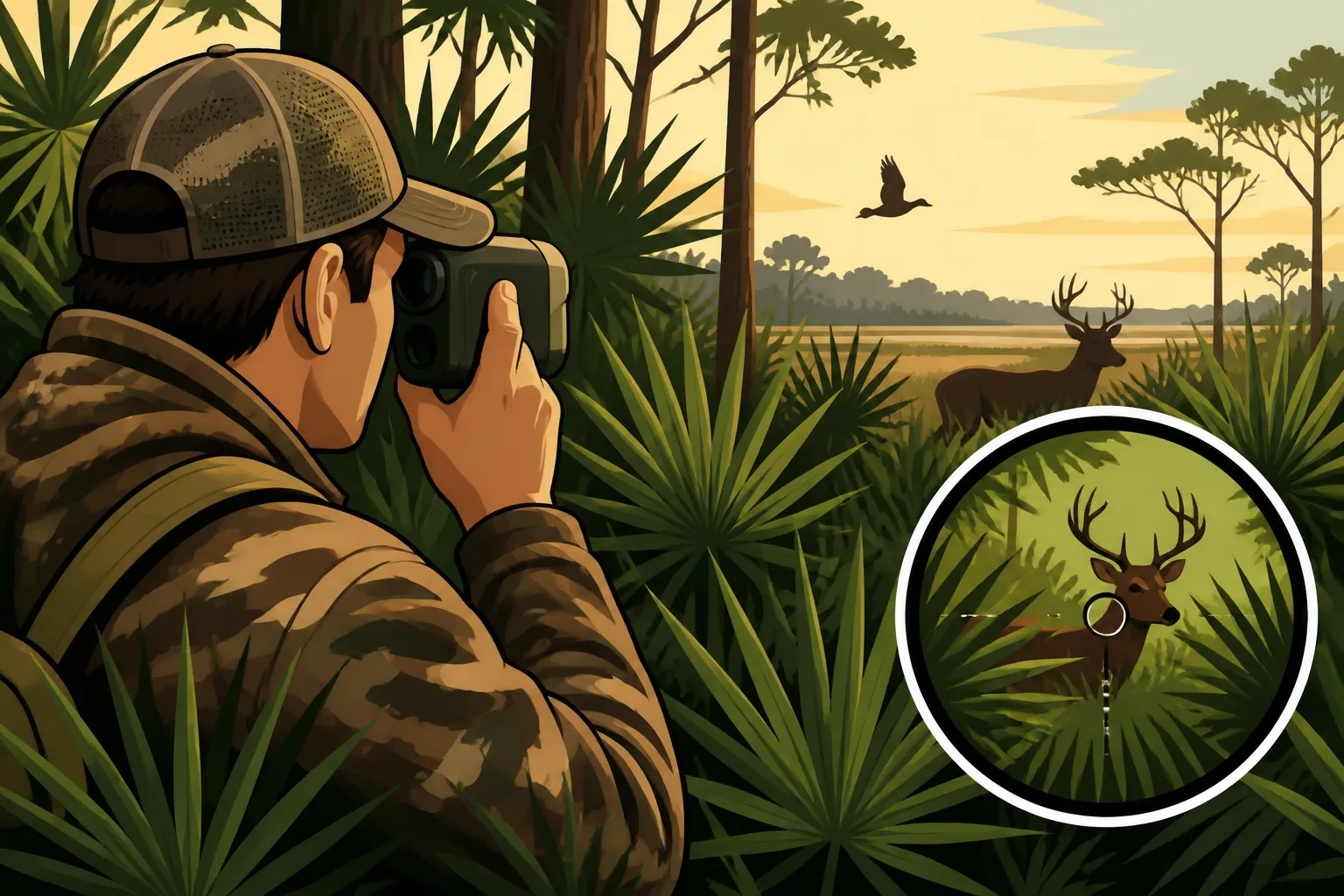
Rangefinders in Thick Coastal Plain Cover
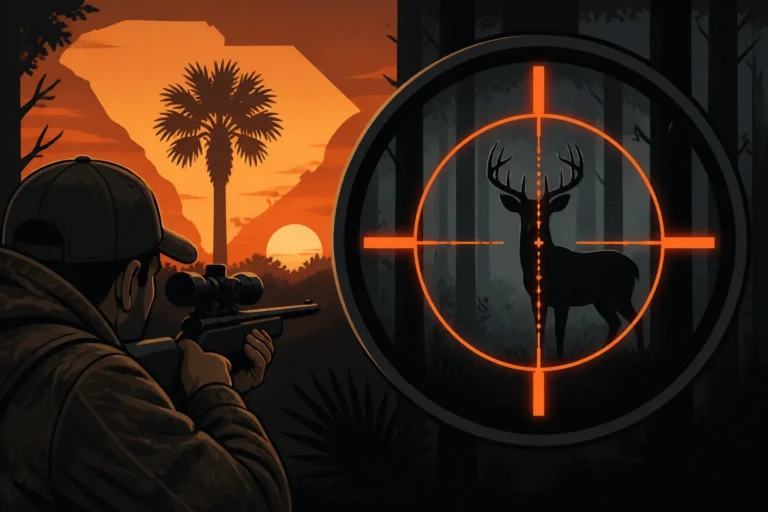
Hunting in South Carolina's coastal plain often means dealing with dense cover, thick brush, and humid air, which can make getting an accurate range reading a real headache. You’ve spotted a trophy buck slipping through a thicket of palmettos and pines, but before you can even think about a shot, you realize your trusty rangefinder is struggling to lock onto the deer, instead giving you a reading on every sapling and vine between you and your target. This guide is here to help you navigate those frustrating moments, offering practical advice on choosing the right rangefinder and employing effective techniques to get precise ranges, even in the most challenging Lowcountry environments.
The Unique Challenge of Ranging in South Carolina's Coastal Plain
Anyone who’s spent time hunting the Lowcountry knows it’s a special kind of beast. We're talking about dense maritime forests, swampy river bottoms, and pine plantations so thick you can barely push through them. It’s not like hunting wide-open plains where you can range a deer at 500 yards with ease. Here, even a 75-yard shot can feel like threading a needle, and getting an accurate range can be the difference between a clean kill and a missed opportunity. The terrain itself, combined with our unique weather, stacks the odds against a quick, confident range.
The Visual Obstruction Game
One of the biggest frustrations hunters face in thick coastal plain cover is the sheer number of objects between you and your target. You might have a clear lane for your arrow or bullet, but your rangefinder beam, often much wider than you think, can hit a branch, a hanging vine, or even a blade of saw palmetto right in front of the deer. Instead of the deer's distance, you get a reading for the closest obstruction, leaving you guessing and potentially making a poor shot decision. This isn’t just about the primary target; it's about the "noise" in the optical path.
Imagine you're on a deer drive in Berkeley County, posting up along an old logging road. A buck slips out of a block of planted pines, moving quickly through a transitional area into a thick hardwood bottom. You might only get a glimpse through a small window. Trying to range that deer when there are still countless small trees, blackberry brambles, and hanging grapevines between you and it can be maddening. Your rangefinder, despite its best efforts, will often pick up the first solid object it encounters, which might be five, ten, or even fifty yards short of your actual target. This is where patience and understanding your unit's limitations truly come into play.
Humidity, Fog, and the Ghost in the Lens
Beyond the physical obstructions, South Carolina's climate presents its own set of challenges for optics. Our coastal plain is notorious for its high humidity, especially during the early deer season in August and September. That thick, wet air can cause condensation on your lens, fogging it up just when you need a clear view. But even without visible fog, the moisture in the air can actually diffuse your rangefinder's laser beam, making it harder for the unit to get a strong, accurate return from your target, especially at longer ranges or in low light conditions.
Picture yourself sitting in a treestand on a still, dewy morning near the Congaree Swamp. The sun hasn't fully burned off the mist, and everything is dripping wet. You hear a rustle, and a group of hogs moves into view, rooting along a creek bottom. You pull up your rangefinder, only to find the lens is slightly fogged, or the reading is inconsistent, jumping between distances, because the humidity is playing havoc with the laser's ability to travel cleanly and reflect back. It’s not just a matter of wiping off a lens; the atmospheric conditions themselves can actively work against your technology. This is precisely why hunters here need features designed to cut through that environmental "noise." Hunting South Carolina's Year-Round Feral Hogs means dealing with these conditions often.
Essential Rangefinder Features for Dense Cover
When you're shopping for a rangefinder specifically for the thick, often humid cover of South Carolina's coastal plain, you need to think beyond just raw distance capability. A rangefinder that can hit a target at 1,000 yards in the desert might be useless at 80 yards in our pine thickets if it doesn't have the right features to cope with obstructions and moisture. It’s all about getting a reliable reading quickly, even when conditions are less than ideal.
Beyond Simple Line of Sight: Scan Mode and Angle Compensation
One of the most critical features for hunting in dense South Carolina cover is a robust scan mode. Instead of just giving you a single reading, a good scan mode continuously ranges multiple points as you pan across an area. This is invaluable when a deer is partially obscured. By scanning slowly across the animal and its surroundings, you can often pick up the actual distance to the deer amidst readings from brush, trees, or vines. You're essentially "painting" the target area with the laser, increasing your chances of getting a direct hit on the animal.
Another feature that's less about cover but absolutely crucial for accuracy in our varied terrain, especially near creek bottoms or small hills, is angle compensation (ARC). Many rangefinders will give you a "line-of-sight" distance, which is the direct measurement from you to the target. However, if you're shooting from an elevated treestand or down into a ravine, the true horizontal distance – the distance gravity acts upon for your bullet or arrow – is shorter than the line-of-sight distance. ARC technology calculates this true horizontal distance, giving you a more accurate number for your shot placement. Missing an animal because you shot over its back from a high stand is a rookie mistake, and ARC helps prevent it. Even on what seems like flat ground, subtle elevation changes in river bottoms can affect your shot, making ARC a vital tool. Treestand Setups in Francis Marion National Forest often involve elevated shots.
Optical Clarity and Beam Precision
Beyond the fancy modes, the fundamental optical quality of your rangefinder makes a huge difference in dense cover. You want clear, bright optics that gather light well, helping you pick out your target in the shadows or at dusk. Look for fully multi-coated lenses, which reduce glare and improve light transmission. A wider objective lens can also help, though it adds to bulk. It's not just about ranging; it's about seeing your target clearly enough to confidently place the rangefinder's reticle on it.
Equally important, though often overlooked, is beam divergence. This refers to how much the laser beam spreads out over distance. A rangefinder with very low beam divergence produces a tighter, more focused laser spot, which is much better for picking out a specific target like a deer through a small opening in the brush. If the beam is too wide, it's more likely to hit multiple objects—like both the deer and the sapling next to it—leading to an inaccurate reading. While manufacturers don't always list this spec prominently, reviews and real-world testing can give you an idea of a unit's beam precision. A tighter beam means less "splash" and more accurate targeting in dense environments.
| Feature | Benefit for Coastal Plain Hunting | Why It Matters |
|---|---|---|
| Scan Mode | Continuous readings, helps find target through obstructions | Reduces false readings from foreground brush; increases chance of locking on deer. |
| Angle Comp. (ARC) | Provides true horizontal distance for angled shots | Prevents over-shooting from elevated stands or down into ravines. |
| Optical Clarity | Bright, clear view for target acquisition in low light | Easier to identify and place reticle on deer in shadows or dense cover. |
| Low Beam Divergence | Tighter laser spot, reduces hitting multiple objects | Improves accuracy by ensuring the laser hits only the intended target through small gaps. |
| Fog/Rain Mode | Filters out environmental noise from moisture for cleaner readings | Essential for South Carolina's humid, dewy mornings and sudden downpours. |
| Waterproofing | Protects electronics from heavy rain and high humidity | Ensures unit functions reliably in wet conditions and prevents internal damage. |
Mastering Rangefinder Techniques in the Lowcountry Brush
Having the right gear is only half the battle; knowing how to use it effectively in challenging terrain is just as crucial. In South Carolina’s coastal plain, where every hunt is a test of patience and adaptability, your rangefinder techniques need to be honed to perfection. Don’t just point and shoot; think strategically about how you're using this tool.
Strategic Ranging for Accurate Shots
When facing a deer in thick cover, resist the urge to simply point the rangefinder at the animal and pull the button. Instead, employ a few strategic approaches. First, range beyond the deer. If you can see a tree or a clear spot behind the animal, range that first. This gives you a baseline distance that you know is at least as far as the deer. Then, carefully try to range the deer itself. If your rangefinder offers a "last target priority" mode, this can be incredibly helpful. This mode prioritizes the furthest object the laser hits within its field of view, effectively ignoring closer brush. Many modern units have this, and it’s a game-changer for thick woods.
Another technique is to range key landmarks before the action starts. If you’re sitting in your stand overlooking a field edge or a creek crossing, take a few minutes to range prominent trees, stumps, or changes in vegetation at various distances. Mark these distances in your mind or, even better, on a hunting app like GoHunt. This way, if a deer steps out, you already have known ranges to reference, which can confirm or quickly correct a new reading. Knowing that the big pine at the corner of the field is 85 yards, or the oak across the creek is 120, saves precious seconds when a deer appears unexpectedly. This pre-ranging strategy is particularly effective when Hunting Coastal Rice Field Edges.
Integrating Technology for Enhanced Situational Awareness
In today's hunting world, your rangefinder doesn't have to be a standalone tool. Many modern units, or even dedicated hunting apps, can enhance its utility, especially when navigating dense public lands. Using a mapping application on your phone or a dedicated GPS unit, like the robust mapping features offered by GoHunt, can elevate your ranging strategy. You can drop pins at known distances, mark out shooting lanes, and even note potential deer travel corridors based on ranged landmarks.
Imagine you're still-hunting a ridge in the Sumter National Forest. You range a promising looking rub line at 60 yards, and a faint game trail disappearing into a laurel thicket at 80 yards. With an app like GoHunt, you can quickly mark these points on your digital map. Later, if a deer crosses near one of those marked points, you have an instant visual reference, which can confirm your rangefinder's reading or help you quickly adjust if the reading is difficult to obtain. This integration provides a powerful layer of situational awareness, turning your ranged distances into actionable data on the landscape. Still-Hunting Sumter Forest Ridges benefits immensely from this.
Comparing Rangefinder Options for the Coastal Hunter
When it comes to rangefinders, the market is flooded with options, from basic units to high-tech marvels. For hunting in South Carolina's coastal plain, the choice isn't just about brand names or maximum range; it’s about finding the right balance of features, durability, and practical usability for our specific environment. Let's look at the main categories and what they offer.
Standalone Units vs. Integrated Binoculars
The most common type of rangefinder is the standalone monocular unit. These are typically compact, lightweight, and designed for quick, one-handed operation. They come in a wide range of prices, with entry-level models offering basic ranging and more advanced ones boasting features like ARC, multiple target modes, and superior optics. Their main advantage is their portability and dedicated function. You can easily slip them into a pocket or a bino harness, and they're quick to deploy when you need a range. For many South Carolina hunters, especially those who value minimalist gear or already have a preferred set of binoculars, a good standalone rangefinder is the ideal choice.
However, a growing number of hunters are opting for rangefinding binoculars. These units integrate a laser rangefinder directly into a pair of binoculars. The obvious advantage here is convenience: one less piece of gear to carry, and you can glass for game and range simultaneously without moving your hands or eyes from the target. This can be a huge benefit when a deer appears suddenly, allowing you to identify, glass, and range in one fluid motion. The downside is typically cost—rangefinding binoculars are significantly more expensive than a standalone unit and a good pair of traditional binoculars combined. They also tend to be heavier and bulkier than standalone rangefinders. For hunters who want to streamline their setup and prioritize speed of acquisition, and who have the budget, these can be an excellent choice for ranging in open fields or longer shooting lanes typical of some Lowcountry hunting scenarios.
Considering Cost, Durability, and Performance
When making your choice, it’s crucial to weigh cost against durability and performance in our unique conditions. You might find a bargain rangefinder, but if it fogs up constantly or can't cut through the humidity to give you reliable readings in the critical moments, it's not a bargain at all. Durability is key. Look for units that are fully waterproof and fogproof, ideally nitrogen-purged to prevent internal condensation. Rubber armor can protect against bumps and drops that inevitably happen in the field.
Performance in the coastal plain boils down to consistency and speed. Does the unit provide fast, repeatable readings? How does it handle ranging through light rain or morning mist? Does the scan mode work effectively in scattered brush? Some brands, while perhaps pricier, invest heavily in advanced laser technology and signal processing that allows their units to perform better in challenging conditions. Read reviews from hunters who operate in similar environments, not just those from open-country hunters. While it's tempting to focus on the maximum advertised range, for South Carolina's thick cover, focus instead on features that enhance accuracy at closer to medium ranges (20-200 yards) under adverse conditions. This is where your investment will truly pay off. South Carolina Hunting Licenses and What They Cost will vary, but investing in good gear is always a smart move.
Keeping Your Rangefinder Ready: Care in a Humid Climate
South Carolina's climate, while beautiful, is notoriously tough on electronics and optics. Humidity, salt air near the coast, and sudden downpours can wreak havoc on gear if you're not careful. Your rangefinder, being a precision optical instrument, needs a little extra love and attention to ensure it performs when you need it most. After all, what good is a fancy rangefinder if it's fogged up or dead when that trophy buck steps out?
Battling Moisture and Condensation
The biggest enemy of optics in our state is moisture. Even "waterproof" units can suffer from internal fogging if not properly cared for. Always store your rangefinder in a cool, dry place after a hunt. If it gets wet, wipe it down thoroughly with a soft cloth. If it's been exposed to heavy rain or a dip in a creek, open the battery compartment (if it's designed to be easily opened and dried) and let it air out in a controlled environment, perhaps with some desiccant packets nearby. Never put a wet rangefinder directly into a sealed bag or case, as this traps moisture and encourages mold or internal fogging.
For external lens fogging, carry a lens cloth specifically designed for optics. Breath on the lens and wipe gently, never rubbing it dry with your shirt sleeve, which can scratch the delicate coatings. In extremely humid conditions, some hunters swear by anti-fog treatments for their lenses, much like those used for eyeglasses or scuba masks. While most modern rangefinders are advertised as fogproof (meaning internally purged with inert gas), external fogging is always a possibility. Keeping it tucked inside your bino harness until immediately before use can also help mitigate sudden temperature changes that lead to condensation.
Power Management and Seasonal Storage
Batteries hate extreme temperatures and prolonged inactivity. For rangefinders, this means keeping an eye on your battery life, especially as hunting season progresses. Always start a season with fresh batteries, and consider carrying a spare set in your pack, especially if you're hunting remotely on public lands where a dead battery could ruin a hunt. Lithium batteries often perform better in colder weather, which can be a factor late in our deer season. Hunting Into the January Zone 1 Close means dealing with colder mornings.
When storing your rangefinder for the off-season, remove the batteries. This prevents potential corrosion from leaky batteries, which can permanently damage the internal electronics. Store the unit in a protective case, ideally with a few desiccant packets to absorb any lingering moisture. Keep it away from direct sunlight and extreme temperature fluctuations, such as in a hot garage or a freezing shed. Treating your rangefinder with this level of care ensures that it will be ready to go, crystal clear and fully powered, when opening day rolls around again. A little proactive maintenance goes a long way in extending the life and reliability of your valuable hunting optics.
Disclaimer
This article is for general informational purposes only and does not constitute professional advice. Laws, prices and regulations vary by location and change over time. Consult a qualified professional for guidance on your specific situation.